
This event (book here) at Manchester Art Gallery, looks interesting!
Introduction to Food Foraging
Thursday 7th February 2013
Demonstration and Talk by wild food expert Jesper Launder
6.00-8.00pm The Restaurant
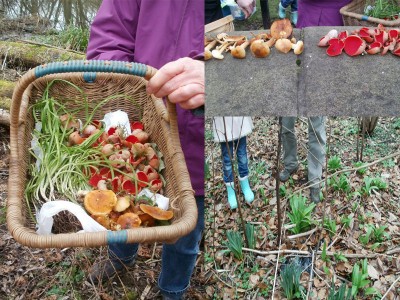
It’s hard to imagine that winter and wild food might go hand in hand, however wild food expert, Jesper Launder, challenges you to re-think this assumption.
Jesper will introduce you to some wonderfully edible and visually satisfying seasonal wild food delights. From tasty young plant shoots, to edible roots, to health-giving gourmet wild mushrooms, this workshop offers an opening into the fascinating world of ‘food for free’.
A collaboration with Cracking Good Food http://www.crackinggoodfood.org
Part of a special evening for Dickens’ 201st birthday, that links with ‘The Walk to Dover’ by Turner Prize nominee, Spartacus Chetwynd, a contemporary art intervention in our 19th Century Galleries, inspired by Dicken’s novel David Copperfield. During Copperfield’s walk to Dover to find his aunt, he survived by foraging for food. This has prompted us to think about what foraging means today.
There will be other Copperfield related activities taking place over the course of the evening from 6pm. Plus wild food related items on our Cafe menu.
If you have any difficulties booking tickets through this site please ring 0161 235 8822 or 234 8859 or 7983 481 886 or email e.anderson@manchester.gov.uk or c.witham@manchester.gov.uk


 manchester climate monthly
There was once a Manchester-region foraging tradition – although not really for food. One of the characters in Elizabeth Gaskell’s Manchester novel, ‘Mary Barton’ (set in the 1840s, I think) is a ‘Mrs Wilson’. Mrs W. is a ‘yarb doctor’ i.e. a herbalist who goes out into the countryside gathering wild plants for herbal remedies.
As a young boy, the great Manchester botanist, Richard Buxton (b. 1786) was apptenticed into the Batt (i.e. children’s leather shoe) trade. His first master, James Heap, who had a shop in Port St., was a yarb doctor and he used to take Richard with him on his forays to gather herbs from the hedgerows in order to make, what he called, ‘diet drinks’ (probably herbal tonics) for his neighbours.