
Details here. You have until Friday 15th August to nominate people within 11 different categories.
How very proud Manchester Climate Monthly will be to receive its award (and perhaps a hug?) from the judges. Oh yes.
Details here. You have until Friday 15th August to nominate people within 11 different categories.
How very proud Manchester Climate Monthly will be to receive its award (and perhaps a hug?) from the judges. Oh yes.
Manchester City Council, made up of 95 Labour councillors and 1 “Independent Labour” councillor, has a choice.
It can release a specific and detailed report about what it has – and has not achieved – over the last 12 months around reducing its carbon emissions. Or it can confirm what more and more people suspect – that it runs from transparency and scrutiny, and that the recent statements of its leader Richard Leese are just more spin. (Asked by a journalist about the consequences of Manchester City Council being entirely dominated by one party, he said “We have to ensure we hold ourselves to account within this chamber and we also need to ensure that citizens – and people that have voted for us – are able to hold us to account on an ongoing basis, not just once every 12 months.“)
The Neighbourhoods Scrutiny Committee is one of the six “scrutiny committees” that is supposed to keep tabs on what the Executive and the officers are doing.
It traditionally gets a report every July on the “Annual Carbon Reduction Plan.” Last July (2013) Council officers made a series of specific proposals about what the Council intended to do to reduce its emissions in the coming year. Aware that previous proposals had not necessarily been completed, two councillors – Kevin Peel (City Centre) and Fran Shone (Northenden) – specifically requested quarterly progress reports on the Carbon Plan. This request was “considered” (and not implemented).
At the July 2014 meeting of the committee a very brief “report for information” was tabled (see MCFly article “Council thinks a warm winter plus building sell-off equals success”). The chair of the committee, Cllr Basil Curley, said that a “more detailed” report would be brought to the Tuesday August 26th meeting.
MCFly wrote to the Executive Member for the Environment, ccing Councillor Curley.
Dear Councillor Chappell,
as you are no doubt aware, it was announced/agreed last Tuesday that “a more detailed report” on the 2013-4 performance of the Council against its carbon reduction plan would be brought to the next Neighbourhoods Scrutiny Committee on 26th August.
I’d like to clarify from you if that report is going to include an item-by-item breakdown of the 2013-4 plan,
e.g will there be a table with all items from 4.11 to 4.86 (pages 35 to 43 in the Annual Carbon Reduction Plan 2013-14) with a column for what was proposed, a column for what has actually been achieved and a third column to explain any discrepancy?
If the report is NOT going to include that, could you please let me know what format it will take, and why it won’t.
Yours sincerely
Marc Hudson
The Council officers and Executive member are now proposing NOT to present a detailed account of what has and has not been achieved in the last twelve months. How do we know? Well, Councillor Chappell, who earlier this year repeatedly promised to setting up a blog (she has since said – without explanation – that she will not do so), replied thus;
I’ve spoken to Basil and the officers involved.
Since adopting the new 3-Year Carbon Reduction Plan in February of this year, our intention has been to report on progress annually in March of each year. This is a change from the reporting cycle for previous 1-Year Plans where we provided annual reports in July.
Some data which is relevant to monitoring the Plan doesn’t get released until June of the following year so our intention is to issue this as soon as it becomes available. This was the content of the Report for Information at last Neighbourhoods Scrutiny.
As we are four months into a twelve month reporting cycle, we don’t have data or information to report against each element of the plan. We have set this up so it will be available and reported on in March 2015.
In order to provide some more detail, however, we have agreed with Cllr Curley that we extend the existing report to highlight to the committee any elements of the plan which we can already anticipate we may have problems
with by year-end, and similarly those where progress has exceeded our expectation.Hope this helps
Members of the Neighbourhoods Scrutiny Committee were not consulted about this decision.
The reports for the 26th August meeting are due to be published on the Council’s website on August 19th. At that point we will see if the Council has had second thoughts and releases the information in a format that councillors on the committee can easily digest, or if the assurances of Richard Leese are maybe not entirely to be believed, and the current scrutiny system is just a meaningless ritual.
Marc Hudson
mcmontly@gmail.com
What you can do:
a) Save the Date – Tuesday 26th August, 7pm. Meeting of the People’s Environmental Scrutiny Committee at the Friends Meeting House, 6 Mount St, Manchester. If you want to come to the Neighbourhoods Scrutiny Committee meeting; it’s at 2pm at the Town Hall. Some of us are meeting at the Waterhouse from 1pm to about 1.45 (just pop in when you can).
b) Send this blog post to any member of the Neighbourhoods Scrutiny Committee who you happen to know. (Here’s a list of the members. If you click on the names, you can get their email address). Perhaps ask them if they are happy with the quality, frequency and format of information that they are being given by officers and the Executive so that they can discharge their democratic responsibilities.

via environmentjob.co.uk, which you should mention in your application (just good manners)
| Organisation: | CTC |
| Salary: | £23,000 pa pro rata |
| Location: | Manchester |
| Hours: | Full Time |
| Position type: | Paid |
| Contract: | Fixed Term Contract |
| Closing date: | Mon 04 August 14 |
| Website: | www.ctc.org.uk |
| Contact email: | sue.cherry@ctc.org.uk |
CTC are recruiting a Cycling Development Officer to provide community development services to Transport for Greater Manchester (TfGM) in support of the Travel Choices sustainable transport programme.
The position is full time for a fixed-term contract until 31st March, 2015 and is hosted at the offices of TfGM in Piccadilly Place, central Manchester, and will involve work across the ten local authority districts of Greater Manchester.
For further details please see the Job Description and Person Specification, by following the ‘More information’ link below.
Anyone wishing to apply should email a current CV together with a covering letter demonstrating their suitability for this role to sue.cherry@ctc.org.uk
The closing date for applications is 12.00 on Monday 4th August 2014. Interviews will take place during the week commencing 11th August in Manchester. Due to the requirement to start the project as soon as possible and the duration of this post, candidates with a notice period greater than one month or unavailable w/c Aug 11th should not apply.
Please share the following with anyone who lives in or near Chorlton!
“We have wildlife gardening on Tuesday nights from 6.30pm till the end of August and a Saturday session on 2nd August from 10am“
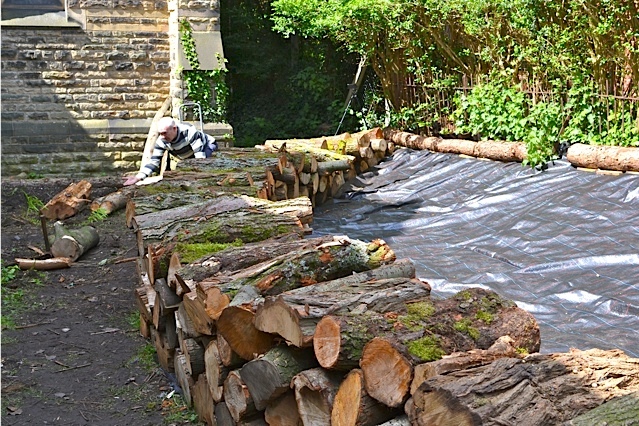 The Chorlton Community Wildlife Garden project was set up last year in response to the ‘state of nature report’ that came out in May 2013. The report by 25 of the leading willdlife and conservation charities highlighted the fact that nature was/is in a worse state that was feared.
Some of the garden was particularly set aside at Chorlton Methodist Church to try and provide shelter, nesting sites, food, water and other habitats for all sorts of birds, bees, insects and mammals. This is the main aim of the project.
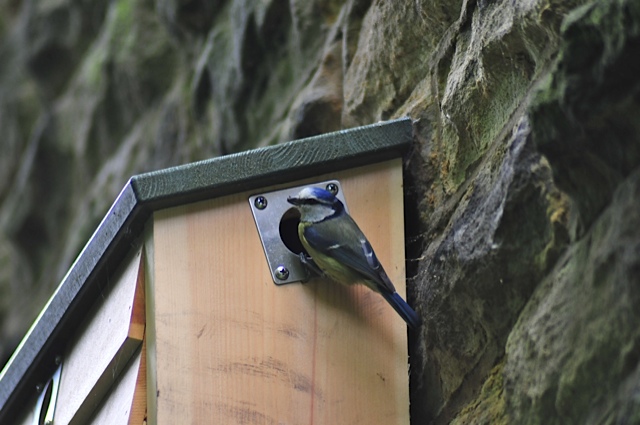 Secondly we hope that through our website, links with individuals, schools and other community groups we can encourage other to support wildlife in their own gardens, schools, neighbourhood and workplace.
So far, we have put up various nest boxes, hedgehog house, bug house, built a wall for a raised bed out of logs and started to make a large raised bed ready for planting with wildlife friendly plants and shrubs.
We have also had a ‘Bat Night’ and hope to put up some Bat Boxes soon.
We need help with moving 10 tons of soil, clearing borders ready for planting, making some garden benches, putting up bat boxes, drilling holes in the log walls so things can make their home in them etc.
If you would like to get involved we have gardening sessions on :
Monday mornings from 10am,
Tuesday evenings over the Summer from 6.30pm
1st Saturday of every month from 10am
Contact us through the website : www.chorltoncommunitywildlifegarden.org.uk
text and images provided by Dave Gallimore
http://campaigns.350.org/petitions/no-more-foul-play-no-more-bp-greenwash-at-the-commonwealth-games-1
We, the undersigned, believe that we should enjoy sport, the arts and culture without oil sponsorship. For a small price, BP and other oil companies sponsor events like the Commonwealth Games and the Olympics in order to appear generous, socially responsible and “green” – when nothing could be further from the truth! Climate change is one of the biggest threats we face – it’s time to stop the foul play and expose BP’s greenwash. We call on you to end your relationship with BP after these games and refuse them the role of ‘corporate partners’ for all future events.
@artnotoil
#sportnotoil
BP is an official partner of this year’s Glasgow Commonwealth Games. For a small contribution, BP paint themselves as generous, socially responsible and “green” – when nothing could be further from the truth.
– BP will ‘donate a tree’ for each participant in its carbon offsetting scheme, but the amount of CO2 they will absorb is almost nothing when compared to BP’s emissions worldwide.
– BP have set up a ‘Young Leaders’ scheme but it is young people who will have to deal with their legacy of runaway climate change and oil spills.
– The US has brought in sanctions against the Russian-owned oil company, Rosneft, but BP have clung to its 19.75% share in the company.
– BP have nestled its brand alongside our elite athletes in order to keep their toxic legacy in the Gulf of Mexico and attempts to drill in the Arctic out of people’s minds.
It’s time to stop the greenwash and deny BP the role of ‘corporate partner’ at all future sporting events!
Manchester City Council has six scrutiny committees that are supposed to oversee the work of the Council bosses (elected councillors in the “Executive” and also the bureaucracy).
Yesterday an email was sent to the chairs of the six scrutiny committees, asking whether they had completed their “carbon literacy” training. (For one councillor’s very positive opinion, see here).
 So far, two have replied. Chair of the Economy Scrutiny Committee, Joanne Green has said “I haven’t yet, I intend to, not yet fixed in diary.”
Meanwhile, the chair of the Health Scrutiny Committee, Eddy Newman, has sent a longer reply, which is published below in full.
 The replies of the four remaining Scrutiny Committee chairs will be given when received.
Dear Mr Hudson
Like many residents of Manchester, I too care about climate change and support the Council’s policies on this. I have extensive experience of public representation and – as a lay person – I am reasonably familiar with the causes and effects of climate change and the need for individual, local, national, European and international action.
I don’t believe that whether or not an individual has completed a particular course of carbon literacy training is an accurate measure of their knowledge – and in particular their commitment – to tackling climate change. For instance, a “climate change denier” could complete this course, and still hold reactionary views resulting in opposing or just paying lip service to tackling climate change.
However, I often take up training opportunities that are available to councillors, and I will be completing Manchester’s carbon literacy training course over the next few months.
If you share my answer, please do me the courtesy of sharing my answer in full.
Yours sincerely
Councillor Eddy NewmanLabour Member for Woodhouse Park;
Chair of the Health Scrutiny Committee;
Manchester City Council
MCFly says: Cllr Newman’s reply is welcome. It raised some important issues.
Carbon literacy should be seen as a minimum, not a maximum.
It’s also important to acknowledge that even when people have “all the information” they may well choose to interpret it differently than the givers of the information would intend/hope.
It’s ESPECIALLY important to focus on action rather than knowledge. So, with a bit of luck and some prompting, we may see the health implications of climate change (heatwaves, floods, etc) and the psychological implications on the Health Scrutiny Committee’s “forward plan sooner rather than later.
UPDATE 25/07/2014: Cllr Julie Reid, chair of Young People and Children’s Scrutiny Committee, has said written “Send me dates and times and I will endeavour to complete the Carbon Literacy status.”
Manchester City Council loves to sell the city as a Global Destination for Sport and Culture. It’s part of the “offer”, to attract inward investment.(1) That’s great, so long as it doesn’t conflict with the imperative to become a genuinely low-carbon city with a genuinely low-carbon culture.
 Some of you have doubtless seen the Council’s logo on the posters for the Manchester Jazz Festival. So I thought, in the context of the Council being oh-so-very open about all things climate, I’d ask some basic questions. And to do this, I’m using the Freedom of Information Act, since nothing else seems to work…. (2)
I’ve emailed informationcompliance@manchester.gov.uk
Dear Sir/Madam,
I am requesting the following information
a) Details of any financial support given to Manchester Jazz Festival 2014 by Manchester City Council (http://www.manchesterjazz.com/)
b) Details of other forms of support given by the Council to Manchester Jazz Festival 2014 (for example – free or below-commercial rate use of venues or other non-financial support)
c) A copy of any agreements between the City Council and the Manchester Jazz Festival 2014 organisers that pertain to environmental impacts of the festival, including recycling and reduction of carbon emissions.
d) A copy of any assessments/requests by Manchester City Council especially with regards to the measures undertaken to minimise the “carbon footprint” of the Manchester Jazz Festival 2014 event. Including not only the direct carbon emissions from heating and lighting, but also the air and road travel of performers at the festival.
Please consider this a request under the Freedom of Information Act 2000.
Marc Hudson
[address]
Footnotes
(1) If you’re interested in the political theory behind all this, of the “Sustainability Fix” and so on – here’s a video of some fat hairy guy.
(2) And your opportunities to get good at FoIAs will come soon. Watch this space!
UPDATE: Got this back today.
Request for Information – Reference No: CEX/9MBEDH
Thank you for your request for information received by Manchester City
Council on 24th July 2014.
Please note that it may take up to 20 working days (approximately 4 weeks)
for the Council to consider your request and to provide a formal response.
20 working days will take us up to Thursday 21st August or thereabouts… Whenever you do a FoIA and get one of these emails, it helps to put a reminder to yourself in your diary (or online calendar…)
Manchester City Council will NOT be giving any detailed account about its climate change performance over the last year, despite repeated requests.
In July 2013 the “Annual Carbon Reduction Plan” was brought to the “Neighbourhoods Scrutiny Committee” (this of the 6 scrutiny committees, made up of “back-bench” councillors, that are supposed to keep tabs on what the bureaucrats and elite councillors are up to.) The spin was that there had been a 7% reduction in emissions in the previous year. The grubby reality, admitted after intense questioning, was that emissions had gone UP by 1.8%.
The 2013-4 plan listed a long series of actions that were scheduled for the coming year. (1) We – councillors and citizens of Manchester alike – are now not going to be able to easily find out which (if any) of these actions has been completed in the last year because, according to a letter sent to Manchester Climate Monthly, the Council doesn’t “have data or information to report against each element of the plan.”
The actions – which include items such as energy efficiency improvements in the Art Gallery, Leisure centre improvements and the like – are the sort of detailed steps that are needed not just to reduce carbon emissions, but also to create the often-talked about “low carbon culture.” The fact that elected councillors, who last year called for quarterly progess reports, will not be able to find out what has and hasn’t been achieved in the last 12 months, reduces the existing scrutiny process to a comical farce.
The Council, in a very brief and initially buried report, claimed a seven percent reduction in its carbon emissions. That brief report ignored the fact that the long-touted goal of a 20% reduction by 2014 had been missed. More seriously, it conceded that the very mild winter, and “building rationalisation” (i.e. the sell-off of surplus buildings) were responsible or the reduction in emissions.
What you can do:
You can write to Councillor Chappell explaining that this is not how an open and transparent Council behaves. Her email is cllr.k.chappell@manchester.gov.uk If you live within Manchester, please cc in your three ward councillors (you can find them via this page on council’s website).
You can contact Manchester Climate Monthly (mcmonthly@gmail.com) about further steps to take (here’s a chance for you to learn how to use the Freedom of Information Act!
Please “save the date” – Tuesday 26th August, 7pm. There’s a meeting at the Friends Meeting House, 6 Mount St in the City Centre
Below is the full text of the letter received by Manchester Climate Monthly from the Executive Member for the Environment Kate Chappell. Perhaps she can give a further account on her blog, which she has repeatedly promised to set up.
Hi Marc,
I’ve spoken to Basil and the officers involved.
Since adopting the new 3-Year Carbon Reduction Plan in February of this year, our intention has been to report on progress annually in March of each year. This is a change from the reporting cycle for previous 1-Year Plans where we provided annual reports in July.
Some data which is relevant to monitoring the Plan doesn’t get released until June of the following year so our intention is to issue this as soon as it becomes available. This was the content of the Report for Information at last Neighbourhoods Scrutiny.
As we are four months into a twelve month reporting cycle, we don’t have data or information to report against each element of the plan. We have set this up so it will be available and reported on in March 2015.
In order to provide some more detail, however, we have agreed with Cllr Curley that we extend the existing report to highlight to the committee any elements of the plan which we can already anticipate we may have problems with by year-end, and similarly those where progress has exceeded our expectation.
Hope this helps,
Footnotes
(1) In all previous years the “Annual Carbon Reduction Plan” had then gone from the Scrutiny Committee to the Executive. Last year – with no explanation – this did not happen.
Green Capitalism: Why it can’t work.
Daniel Tanuro
Merlin Press/ Resistance Books, 2013
I approached this book with some scepticism. It wasn’t that I was unsympathetic to the arguments I expected to find in it. I do regard myself as a Marxist, on who thinks that to understand the systems (political, economic, cultural, social, family, psychological) that shape our lives, it is necessary to understand the ‘deep processes’, the often hidden ways in which some groups dominate others in the control and struggle for resources (historical materialism). But there is a strong tendency in organised Marxism to adopt a ‘maximalist’ line, one that suggests that nothing can be done, improved, sorted out, until the workers triumph and overthrow the rule of Capital. This is, apart from being inaccurate (significant victories over Capital such as the establishment of the NHS, the Scandinavian welfare states, Kerala’s superior human development compared to neighbouring Indian states, the result of social movements with reformist politicians have shown how another world is possible), a counsel of despair, and indeed often, paradoxically, of quietism. This book has been distributed by Socialist Resistance, a group that now describes itself as eco-socialist, whose lineage goes back to the International Marxist Group, Ernest Mandel and Trotsky’s Fourth International. Indeed they still think it necessary and helpful to describe themselves as the British section of the Fourth International. However, like the old IMG they do represent the more human, thoughtful end of the Trotskyist tradition.
But on reading the book I was favourably impressed. Tanuro caries out a careful examination of capitalism and its destructive tendencies and of attempts to ameliorate the impact of continual capital accumulation (a.k.a economic growth) on, for example greenhouse gas emissions, using its own tools, such as the creation a market in carbon emissions. He examines carefully forensically the huge problems of such trading schemes, with their inadequate pricing, and effective licence to emit. He also makes it clear how government targets for emission reduction are nowhere near enough to prevent harmful climate change, even if schemes like the European Emissions Trading Scheme were actually to work. He also criticises the traditional left its general lack of concern about the environment and its destruction: “At best it ignores the problem.. at best it is on the defensive”.
He then considers some alternative approaches, ecological economist Herman Daly’s idea of the Steady State Economy and the European degrowth movement, particularly associated with French economist Serge Latouche.
My own criticisms of Daly’s approach are somewhat similar: most treatments of the Steady State economy take the view that it would be consistent with some form of capitalism (British economist Tim Jackson for example suggests this, but he uses an inadequate definition of capitalism as the market economy). Daly also fails to make it clear that our current level of economic activity is far too high: it needs to decrease so we (humans in the aggregate, though levels of consumption differ radically) live within the capacity of the earth to support us.
His treatment of Latouche is also unsympathetic but in this case I don’t think he has read him very thoroughly. For Latouche ‘degrowth’ is a mater of changing the conversation, from growth and development to other goals. He is attempting to move the debate, the narrative, from one dominated by economic concepts to one where human and ecological values take their place. In this he is close to socialist thinkers like Raymond Williams and the ‘post-Marxists’, who he discusses, Cormelius Castoriadis (Paul Cardan) and André Gorz, a key thinker in the movement for a shorter working week. All of these theorists had in common the critique of the ‘productivism’ that the traditional left (though arguably not Marx) share with capital’s ideologues. Furthermore Latouche has a lot in common with the decolonial thinkers from the global South (such as R Grosfoguel, S Amin, V Shiva, E Gudynas, A Acosta, A Escobar, E Dussel, and A Quijano) who criticise the very idea of ‘development’ as a linear, Eurocentric concept tied to that modernity whose underside is the global extraction of wealth from South to North (a.k.a. West) and the myriad tricks of defamation, devaluation, obfuscation that go with it. But despite including a quote from Mandel that makes it clear that material ‘progress’ can be harmful, Tanuro objects to what he sees as a conflation of capitalism ad development. Perhaps we’d agree with the slogan of environmentalist Bolivians though, that “another development is possible’, at which point we might search for a better term.
Tanuro ends with a call for ecosocialism, but for a Marxist the glaring gap is of a convincing praxis that could conceivably bring this about.
So, if we accept that (most of) the dominant approaches to reforming the economic and social system are unworkable or utopian, then how do we move forward without falling into the maximalist “after the revolution we’ll see” that Tanuro himself ridicules? For me at least part of the answer lies in some of the more innovative concepts from socialist praxis:
Trotsky’s notion of transitional demands is to mobilise around those reforms that can be reasonably campaigned for, that the system might agree to, but which through the failure to realise them in reality, expose its true nature. The shorter working week and increased pre-distributive equality are good contemporary examples.
Gramsci’s concepts of prefigurative struggle, war of position, hegemony and counter-hegemony, little understood by swathes of the left, connect with both the alternative lifestyles movements and the hard-nosed struggles against neoliberalism, suggesting the basis for the kind of anti-capitalist, ecologically literate alliance that we perhaps se emerging in Spain, Greece and parts of Latin America.
Gorz’s concept of revolutionary reforms (like Gramscian prefiguration) similarly bridges the day to day creation of an alternative reality within the current system with the revolutionary reconstruction of society, economy, culture, politics – and our relations with nature.
But there again, perhaps this is all a conceit – the system will crash and what we think might be seeds of a new society may be no more than lifeboats in a storm of unprecedented destruction.
Mark H Burton
[Mark Burton is part of the Steady State Manchester group, but is writing here in a personal capacity]
 | Dave Bishop on COP27 and the fantasies of sal… |
 | manchesterclimatemon… on The messages we send – o… |
 | Anon on The messages we send – o… |
 | Stephen PENNELLS on Climate emergency? What climat… |
 | marchudson on Twelve years ago in Punxatawne… |

 manchester climate monthly