#Manchester Council talks #climate while wasting energy – photo to prove it

Manchester City Council’s Executive met to rubber stamp its latest budget – and its climate change “plan” – on Wednesday. Meanwhile a space heater was blazing away in the empty room that they had said they were going to use, just across the corridor. And we have the photo to prove it.

councilchamberweds12febOn Weds 12th February the Council’s 9 member executive – and assorted assistants, officers and precisely two members of the public – squeezed into the “Scrutiny Room,” on the second floor of the Town Hall Extension. According to the staff member on the reception desk downstairs, the meeting of the Executive was actually scheduled for the Council Chamber across the way. That would explain why a space heater was blazing away in there from at least 9.30am…

As reported on Wednesday, the Executive Member for the Environment declined to say that the nine actions in the Open Letter submitted by citizens of Manchester were sensible suggestions and that she would work to the best of her ability to make them happen. Instead, she delivered a mini-lecture about effective behaviour change. [Happy to be a guinea pig, but hopefully that advice can be recycled somewhat closer to home in the near future.]

The Executive then studiously ignored the fact that the Council will miss its long-promised 2014 target of a 20% carbon reduction. Instead some of them they chose to snicker at the sole Liberal Democrat politician in the room. .Sixty feet away, a space-heater heated empty space.

Perhaps the next time the Glorious Leader tries to score cheap political points by asking rhetorical “how do we cut building emissions?” questions to the political opposition, this photo will be used. Oh, but wait – after May 22nd there will be no political opposition in the Council whatsoever. Happy times for Manchester, oh yes. #1partystate

Marc Hudson
mcmonthly@gmail.com

polarbeartownhallspaceheater

Posted in Climate Change Action Plan, Democratic deficit, Manchester City Council | Leave a comment

Event: Climate Action in #Manchester – where next? Tues 25th Feb, 6.30pm Friends Meeting House

feb25thfacebookicon-page001

You do NOT need to book for this.

Here’s the Facebook page.

Following on from the open letter to Manchester City Council suggesting 9 actions it could take to improve communication and performance around climate change, what actions should we citizens be taking? This is an interactive and participatory format. Expect to be asked to talk to people around you, and to share ideas. It’s OK if you don’t think you have many, it’s not a competition. Come meet other concerned and interesting people for practical planning!

Posted in #mcrclimateplan, Upcoming Events, volunteer opportunity | Leave a comment

#Manchester citizens answer 3 questions – 006 Sarah Irving #3qthurs

So, Thursdays are hereby proclaimed to be 3 Questions* Thursdays.

This week, the other Sarah Irving…

Every Thursday we will put up a short video of a Mancunian answering the following –

1. “Who are you?”  (Name, where you live, and – if you want to say – what you “do”)
2. “What does Manchester need to become more sustainable?”
3. “What knowledge and skills do you want to acquire in 2014?”

Why this? Because we need to celebrate what is happening, imagine what could happen and also connect people who have skills with people who want them.  #movementbuilding.

So, watch out. If I see you before you see me, and I’ve got my video camera handy (I will), you might be in the frame…

* And an optional 4. –  “Anything else you’d like to say?”

Posted in 3 question Thursday | Leave a comment

“3 out of 9 ain’t bad”? #Manchester City Council lukewarm on 9 #climate actions

Manchester City Council has poured lukewarm water over an “open letter” suggesting low-cost actions on climate change. The letter, which has appeared online and in the Manchester Evening News was from citizens of Manchester, who offered their help in implementing nine specific actions.

Responding to a brief statement made by the editor of Manchester Climate Monthly to the Council’s 9-member Executive at the Town Hall this morning, the new Executive Member for the Environment, Cllr Kate Chappell, stated that she felt three of the ideas were of interest – carbon literacy, funding [unconditionally] the [utterly undemocratic] Stakeholder Steering Group and ‘councillors doing more’.

She then delivered a mini-homily on the nature of collaboration and behaviour change, and committed to replying in “some detail” to the letter. This reply will presumably be cced to the many people who have emailed her during the last 8 days.

The City Council’s Executive then endorsed the “Climate Plan 2014-7”. As reported previously, this official document never spells out a simple and extremely inconvenient truth; the long-promised 20% reduction in the Council’s own carbon emissions by 2013/4 has been totally missed, with actual reduction probably about half of that target, and mostly due to the sell-off of surplus buildings. (We will know the exact amount in July 2014).

The nine actions in the open letter include the setting up of an Environmental Scrutiny Committee and the release of currently-secret quarterly progress reports about the Council’s climate action. The letter was created by Manchester Climate Monthly and then endorsed by a growing number of citizens. A 30 page document that included implementation plans for each of the nine actions was sent to Executive members earlier this week. This was an effort to show that all the nine actions were eminently feasible and remarkably cheap, and to help a council that has often struggled – even before austerity kicked in – to move from strategy documents to implementation documents, let alone to implementation itself. It seems, however, to have backfired, providing a pretext for kicking the nine actions into long grass.

Tactical blunder? Perhaps.
There is an argument that says releasing a 30 page implementation plan to the Executive forced them onto the back-foot. Nobody likes being bossed around, after all, and told their jobs. Perhaps such a document could and should have been released immediately after the Executive meeting.

Maybe, but this is not a Council that has shown – since the halcyon days of late 2009 – any interest or ability in being innovative in its policy-making. This is a Council that has spun increases in carbon as decreases, has promised that a 20% reduction was on track and now finally “admits” (but only in a meeting, never on the page!) that it will be lucky to get a 13% reduction by the target date. This is a Council that has managed to get only 6 out of its 96 members to undergo a straightforward training in “carbon literacy”. Maybe they do need to be helped with implementation plans after all.

Let’s not be naïve about what we are dealing with here. Even in the absence of that aggravating implementation plan, it’s highly likely the response would have been the same level of luke-warmness. Some other excuse would have been found.

And finally, let’s consider the absolute “best case” scenario – the Council actually unambiguously welcoming and committing to the nine actions. (By the way, these actions are – in the words of one person in a position to know about these things – “sensible suggestions.”) Would that have meant we could have patted ourselves on the back for a job well-done and gone home? Would that have meant that no further surveillance, chivvying and scrutinising – of a council that will in all probability be 100% Labour – would have been needed? Let’s remember, left to their own devices the Council’s target for so simple an action as getting all its elected members to be carbon literate was March… 2017.

Who would trust them to be able to deliver on these nine actions? Only somebody who had been paying no attention whatsoever in the last few years, someone who believed that austerity’s culling of capacity and talent would not matter to what was someone (now on the cusp of retirement) described in 2010 as “Delivery, Delivery, Delivery”.

It was always the case that, if these 9 actions were to happen (and all the others that need to happen.), then citizens of Manchester would have to be involved every step of the way. Today’s events don’t change that. Citizens will have to learn new skills, build new relationships, uncover and share new knowledge. All the while they will have to sustain their own and each others’ morale. They will need to be able to effectively welcome new people, and be able to allow everyone – old and new – to scale up and scale down their involvements when “real life” intervenes, as it so often does.

A previous effort to give the Council tools it needed – Call to Real Action (2009-10) – signally failed to do those things in the long-term. Such failures! – we cannot afford them any more. If you want to learn those skills, build those relationships, uncover and share that knowledge, please, get in touch. mcmonthly@gmail.com

If you can come to our first meeting about this, on Tuesday 25th February, from 6.30pm at the Friends Meeting House, (rolling programme – come for as long as you like), then great. If you are busy that day/hate meetings/can’t afford to come but still want to be involved, get in touch. mcmonthly@gmail.com

Marc Hudson
mcmonthly@gmail.com

Posted in #mcrclimateplan, Campaign Update, Climate Change Action Plan | Leave a comment

Text of speech on #climate that may get given to #Manchester City Council Executive

Manchester City Council’s Executive meets today. Members of the public do not have the right to address the meeting, but can ask permission. I have already. If it is granted, this is what I’ll be saying.

Thank you, chair, for the chance to address the Executive. I will – for once – be brief.

On the 17th November 2009 the Executive of Manchester City Council endorsed the Climate Change Action Plan. That plan had been written collaboratively over the previous few months by many stakeholders. This was a bold and praise-worthy action by the Council.
The Plan’s headline goals were two (they are more now). The second – and most radical – was to engage all citizens and organisations in creating a low carbon culture. The first was a 41% reduction in the City’s emissions by 2020.

In October 2010 Manchester City Council released its 10 year plan for the period 2010 to 2020 on Climate Change. It committed to reducing its own carbon emissions by 20% by 2014, so that momentum would be created towards a planned 41% reduction by 2020.

At every subsequent meeting about progress since then, elected members of the Council have been assured that this was going to be done. As late as July 2013 members of the Neighbourhoods Scrutiny Committee were told by officers that it would be done. That report, by the way, never came to this Executive.

Last Tuesday the Climate Plan 2014 to 2017 that is before you now was presented to Neighbourhoods Scrutiny Committee. Buried inside is the admission that emissions have gone back upwards and that the Council will – if everything goes according to plan – achieve a 13% reduction. 13% is not 20%.

We can’t change that. We don’t, sadly, have a time machine.

What we can do is to revive the collaborative and innovative relationship between the Council and the citizens of Manchester and their organisations that existed in 2009. The report that you have all received is an implementation plan for the 9 actions that are contained in an Open Letter published online and in the Manchester Evening News. If any of the implementation plans are insufficiently detailed, let us know and we’ll beef them up in, say, a week. Or less, if you need.

I hope that all members of the Executive, all members of the Council, and indeed everyone else – will play their part in making Manchester safe for the enormous challenges that lie ahead.

Posted in #mcrclimateplan, Manchester City Council | Leave a comment

Text of speech on #climate that may get given to #Manchester City Council Executive today, Weds 12th

Manchester City Council’s Executive meets today. Members of the public do not have the right to address the meeting, but can ask permission. I have already. If it is granted, this is what I’ll be saying.

Thank you, chair, for the chance to address the Executive. I will – for once – be brief.

On the 17th November 2009 the Executive of Manchester City Council endorsed the Climate Change Action Plan. That plan had been written collaboratively over the previous few months by many stakeholders. This was a bold and praise-worthy action by the Council.
The Plan’s headline goals were two (they are more now). The second – and most radical – was to engage all citizens and organisations in creating a low carbon culture. The first was a 41% reduction in the City’s emissions by 2020.

In October 2010 Manchester City Council released its 10 year plan for the period 2010 to 2020 on Climate Change. It committed to reducing its own carbon emissions by 20% by 2014, so that momentum would be created towards a planned 41% reduction by 2020.

At every subsequent meeting about progress since then, elected members of the Council have been assured that this was going to be done. As late as July 2013 members of the Neighbourhoods Scrutiny Committee were told by officers that it would be done. That report, by the way, never came to this Executive.

Last Tuesday the Climate Plan 2014 to 2017 that is before you now was presented to Neighbourhoods Scrutiny Committee. Buried inside is the admission that emissions have gone back upwards and that the Council will – if everything goes according to plan – achieve a 13% reduction. 13% is not 20%.

We can’t change that. We don’t, sadly, have a time machine.

What we can do is to revive the collaborative and innovative relationship between the Council and the citizens of Manchester and their organisations that existed in 2009. The report that you have all received is an implementation plan for the 9 actions that are contained in an Open Letter published online and in the Manchester Evening News. If any of the implementation plans are insufficiently detailed, let us know and we’ll beef them up in, say, a week. Or less, if you need.

I hope that all members of the Executive, all members of the Council, and indeed everyone else – will play their part in making Manchester safe for the enormous challenges that lie ahead.

Posted in #mcrclimateplan, Climate Change Action Plan, Manchester City Council | 1 Comment

North #Manchester Work Clubs – interview with Collette Carroll

In case you’re wondering what on earth this has to do with Climate Change, this; We have loads of jobs that need doing (insulating houses, community energy, food growing, et cetera (the list is endless)). And there are loads of people thrown on the scrap heap, told they are useless, unwanted… See where I am going with this? If we want a fair and sustainable future, it doesn’t start with counting molecules of carbon dioxide (though that’s important), it starts with people who are told they don’t count.

If you haven’t already, please watch the video about the “Open Letter to Manchester City Council on Climate Change” and sign and share!

If you didn’t already sign the open letter to the Council

either send mcmonthly@gmail.com an email with your name and ward e’g. “Joe Bloggs, Harpurhey” in the subject header or use this form.

← Back

Thank you for your response. ✨


and encourage your friends, family and work colleagues to do the same.

And if you have time, email the Executive Member for the Environment, Cllr Kate Chappell cllr.k.chappell@manchester.gov.uk and tell her you want to these actions happen. (If there are some you think are wrong/don’t matter, say so. If there are others you think should be on there, say so!)
It would be great if you also cced your three ward councillors [find them by entering your postcode here and also us – mcmonthly@gmail.com]

Posted in Interview, youtubes | Leave a comment

Venture capitalists expect transparency. Surely #Manchester City Council could provide the same?

At last week’s Neighbourhoods Scrutiny Committee meeting there was a (metaphorically) mumbled admission that the “20% carbon reduction by 2014” target was going to be missed by at least 7%.  This despite the fact that as recently as July 2013 it was confidently stated that this target would be achieved.

It got me thinking about what transparency actually is. And then the Internet provided this below, from 99u.com

When a lot of people are relying on you, it can be hard to admit defeat. A common reaction might be to cover for yourself and scramble to make the deadline without anyone else ever having been the wiser. And while it may work on occasion, you may be doing yourself more harm than good in the long run. Craig Shapiro, CEO and Founder of Collaborative Fund, explains:

When you update your investors, be honest, tell the whole truth, and give context. Your investors want you to succeed and they understand that virtually all mis-steps can be fixed. But that means they need to know what challenges you are facing, if there’s going to be any chance of fixing them.

It concerns me when I get consistent updates that all is well only to hear later that a problem has been allowed to grow and snowball into something much bigger and less fixable. (emphasis added)

Posted in Climate Change Action Plan, Democratic deficit, Manchester City Council | Leave a comment

Breathe Clean Air Group #Trafford at High Court in #Manchester. Hearing finishes Tues 11th

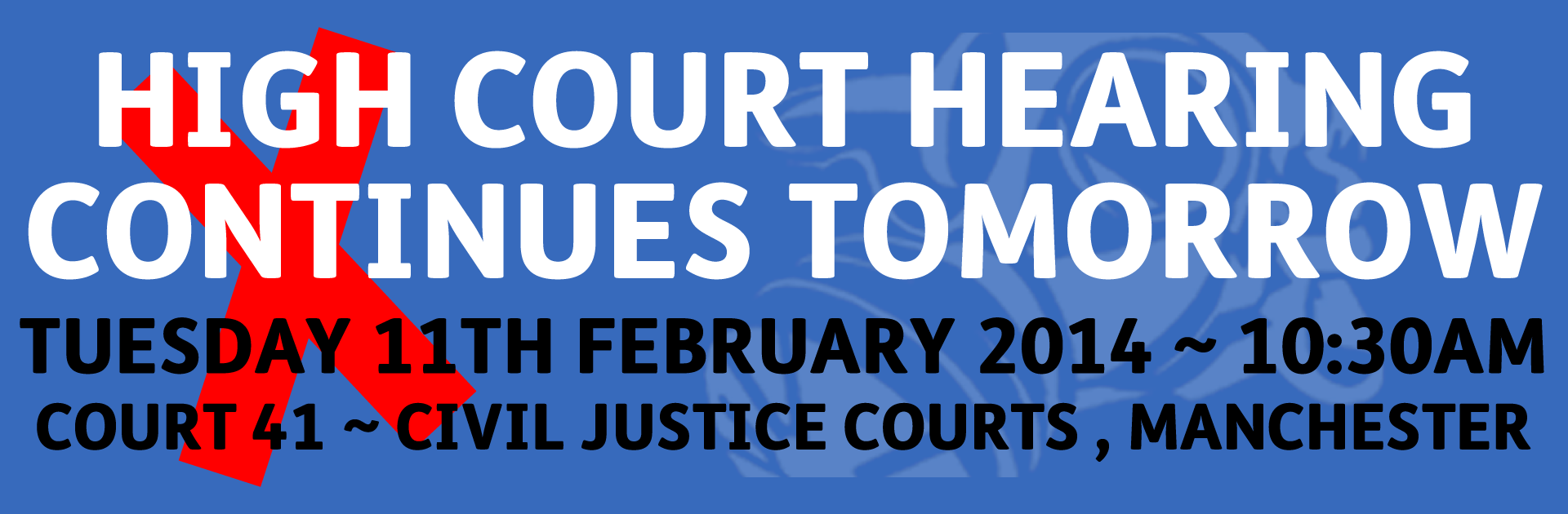
High Court Hearing Continues Tomorrow - Tuesday 11th February 2014 - 10:30am - Court 41, Civil Justice Courts, Manchester

DAY ONE UPDATE • High Court Challenge Hearing into Davyhulme Incinerator
About 20 members of the Breathe Clean Air Group and the local community turned up at Manchester Civil Courts of Justice on Day 1 of Trafford Council’s Appeal against Peel Energy’s controversial proposal for a waste wood incinerator plant.

The purpose of today was for a Judge to assess if the Government’s Inspector came to the right conclusion at the Public Inquiry in November 2012, and if the Secretary of State for Communities and Local Government, Eric Pickles, made the correct decision to allow planning permission for Peel’s dirty incinerator. Trafford Council, the Secretary of State and Peel were each represented by a barrister. Frustratingly, there was to be no evidence heard about the ill health effects of Biomass and burning wood and general waste.

Posted in Campaign Update, Energy, press release journalism, Upcoming Events | 2 Comments

Seminar Tues 11th Feb in #Manchester – “Glacier Sensitivity to #Climate Change in the Nepalese Himalaya”

ann-rowan

Dr Ann Rowan, Postdoctoral Research Fellow in the Department of Geography and Earth Sciences at Aberystwyth University answers questions about her work. She is giving a seminar tomorrow at Manchester Metropolitan University. It is free to attend and open to the public. It’s at 1pm. Room 2.10, Sandra Burslem Building.  Manchester Metropolitan University

1) You’re “a glacial geologist interested in glacier–climate relationships in mountainous regions with active tectonics”.  Is there a big academic community around that job description?  What areas of t’planet do you guys study, besides the Himalayas?
There’s a lot of scientists interested in many different aspects of glaciers, but most of the modelling community has typically been looked at large polar ice sheets rather than alpine glaciers such as those in the Himalaya, New Zealand, the Rockies, the Andes and of course the European Alps. Since the publication of the 2007 IPCC assessment report which mistakenly stated that glaciers in the Himalaya would vanish by 2035 made us realise how little we knew about these glaciers, many more glaciologists, geologists and Quaternary scientists have been studying this region.

2)  For the people who can’t get to your seminar next Tuesday, could you give a 100 word summary?
I’m going to be talking about the work my research group in Aberystwyth have been doing to try and develop 2-D glaciers models that we can use to predict how glaciers in Nepal will change over the next century or two. We are interested in how climate change over short time-scales (decades to centuries) affect the mass balance and ice flow of these glaciers, and what we can say about how individual glaciers behave. Many of the large Himalayan glaciers are covered with rock debris, which complicates their response to climate change and I’ll talk about how we are trying to quantify this. We’ve found that even using cutting-edge models, it’s difficult to describe how these glaciers will change with climate change, but we can quantify their sensitivity to climate. We think that its really important to collect detailed field data with which to validate numerical glacier models, and I’ll talk about our plans for fieldwork at the Khumbu Glacier in Nepal this spring. There will be lots of nice images of mountains and glaciers!

3) With respect to mountain glaciers, are the changes due to climate change happening quicker or slower than the models constructed in the 1990s and 2000s suggested?
Recent observations show that glaciers in the eastern Himalaya have lost mass more rapidly since the 1990s than earlier in the 20th Century, but its difficult for us to determine how quickly glaciers are changing as they respond to climate change more slowly than the climate change occurs. The glaciers we see today are still responding to the climate as it was 50 years ago or more. This lag between the climate changing and the glacier flowing into equilibrium with the climate is called the response time. On the other hand, models of glacier mass balance that don’t consider ice flow to equilibrium in this way show that even if no more climate change occurs from today, glaciers in the eastern Himalaya will lose up to 10% of their mass in future.

4) What are the human consequences of glacier changes likely to be in general?
Himalayan glaciers have been described as the “water towers of Asia” as they store water over the winter and release it each summer when the weather becomes warmer, feeding some of the biggest rivers on Earth—the Indus, the Ganges and the Bramaputra—which supply water to billions of people. Its possible that if they melt completely there will be droughts before the summer monsoon each year as it’s thought that this glacier melt bridges the gap between winter precipitation and the summer monsoon.

5) Given the way we are increasing our emissions, as a species, and the possibility of release of methane from permafrost, clathrates etc, will there be anything for glaciologists to study in 100 years?
That’s a good question! Climate change is not straightforward and over the next century we will see variations in how glaciers change in different parts of the world. At the moment, anthropogenic climate change has increased mean temperatures in the Northern Hemisphere which causes more snow to fall in winter in the Karakoram mountain range in Pakistan at the western end of the Himalaya. These Karakoram glaciers are actually getting larger while those to the east in India and Nepal are diminishing. This raises questions about how we might expect climate change to vary regionally in the future. Also, in 100 years, the polar ice sheets may have lost so much ice mass that parts of Greenland and Antarctic will resemble the Himalaya or the Alps, and there will be plenty of smaller glaciers for us to study where there were once large ice sheets.

6) Anything else you’d like to add?
Thanks for asking these questions and hope you enjoy my talk at MMU!

Posted in academia, Upcoming Events | Leave a comment