What’s a 2050 future look like? You do the maths! #DECC

A new 2050 Carbon Calculator from DECC is a promising tool but it hides weak ambition and side steps important political choices. Jonathan Atkinson reports from the British Energy Challenge roadshow that was held last Friday in Manchester Town Hall.
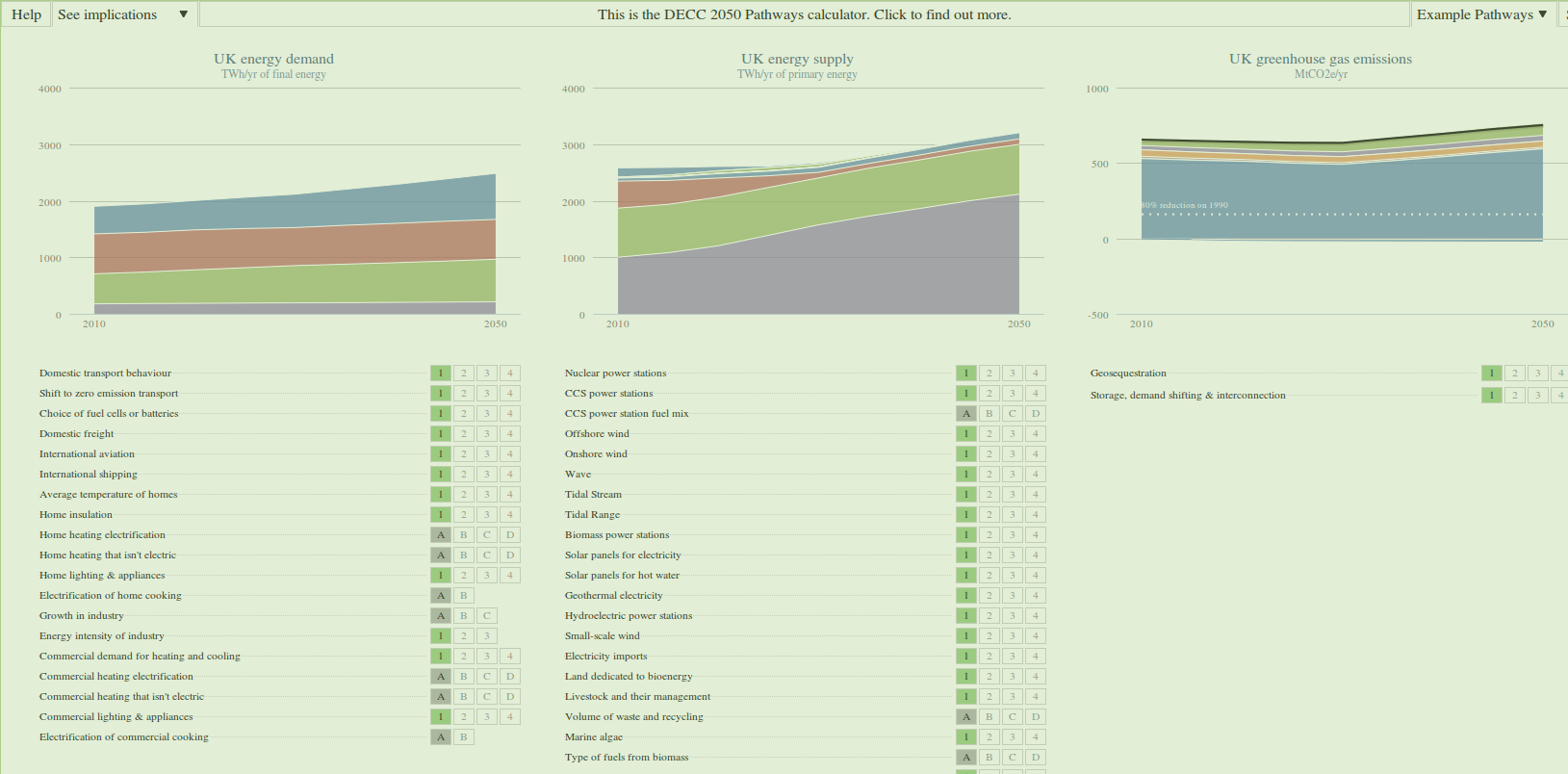
decccalculatorWhat does a low-carbon 2050 future look like? Many of us might have a view of what’s needed 35 year hence to mitigate and adapt to the challenges of climate change. Perhaps it’s a landscape of wind turbines or maybe a giant solar mirror orbiting the earth (or maybe some really crazy sci-fi stuff like carbon capture storage!).

While we can all argue about that future, the DECC 2050 calculator seeks to convert idle speculation in to hard fact and real dilemmas. At the Great British Energy Challenge event staged at Manchester Town Hall in association with the Low Carbon Hub, DECC sought get a view on our city’s 2050 future from a selection around 150 of Greater Manchester’s ‘green and the good’.

The tool (excitedly an open source project – whoop!) allows the user to model the two sides of the 2050 challenge: reducing energy demand on one side and increasing renewable and low-carbon energy generation on the other. With 42 ‘levers’ the user can create a series of energy scenarios, game playing to meet the UK’s energy needs and importantly its carbon emission reduction targets.

The beauty of the tool is that it distils the stark choices the UK faces. If the user attempts to close every power station whilst rejecting the need for more onshore turbines, carbon targets are met but the lights go out.

The event was ably facilitated by Mark Lynas and presented by DECC’s Chief Scientific Officer and the tool’s architect Professor David MacKay. He made for an engaging speaker, inviting participants to wrestle with an issue at a time, in small group discussions though as the session drifted this broke-down in to show of hands style voting from the room.

Mark Lynas also did a good job of facilitation on such a large-scale though, as a well-known nuclear power advocate, his neutrality slipped when discussion turned to the pros and cons of new nuclear power stations (‘nukes’ as McKay termed them in his street-scientist language – he also exclaimed ‘Yo!’ at one point).

It’s that perceived neutrality that gets to heart of the weakness in the calculator. As with many areas of climate science it attempts to create an objective, data-driven decision-making tool from what are essentially political decisions.

How much of our modern Western lifestyle are we prepared to compromise for a climate safe future? What risks are we prepared to make with the technology we utilise in the future? Who will control the energy supply and generation resources in 2050? How equitable will the transition to 2050 be and who will bear the burden of this transition?

The problem with the calculator is that it seeks bury these choices rather than expose them and only having its inventor present in the room with experts the likes of Kevin Anderson, Michael O’Doherty, John Broderick, Charlie Baker etc etc allowed these to be revealed.

Most shocking of all is the calculator’s lack of ambition, in other words the extent to which the ‘levers’ can be shifted, for example some of the most ambitious scenarios included:
– Properties retrofitted to 50% savings by 2050 (80%+ is ambitious)
– Cycling up to 5% of total journeys by 2050 (it’s at 36% in Copenhagen today)
– Total journeys to only stabilise by 2050 (no room for better planning, live/work scenarios?)
– Air travel to increase by 86% by 2050 (as a best case scenario!)

I’m all for being pragmatic, and the calculator allows you to be modest or pessimistic of your view of life in the year 2050, but to set these as best-case benchmarks for 35 years of progress is deeply depressing.

But lowered ambitions on energy demand reduction have the knock-on effect of the need for relatively more generation. Inevitably, if you can’t reduce demand you need more nuclear power stations OR huge amounts of renewables (onshore wind equivalent to 1/3 the land mass of Wales) OR we hang our hopes on experimental technology. Personally I am very dubious carbon capture storage will ever be a viable technology let alone be filling up empty North Sea fields with liquid carbon dioxide at a rate four times faster than it was emptied of oil (maybe on these grounds Nuclear Fusion technology from sea water should have been included!).

When highlighted, McKay was sanguine on these points, maintaining it was an achievement that the calculator ever made it through Whitehall departments at all and that potential existed to influence future iterations and ambitions.

Given its open source nature it should be relatively easy for more progressive types to open up the bonnet and demonstrate what a super-powered, low-carbon 2050 juggernaut might look like. Maybe at that point we can start to discuss some of the crucial decisions that lie beneath these decisions.

As with much in the movement to limit climate change, it feels like the government have started something but that it’s up to us to finish the job and reach its full potential. Let’s just hope we manage to do that before we end up with a new nuclear power time bomb or billions more wasted on dubious techno-fixes.

Posted in Energy, Event reports | Tagged , | 3 Comments

“Dark Snow falls in Copenhagen”; #food #climate and the #Arctic

Manchester chef Jules Bagnoli reports from an inspiring gathering of foodies in Denmark.

IMG_3438When Nobel award winning Professor Jason Box bounced onto MAD3‘s woodland stage, freshly mown by the teeth of the previous speaker, forager Roland Rittman, the mainly chef crowd confidently had no idea what to expect next. Eyes narrowed at slide after slide of stark scarred ice images, melt rate graphs and magnified water molecules charted up to a 21 metre sea level rise in coming centuries – and the effect on a food industry in turn up to 40% responsible for climate change was not lost.

For those who hadn’t yet found their dark foam cushions and were already shifting on the circus plank seats, comfort shrank further at the sight of 80 square kilometres of the Jakobshavn glacier crumbling on screen. Where the world’s fastest glacier is going – seaward, and at 180 foot a year – the rest of the Greenland’s ancient ice is following, and soon.

Rather than kicking his heels writing research bids, Box launched Dark Snow, the first DIY, crowd-funded climate change expedition to get him back to Greenland for the 24th time in 20 years to ‘answer the ‘burning question’ – how much does wildfire and industrial soot darken the ice, increasing melt?’. As Rolling Stone magazine puts it, “There’s no place on earth that’s changing faster – and no place where change matters more than Greenland.” The Arctic is melting at a record pace, much faster than heat alone would predict. Box has radically linked the accelerating Greenland 2012 melt directly to last years unprecedented wildfires in a ‘unified theory’ of glaciology.

The melt has increased annual sea level rises from 0.4mm to 0.8mm from 2000-6 and 2006-12. Doing the compound maths, accelerating melt rates leave the seas 7 metres higher by the end of this century. And that top end 2 metre is laughably conservative, says Box.

While 9 times smaller than the Arctic, this little cousin with its 3.5km ice plate alone could raise sea levels one metre if returned to rock. And with the last decade the warmest in 600 years, this is on the cards. Some relevant facts here. First, the ‘hockey stick’ Copenhagen Diagnosis of 2009 places warming well past the 2% ‘guardrail’ with up to 8% change projected. Second, ‘global-warming godfather’ James Hansen records the highest temperature increases the higher up the globe you go – maybe 7.5% by 2099 , as luck would not have it, on our Arctic ‘roof’. Third, as ice melts it’s sharp reflective edges round off, absorbing not reflecting heat. Four, air-borne wildfire and power station soot, sometimes funnelled due North by changing gulf stream pattern, has darkened snow by up to 7% in 7 years – the negative feedback Albedo effect. And as Hansen had suggested in 2003 that even a 2% dirt-related drop in reflectivity has the same impact as twice as much C02 in the atmosphere, we may be looking at more dangers than warming alone.

Noting the relatively recent birth of sustainability in 1987 as a source of hope, Professor Box ended paradoxically lightly for the data dumbstruck crowd, noting that if the food movement made changes, then we could rebalance. Especially if we get down on our knees and graze, like Roland.

See #darksnow

Jules Bagnoli

Posted in Arctic | Tagged | 2 Comments

Smarter driving on the road to ruin – #Manchester #climate #toptrumps

Manchester City Council’s carbon emissions are, even from the false baseline of 2009/10, climbing.  And so to help them achieve their rubbery targets they proclaim that they will finally introduce that one day programme of training that they designed last year…  #Senseofurgency??

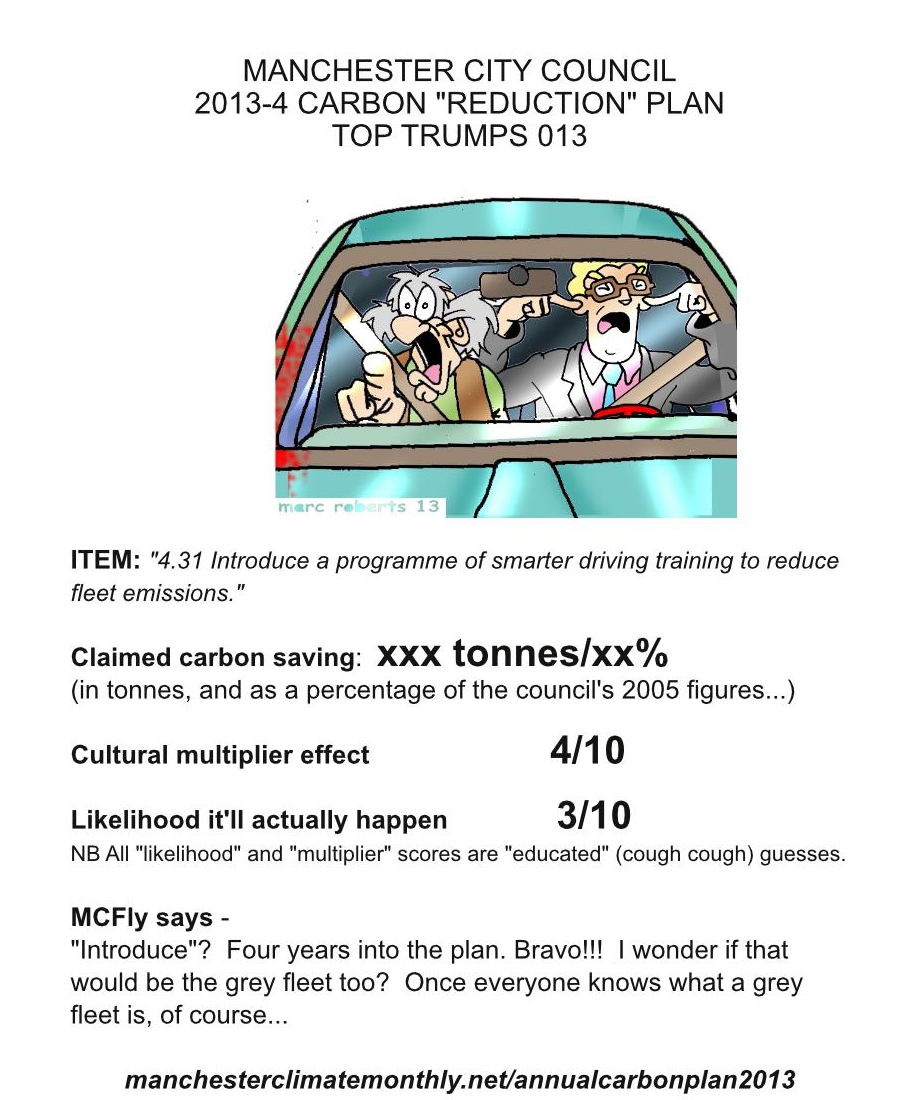
toptrump013What it says

4.31Introduce a programme of smarter driving training to reduce fleet emissions.

What was said last year (direct quote from 2012/13 plan)

5.3.5 Council fleet
The Council will lead by ensuring improved performance of the Council’s fleet to
reduce emissions, including:
 Identifying opportunities for trialling and rolling out alternative fuels, locally
produced bio fuels and electric vehicles within the Council’s, and partners’, own
fleets
 Recommending speed limiting vehicles to 60mph whenever practicable
 Design 1 day training programme on fuel efficiency

MCFly’s verdict (Is it ambitious enough, is it likely to happen, is this meaningless gibberish/stuff that they were already doing designed to pad out a thin plan, what questions about this “action” are yet to be answered etc etc)

So, did they design this 1 day training programme?  Did anyone go on it?  Was there feedback collected?  Were impacts measured in any way, shape or form?   Enquiring and scrutinising minds would like to know. I feel a FOIA coming on…

What would a proper three year plan around this item look like? It would start with everyone on the Environmental Strategy Team knowing what grey fleet was.  For starters.

How can culture be shifted around this item?

Any takers?

What else should the Council be doing around this item? Any takers?

Other info n/a

Phone numbers and emails of the organisations n/a

BACKGROUND –

In 2012 Manchester City Council aimed for a 10% reduction in its own emissions. In July 2013 it claimed a 7% reduction. It was able to do this because responsibility for traffic lights moved from its books. Looking at everything else (buildings, transport) emissions went … UP by 1.8%.
So, building on that extremely strong base, the Council’s bureaucrats have proposed a series of actions to help them hit a new “7%” target. You can see the complete list here. Manchester Climate Monthly is going to take a closer look at each and every one of these 44 “actions.”

Twice a week, on “Annual Plan Tuesdays” and “Annual Plan Thursdays” we will be asking a few straightforward questions about each item. And to illustrate each post, we (Marc Hudson and Marc Roberts) are devising “Top Trump” cards for all of these actions. At two a week it will take you until December or so to collect the whole set… So far can’t give you a percentage on the 2005 figure, since the Council has been going off its 2009/10 baseline, in direct contradiction of its own plan.

And throughout all of this, we are asking YOU, the reader, and council tax payer (probably), what YOU think the Council should REALLY be doing… Because next year the council moves to a “three year plan.” And given what we already know of the low quality of the carbon plans and their implementation so far, we, the citizens, will be complicit if we remain silent…

Posted in Climate Change Action Plan, Democratic deficit, Manchester City Council | Tagged | 1 Comment

Competition: “Tomorrow’s City” #students #rtpi

rtpicompetition

Posted in Competitions | Leave a comment

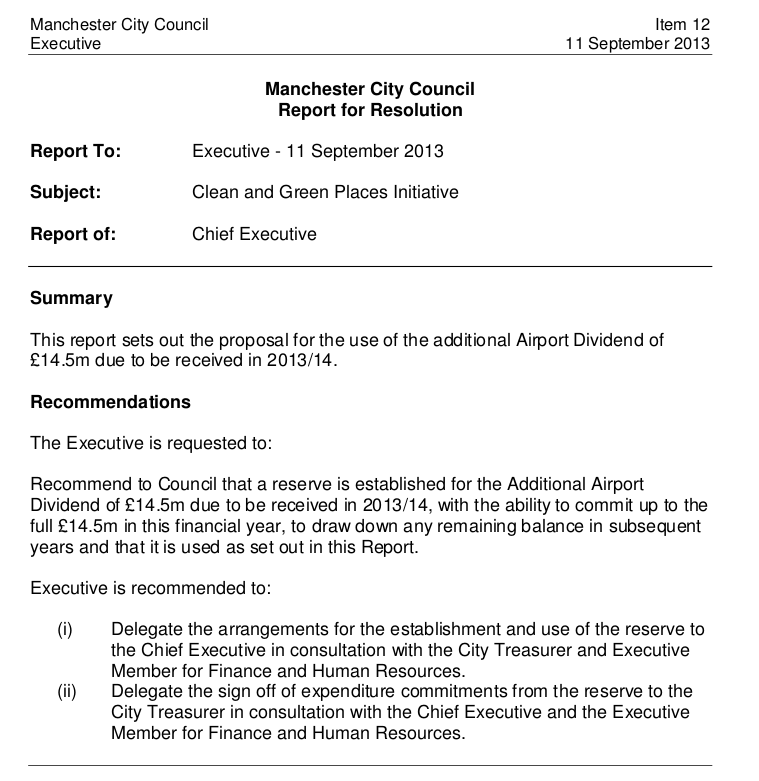
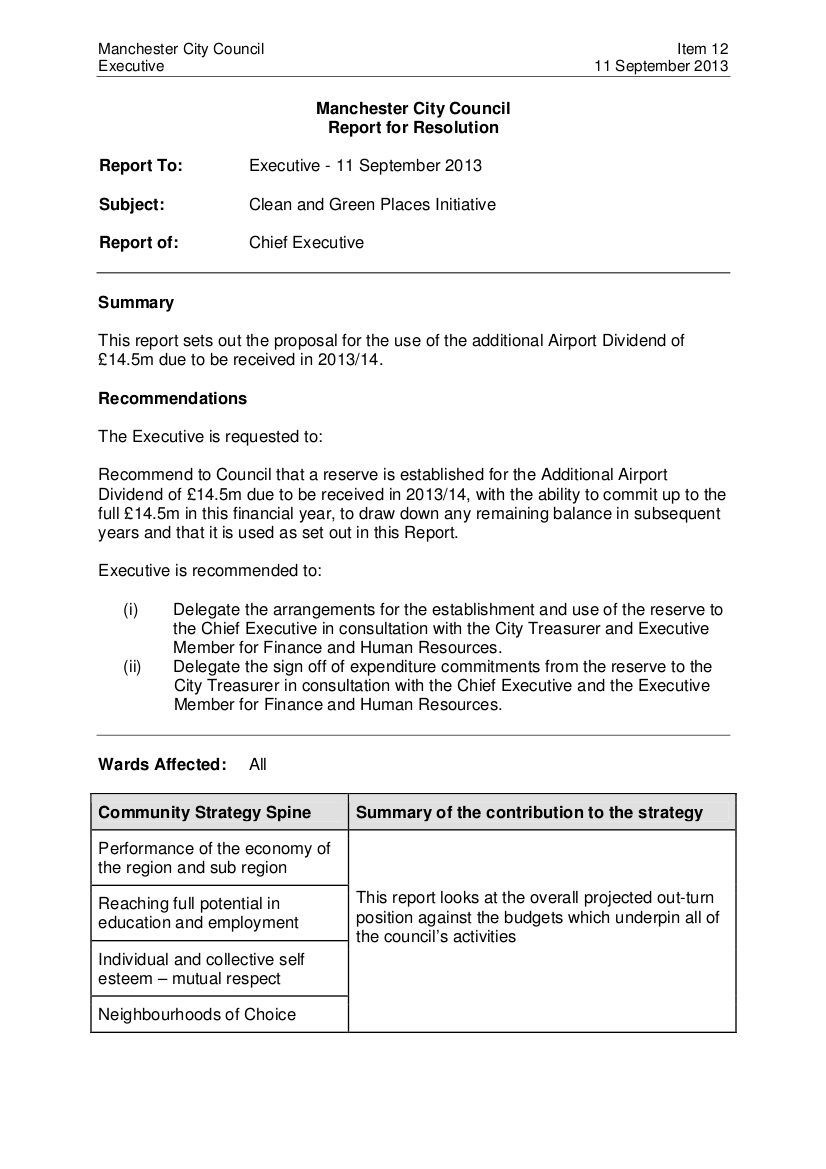
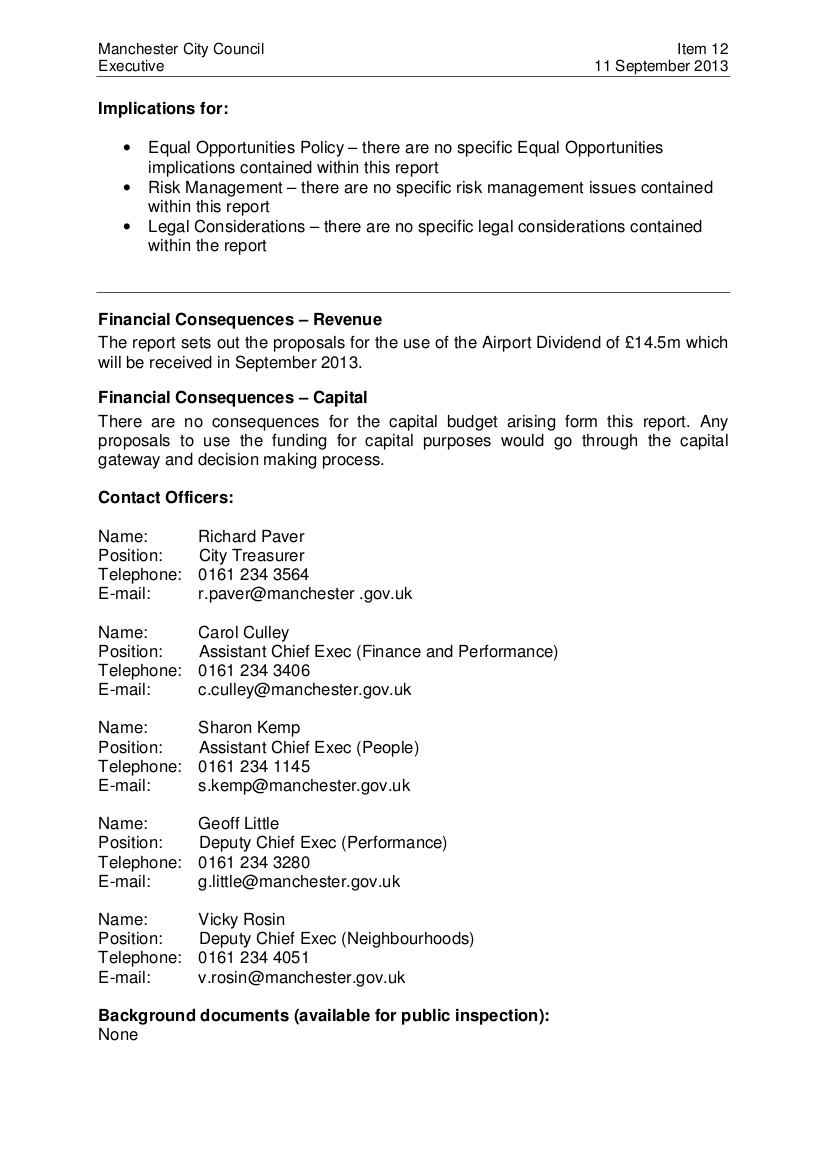
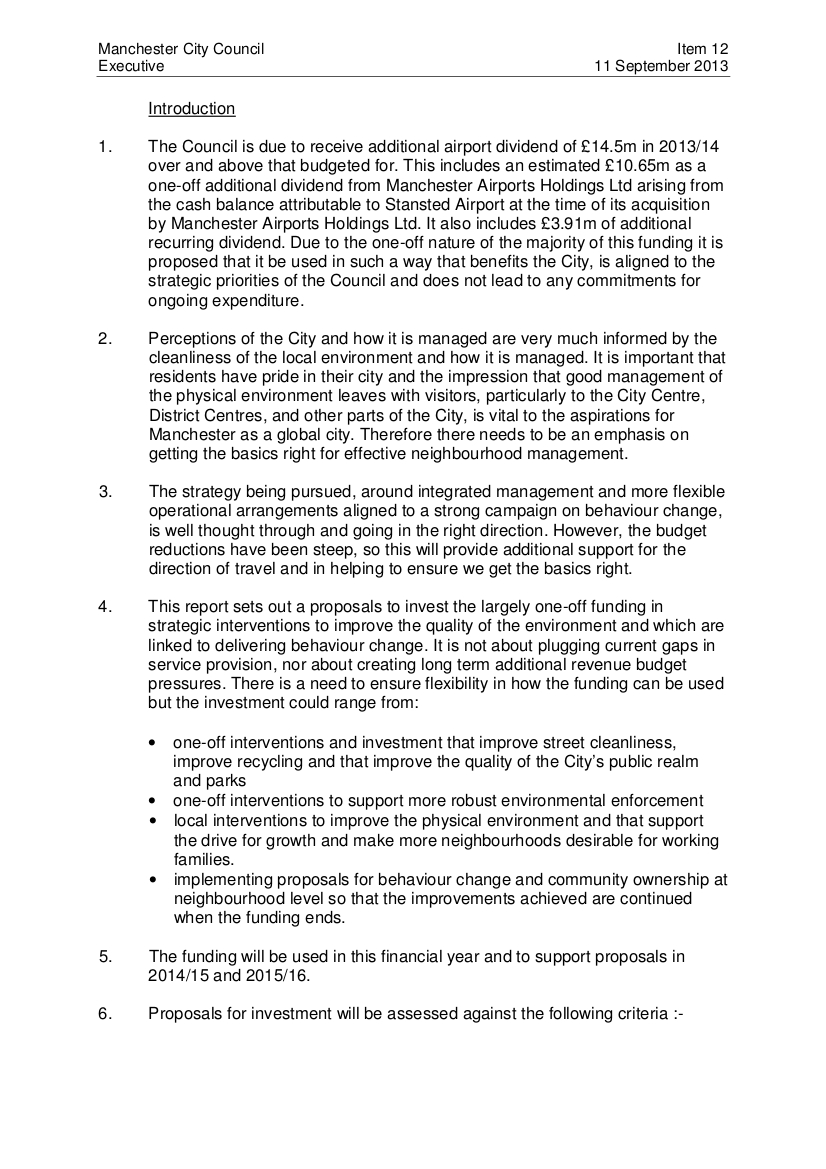
£14.5m for a “Clean and Green” #Manchester. Libraries and day care centres and stuff? Not so much

[UPDATE 11th September; there is now an online petition about having a public consultation on this £14.5 million.  You can see (and sign) it here on Manchester City Council’s website.]

Yeah, you read that right.  On Wednesday September 11th the Executive (top 8 councillors) of Manchester City Council will be discussing a report on the “Clean and Green Places Initiative” (scroll to the end of the article for the full report).

Thanks to Manchester Airports Group (35%-owned by the Council) snaffling Stansted, and a bigger than anticipated dividend, the Council has more money than it expected. But it’s only fourteen and a half million pounds, so there are Tough Decisions to be made.

Re-open libraries? Don’t be silly.  Daycare centres? Please don’t be silly.  Alleviate council tax burdens on the most vulnerable? Look, for the last time, don’t be silly.  A new and properly-implemented-this-time Carbon Reduction and Innovation Fund?  That’s crazy talk.

cleandgreenplacesManchester’s branding matters more. After all, we have it on good authority that “in a globalised world, we are what people think we are – reputation is the only thing that matters“.  According to the report – which will be discussed by Executive at around 11,15am-ish in Committee Room 11 of the Town Hall- and we’ve added emphasis;

“Perceptions of the City and how it is managed are very much informed by the cleanliness of the local environment and how it is managed. It is important that residents have pride in their city and the impression that good management of the physical environment leaves with visitors, particularly to the City Centre, District Centres, and other parts of the City, is vital to the aspirations for Manchester as a global city. Therefore there needs to be an emphasis on getting the basics right for effective neighbourhood management.”

What does this mean in practice (again, emphasis added)

There is a need to ensure flexibility in how the funding can be used but the investment could range from:
• one-off interventions and investment that improve street cleanliness,improve recycling and that improve the quality of the City’s public realm and parks
• one-off interventions to support more robust environmental enforcement
• local interventions to improve the physical environment and that support the drive for growth and make more neighbourhoods desirable for working families.
• implementing proposals for behaviour change and community ownership at neighbourhood level so that the improvements achieved are continued when the funding ends.

Fourteen million quid is, of course, quite a lot of money, so there will be the usual scrutiny –

“Recommendations for the use of the fund will be made at Executive Member level against the above criteria [of “visibility,” “speed of implementation,” “sustainability” and “community involvement.”] To ensure there is appropriate scrutiny it is recommended that sign off of the proposals for the use of the fund will be made by the City Treasurer in consultation with the Chief Executive and the Executive Member for Finance and Human Resources. Any decisions that are key decisions or will involve the commitment of capital expenditure will follow the appropriate process.”

I am sure all those people who are now even poorer than they were before the Coalition government started dismantling the welfare state will be happy that they can be destitute in a cleaner, “greener” and more visitor-friendly city.

Marc Hudson
mcmonthly@gmail.com

PS Here’s the report in full. It hasn’t, to my knowledge, been to any of the Council’s six scrutiny committees. Talk about Executive Decisions…

UPDATE 10.35 am, 9/9/13:  An extremely efficient and helpful Council officer* has explained  “The key decision on the setting up of the fund has to be taken by the full Council. All Councillors will be able to consider it and express their views on this proposal at the Council meeting.” [The next Council meeting is on Weds 9th October.]
* That’s not sarcasm!

cleanandgreeninitiative1 cleanandgreeninitiative2 cleanandgreeninitiative3

cleanandgreeninitiative4

Posted in Democratic deficit, Manchester Airport, Manchester City Council | 10 Comments

My 5 minute “Is a low carbon energy future possible?” spiel #Manchester #doomed #climate

I witnessed a catastrophe on Thursday night (5th September), and then wasted several hours of my life (no refund possible) writing about it.

In that piece, mostly a run-down (harhar) of what each panellist said, I briefly imagined myself as the compere.  Here in this very crude video I imagine myself a panellist* trying to answer the question, but choosing instead to the somewhat easier question “is a human future possible?”

With thanks to to Soundjay for the free clip of people talking…

* For unaccountable reasons, I never get asked to be one.  Go figure.

Here’s the script, cobbled together in twenty minutes.. At one point in the narration I have stumbled and imply that oceans were not sinks but sources. Meh, I couldn’t be bothered to re-record (all in one take, by the way – I am getting less bad at this…)

We need to thicken the network. So please turn to someone you don’t know – next to you, in front of you, behind you. For ONE of my five minutes, you are going to swap names and ideas for how your city or town could be greener.

[give ’em a minute to come up with ideas/swap names etc]

“Is a low carbon energy future possible?” Did Obama shoot JFK? Well, it’s theoretically possible, but no-one seriously believes it.

The numbers don’t add up to anything other than catastrophe. The amount of carbon dioxide in the atmosphere is unprecedented. 400ppm and climbing. As the economy grows, we emit 3% carbon every year. Meanwhile the sinks that take some carbon back down – the oceans and the forests – are failing rapidly. Our politicians talk, our businessmen say “you first,” our social movements are dead as a dodo. We’ll hit 3 or 4 degrees of warming by the time the youngest people in this room are senile. Human civilisation will collapse after a series of grotesque wars that will make the Russian Front in World War 2 a paradise by comparison.

Is a low carbon energy future possible? Prediction is very difficult, especially about the future.

Perhaps climate sensitivity is lower than we thought, and we will get lucky, and we will wake the hell up and start using our undoubted brains to replace our rockets and guns with low carbon machines. Perhaps. Pessimism of the intellect and optimism of the will. But really?

Who in this room thinks we’re doomed?

Okay, who in this room thinks our political and economic lords and masters will act in the absence of mass pressure from below?
Who in this room did anything to help build that mass pressure from below today?
Who in this room has been using their historically unprecedented freedoms – of speech, of assembly, of information, of time, expensive university education, passion to help build that mass pressure? Who did that every day last week, last month, last year? Who will do that every day of next week, next month, next year?
If the answer is no, then the answer is no; a low carbon energy future is not possible.

You can fool yourself if you like with your pretty incremental ideas of “transitional” shale gas, or stuffing all the carbon in the North Sea, or building nuclear or space mirrors. Those are pretty stories, wouldn’t it be nice to believe them.

Have you written to your councillor? Have you lobbied her or him? Have you attended council meetings to protest the triumph of rhetoric over reality?
Have you written to your MP? Have you written to every member of the Cabinet? Have you written to every member of the Shadow Cabinet?
Have you joined Friends of the Earth, Greenpeace and groups more radical?
Have you boycotted carbon intensive products, and told the companies why?
Have you renounced flying in all but the most extreme emergencies?
Have you absolutely minimised your car use?
Have you pressured your place of worship, your place of work about their business as usual attitudes to carbon intensive work?
Have you talked to your friends and neighbours about how you can all help each other to learn about the challenges ahead, and collectively reduce your carbon footprints and increase your political footprints. Have you helped each other past the normal and understandable emotions of fear and horror that cause both active denial – rare and irrelevant – and its much more dangerous shadow, quiescence?
Have you made sure your campaigning group learns from its successes and failures, and welcomes and integrates – rather than alienates – potential members?

No. You haven’t. Unless you’re more of a saint than me. I’ve done hardly any of those things. #hypocrite.

No. The answer is no. No future for you and me.

We’re toast. It’s over. Probably was by ’88. In the words of the great political theorist Jarvis Cocker, dance and drink and screw, cos there’s nothing else to do. Don’t ask me what you should say to your kids, as they look at you pleading for you to make it better, cos you can’t.
Any questions?

Posted in Energy, inspire, youtubes | 2 Comments

Free Environmental Law seminar Thurs 26th September #Manchester

Join a team of specialist barristers from Francis Taylor Building in Manchester for a clear and user-friendly explanation of how you can use environmental law to protect your local area.

Friends’  Meeting House, 6 Mount St, M2 5NS; Thursday 26 September, 2pm-5pm.

You can book a place  and get more information, including a flyer with details of the event, from reception@ftb.eu.com.

Places are free but limited, so book early!

Posted in Upcoming Events | Leave a comment

International: Black families still counting the cost of Katrina

Sigh. From Ebony magazine;

Today, New Orleans is in a much ‘better’ place with its airport renovated, restaurants thriving, and new schools and medical facilities being built. However, many of the city’s low-income, Black families are still dealing with problems directly related to the storm. Professor Beverly Wright of Loyola University New Orleans explained that “pre-storm vulnerabilities continue to limit the participation of thousands of disadvantaged individuals and communities in the after-storm reconstruction, rebuilding, and recovery. In these communities, days of hurt and loss have become years of grief, dislocation, and displacement….”

Tracey Ross is a Senior Policy Analyst at the Center for American Progress in Washington, DC. She is a graduate of UC Berkeley and completed her Master’s in Public Affairs from Princeton University. Her writing focuses on women, race, and urban policy.

Read more at EBONY
Follow us: @EbonyMag on Twitter | EbonyMag on Facebook
Posted in Adaptation, International | Leave a comment

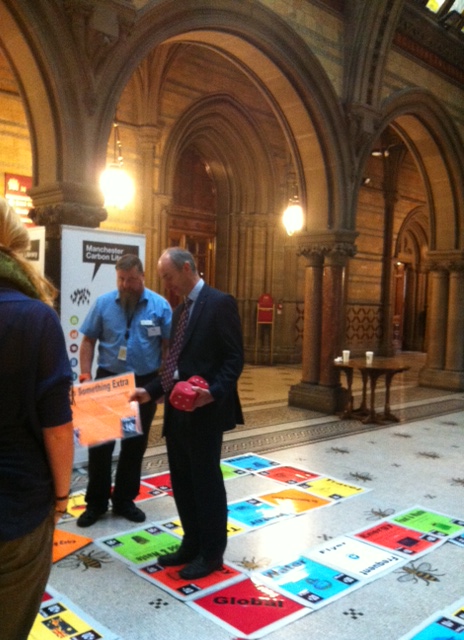
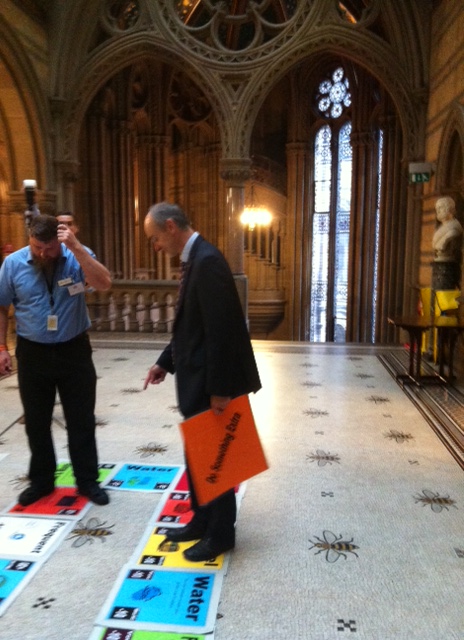
Professor David MacKay plays games of skill and chance in #Manchester #DECC

Professor David McKay is the chief scientific advisor for the Department of Energy and Climate Change.  He is the author of the seminal “Sustainable Energy- Without the Hot Air” and “famed for his scrupulous approach.”

photoStill, even the smartest of us have to “chillax” occasionally, and at Manchester Town Hall yesterday, for the “British Energy Challenge” the good professor found time to play a snakes-and-ladders carbon game devised borrowed by Manchester’s Cooler Projects from its inventors St Peter’s High in Gorton who devised and manufactured the game. “There’s an online version too – that they’re dead keen for people to use.”] It’s part of their “Carbon Literacy” work and I’m sure if you ask nicely you can play too. [Thanks to Phil Korbel for the correct info- see comment below.]

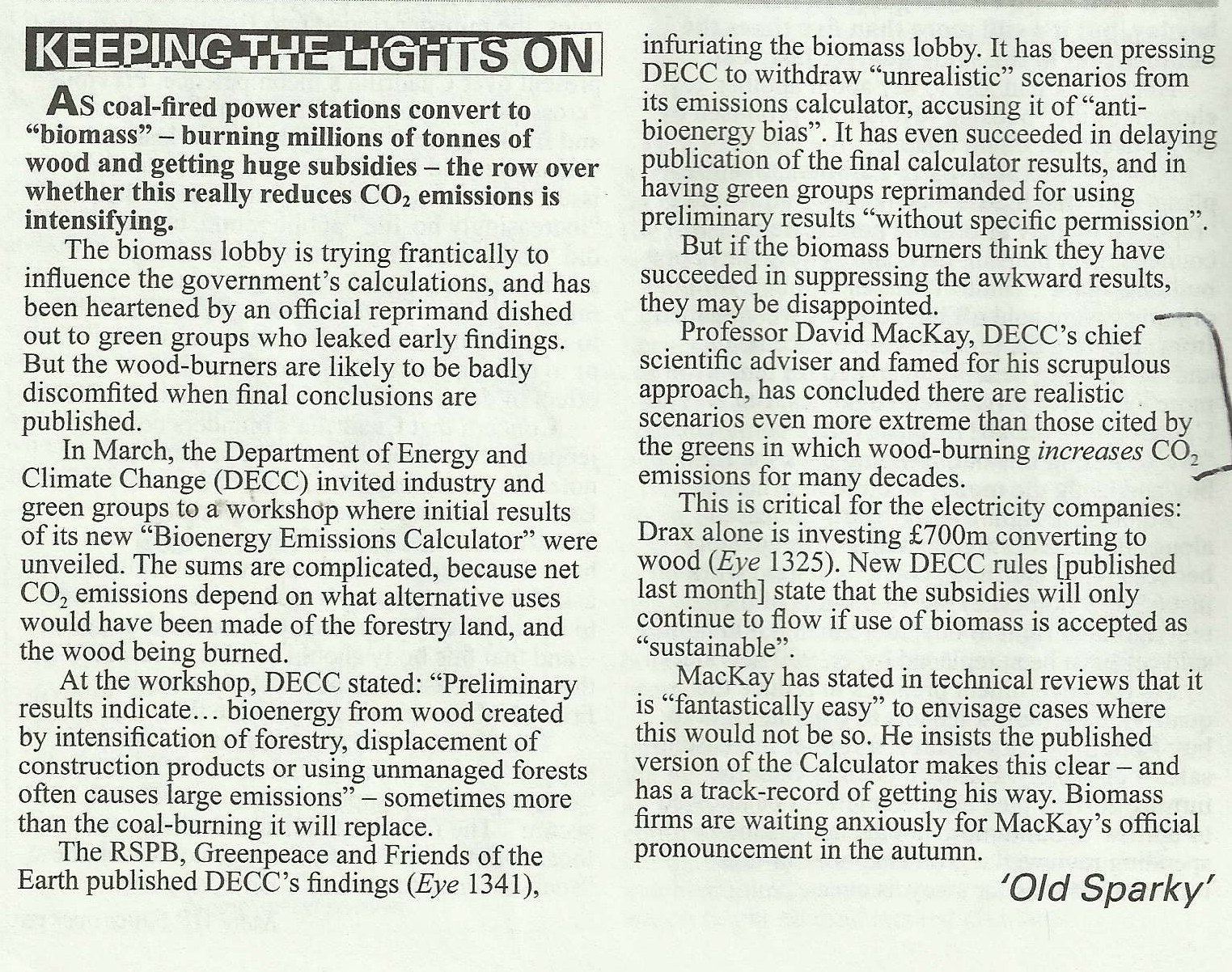
Below the pap-shots that our intrepid photographer took you will find a scan of an interesting article about biomass and subsidies, with a mention of the Prof.  It’s from the latest issue of Private Eye. If you want to understand what the hell is going on in this country, you have to read this fortnightly organ.

photo(1)photo(2)

privateeyesept2013

Posted in Energy | Tagged , , , , , | 3 Comments

Peer-review group says #Manchester Low Carbon Hub has “low direct involvement of the citizens” #PopeStillCatholic

A group of people who came to Manchester from Italy, Spain and Netherlands have spotted that the “Low Carbon Hub” has “low direct involvement of the citizens” and “weak direct involvement of SMEs.”

Their feedback, contained in this report, which  will be discussed on Friday 6th of September at a meeting that somewhat proves their point – a members-of-the-public-are-excluded gathering at Manchester Town Hall.  MCFly has been reliably informed that the Irony Police will be in attendance to enforce this exclusion.

weaknesses

The team, which came to Manchester in July for an “Interreg IVC “Regions 4
Green Growth” Peer review visit to Greater Manchester” was led by representatives from Maramures region in Romania complemented by partners from; Lazio (Italy), Valencia (Spain) and Nord Brabant (Netherlands) and the Association of European Regions in Strasbourg.

Marc Hudson
mcmonthly@gmail.com

UPDATE – The papers for this meeting, which you can’t attend, are now up.

Posted in AGMA, Democratic deficit, Low Carbon Hub | 2 Comments