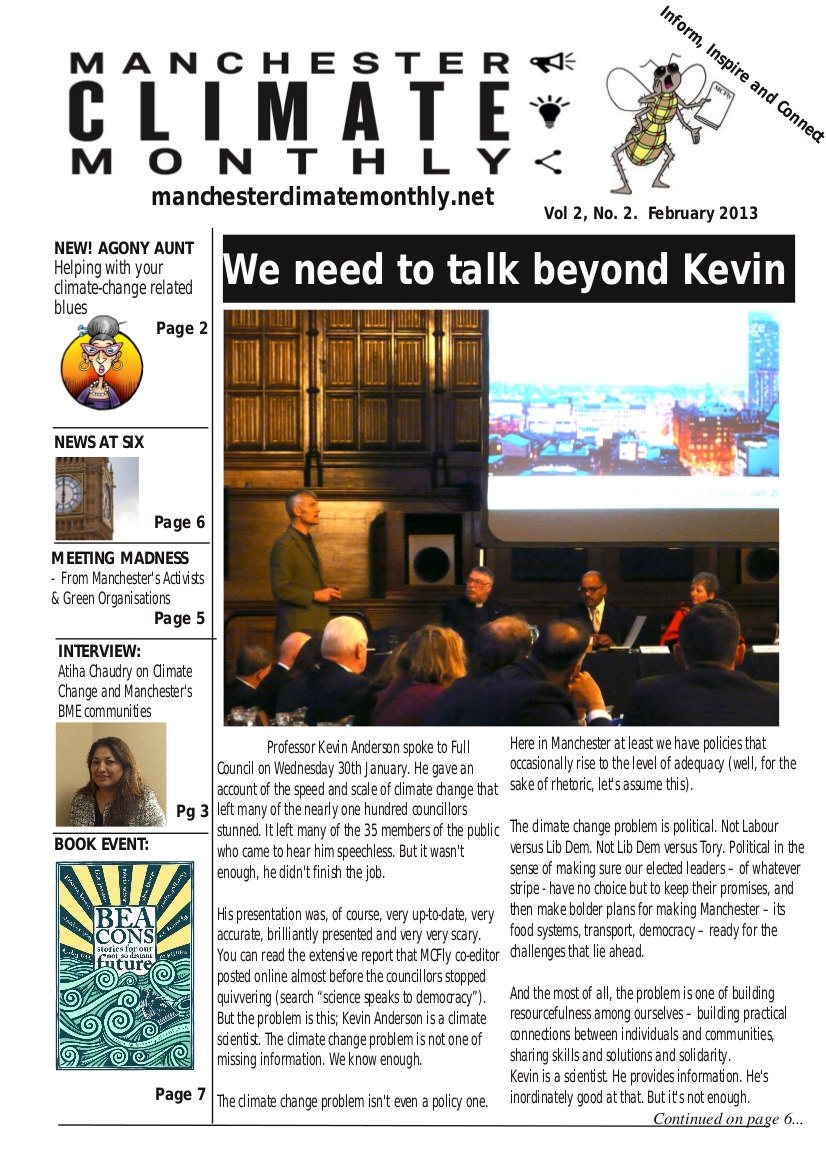
MCFly reporter Laurence Menhinick attended the recent “conference”, and has this to say. See here for the first account we published)
Here is a quick roundup using the new five themes from the NESS1 themes:
Some changes:
First, it was much shorter [than previous years], but timekeeping was erratic (the second workshop suffered in that respect), and there were fewer opportunities to mingle and meet or indeed ask questions…
Second, I was actually pleased to sit at round tables for the workshops– no repeat of last years’ large groups scattered in corners and talking over each other’s noise, thank goodness.
Now, there were also significant shift to this conference: not only with the decision by the Steering Group to adapt the 5 themes from the Greater Manchester Climate Change Strategy, but also to broaden our perspective by opening up to “The Northern Way”. Hmm, delegates were Mancunian stakeholders, here for a Mancunian effort and solutions, but this is not just about Manchester any more but also Liverpool and Leeds and their own visions and plans.
Some presentations:
*The slides from the presentations, together with transcript have already been uploaded here by the Chairman- I must admit this is very efficient! *
– Chairman Steve Connor and Sir Richard Leese (slides 1-65) introduced in turn the Refresh updated document and all good things Manchester (the MACF stakeholder approach, the Green Deal, the GMCA, the City Deal, the Low Carbon Hub Board, the GMCCS, the Carbon Literacy Project)
– Mark Knowles, Head of Low Carbon Economy Liverpool City Region, Local Enterprise Partnership, (slides 66 – 84) who introduced an impressive renewable energy emphasis in his area, including 4.2GW capacity offshore wind energy hub in the Irish sea, complete with skills development and job opportunities. Obviously Liverpool have found their niche as he also mentioned the untapped tidal and wave energy potential and potential hydrogen economy Runcorn could even play a part in.
– Melanie Taylor, Green Economy Lead, Leeds City Region (slides 84-end) on her region’s sustainable approach. This presentation was dealing with the challenges relating to such a widely spread out area with a 40% emission reduction target by 2020- she introduced the green economy agenda supporting retrofitting and low carbon agenda as well as the adaptation opportunities Leeds can develop. (see the Green Infrastructure Strategy for info)
Some news:
– The plan has been updated using the five GMCCS themes mentioned earlier: transport, green and blue infrastructure, sustainable consumption and production, buildings and energy with TCF ( total carbon footprint) interim targets set.
– On the Environment Agency’s Carbon Reduction Commitment performance league table, ranking Energy Efficiency Schemes in the UK, MCC has come #1 public sector organisation and 4th overall based on 2097 participants. (when the Department of Energy and Climate Change is in 153rd place…)
Some workshops:
The workshops themes were the same as above, and we were asked to answer a specific set of questions:
What are group members currently doing in this area?
What do they feel inspired to do in addition?
What barriers need to be overcome to achieve this?
A consideration of the resources available.
Followed a hands-on creative session ( read play dough, glue, pompons, pipe cleaners and feathers art set here) to demonstrate how overcoming barriers will be achieved.
“Buildings”, were I was, was full of really interesting people, we had a great presentation by Steve from Northwards Housing followed by interesting comments but overall we all knew the same barriers and struggled to find a vision beyond networking… Interestingly the second buildings workshop came up with a very similar same play dough model as we did. Coincidence? I wonder. Short of plagiarism, I am starting to wonder if our answers were not stirred in the same direction…
“Green and blue” was rushed as something along the way had taken too long; again good attendees (you must admit there were some really interesting people there) but discussions still inconclusive. At least we did create our artwork, which will be appearing in a gallery near you I’m sure.
Some… things missing:
– People disappeared between the first and second workshop session, there were a lot of empty chairs at each table (ours had 5/12 empty)
– Overall discussions of the whole group were missing2: we could have debated solutions to reach isolated communities, issues surrounding the airport and air transport emissions, re-localisation of the economy, even the actual process of the MACF. No Q&A session either.
– “The man on the 42 bus” ie the public, community groups (faith groups, health providers, citizen associations), students, manufacturers, bankers… or well known local environmental bloggers 3
Finally as I reflect on the day and write this summary, I am suddenly stricken with the vision of having to explain the relevance of our peculiar childish displays to islanders in the Maldives or other drought stricken poor souls facing the full force of climate change as I speak- trying to convey how on that day, that was how I made plans and discussed how to tackle the biggest threat to mankind with pipe cleaners.
Life’s most persistent and urgent question then4…
Laurence Menhinick
Footnotes
1 New Events Summary Strategy
2 I left 8 minutes early so maybe all of this happened in the last 8 minutes.
3 Although I can’t check who was present as I didn’t seem to get the list of attendees in my plan pack, maybe others did?
4“Life’s most persistent and urgent question is, ‘What are you doing for others?” Martin Luther King Jr.

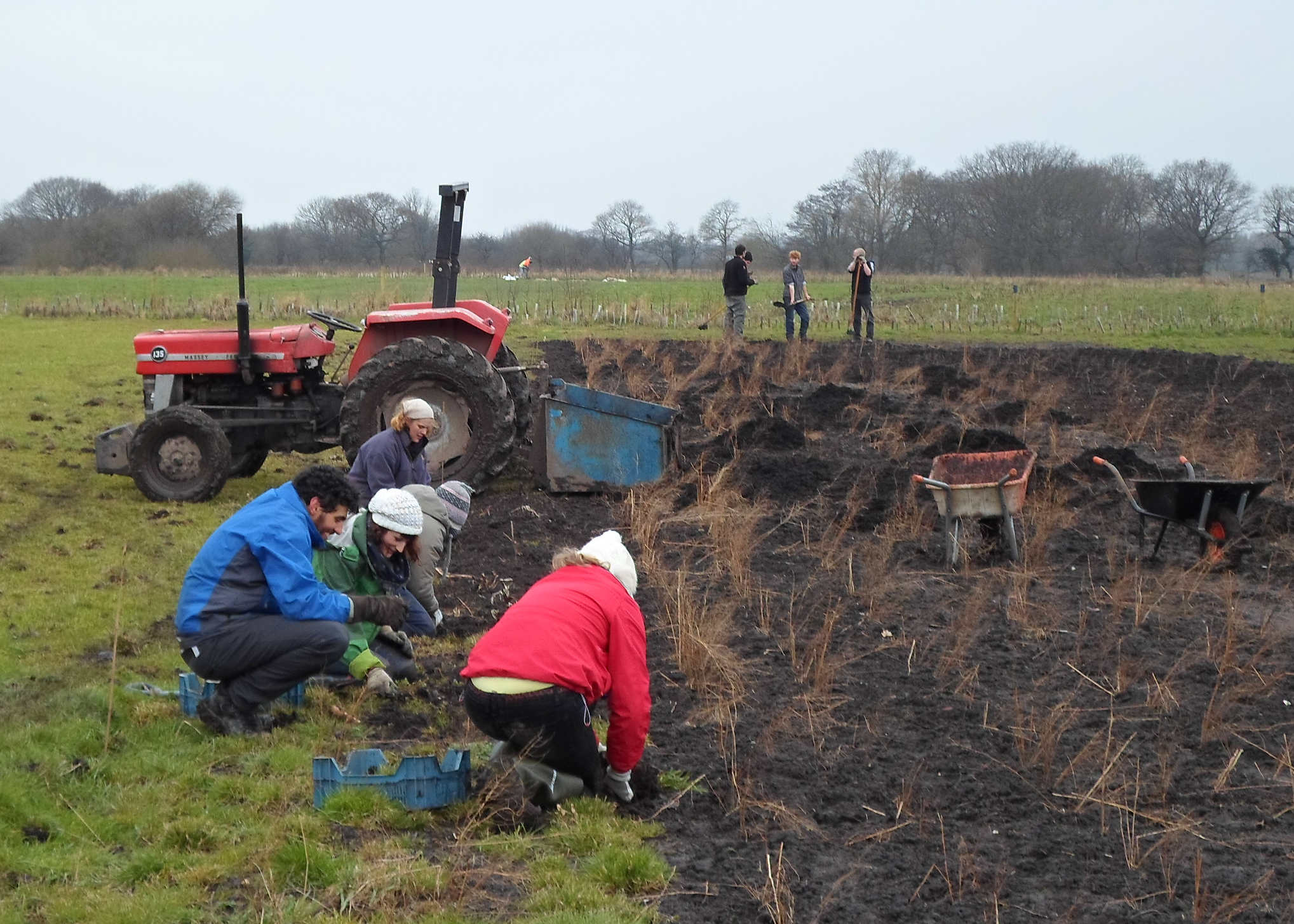 There are two jobs that it would be great to get done. One is to resurface the areas around the polytunnels with mypex covering (a weed suppressant sheet), and the second is to renovate (digging, weeding, pruning, cutting, clearing etc.)an area that they want to use for experimenting with new crops. Then if there is the time/energy left over there is also maintenance of the rhubarb bed and other general digging over of beds.
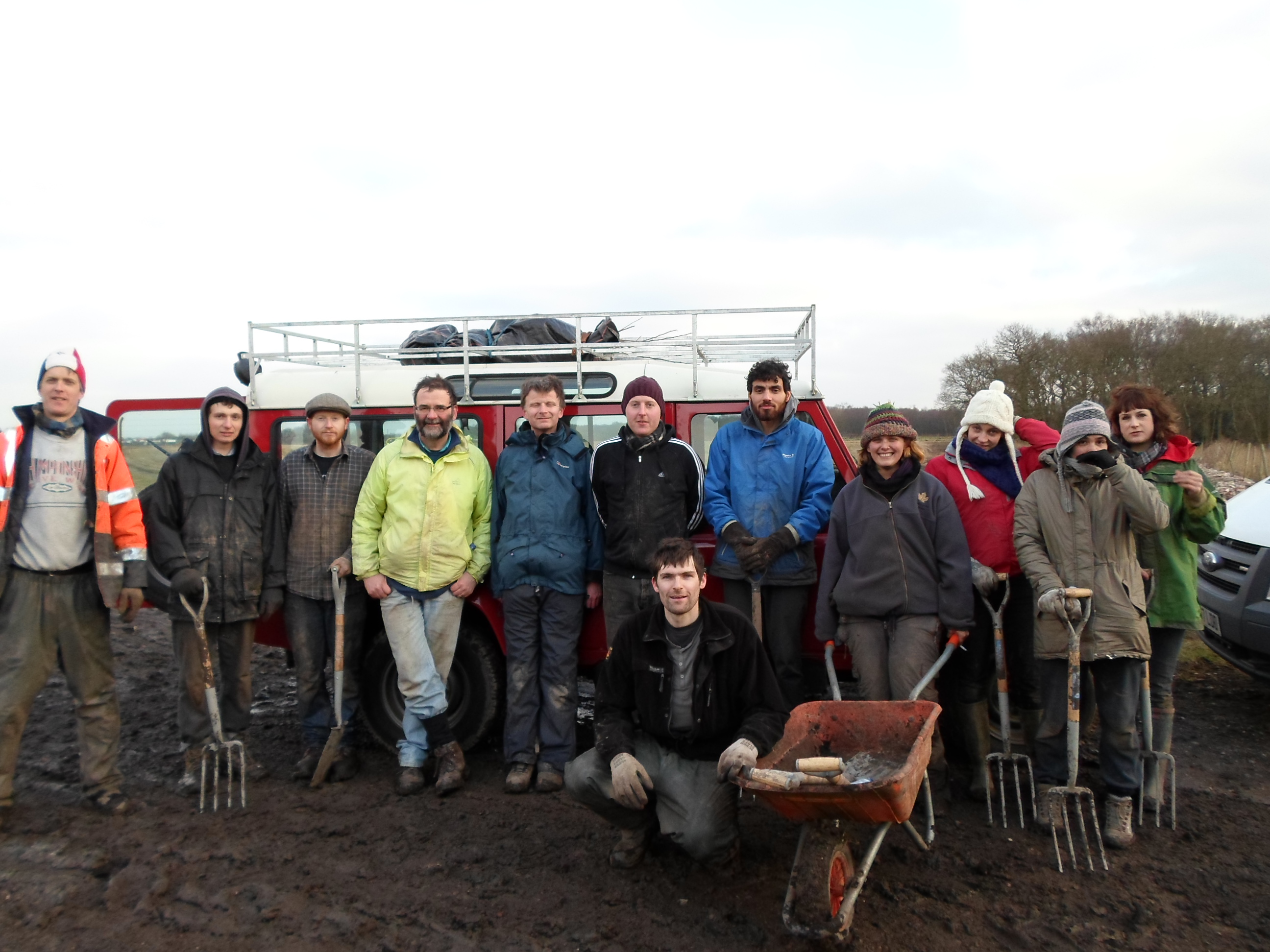 Just as an advance warning the growers say that all these jobs would ideally be done in dry conditions so this trip is slightly weather dependent…but we’ll cross that bridge when we come to it!




 manchester climate monthly