Prof Kevin Anderson on “The Climate Clock is Ticking. Normal isn’t Working. What Will You Do differently?”

Below is Professor Kevin Anderson’s submission for the recent “Climate Clock is Ticking” series.  The Guardian don’t appear to have used it in either their print edition or online.  Below his submission we have posted our response to the same invitation.

The request for the piece from the New Economics Foundation was:

‘The Climate Clock is Ticking. Normal isn’t Working. What Will You Do Differently?’

We would like to use your answer in a feature of collected insights to mark the half-
way point of the 100 months climate countdown that began in August 2008, and to
highlight what can be done differently in the next 50 months.

_____

My day job is to translate the science of climate change into the everyday language
we use to understand our lives. To chaperon policy-makers in the transition towards
a low-carbon UK, and to help companies and civil society understand the mitigation
challenge we all face. But this is not just a job – I’m as much a part of the problem
as the solution. Many of my colleagues disagree with me on this – but as I work in
the area I cannot excuse my profligate emissions through lack of knowledge. Surely
it’s incumbent on me to reduce my emissions to levels I’m both asking of others
and proposing the government regulate for? This will not be easy, either for me or
collectively for society, and we should not pretend otherwise. There are some win-
win opportunities and occasional green-growth niches – but despite all the rhetoric
we, the wealthy West, have left it far too late to grow ourselves out of the climate
change problem.

In 2011, a year of economic upheaval for many industrialised nations, global carbon
dioxide emissions rose by 3.2% on the 2010 figure, which itself was up almost 6%
on 2009. Despite this reckless growth in emissions, we continue to respond as ill-
behaved children quarrelling in the playground. The West points to the Chinese,
the Chinese cry we didn’t start it, the aviation sector claims it’s victimised whilst the
shipping industry dismisses flying as a luxury, disguising its own 4-fold emissions
increase as a reduction. Wind farms are hounded for killing birds, the new Defra boss
is endorsed by climate sceptic Nigel Lawson – and meanwhile persistent lobbying
by VW and others have rendered the EU’s flagship car-efficiency standards as
ineffective.

But the future does not have to be so bleak. Whereas to the orthodox mind a steady
state (no-growth) future can only ever be a land of torpor and desolation – those with
a more enlightened and creative outlook could yet see a low carbon Phoenix emerge
from the fossil-fuelled flames. Uncomfortable as it may be, what we desperately need

are top-down standards initiating an immediate transition to low-carbon practices –
through radically more efficient demand-technologies (fridges, cars, etc.) and major
changes in our lifestyle. But alongside and just as importantly, we need civil society
to complement the top-down framing of our low-carbon future. When politicians falter,
civil society needs to step in and offer support – and when civil society doesn’t deliver
its our politicians’ job to provide the right legislation and facilitate a can-do mentality.

So returning to the question what does this mean for me. Undoubtedly I’m one of the
few per cent of the 7 billion that is responsible for the lion’s share of emissions. Living
a low-carbon lifestyle is what most people around the planet do, including many in
the UK. The high emitters are a small and elite group – they are my friends, family,
those reading this and listening to Radio 4 – and of course my colleagues and I.
Climate change is not a population issue – it is a consumption issue – it’s about what
we can do between now and around 2020. Consequently, the poor, even as they
strive to buy fridges and drive cars, are not to blame. It is those already leading high-
carbon lifestyles that need to instigate or be coerced into a radical transition to a low
carbon future. This is the real challenge –Turkeys (high emitters) are going to have to
vote for a low-carbon Christmas.

So what will I do differently? I haven’t flown for almost eight years – and that will
have to continue. I have halved the distance I drive each year and have significantly
changed how I drive. I’ve done without a fridge for 12 years, but recently relented
and joined the very small proportion of the world’s population that has a fridge – this I
may have to reverse! I’ve cut back on washing and showering – but only to levels that
were the norm just a few years back. All this is a start but it is not enough. Certainly,
if those of us working on climate change are a bellwether of society’s response, the
future looks bleak. Nevertheless until those intimately engaged in climate change,
including the scientists, journalists, NGOs and ministers, put their own houses in
order, I think it unlikely others will take our analysis seriously. As we pass the bus
stop to jump in a taxi from the airport to another air-conditioned hotel room in Bali,
Cancun or Rio – what message are we disseminating?

And the MCFly response (drafted by Marc, agreed with Arwa).

Manchester Climate Monthly is a magazine and website that exists to
“inform, inspire and connect.” And to cajole! It started in October
2011. Its editors think the two degrees target is no longer
achievable. We’re burning too much carbon, and taking no real steps to
cut down.  Renewables simply won’t kick in quick enough.

As we enter the age of consequences, we will need more people and
organisations growing more food, learning to solve more problems and
work together.

The culture of the “Left,” – the unions, the ngos, the think-tanks,
etc – actually churns and burns potential new members by using them as
“ego-fodder” for the big names at the front of the room.

What we will do differently:

Use the Freedom of Information Act more frequently to get Manchester
City Council and other public bodies being honest about what they are
– and are not – doing on climate change

Use social media more effectively to engage and discuss the breadth of
the problems that we face; environmentally, politically, culturally,
economically.

Encourage more people to become involved – at whatever level their
time, energy, motivation allow – in ‘green projects’, especially ones
that increase community-based resilience.

Advocate more effectively for the creation of a Steady-State economy
in Manchester (steadystatemanchester.net)

Help build the capacity of environmental and social justice movements
through the “Activist Skills and Knowledge” project
(askfortheworld.net)

Encourage more people to become “transruptive” – disruptively
transformative – in their dealings with bureaucracies and their own
activist sub-cultures

Get more groups in Manchester to adopt the “meetings charter”, which
starts out There is a dangerous gap between the importance of our
mission and the level of our results so far. Coping with climate
change will demand bottom-up solutions as well top-down technocratic
ones.

People attend meetings for information, but also in the hope of being
inspired and connecting with their fellow citizens. Our current
methods of organising and holding meetings – which we have used for
decades –  have not succeeded in creating the vibrant social movement,
full of inspired and networked people, that we aspire to. Many people
attend one or two of our meetings and are then never seen again. We
have to acknowledge this if we are ever going to improve and we ought
to think carefully about why this is happening, and what we can all do
to improve it.

Posted in academia | Tagged , | 2 Comments

Upcoming Event: “Keep Calm Prepare for Change” Thurs 18th October #Manchester

Here’s an event that wasn’t in our dead-tree format calendar because we didn’t know about it. Hat-tip to Erinma Ochu.

Keep Calm Prepare for Change

Thursday 18 October 2012
1.00pm – 7.00pm
MMU Business School, All Saints Campus, Oxford Road, Manchester M15 6BH
“It’s not about the way we live, it’s about how we live responsibly”

Keep Calm Prepare for Change will examine how we can adjust the way we live, work and do business more sustainably. Keep Calm will encourage individuals to make a difference in their lives, and will aim to demonstrate how this transformation can be achieved by:
•connecting and combining old and new ways of doing business together to make sustainability affordable
•encouraging the wise use of resources – reduce, reuse and recycle
•celebrating successful examples of affordable sustainability.

There are three parts to the event – Panel Debate, Lecture and Workshops. There are additional tickets available for the Lecture only. There is also an optional lunch before the conference begins.

The workshop sessions aim to share experience and new developments from those who have delivered practically, and will offer you the chance to explore how your idea or project can grow into a sustainable business. Come to listen, come to talk, but above all come with a proposition that can be developed over the next 12 months and the RSA North West Fellows will help you develop it.

There are two workshops you can attend (both sessions are repeated):

– Commercially Successful – leading to sustainable organisations

– Responsible You, Wonderful You – contributing to sustainable communities

For more information please email Lilian Barton at lilian.barton@sky.com

The Keep Calm initiative is supported by RSA North West, Manchester Metropolitan University, University of Manchester, Corridor Manchester and Business in the Community.

Posted in Upcoming Events | Tagged | Leave a comment

Event Report: “Transformational Economics” fringe event at Labour Party Conference

Attention Conservation Notice: detailed account of “Transformational Economics” fringe meeting at the Labour Party Conference. Random observations, blow-by-blow account and some observations for how it it could have gone better.

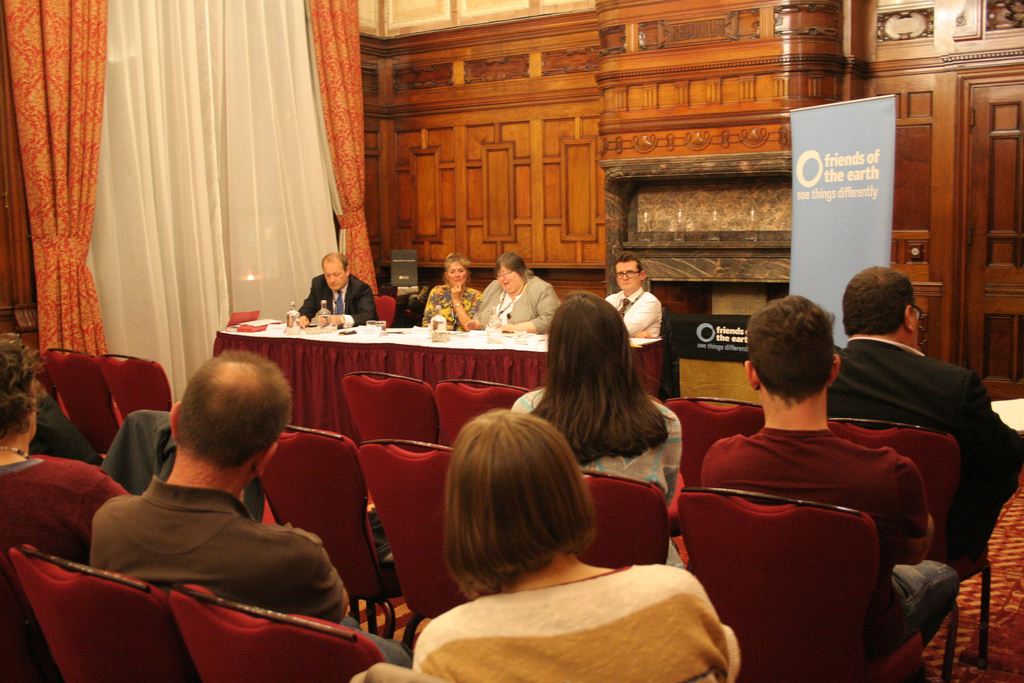
In the ornate (1) “Directors’ Lounge” at the Palace Hotel, Friends of the Earth hosted an event at which three speakers basically agreed that the current government is a Very Bad Thing, and that – in various ways – Things Need to Change.

Jane Thomas of FoE chaired, and opened with a few mentions of “environmental and social justice” and “capitalism is based on inequalities”. Nothing though, on the accelerating arrival of evidence that we are more than somewhat fubarred, but confining herself to questions (largely unanswered by the speakers) of “tensions between economic growth and environmental limits” and “how to limit consumption.”

[Update 5th October.  Photo above added, with thanks to Pete Abel of Friends of the Earth.  For their gallery of the event, see here.]

First up was Cllr Sue Murphy, one of the two deputy leaders of Manchester City Council.

Cllr Murphy pointed to decreased recent public investment and increased deprivation. She made the point – that always bears remaking – that although the city centre has shiny new buildings , along the fringes and boundaries of Manchester City Council’s area there are people and communities who “don’t benefit as much as they should.”

She pointed to the Greater Manchester Strategy, with its aim to decrease dependence on public services (“The Tory version is to take away public services. Labour wants to give skills to people to become less dependent).

Of particular interest to MCFly readers, she then turned to climate change and the “low carbon economy”. There are “huge opportunities” in retrofit, sustainable transport and growing digital infrastructures. And challenges such as the cut to the Feed-In-Tariff, the dilution of the Green Investment Bank and the Green Deal.

Cllr Murphy then very briefly touched on what many will regard as the crux of the issue – “tensions between economic growth and low carbon… we need ours to be sustainable growth, with minimal eco-inputs”. She then turned to the equal opportunities agenda, and productivity (developing the skills of the workforce). Citing the Manchester Independent Economic Review, she spoke of the importance of intervening positively in the 0 to 5 age group.

Switching back to climate change, she said that the Climate Change Action Plan had been “received quite well” (2)

Key projects include;
Manchester Minimum Wage
The Environmental Business Pledge
Making procurement more localised (and therefore reducing the carbon footprint of goods used).

She mentioned the Manchester Carbon Literacy Programme, that all councillors are due to undergo, and then highlighted two local projects.
a) A “Sustainability Visitors Construction Centre” in Benchill, with photovoltaic cells on its roof and geothermal energy, as part of a bigger campus with many students taking A-levels, courses in construction etc
b) Real Food Wythenshawe. On the latter, she said the project organisers are actively seeking “infill” land, since there is already a waiting list for allotments in the area.

Her “Big Idea” was that Manchester get “powers not structures” – i.e. the power to raise money and/or decide how to spend it without having to have a mayor foisted upon them.

Next up was Simon Danczuk, Rochdale MP. He, as befits a Labour MP, described the government’s response to the economic crisis as “woefully inadequate”, and speculated that the “creation of divisions” was not entirely accidental. He said that while small and medium enterprises (“SMEs”) were struggling to get finance, different schemes were announced and cancelled, despite evidence of some of them being effect.

He described the “New Homes Bonus” as – stuffing the pockets of wealthy local authorities, and his big idea was looking to northern Europe for ideas instead of the United States.

Finally, Neil McInroy of the Manchester-based “Centre for Local Economic Strategies” (see here for account of a previous meeting) predicted that the recession won’t end anytime soon, made reference to the problem of an aging population and the “graph of doom” (where all spending ends up going on social care). He pointed out that pre-2008 was not a golden age of perfection, and that we are facing peak oil, soil, water and energy. A new narrative, he said, was necessary, as he declared himself sick of the “narrow conversation about growth” (if you’re not for it, you’re a luddite).

Three concepts he put forward – the need for resilient, the need to grow human, social, environmental and public capital, and the importance of the local public spend (keeping money circulating locally).

The Q and A session over-ran dramatically, and suffered a bit from “comment tennis”
Of note –

  • Cllr Murphy said that Manchester City Council’s experience of being a Community Budget pilot was that it’s very bureaucratic and hard to fathom. (The goal is to spend the same amount of money for increased local impact)
  • Cllr Murphy noted that the Secretary of State of Local Government (Eric Pickles) talks about devolution but had given himself 147 new powers “He’s devolved the pain, kept the real powers for himself”
  • A speaker enthused over local/regional banks (His example was Bologna)
  • Cllr Murphy said that real regeneration relies on local jobs, is complex, and can take a long time.

At this point I had to leave, so maybe some of the MCFly readers who were in the room can add to the picture?

MCFly says: It was interesting to see a senior Council member laying out some of what the Council is up to. Executive members are of course very busy, but blogging, doing interviews and public events are all important ways of getting the Council’s message across.

What could have gone better: An organisation that wants people to “see things differently” could usefully, well, DO things differently. The age-old fringe event format – of Worthy Speakers followed by Worthy Questions from Usual Suspects is not in any way conducive to the formation of new links, new networks. If we are serious – and I don’t doubt the speakers’ sincerity – about the importance of human capital, social capital and so on, could we PLEASE move away from comment tennis and pure unadulterated sage-on-the-stage to a model that is likely to achieve more connection between attendees?

Footnotes
(1) gaudy
(2) true it was received well, but after three years, progress has somewhat stalled – only 200 groups and organisations have endorsed it, and only two – the Council and its housing offshoot – have produced their own implementation plans.

Posted in Event reports, Manchester City Council | Tagged , , , | Leave a comment

Sustainable Housing – what they’ve done, what’s coming up

Here’s some information about the “Sustainable Housing” project in Fallowfield.

a) What has your organisation achieved in the last month?
We have held the first of our fortnightly Jam Sessions and Movie Nights. The Jam Session saw 10 people come together with guitars, drums, pots, pans, spoons and a digeridoo. At Movie Night we will be alternating between those relevant to sustainability, community and personal development. Our first showing was No Impact Man (2009) – the story of a family in New York who attempt to have no impact on the environment for a year. We have now launched to the student population at fresher’s fair.

b) What events/”get involved” opportunites do you have coming up in the next month?
The next Jam Session is on Thursday 4th October at 7pm. BYOI (instruments). The next Movie Night is on Thursday 11th October at 7pm. We’re showing Peaceful Warrior (2006) – the story of a young gymnast who has to overcome some personally- limiting beliefs in order to live a happy life.
All the above are at 34 Finchley Road, Fallowfield, M14 6FH.

c) What specific help would you appreciate from individuals and groups?
Bring your ideas and enthusiasm to the house and use it as a base to create your own projects that will benefit the community and help you gain skills and experience. We are currently looking for people with an interest in food, renewable energy technology, waste, construction, fence weaving.

David

Posted in Fun, Upcoming Events | Tagged | Leave a comment

Event Report: “Urban Waste Transitions”- a wasted opportunity? #Manchester

Laurence Menhinick gets lost into academia-land for a day at the Sustainable Consumption Institute’s “Urban Waste Transitions Workshop.

Today was hardly about real waste. Or transition. Actually, what’s a workshop again? According to the welcome pack, over 55 people registered… 40 turned up and by 2pm only 18 remained. It was around mid-morning that I eventually realized that, once again, I was not the target audience, as I am not in the academic industry; still it was nice that I was allowed to attend anyway (this was a free event with generous tea and lunch provided, with very clever and articulate people, in a pleasant environment with stunning views of Manchester all round). The declared aim was to promote interaction between different university departments and researchers (and some external agencies which were allowed 3 minutes each at the end) so that they may benefit from each other’s expertise and possibly encourage a coherent narrative between them in the field of urban infrastructure etc…. In practice this the usual lecturer + powerpoint format, followed by questions-thinly-disguised-as-“comments-in-my-field”-from-the-floor (they all seemed to know each other by name already anyway).

So for many hours and the perceived benefits of MCFly’s readers, I listened and can reveal the contents were actually:

– an introduction to socio-technical transitions to sustainability – which was most interesting actually, commenting on the need for a multi-level approach ( economy+ technology+ neo-institutional); the reasons for inertia (economic, social, political); the need for a new system to allow transition to happen; the role of the city as primary actor or location for projects; the need to promote niche innovations at bottom level as well as facilitation from top-down incumbents so that a homogeneous alignment is eventually reached ( told you it was academic).. and related useful stuff from Frank Geels of the SCI. (1)

– a conceptual framework and comparative analysis on the intermediary organisation of low carbon cities, by Mike Hodson ( Salford Uni) and Simon Marvin ( Durham Uni), which dealt with the legislating of the CO2 issue, the conflicts of vested interests, the delivery of the promotion ( ie. project or system focused and externally or context specific ), a comparison of intermediaries, vision and delivery in London and Manchester – ( aka : Manchester’s approach is too piecemeal without vision or statutory responsibilities)

– a talk on new infrastructure development, how projects evolve in time and process, who the participants of decisions and actions are at each level, whether an infrastructure can be considered and treated as a “Commons” with multiple agents ( Nuno Gil, MBS)

– a presentation of a new research paper ( I think) from Nicky Gregson ( Durham Uni) on economizing municipal waste: UK resource recovery as marketisation which dealt with the overall values placed on the recycled waste, both economic and environmental. She explained that economic value is calculated with two costing tools, the Kerbside Analysis Tool and the the MRF Costing Tool which place difference emphasis on waste categories and levels; also that mixed collecting ( when everything is in the same bin) pauses problems at sorting and even demand levels since contamination – of paper by glass shards for instance– lowers the quality of the waste.

All in all though, the event was very disappointing to me, primarily because there was no discussion at all, although this was scheduled in the afternoon (this event’s time keeping was creative to say the least). It was about waste, but not as we know it: more of a concept for policy-making argument. I expected debates on evidence of opportunities and challenges in waste management, concrete ideas on reduction and re-use, and who knows, new urban models or even debate on the acceptability of high waste levels and built-in obsolescence in the first place. The most interesting and useful interventions by John Bland of Greater Manchester Waste Disposal Authority and Tom Quested of WRAP ( an agency promoting waste reduction and better resource management ) were rushed and disappointingly stuck on at the very end.

When, 4 minutes before leaving, I finally found the opportunity to make a comment, I mentioned the lack of discussion or research (after all this was an academic exercise here!) around new economic models such as the circular economy, and the idea of not generating waste in the first place, this was dismissed by an attendee ( who was not a speaker) as an unfeasible model as… we shouldn’t forget that there is money to be made from waste, and it would be a loss to the local authority! So there we are again, and it is the reality of the problem: the need to generate more, consume more and waste enough in order to sustain the whole economic process whilst simultaneously preaching restraint. I wish I had spoken to WRAP longer, but after close to 7hrs I must say I had had enough

 Laurence Menhinick, who wants it noted that it was quite an effort not to make any waste-related puns in her write-up!

 (1) MCFly co-editor Marc Hudson writes; Prof Geels, a very big name indeed in the field of “Transitions” is now at the University of Manchester.  MCFly will be making a youtube video about his recent article (see below), and hopefully getting an interview too.

A socio-technical analysis of low-carbon transitions: Introducing the multi-level perspective into transport studies

 Geels, F W. Journal of Transport Geography, 24, 471-482.

Abstract
Climate change and deep cuts in CO2 emissions require transitions to new kinds of transport systems. To understand the dynamics of these transitions, this paper introduces a socio-technical approach which goes beyond technology fix or behaviour change. Systemic transitions entail co-evolution and multi-dimensional interactions between industry, technology, markets, policy, culture and civil society. A multi-level perspective (MLP) is presented as a heuristic framework to analyze these interactions. The paper aims to introduce the MLP into transport studies and to show its usefulness through an application to the auto-mobility system in the United Kingdom and the Netherlands. This application aims to assess the drivers, barriers and possible pathways for low-carbon transitions.

Posted in academia | Tagged , , , , , | Leave a comment

Manchester Climate Monthly #10, October 2012 out now!

Would you be ready if Manchester were hit by seven straight days of snow this winter? Would your neighbours?   Did you know about the public launch of the Manchester Carbon Literacy Project?  What do you think about class and climate activism?  All this and book reviews, interviews and the usual features, in the latest “Manchester Climate Monthly”.  Please share it with your friends.  You can pick up a paper copy from “Lush” on Market St.

[UPDATE – Apologies to those of who who clicked on the image to the right thinking it would let you download a pdf.  It does now, but be warned, the pdf is like, 9Mb]

As ever, your thoughts and comments welcome – mcmonthly@gmail.com

Posted in print editions | Leave a comment

Newsflash: Prof Kevin Anderson on Today programme Monday 1st October

[UPDATE 7.15am Mon 1st – Prof Anderson has informed us that the slot has been cancelled.]

Professor Kevin Anderson of the Tyndall Centre(recently interviewed by Manchester Climate Monthly) and Professor Nick Pidgeon (Environmental Psychology, Cardiff) will be on the Today programme, Monday 1st October at 8.40am.
They will be talking about an event on Monday evening at the Royal Festival Hall called “50 months and counting,” and a series of articles due to be out in the Guardian on the same day. [Update: Save your £1.20 -it’s buried deep in the G2 pullout section.  You may not even have more luck online]
The interview, event and articles relate to the “100 months club” – a programme launched by New Economics Foundation 4 years ago based on the assessment there was roughly 100 months left to reverse the growth in carbon dioxide emissions. Professor Anderson been asked to talk about “what this means for us today in terms of action we need to do to reduce our emissions and what happens if we don’t.”

We’ve seen an (embargoed until tomorrow) preview of his article, and it’s typically robust stuff…

Should be interesting. steadystatemanchester.net, anyone?

Posted in academia, Upcoming Events | Tagged , , , , | 1 Comment

Youtube: Sneak preview of MCFly 0ct 2012 with Arwa Aburawa

We have a video camera. And some editing software. Early days, but we will get better at this…

Posted in youtubes | Tagged | Leave a comment

Event report: Didsbury Dinners Food Trail

We asked Amanda Woodvine of Didsbury Dinners to write up an account of how last weekend’s “Food Trail” events went.

Highlights from Didsbury’s first celebration of local, seasonal food

We hope that some of you turned out to enjoy Didsbury Food Trail, which ran last weekend. Activities at all seven sites were packed. Here are some of the highlights from the Trail!

SATURDAY 22 SEPTEMBER
BARLOW MOOR ROAD COMMUNITY GARDEN, 4-6PM
TEA & CAKES ~ BLACKBERRY PICKING

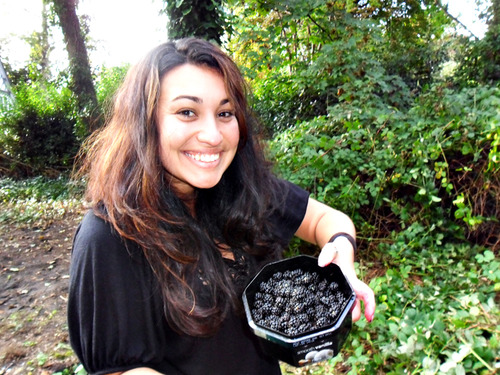
The Didsbury Dinners team welcomed first-time visitors to its garden with tea and cakes (and a glut of blackberries ready for picking).

We had a reserve list for our blackberry-picking/tea party that could have filled the session twice. It was really lovely to meet so many new people, who left with big smiles and even bigger tubs of blackberries. If you missed a place on the session, why not recreate your own with our fab recipes? Recipes include marrow and walnut brownies, chocolate beet cake, and sourdough oatmeal apple cake.

Work started on transforming the garden in March 2012. You can follow the team’s amazing progress, and view more photos from our tea party, here.

SUNDAY 23 SEPTEMBER
FLETCHER MOSS COMMUNITY ORCHARD, 2–4 PM
BBQ ~ LIVE MUSIC
In July 2011, we used funding from Didsbury Dinners: The Low-Carbon Community Cookbook to establish our first new community orchard on Stenner Lane in Didsbury. Didsbury Greening and Growing Group planted 40 fruit trees on land at the back of the TocH rugby pitches – apple, pear, plum and damson. This fruit is there to be enjoyed by anyone, for free. Fruit has already started to appear.

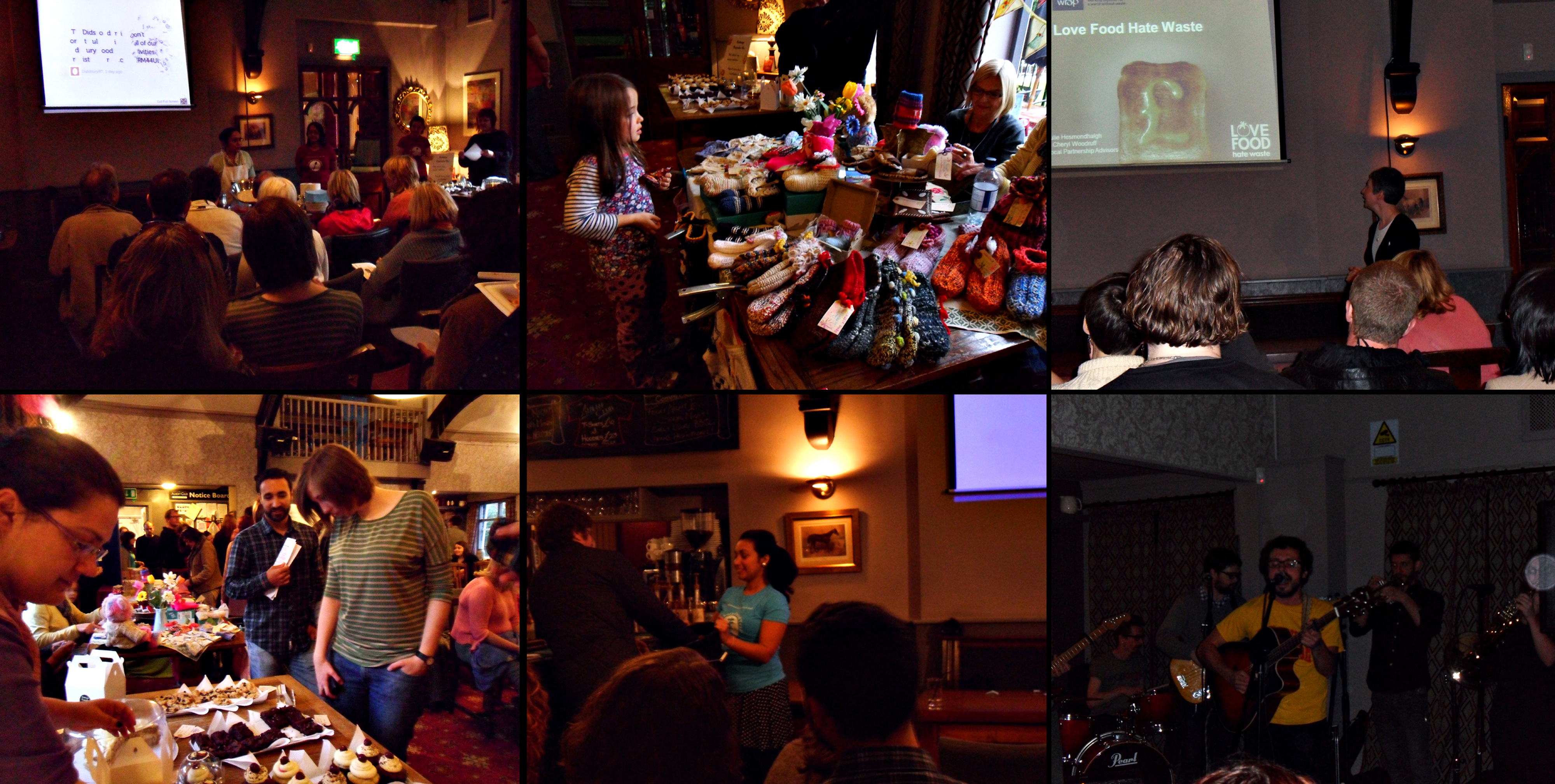
Volunteers from Didsbury Greening and Growing Group put on a barbecue and live music as part of the Food Trail, which was supported by around 50 people!

THE ALBERT CLUB, 5–8 PM
STALLS ~ FREE FOOD ~ SHORT FILM ~ WORKSHOP ~ RAFFLE ~ COOKERY DEMONSTRATIONS ~ LIVE MUSIC
Our headline Food Trail event at the Albert Club was filled with cookery demonstrations, stalls, and workshops, and was the perfect end to the weekend.
Didsbury Dinners showed a short film charting its progress in creating a new community food garden in just 6 months. Harjinder Kaur (BBC TV’s Hairy Bikers) demonstrated how to make Punjabi lentil dahl, atta dough and roti. Jenny from Cottage Cupcake Co showed us how to make devine vegan cookies, and Chaat Cart rustled up some lovely dosas, under the cover of a gazebo outside.

Julie and Cheryl from WRAP led a Love Food Hate Waste workshop, explaining the benefits of planning, knowing your dates, savvy storage, perfect portions and lovely leftovers.

And the event was rocked out in style by the amazing Hugo Kensdale and his band. We’re looking forward to Didsbury Food Trail 2013 already!

Recipes from the tea party.
Short film about our work.

Posted in Event reports, Food | Leave a comment

Upcoming Event: Trafford “Waste Ambassador” training on Saturday 6th October #afsl

Action for Sustainable Living is currently recruiting for people from Trafford to attend free Waste Ambassador training on Saturday 6th October. There are 10 free places available for Trafford residents.

“The training will be fun and interactive teaching how to design, plan and hold a waste event (example: a swap shop with friends). The training will teach why waste is important and how to improve the environment you live in by using a few simple ideas.

Lunch and refreshments will be provided as long as a place has been confirmed on the course.”

It will be held at:

11am – 5pm
Saturday 6th October 2012
The Lounge
Old Trafford Community Centre
Shrewsbury Street
Old Trafford
Manchester
M16 9AX

To book your place or should you need any further information contact Jo Wilkes at joanne.wilkes@afsl.org.uk 07904244557

Posted in Upcoming Events | Tagged , , | Leave a comment