The October MCMonthly Interview – Jacqui Carroll of REELmcr

MCFly co-editor speaks to Jacqui Carroll about her environmental work at REELmcr, the dire funding situation and successfully engaging working class communities in the climate change agenda. 

What does reelmcr do and why?
REELmcr works across the North West running projects with working class communities on a varied range of subjects from social history, community cohesion, environmental issues and just about anything that effects those communities. We have been doing this for eleven years now and as you can imagine it’s not easy in this current climate where funding is a thing of the past and arts projects are seen as a luxury in these communities.

We set up because we didn’t feel the working class had a voice – they are under-represented in government, the media, law well just about everywhere. We are the people that the media see as CHAVs. A word I despise and think should be banned. People really need to think twice before calling someone a CHAV and realise what it stands for – council housed and vermin or violent. I have spent my whole life living on council estates and I’m very proud to be working class and educated.

What environmentally-related films have you made? Are they available to view?
We have made the Green Wave – which can be viewed on the REELmcr You Tube Channel. We also have over 30 of our films on the site. In 2010 we were funded by Manchester City Council to work with the community of North Manchester, Charlestown and Higher Blackley to raise awareness of environmental issues which we will all be facing. Not a typical group to engage in a project of this type but it was a massive success, it changed people and the habits of a lifetime. People actually got rid of their cars and began to use the bins provided by the council which they had no idea what they were for at the start of the project.

We remained in contact with this group since and have been trying to raise the money to develop the film further and use it across the North West to inspire others but unfortunately in May 2010 we got the “greenest government ever”! All funding went down the drain and we have never been able to raise the money to continue this good work which is heartbreaking.

What happened to the people that made the Green Wave – are they continuing in their efforts?
The community we worked with on the Green Wave are now back together as we have raised funding from Heritage Lottery to start a brand new project around the birth of the NHS and stories from the now closed Booth Hall Hospital in North Manchester. It began last week and it has been wonderful to see them all again. They have all kept up with their recycling and they have all reduced they carbon consumption drastically since the project.

What’s the most rewarding part of what you do?
The most rewarding part of our work is seeing people’s pride of their achievement at the premiere and seeing the journey they have been on. We have seen many of our participants go on to great things – we’ve worked with young people who have been wrote off at an early age who are now at the most prestigious acting colleges in the country. It is just wonderful to see people reach their potential and also have pride in their communities.

Any upcoming films?
This year we began a project in Abbey Hey in East Manchester funded by Adactus Housing Association working with their tenants to train them to make a documentary around the retrofit which was due to take place early this year to make the old terraced houses environmentally sustainable. Unfortunately there have been issue around planning and the retrofit will not take place until 2013 so this project is still ongoing.

What do you think the responsibilities of local authorities and housing associations around working with tenants and citizens on social and ecological justice issues?
It has become increasingly difficult to raise money for environmental films but I do believe that housing associations are trying their best with smaller projects especially for community allotments which is something we have come across in Moss Side, Fallowfield, Salford and Abbey Hey. I believe a lot of work needs to be done with people who are experiencing fuel poverty as this is going to get worse as this recession deepens. We are only at the beginning of the cuts now.

Anything else you’d like to say?
I want to take the opportunity to thank Marc Hudson who we met during the Green Wave project who has become a good friend of REELmcr since and will always support the good work he is doing in every way we can.  He is wonderful in the Abbey Hey film but it might be some time till you can see that.
I feel blessed that I am able to do this work as I get to meet some of the most inspiring people living in communities that have been long forgotten. Having the opportunity to put some life and pride back into that community is what keeps me going.

Posted in inspire, Interview | Tagged , , , | 2 Comments

#Manchester #climate nuggets October 8th 2012

Hi all,

hope you enjoyed the last issue of MCFly. (All feedback v. welcome!)   If you missed it, you can click on the picture to the right and that will take you through to an electronic copy. Paper copies can be had from Lush on Market St (opposite Marks and Sparks) and also in person at various eco-events in the coming weeks.

Steady State Manchester” is about to make an announcement about the date and venue of its launch – watch this space. On Wednesday 10th (i.e. two days time), MCFly co-editors Marc and Arwa are at Nexus Cafe on Dale St from 5pm to 6pm, working on the “faith” section of the report. All welcome….

Our email is mcmonthly@gmail.com

Arwa Aburawa and Marc Hudson

Coming up this week

Tues 9, 6.45 -9pm Friends of the Earth meeting “What’s on your plate?” event Green Fish Resource Centre on Oldham Street (next to Mint Lounge) “This meeting is perfect for those who are new to Friends of the Earth. Contact Colette at colette@manchesterfoe.org.uk or on 07754 042716 for further details.”

Thursday 11th, 7pm. Movie Night at Sustainable Housing – Peaceful Warrior (2006) – the story of a young gymnast who has to overcome some personally- limiting beliefs in order to live a happy life. 34 Finchley Road, Fallowfield, M14 6FH.

Thursday 11th, 7pm. Manchester Green Party monthly meeting, Friends Meeting House, 6 Mount St

Thursday 11th, 7pm Manchester Friends of the Earth climate subgroup meeting, “at which we’ll be planning next steps on the Clean British Energy campaign and our local campaign to engage businesses with Manchester’s climate change plan, A Certain Future.  If you’d like to join us, please call/text Ali on 07786 090520 so we know to expect you.”  Green Fish Resource Centre, 46-50 Oldham St, Manchester M4 1LE

Stories you may have missed on the MCFly website

Lessons we like to pretend we have learnt
It can be hard to let go of the laughing-at-the-incompetent-Lords-and-Masters thing.  That’s comfort zone, and we all of us need to get out of our comfort zones…

Worth a read…

Cloud computing efficiency gains to be wiped out by increase in online data storage

EC shies back from curbing shipping emissions

from The Low Carbon Kid by noreply@blogger.com (David Thorpe)
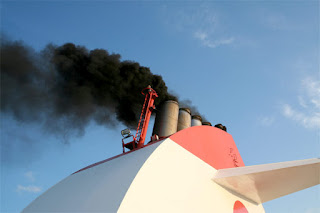
smokestack on a ship

The European Commission will launch a shipping emissions monitoring system early next year, in a move widely seen as postponement of action to reduce emissions.

In a disgraceful abdication of its responsibilities, its solution will only cover “a simple, robust and globally feasible approach towards setting a system for monitoring, reporting and verification of emissions based on fuel consumption”, it said in a statement issued by Vice-President of the European Commission Siim Kallas and EU Commissioner for Climate Action Connie Hedegaard.

This ‘might’ form the basis for bringing shipping into a maritime emissions trading scheme or imposing bunker fuel levies.

According to Elina Bardram, the head of the EU DG Climate Action’s international carbon markets unit, setting up such a scheme would be easier and could happen “more quickly than for aviation”.

Gary Neville and his green credentials

Posted in Weekly bulletins | Leave a comment

Easy to Jet, easy to see the damage, if you want to…

From here

“In 2012 easyJet formed a partnership with UNICEF the world’s leading organisation for children. The partnership runs across easyJet’s pan-European network during the peak summer and winter seasons, reaching out to the airline’s 55 million passengers who travel on the airlines’ 200 aircraft on over 600 routes across 30 countries.

“The programme branded Change for Good offers all our customers the chance to support the world’s children simply by dropping their spare change into specially designed pouches, which are handed out by easyJet’s crew during flights….

“David Bull, Executive Director, UNICEF UK, added: “I am thrilled that UNICEF is now on board with easyJet, the UK’s largest and fastest growing airline. Together we can help save the lives of some of the world’s most vulnerable children.

“This partnership gives us at UNICEF a unique opportunity, to generate significant new support for our vital work with children and also bring information about our mission to an audience of millions. As two global organisations whose brands are recognised across the world, our new partnership is the perfect match for children.”

The new partnership, which will operate for an initial three year period, will form part of UNICEF’s global Change for Good initiative, which has raised millions of pounds for the world’s most vulnerable children through partnerships with leading airlines across the globe.

As the person who sent this on to MCFly wrote – “and how many children will be made homeless, forced to migrate or drowned by the impact of EasyJet’s CO2 emissions ?”

Hypocrisy Advisory Notice:  MCFly co-editor Marc Hudson flew to Australia in November 2010 to spend a year with his parents. And flew half way back in 2011.  MCFly co-editor Arwa Aburawa flew to Spain and back earlier this year.  All of us are lying in the gutter. Some of us are looking at the stars and thinking – “I bet human life couldn’t survive on something that hot…”

Posted in Aviation | Tagged , , , | Leave a comment

Very good climate change letter in #Manchester Evening News by Green Party member

Manchester’s climate activists should, in MCFly’s humble (cough cough) opinion, be making more strenuous and systematic efforts to get “the message” across via the letters page of the Manchester Evening News. The message – of urgency, of the near-total ineptitude of official “efforts” thus far and of the need for genuine grassroots action is one that cannot be said too often. This example, published on Weds 3rd October and submitted Sam Darby of Manchester Green Party, is a really good one.

DISCLAIMER: MCFly will continue to say very rude (but hopefully truthful) things about all political parties.

Posted in Campaign Update | Tagged , , | 1 Comment

#Manchester Permaculture Network – who, what, why, when

Ahead of an open Network planning meeting at the Biospheric Foundation’s ‘Irwell House’ from 6 to 8.30pm on Monday 15th October, MCFly asked Jane Morris to explain a bit about what permaculture is, and what it has to offer a genuinely sustainable and just Manchester.

Manchester Permaculture Network learning from nature and evolving designs – a forest gardener’s viewpoint

by Jane Morris, September 2012
Informed by discussion with Vinny Walsh, Liz Postlethwaite & Rob Squires who has kept the Network’s website together – thanks all.

The word ‘permaculture’ (copyright: Permaculture Institutes & their graduates) is from ‘permanent agriculture’ and ‘permanent culture‘, It is an approach to designing whole systems, through maximising the interconnectedness of elements with its scientific base in ecology (CPUL 2005). So working with, rather than against, nature it enables the design, assembly and cultivation of ecosystems, ways of living and communities that endure because of the beneficial relationship of elements to each other and to the energy flows (eg from the sun, rain, human effort or money). A correctly designed system will, like a natural ecosystem, become increasingly diverse and self-sustaining.

Permaculture is, thus, study of the design of enduring systems that support and sustain human societies, from agricultural and architectural design, to community, organisational or economic development. Described by its originator Bill Mollinson as the only organised system of design He says it is about“protracted and thoughtful observation rather than protracted and thoughtless action; looking at systems in all their functions rather than only one yield; and allowing systems to demonstrate their own evolutions”. For more exploration
http://www.permaculture.net/about/definitions.html
http://www.context.org/iclib/ic28/mollison
http://www.permacultureactivist.net/intro/PcIntro

This systems approach can be applied to a garden, project, household, service or business, or to develop more sustainable and productive, non-polluting and healthy neighbourhoods and communities. It can mean adapting existing places, settlements and spaces or starting from scratch, creating more stability and social justice, increasing tree and ground cover and deepening soils, building community strengths and reciprocity and improving chances of peace, adequate shelter and supplies, if not abundance, and health and well-being.

Its ethical framework of co-operation with nature and each other, earth and people care, is rooted in traditional resource use strategies and innovative sustainable agriculture, most often applied by people living close to nature in rural areas (eg at Middlewood in the NW http://www.middlewood.org.uk/middlewood.html) and especially established the South West of England. A few urban communities have used permaculture over some time (eg Springfields on the fringe of Bradford and London’s ‘Naturewise’). It has become more prominent in towns and cities over the last decade, generally on a small scale affecting people’s perspectives but yet to be very productive or have significant ecological impact in urban areas.

Permaculture design evolves as the environments worked within change and it is instigated, operated and allowed to operate at different and sometimes nested levels. Applicable to small yard or garden, household, business or bioregion; redesign of many places/spaces, planning and building, preserving fragile ecosystems or regenerating damaged habitats, permaculture design and strategies can make neighbourhoods more productive and inclusive. “Good design depends on a free and harmonious relationship between nature and people, … through continuous and reciprocal interaction” see http://www.David Holmgren design principles. Assembly of such carefully designed environments in our metropolis with the diversity, stability and resilience of natural ecosystems could produce needed and desired yields and many dividends in terms of health, sustainability and security.

Resilience is the capacity of a system to deal with change and continue to develop; withstanding shocks and disturbances and using such events as catalysts for renewal and innovation. This concept related to robustness and adaptive capacity is used across disciplines from engineering to psychology and most crucially in socio-ecological systems. Destructive monocultures have undermined mixed sustainable farming, subsistence and ecology. Resilience is intrinsically linked to diversity of knowledge, materials, methods, skills, yields etcetera for individuals, organisations and whole systems, see the work of Vandana Shiva, eg: http://www.navdanya.org/climate-change-and-biodiversity, a guide to indigenous knowledge and climate change: http://bit.ly/indigenousknowledge and Lin Ostrom reviewed: http://www.ecologyandsociety.org/vol17/iss2/art31/

Biodiversity is the alternative to fossil carbon and the foundation of life, it underpins ecosystem services and resilience, beyond the yields of food, wood, fibre, fuel and freshwater to regulation of climate and disease – it supports our soil, security, health, social relations, cultural opportunities and freedom of action. It is fragile and being diminished across the globe. So, as well as protecting remaining rain forests and ancient woodlands, we need to re-forest and increase tree and ground cover and biodiversity in all sorts of spaces

Gardening with Nature’ using trees and other perennials, nitrogen fixing and self-seeding plants imitating the patterns and other processes of natural woodlands, in forest gardens can produce a range of food and other plant products, and high yield compared with orchards and other monocultures. Forest gardening as pioneered by Robert Hart (1991) is based on the seven distinct layers or ‘storeys’ of the natural forest, creating guilds of plants to support each other in a low maintenance, productive and sustainable ecosystem see http://www.spiralseed.co.uk/forestgarden/page2.html. Agroforestry and forest gardening can be applied in all sorts of spaces including roofs, yards, larger balconies and atriums. Even inner-city communities can develop self and mutual reliance, and use abundant materials from:

  • Nettles, Mints and Sweet Cicely see http://www.pfaf.org/Myrrhis+odorata to Blackberries, Rosehips, Apples and Elder flowers/berries and Lime leaves and flowers;
  • Parks, Avenues and Groves, and community gardens, orchards and woodlands/forests and biodiverse grounds with improved soils – some managed for particular yields/outcomes others naturalising or wild;
  • cleaner and safer air, soil, water and cycling and pedestrian routes, and
  • mutually beneficial social enterprises.

Lost habitats, resource depletion and global warming and its associated extremes increase the need for all kinds of resilience. We can’t predict much about how these climate changes will come about nor crises in supplies, but permaculture’s practical approach, careful observation and natural system designs can help prevent or prepare for floods and other consequences of climate change, energy transitions and “all aspects of creating a sustainable future” (http://xa.yimg.com/kq/groups/Oct Leeds PDC.pdf). ‘Future Scenarios’ (Holmgren, 2009) shows permaculture’s particular potential after peak oil and cheap fossil fuels. The inevitable ’Transition’ or ‘Energy Descent’ may take different paths with or without nuclear energy and collapses/crashes. Permaculture could be applied in the different scenarios and can be used in countering pollution, erosion and desertification and response to crises. It often emerges in the toughest of places and hardest of times eg: http://www.permacultureglobal.com/Marda-permaculture-farm, Palestine

http://www.youtube.com/watch Greening Jordanian Desert

http://theurbanfarmer.ca/cuba-programs/permaculture-cuba-internship/

We can smooth transition to food, energy and general security, hopefully with extremely low maintenance forest gardens abounding and other self-maintaining systems finding their niche, and evolving earth stewardship and symbiosis with nature. Certainly we can increase biodiversity and ecological health and improve quality of lives via greening of inner cities, repair of degraded environments and whole systems approaches in all sorts of places, groups, communities and organisations see http://www.unep/pdf/Blue Planet Imperative to Act. Perma-cultures with a stabilising climate on this ‘Blue Planet’ may be feasible if we imitate nature’s designs, up-cycle, rationalise trade eg with regard to food miles and seasonality, use waste productively and ”innovate to make consumption of those products a positive action, responding to all basic needs for water, food, energy, health and shelter” see http://www.blueeconomy.eu/our philosophy.php. Integrated and holistic permaculture solutions do tend to solve many different challenges simultaneously. Opportunities arise from crises and from demand for more inclusive environments, transport and land use; ‘green’ economy and ‘localisation’ and from the imperatives of public health, post-industrial regeneration, food and fuel poverty and international injustices see http://www.permaculture.org.uk/principle/12-creatively-use-and-respond-change

Manchester Permaculture Network’s events and other activities in the metropolis and surrounding counties have clusters and phases of activity reflected by various projects/courses and collaborations eg with ‘Abundance’ or local Transition initiatives. The Northern School is currently running a 72-hour international Permaculture Design Course (PDC) in North Manchester that will award participants the Permaculture Association certificate. Network aims were discussed following review of the recently completed Salford Permaculture Design Course, and a few years ago when working on a possible draft constitution, they can be summarised as to:

  • link the ever growing web of permaculturists in Manchester and the surrounding bio-region but especially in the urban areas;
  • create support and beneficial connections between individuals, groups and projects; &
  • learn together and educate about permaculture and related topics, co-operating with other organisations.

The Network supports numerous community projects including:

  • Birchfields Park Forest Garden in Rusholme – we need more gardeners in our most public of forest gardens! see last month’s article by Yasmin Quayyum https://manchesterclimatemonthly.net/2012/07/18/birchfeeields-park-forest-garden/
  • Burnley ‘Offshoots’ which is has wide-ranging projects and activities including training and eco therapy see http://www.offshoots.org.uk/
  • Leaf St Community Garden in Hulme;
  • Two allotments designed on permaculture principals near Southern Cemetery started by Action For Sustainable Living see http://www.afsl.the-lost-plot
  • MERCi Sustaining Change, ‘Herbie’ Fruit and Veg Van, flax growing etcetera
  • Saddleworth Community Hydro & Stockport Hydro;
  • Salford’s ‘Biospheric Foundation’ where a 72 hour design course ran over two weeks this summer and a Forest Garden emerges between the riverbank and the mill under renovation. There’s a range of projects around food, energy and waste including fresh fruit and veg delivery and ‘Epoch 6’ design studio (for innovation/other research around challenges facing inner city communities and ecology) http://biosphericfoundation.com/
  • Wigan Allotment Network with workshops and opportunities for organised groups and individuals to volunteer eg on the community allotment at Worsley Hall.

The associated e-list includes others involved with more local and other projects from Trafford and Stockport, Prestwich Forest and the Calder Valley to Leeds and beyond. The diversity and variation of permaculture activities in and around Great Manchester should be celebrated, says Vinny Walsh of the Biospheric Foundation “This is how true resilience emerges, as research suggests from the Stockholm Resilience Centre” See http://www.stockholmresilience.su.se/21/about-us.html

The next event an open Network planning meeting will be at the Biospheric Foundation’s ‘Irwell House’ from 6 to 8.30pm on Monday 15th October. Ideas for further events include a wider Forum for local/urban perma-projects, visits to each other’s projects; follow up to MERCi’s ‘Blue Economy’ seminar &/or a workshop with ‘Steady State Manchester’ on design solutions. For latest news and events, PC TV, how to join the Network’s email list etcetera see http://manchesterpermaculturenetwork.howcreative.co.uk/node

References
Robert A de J Hart, 1996 ‘Forest Gardening: Rediscovering Nature & Community in a Post-Industrial Age’ Green Earth Books, Dartington

David Holmgren 2009 ‘Future Scenarios: How communities can adapt to peak oil and climate change’, Green Books, Dartington.

Posted in Upcoming Events | Tagged , | Leave a comment

Something for the Weekend 5 October 2012 #Manchester #Climate

Why did the algebra teacher confiscate the rubber-band gun? It was a weapon of math disruption.

And this weekend’s event, that we know of are:

Sat 6th, 11-5pm Free Waste Ambassador training from at the Old Trafford Community Centre. The training will be fun and interactive, teaching you how you could design, plan and hold your own waste event (example: a swap shop with friends). The training will teach you why waste is important and how you can improve the environment you live in by using a few simple ideas. Lunch and refreshments will be provided as long as you have confirmed your place on the course. There are 10 free places available to Trafford residents. Please contact Jo Wilkes at joanne.wilkes@afsl.org.uk. Alternatively, call on 07904 244557 as soon as possible to secure your place and avoid disappointment.

If you know of other weekend events that are about “climate” (and that includes food growing, or cycling or whatever), then let us know and we can include them in future “Something for the Weekend”s…

Posted in Something for the Weekend | Leave a comment

Of polar bears, terminators and beyond-satire hypocrisy…

If you’ve got any “I can’t believe he/she said that” quotes to do with climate change, please send them in to mcmonthly@gmail.com

(We think this is a series that could run and run…)

Posted in humour | Leave a comment

Upcoming Event: Friends of the Earth “What’s on your plate: Cooking your dinner or the planet?” Tues Oct 9th, #Manchester

So, below is a bit of the press release for a meeting next Tuesday, from 7pm to 9pm at the Green Fish Resource Centre, 46-50 Oldham Street, Manchester, M4 1LE  (two minutes walk from Piccadilly Gardens).  It’s based around a report by the Tyndall Centre Sustainable Consumption Institute (see our July 2012 article – “what’s cooking? The planet, soon enough“)

On Tuesday 9th October, Manchester Friends of the Earth are inviting people in Greater Manchester to an event to learn more about how climate change will impact food production and how the food we buy, grow and eat can make a difference.

Dr Alice Bows co-author of the hard-hitting report ‘What’s Cooking’ Adaptation and Migration in the UK Food System and a senior researcher at the  Sustainable Consumption Institute will talk about her recent research on the impact of climate change on food production.

The research found that UK consumers could face dramatically reduced food choices in the future unless much more is done to cut greenhouse gas emissions. It also warns that foods which families now take for granted, such as meat and fresh vegetables, could become too expensive for many if global temperatures rise in line with the current trends and reach 4 degree C within the lifetime of many people.

The meeting will also include presentations on the Healthy Planet eating campaign by a national Friends of the Earth campaigner and from the Kindling Trust talking about local food producers and projects.

UPDATE: 8th October 2012.  I got the facts wrong. The “What’s cooking” report was produced by academics at the Sustainable Consumption Institute, not Tyndall.  The post above has been updated to reflect this.  Marc Hudson

Posted in Upcoming Events | Tagged , , | Leave a comment

Event Report: Incredible Edible… Heatons?

People wanting to take climate/community/food action in Heaton Mersey Stockport gather to hear from someone with a track record, and then generate their own ideas; MCFly reader Phil Korbel reports .

About 40 people gathered in St Thomas’ Church Heaton Mersey last week to get
informed and then discuss the proposition above, courtesy of the community group
Sustainable Living In The Heatons (facebook page here).

The speaker for the event was one of the founders of the Incredible Edible
Todmorden (IET) phenomenon, Pam Warhurst. Their premise is simple – start
using patches of spare local land for growing food, for everyone, and they’ve been
doing this for four years.

They started with what might be known as ‘guerilla gardening’, planting on unused
land without permission, but she prefers calling it planting ‘Propaganda Beds’
because they get people talking. Now they’re building an amazing aquaponics
facility at the high school, are running market gardening courses on donated land,
have a bee trail, a network for local chicken keepers and of course the beds – in front
of the police station – the canal towpath, health centre, the railway station and the
graveyard (‘good soil’ she says). All the schools are growing food and involving the
community and they’re doing a good trade hosting ‘vegetable tourists’ from all over
the world.

The group had started out by looking for a common language to engage people in
issues such as climate change and peak oil. That language is food, so much so that
the ‘big issues’ hardly get talked about because the IET people are too busy actually
acting on them by growing food.

Pam’s key messages included that the project isn’t about gardening or horticulture
– it’s about growing ‘kindness and community’. Why? Because the food grown on
verges and in raised beds all over her town is for everyone to pick – and because
it’s open to everyone to join in. As to who can join in, Pam’s blunt – ‘If you can eat,
you’re in!’ Other results observed in Todmorden is a greater willingness to shop
locally, to ask for local produce and even a fall in vandalism.

Pam’s a passionate and engaging speaker, and that doesn’t stop her being
provocative. She says ‘don’t ask for permission’ and obviously feels that planning,
strategy papers and project budgets come a firm second place after just getting on
and doing. As she said this you could see the smiles and the nods going round
the room. This enthusiasm was replicated in a range of engaged and insightful
questions from members of the audience.

Most of the audience stayed for tea and biscuits and a chat about what to do next.
This included a call to walk around the area and just imagine where a verge or
scrappy bed of thorny shrubs could be dug up and food planted. Some specific sites
were discussed and it was clear that there’s no shortage of them. The upshot was
clear – that a Propaganda Bed will be planted in a high profile public location – as a
statement of intent of what might just become Incredible Edible Heatons. Watch this
space, or verge or bed or thorny scrubs…

You can see a similar talk from Pam here – with a standing ovation too –
The IET website is well worth grazing too.

The event was made possible by funding from Stockport Council.

If you live in the area do drop us a line – sustlvngheatons@gmail.com

Note for McFly – The event facilitator used the tip to ask people to” turn to someone
they don’t know before the Q & A, and discuss what question you might ask”, to good
effect.

Posted in Event reports, Food, inspire | Tagged , | Leave a comment

Upcoming event: “Love Cycling, Go Dutch” Tues 20 November

We’ve been asked to let readers know that “Places are strictly limited, to be considered for an invitation please email Angelique Meyer at NBSO Manchester meyer@nbso-manchester.co.uk”

Posted in Transport, Upcoming Events | Tagged | Leave a comment