Upcoming Event: “What has your #climate group achieved? #Manchester Sat 26th April

Maybe the Steering Group could go along. Only need five minutes. Just sayin’.

So, what has your group achieved?

Free workshop on Monitoring and Evaluation for climate community groups, Sat 26th April 2014, Manchester, Anthony Burgess Foundation.

The workshop aims to support your group to find appropriate tools and processes so you can:

·         Better understand what works and what doesn’t;

·         Generate data that will help you to create better reports for funders and other stakeholders;

·         Get a chance  to trial a range of resources that will enable your group to self-monitor and evaluate your activities;

·         Inform your next steps in whatever project or initiative you are working in;

·         Respond to those queries of ‘so what has your group actually achieved?’

These workshops will be fun, interactive days where you can meet people doing similar work to you.  They are a central part of the Oxford-based knowledge exchange project called ‘Monitoring and Evaluation for Sustainable Communities’ (see URL below), in partnership with Low Carbon Communities Network and the Transition Network.

We are particularly keen to attract participants who can trial some of the tools and processes over the six months after the workshops. Taking part in this trial will mean you be asked to provide some feedback and reflection on your experiences. In exchange you will receive support and advice from the project team, as well as modest financial and material resources.

Workshops begin at 10am and finish at 5 pm. We can reimburse reasonable travel costs. All workshops and refreshments are free to enrolled participants, but advance booking is essential.

To register or for more information: email kersty.hobson@ouce.ox.ac.uk

For further information about the project: http://www.geog.ox.ac.uk/research/technologies/projects/mesc/

Posted in Upcoming Events | Leave a comment

Interview with Luke Blazejewski of “Clean Up #Salford” at Greater #Manchester Wildlife Conference


Thanks to Luke for agreeing to be interviewed.  And to the wife for buying me the video camera, for my 40th birthday last year (cough cough).

Posted in Biodiversity, Upcoming Events | Leave a comment

Upcoming Event: “Nature in the City” #Manchester Art Gallery Thurs 3rd April

Thursday 3rd April MANCHESTER ART GALLERY

NATURE IN THE CITY
5.30 – 8.30pm
The evenings are lighter and spring is in the air. Join us for an evening inspired by Thomas Horsfall and his Art Museum that celebrates spring, nature and the beauty all around us. Take part in art activity, listen to live music and hear about the garden on our roof and urban gardening. Get inspired to take notice of the nature around us in the city.
Immerse yourself in our Plant space and get drawing with artist, Mitchiko Fujii. Take part in the lucky dip still life challenge with artist, Nicola Dale, try your hand at printing inspired by nature with artist, Julie Mosley.

6.15pm
TOUR: Who was Horsfall?
Join curator, Hannah Williamson, for a tour of the Horsfall exhibition and find out more about this inspiring Mancunian.
Meet in the Horsfall exhibition, Ground Floor

7.15pm
URBAN GARDENING TALK AND DISCUSSION
Find out about the bee hives on the roof of the gallery and the River of Flowers project with John Mouncey, Visitor Services Manager. Meet Manchester’s National Trust, Gardener in residence, Sean Harkin, and find out more about his plans for greening the city. Meet in the Horsfall exhibition, Ground Floor.

Posted in Biodiversity, Upcoming Events | 1 Comment

“Greater #Manchester Open Eco-Homes weekends” – are you retrofit enough?

This below is from Carbon Coop… (if retrofitting interests you, have a read of the recent interview with Michael O’Doherty

Greater Manchester Open Eco-Homes weekends

We are looking for households from Greater Manchester and beyond, who have undertaken energy efficient retrofit work and would be willing to show people around their homes and explain the measures.

Our recent survey work showed a large number of supporters have already carried out some energy efficiency or renewable generation improvements.

Now, Carbon Coop and Action for Sustainable Living are running Open Eco-Homes events on the weekends of 17th/18th and 24th/25th May 2014, featuring open houses and Red Bus Tours.

Each householder will have a trained volunteer to assist them and visitors will book via a moderated booking system.

To showcase your home email us on info@carbon.coop or call 0161 408 6492.


Support for the event comes from the Open Green Homes network and DECC.

* To qualify as an ‘eco-home, you would have installed two or more energy efficiency or renewable technologies such as: external wall insulation, internal wall insulation, Solar PV, Solar hot water, Ground/air source heat pump, roof or floor insulation, Triple glazing, new doors, Wood burning stove, biomass boiler, significant Cavity insulation, Low water shower/WC systems, new heating system, air tightness works, etc etc.

Copyright © 2014 Carbon Co-op, All rights reserved.
This is the email list for the Carbon Co-op

Our mailing address is:

Carbon Co-op

3 Corkland Road

Manchester,EnglandM21 8UP

United Kingdom
Posted in Energy, Upcoming Events, volunteer opportunity | Tagged | Leave a comment

#Manchester citizens answer 3 questions – 012 Jo Campbell #3qthurs

This week, Jo Campbell, of Moss Side Community Allotment (among other things).

1. “Who are you?”  (Name, where you live, and – if you want to say – what you “do”)
2. “What does Manchester need to become more sustainable?”
3. “What knowledge and skills do you want to acquire in 2014?”

Why this? Because we need to celebrate what is happening, imagine what could happen and also connect people who have skills with people who want them.  #movementbuilding.

So, watch out. If I see you before you see me, and I’ve got my video camera handy (I will), you might be in the frame…

* And an optional 4. –  “Anything else you’d like to say?”

Posted in 3 question Thursday | Leave a comment

Interview with Greater #Manchester housing retrofit etc lead officer! #climate #GreenDeal etc

Last year MCFly interviewed Michael O’Doherty, the lead officer for buildings and climate change, and Assistant Director of the Greater Manchester Environment Team. That experience clearly wasn’t unpleasant enough for him, since he’s gone under the cosh again.

The tl;dr is that policy uncertainty at the national level hasn’t helped, and some things have are more-or-less on track, others behind.

Here’s the interview (tidied up slightly).

Shall we get the good news out the way first – you can tell us every wonderful thing that is happening, and then we can spend the next half hour going into the fine print. So, since we last met, in July, what would be the one, two, three things that have been accomplished and that you can point to and say “we’re on the right track”.

Okay, what we have done, which we said we would do, is procured a framework of partners to deliver Green Deal Eco, and ultimately to drive the housing retrofit approach for Greater Manchester. That procurement process took – as we expected – some time, so they were announced in January, and they are Wates with British Gas, Keepmoat with EDF and Wilmott Dixon. We are finalising the contract side of things and on the first of April that scheme should be going live and we should be starting to undertake Green Deal assessments and deliver energy efficiency measures. Another positive to come out of the process – is that we will capture social benefit for Greater Manchester. It’s all about how can Greater Manchester drive a housing retrofit programme in Greater Manchester, but equally how can we ensure that Greater Manchester gets competitive economic advantage from that. How can our Green Deal provider partners, who by definition are large organisations who tend to work on a national basis, how can they engage with the supply chain of Greater Manchester, ensuring that we capture GM jobs, and that GM businesses including SMEs, benefit from the programme. How can we ensure we are capturing that local pound, so not only that savings made by households are spent in the local economy, but also wages paid to local people are spent back into the Greater Manchester economy?

Since announcing the partners we have held three very positive supply chain events. Our new partners have worked collaboratively, demonstrating that they can work together to engage with local companies. Local companies now have a route, to become part of the supply chain. The challenge will be a) transparency of that process, because we’ve been criticised before for not being as transparent as possible and b) to create the amount of work needed to develop the supply chain. That’s a big challenge of course.

So, in terms of where we said we’d be for Green Deal and Eco, we have a framework, we have the willingness to deliver, we’ve got the engagement of the 10 local authorities, the strategic context in place, we’ve got a fuel poverty plan, we’ve got a Greater Manchester Housing Retrofit Strategy, which basically sets out the longer term priorities for the programme, what we need to do to hit our Climate Change Strategy targets.

And does that have SMART goals…?
It has high-level goals… That document was always a high-level strategy which says “we need to do the following to our housing stock if we are going to contribute towards GM climate change targets. So there are long-term targets in there, which clearly can’t be SMART if you’re talking about 2030-35, about getting stock to a certain level, but there are shorter-term targets that relate back to the contract.

So for example 60,000 retrofitted homes over three to five years is a commitment within the programme. Recent changes to national policy have created further uncertainty into the numbers that we can deliver because of the amount and level of ECO funding available to kick-start the market. However we’ve got the framework and the strategic background in place.

Thanks. I want to pick up on the word “transparency” and I want to come back to this question of SMART goals. There’s a high-level document. Is there therefore going to be an implementation plan for the years 2014-17 or 2015-18 with more specific goals and named individuals/organisations and metrics. If not/why not. And what other forms of transparency besides SMART goals, implementation plans and regular reporting do you think Greater Manchester could and should undertake?

Okay, so yes there is a Low Carbon Hub business plan, of which there is a low carbon buildings plan , of which domestic retrofit is an important part of that. That is a document which is in the public domain. That contains and will contain specific targets in relation to what we are aspiring to deliver through the housing retrofit programme. We’re also reporting back through the Low Carbon Hub the outcome of that. So there is a transparent scrutiny process. We’ve also got the potential for local authorities to scrutinise our activity.

Through the scrutiny pools?

Through the scrutiny process.

Okay, any other ways that the Low Carbon Hub is thinking about this – and I understand it is difficult for you to be able to answer, because you’re not on the Board – are there any other mechanisms by which you would be reporting and publicising where you are up to versus where you said you would be up to?

We have a whole governance structure that sits under the Low Carbon Hub. Ultimately it’s reported to the Low Carbon Hub but we also have to go back to the local authorities at the GMCA level to report back on the progress we’re making on framework targets. So that would be in the public domain as well.

Is this the 60,000 houses that you’re talking about?

Yes.

We’ll come back to the Low Carbon Hub and communications, because in the report that was tabled last Friday that you’re listed as the author on there’s something to pick up on.

We’ve talked a lot about domestic retrofit. I’ve got a question here; “what’s happened to stream two – the work package dealing with the retrofit of non-domestic properties. Is that still in the stage of compiling a list, or is that moved on to being a bit more fleshed out?

We have a draft business case with four authorities for retrofit of public buildings. We are proposing to take a significant programme of buildings through a procurement process; well over a hundred buildings as part of a demonstrator of aggregated energy efficiency savings. We’re looking to potentially use the London-based “refit” framework in the first instance because it has already been procured and is available. But that experience will help GM to set up its own procurement approach to public buildings retrofit. So we have made progress, we’ve got a business case in place now that is currently with four of the local authorities for signing off.

Are you able to say which those four local authorities are?

Bury, Manchester, Oldham and Trafford are looking at the business cases.

And the other six local authorities are not yet looking at them?

It was always the case that we would have a demonstrator, and this is to develop proof of concept that we can overcome the barriers to scaling up energy efficiency prorgammes. Clearly each local authority could take action in their own right, and have been doing, but this is an attempt to use economies of scale to be able to go into deeper energy-saving measures than maybe would have been possible through a single local authority approach.

Assuming that we are still talking in a year’s time, and I do another interview, and I say “what’s happened on non-domestic retrofit?” what do you hope to be able to say?

I’d be disappointed if we hadn’t been out to procurement, and selected a partner, and the partner potentially on-site at that stage for four of the local authorities.

The GM retrofit strategy that started life in 2011 in various discussion drafts – where are we up to with that – when will the final final version be published?

It will go to GMCA probably in April now. It’s been back to the Low Carbon Hub. We always said it was a draft, a publicly available draft that’s been on the website for the last year and a half, but we needed the finalised framework to understand how we’re going to deliver it, what the funding route would be, whether we were going to use Green Deal, Green Deal Finance Company, looking at other options to fund that as well.

Which segues neatly into a question here – which is pretty similar to a question I asked last year – “is there a plan b if Green Deal is doomed and is cancelled before or at the next election. Is there a contingency plan that AGMA is working on or has worked on?

So what the strategy sets out is what we’ve got to do. It also sets out how we think we’re going to do it based on current government policy. We’ve not procured a framework just to deliver Green Deal and ECO, we’ve procured a framework to deliver housing retrofit – that’s important. So we wouldn’t necessarily have to start again if there were a change in government policy. We’re sufficiently close to each of the parties’ thinkings in terms of the future to be able to recognise that there will be a model that requires some form of additional subsidy, whether it’s energy company obligation or it’s tax funded, and it’s likely that a pay-as-you-save model will still be around, but with tweaking we’d expect from each of the parties. So plan a is that we use the current government policy and drive the programme forward, plan B is that local authorities – and this is part of the strategic approach that we are taking – recognise that funding needs to come from other places if not from the Green Deal funding initiative.

AGMA has huge investment and borrowing power – I s the GM Pension Fund actively involved in looking at this?

There have been discussions with the Pension Fund, and with a number of potential sources. The first option – plan A – is to use the model that’s already in place. The issue being that Green Deal finance allows you to attach the loan to the meter. Legislation is in place to do that, so it actually makes it more complicated to bring in other finance.

So it’s right that we do give the current framework every encouragement. We accept that there are challenges that need to be overcome, one of them being that the level of interest could be deemed to be unattractive.

So, again, time-scales and metrics for this time next year – 2016, 2017. Is there a document that I can look at that tells me “well, by this time we expect to have this in place, that in place…”

There are targets set out for the framework, and that is how you breakdown your sixty thousand retrofits for that period. The caveat, as everyone knows right now, is that the Autumn Statement has affected proposals. So for example, each of the Big Six is at the moment reviewing their ECO policy in line with the Autumn Statement. Clearly that makes it very difficult to be able to commit to figures right now, however we’ve got strategic partners with the energy companies as part of our new partnership who are looking to commit resources to Greater Manchester as part of their longer term approach. So we think having a framework of more than one partner, and having energy companies tied into that framework is the best way of maximising income into Greater Manchester. It’s just difficult to predict the outcome of the Autumn Statement.

For people who aren’t familiar with the Autumn Statement and the implications it had – it seemed to create a lot of dismay and confusion, and the dust hasn’t settled – could you just briefly outline what it was in the Autumn Statement that was unwelcome or unexpected. And secondly, when do you think the dust will have settled and we will have a better understanding of where things are at, because it says here in the report “final legislation is likely to be in force by autumn”.

Obviously speaking as an officer I can only give a high level policy response to this. But for Greater Manchester, as our housing retrofit strategy set out we have a large number of hard-to-treat pre-1919 homes, and therefore we’ve got a large number of properties that would benefit from the low carbon [CERO] element of ECO. That’s the element that is probably in the long-term most affected by the Autumn Statement, because they stretched the target that was originally to 2015 to 2017, so it means there’s less onus on the energy companies to funding these works – particularly solid-wall and hard-to-treat cavities. So that’s a challenge for us, and one of the things we need to work on with our partners is how to make sure we can overcome any funding shortfall, and design neighbourhood schemes that help us to do that.

Of other aspects of the Autumn Statement, personally I think a huge concern right now is the fuel poverty element – the “HHCRO” element which supports the most vulnerable households. This is the bit that would fund 100% of measures for vulnerable households, and effectively was what replaced the previous government’s “Warmfront” scheme. The implication being that for the first time in over 20 years there’s no safety net for the most vulnerable households if their heating system fails. And because of the Autumn Statement – and probably even before, to be honest – not all vulnerable houses are able to get those measures funded 100%. So that’s quite different from Warmfront. And that’s more of an issue right now, so as I understand it many energy companies have completed or near to completed their obligation of the current period for HHCRO. And therefore the value of that ECO funding is so low that it makes it much more difficult for providers to provide those measures for free. So clearly there’s a public policy issue there . From a public policy perspective it means there might be vulnerable households that don’t have access to heating that works. It also means that we need to look in terms of how the public sector can work with partners to make sure that we can get schemes to work; whether there are funds that can fill the gap or top up measures. But ultimately, that to me is a national public policy issue.

On a more positive note, the CISCO funding – the community-based funding is now widened to include the 25% lowest IMD areas, the most deprived areas, which for Greater Manchester means more areas are able to get a broader range of measures including loft and cavity insulation, hard to treat cavity insulation. So it does help to get neighbourhood schemes working. So that’s a more positive outcome from that.

And finally, the Autumn Statement also brought in additional money through cash back to support Green Deal schemes. It talked about driving programmes for the private rented sector and it also extended the amount of nationally available funding to kick-start the ‘Green Deal communities’ scheme from twenty to eighty million pounds.

So there are some positive outcomes, but the statement has made longer term planning of the programme more challenging.

In item 9 for the meeting last week you covered that in the fuel poverty section, about these houses not getting the coverage. Still in that report, 3.1 – “marketing.” “There have been a number of stalled attempts to engage/procure GM and ECO marketing and communications agency support.” I don’t need names and addresses of anyone with responsibility, but what’s gonna happen next? If previous attempts have stalled, what’s to say that future attempts will be any better?

Public procurement relies on us being able to demonstrate that we’ve achieved best value. We’ve used a number of frameworks to try and procure a wider joined-up marketing and campaigns provider. For various reasons the outcome was deemed to not provide value for money, so we’ve had to follow a different approach. We are now working with our new delivery partners who have been able to share their knowledge through market research and we’ve broken down marketing activity into more manageable packages. So for example a branding piece, a website development piece and ongoing support lead generation. So it’s not ideal – we’d have liked to have done more already. Ironically, the timing of it probably works quite well because we have a better understanding of how ECO will operate and we can incorporate knowledge from our new partners have got as well.

Is this going to be a new website or a re-jig of an existing one? And if it’s a new one, what will the web address be?

So, we don’t know what the web address will be yet, but the question is “does the Greater Manchester Toasty” brand do what it needs to do for the wider group of customers that we are now approaching – the able-to-pay group, communities, vulnerable households.. is it a fresh enough brand? That’s the question. And it’s right that we bring in some expertise to help us to understand that. In terms of website, exploring how Greater Manchester is developing its own approach to customer engagement through web delivery, but clearly for the model that Greater Manchester has selected, having a framework of three partners, using the Greater Manchester Energy Advice Service, which you’ll recall was retained from when the EST [Energy Saving Trust] contracts ended a year or two ago now – that’s all driven by marketing, getting the message out to consumers, trying to use the trusted brand of Greater Manchester local authorities. So it’s really important that we get the right message in what is a difficult market to start off with. So marketing’s crucial.

And when will that little Toasty icon know whether he’s toast or not? Sorry, I couldn’t help myself.

You couldn’t, could you? We would like to be getting the brand in place in the next two to three months.

A draft GM Fuel Poverty plan has been produced. When is does it stop being a draft and when does it get rubber-stamped?

Again, we’re looking to take a number of documents – Green Deal Update, Housing Retrofit Strategy and Fuel Poverty Plan – which has been subject to quite a significant engagement with the right agencies – Health, Housing, Sustainability – that will go to the wider leadership team of Greater Manchester in the next four to six weeks.

And then it will be signed off at a GMCA meeting?

Sometimes there’s more work to be done after it’s gone to wider leadership team, but it’s in that chain of what needs to be done to ensure organisations have high level engagement and buy-in and therefore play their part.

And a member of the public who wanted to go along to the meeting at which that was discussed, that would be the last Friday of the month or whenever it is. And beyond a press release, what publicising of the Fuel Poverty will be done, or will it be done just with the stakeholders who were involved in the consultation?
It’s a good question. It’s not purely down to me. This whole piece of work was at a strategic level to bring together the right agencies, including various health agencies as well. Fuel Poverty is an unusual issue because it’s poverty but with particular solutions that can be pulled together if agencies work in the right way. So first and foremost we’re working on that engagement, that buy-in from senior leaders in Greater Manchester and actually changing the way we work, turning that into a positive news story – something that we should and will do I’m sure. I can’t say when that will be.

The Draft Low Carbon Housing Retrofit Strategy. “The strategy has been prepared over the last twelve months and sets out how Greater Manchester’s target for 55% carbon reduction in housing by 2022.” Now either it’s a typo for 2020 or the Housing Strategy strategy is different from the GM Climate Strategy target, which is 2020. Is it a typo or is there a gap between the two plans? I don’t have a life, I know, I can see it in your eyes.

We did actually intend to put 2022 in there. It relates to Committee on Climate Change carbon budget recommendations – although others would be better at explaining how.

That is going to be presented in April, potentially?
Yes, that’s the plan.

As I asked at the end of the last interview – anything else you’d like to say. Any questions you were afraid I was going to ask, please answer those.

What I’d say is that the last twelve months we haven’t delivered as much as we’d like to under the interim ECO scheme. The shift from a well-established loft and cavity-wall insulation market to more expensive, more disruptive and more unusual energy efficiency measures – is as we suspected a challenging one. So we’ve got to work that much harder now to use ECO funding, Green Deal cash-back funding, funds from government such as the communities funding – but also Green Deal and other finance routes to try and drive that. Have we made as much progress as I would have liked over the last twelve months? No. So certainly next time, I think it’s right that you are challenging us on how well we’ve started to up those numbers. Because ultimately this is a numbers game. We’ve got to get homes retrofitted, we have to kick-start the market, that’s the reason for doing this. Yes, government policy changes and sometimes that can make it difficult, but ultimately Greater Manchester has to demonstrate how it is helping to drive the market.

 

Posted in Energy, Interview | Leave a comment

For #climate action #Manchester needs more ‘tories

Signatories. On the Climate Change Action Plan.
MCFly editor Marc Hudson* recounts a sorry tale of missed targets, responsibility-shifting and “is it worth it”-ness. And asks the non-rhetorical question – is there any point whatsoever to the Stakeholder Steering Group?

In 2009 (ahead of the climate change conference in Copenhagen), Manchester came up with a Climate Plan. And unlike many other such documents, this wasn’t concocted in the bowels of the Town Hall by policy-monkeys who’d been chained to desks and were fed biscuits in exchange for paragraphs of jargon.
No, this was as genuinely a collaborative and interactive piece of work as you are ever likely to see in this city (or many others).
The headline goals were a 41% reduction of the City’s carbon emissions by 2020 (not just the Council’s emissions!) and engaging everyone in the creation of a “low carbon culture”.

The plan was to get 1000 organisations to sign up to the plan and then make their own implementation plans.

In the first few months, 220ish did indeed sign up. And only two of those ever produced implementation plans.

Then the wheels fell off. (We won’t go into that, since we don’t have a time machine.)

In January 2014 an Open Letter was created and sent to the new Executive Member for the Environment, Councillor Kate Chappell. One of the nine actions that it advocated was that there be a clear-out of the 220 (since some no longer exist) and that a new campaign be launched to get 400 signatories (tories, geddit?) by the end of 2014, with 40 of these having implementation plans.
These numbers were picked to be challenging but doable.

Councillor Chappell replied to the open letter, writing

This action would sit with Manchester- A Certain Future [i.e the Steering Group]. I understand from the most recent meeting of the Steering Group that signing up to the Climate Change Action Planw as an activity that took place at the launch of the Plan, but has not been available as an option since.

So, with dread, we wrote to the Steering Group

“for an on the record statement about item two – commit to doubling the number of signatories to 400 by the end of 2014, with at least 40 organisations having completed implementation plans.
The Council has thrown that over to MACF.
Does MACF accept that it has responsibility?
If so, will it accept these above as its target?
If not, why not?
And if it DOES accept, who (a named individual) will be responsible for leading on this?

and we got (in part) this from the chair, Gavin Elliott.

… Based on these discussions [with colleagues] my understanding is:

·         As you rightly say the original M:ACF Plan drafted in 2009 contained a statement targeting 1000 signatories to the plan
·         Circa 250 organisations did ‘sign up’ initially
·         Thereafter very few organisations have ‘signed up’ not least because it required them to ‘put in place an implementation plan’ which not all of them felt able to do, and hence the number of new signatories diminished.
·         Furthermore, as time has elapsed, the idea of becoming a signatory to the 2009 plan has begun to seem less relevant, and largely ‘historic’

No one seems to recognise the ‘400’ figure which you mention to Kate. I suppose, strictly speaking, the target is still 1000, although self-evidently we are way off this. As you know from our conversations, we’re (I’m) presently engaged in a process of trying to transform M:ACF to address some of the criticisms that have been made of us, not least by MCM. In all these discussions, about a whole range of issues, the 1000 signatories ‘issue’ has never been discussed, as our priorities have been elsewhere, but that’s not to say it couldn’t / shouldn’t be a future Agenda item.

So; the Council uses the Steering Group as a stabvest and the Steering Group points to its lack of money and authority. It’s 2012 all over again. Everyone says “someone else’s job, matey.” And – scarier – they say “is this actually worth doing?”

On that “worth doing” thing. Well, to quote my reply to Kate Chappell;

“You ask for my opinion about whether to reinstate the concept of signatories. I personally don’t see any other option. Either we are trying to get the two headline goals endorsed and enacted by individuals and organisations across the city or we are not. The response given in the past by council officers has been to mumble something about the Environmental Business Pledge. Well, what if you aren’t a business?!”

One of MCFly’s suggestions around this item was that the City Council basically insisting that groups participating in things like Pat Karney’s “Manchester Day Parade” have to endorse the Climate Change Action Plan in order to take part, and commit to producing an implementation plan within twelve months of endorsing. Gavin Elliott wrote

speaking personally, I quite like your idea of making certain actions related to demonstrating a commitment to carbon reduction a pre-condition of membership of the ‘Manchester Family’. However neither I nor M:ACF have the power to do this. All we can really do is to use our role to try to persuade the policy-makers that this is something they should consider – just in the same way that  you have done – and in the meantime try to get on with some of the more tangible things we are trying to do..

In the 2010-2020 plan there is a lot of talk about the Council’s role as a leader. They even occasionally used the r word – “regulator.”
regulator

But not any more, it seems.

MCFly says: If the Steering Group isn’t willing or able to get signatories, or even signaliberaldemocrats, then what is the point of it? To stage more hopelessly small and inward-looking networking events? To pretend that activity that is happening anyway is in some way related to the existence of MACF? To be a club for the greeniscenti, or the 100 months club that never took off?

A while back, at one of the Steering Group meetings held behind closed doors (they all are), one member asked “when are we going to stop talking and start doing something?” It’s a good question. She didn’t, we’re told, come back to any more meetings to find out if there was an answer. But she – and everyone else – has that answer now, it seems.


* MCFly is edited by Marc Hudson (former co-editor Arwa Aburawa has been demoted to working for Al-Jazeera). Marc Hudson is NOT a member of the Green Party. Or the Lib Dems. Or Labour. Or the Tories. Or the People’s Front of Judea. Never has been a member of any party.  i.e. not a party animal.

Posted in Climate Change Action Plan, Manchester City Council, Steering Group | Leave a comment

Air Pollution in Urmston and Davyhulme over safety limit, says #Trafford Breathe Clean Air Group #Manchester

From a press release-

Air pollution on the streets alongside the M60 motorway in Urmston and Davyhulme is over the safety limit, according to Trafford’s Breathe Clean Air Group.

The group has been monitoring nitrogen dioxide levels for the last three months and has discovered that of the eleven results so far, nine of them are over the limit of 40 micrograms per cubic metre and 2 are just under that limit. The range of results is between 35.78 and 59.69. The safety limit of 40 was set by the European Union.

“No wonder Europe wants to prosecute the UK for infringements of air quality” said Pete Kilvert, Chairman of the Breathe Clean Air Group, “and these results are right on our doorstep.”

Nitrogen dioxide is a toxic and irritant gas produced as a result of combustion. Vehicle exhaust emissions are the worst culprit for producing this gas, but industry, electricity generation and domestic heating also adds to the mix.

“We have started monitoring now” said Mr Kilvert, “to get a baseline before the Davyhulme Incinerator is built. We also anticipate that the Peel Group’s other proposed developments will attract even more vehicles, producing more nitrogen dioxide pollution at a time when it should be reduced. Other, more dangerous chemical substances will be emitted from the proposed incinerator which will cause ill health conditions affecting the local people, especially the children.”

On Wednesday 26th March, Trafford Council will be receiving two motions on the Davyhulme Biomass Plant and on Air Pollution at its full Council meeting. The first motion notes the “failure of Peel Energy to take into account the clearly expressed opposition of Trafford residents and their elected representatives.”

The second motion says that “the Council recognises that the Environment Agency is not able to protect the air we breathe” and so the Council should “extensively measure and monitor air quality throughout the borough to establish how big the problem is.” It should also “ensure that Trafford Council’s planning policy protects the people of Trafford from further air pollution.”

Posted in Campaign Update, Energy, press release journalism | 2 Comments

Rent-free plots for food-growing in East #Didsbury, #Chorlton & #Withington, South #Manchester

The folks at Eat Green UK (formerly Didsbury Dinners) have got some landshare plots…

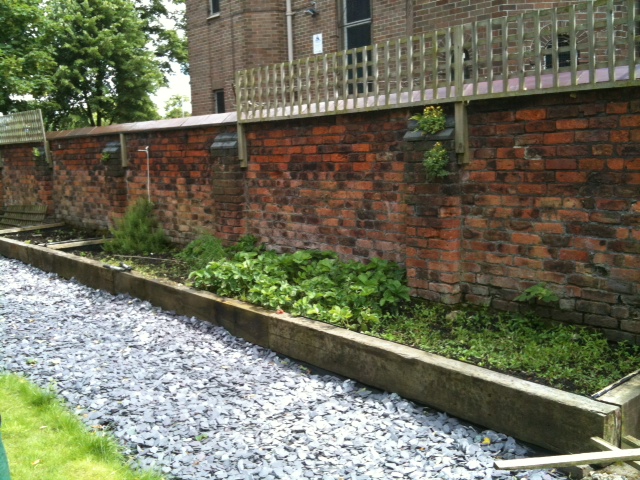
Would you like a rent-free plot on which to grow your own food? Eat Green (South Manchester) is pleased to announce new landshare plots in Didsbury, Chorlton and Withington, with space for up to 15 growers.

Landshare plots

East Didsbury

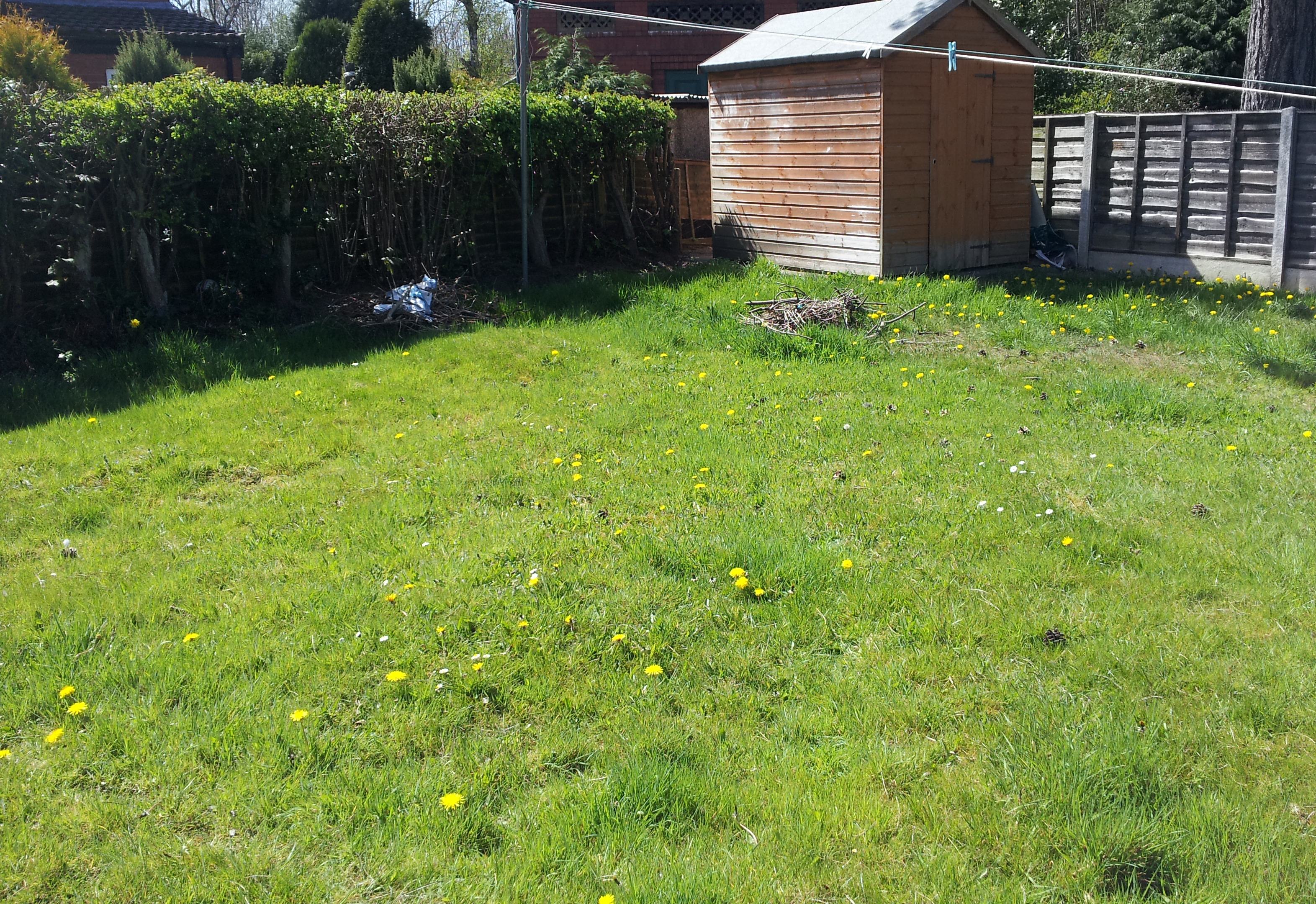
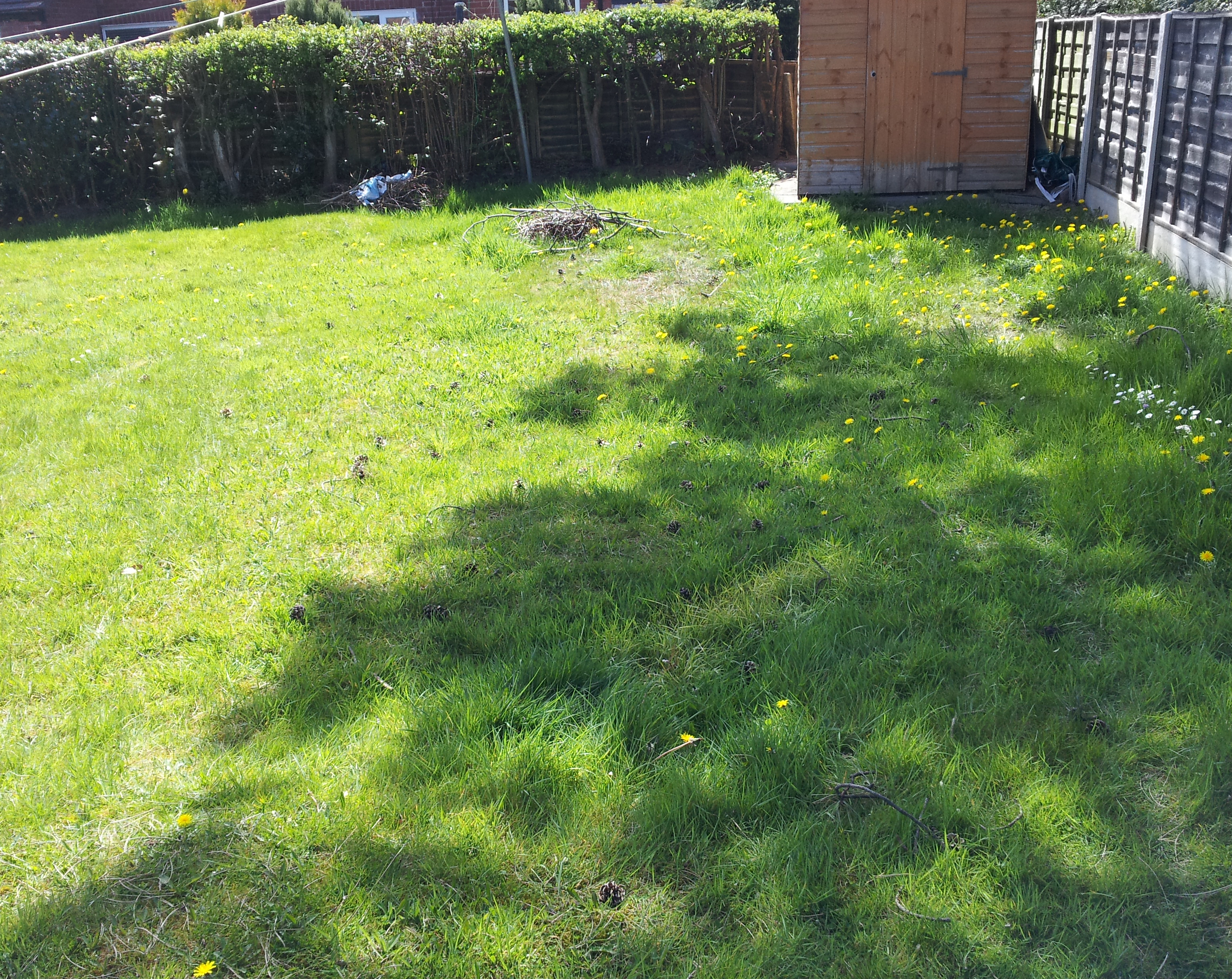
Spacious plot available within walking distance of the Parrs Wood complex in East Didsbury. Growers will have access to the landowner’s tools and can leave items in an on-site shed (at their own risk). Weekend gardening times preferred by owners. Would suit up to 4 growers.

East Didsbury 1East Didsbury 2


Didsbury Village

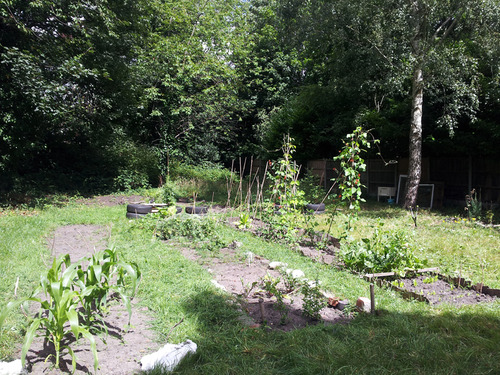
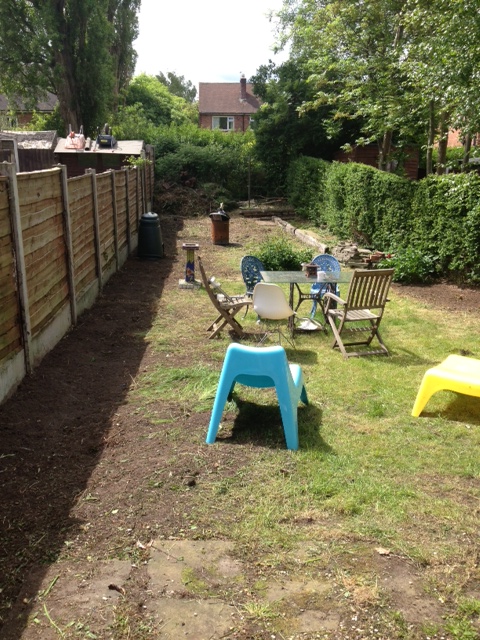
Up to 5 more growers wanted to share management of former community garden in Didsbury Village. Growers will benefit from access to established communal soft fruit and herb areas, an on-site water butt, and ready-weeded beds. Weekend gardening times preferred by fellow growers.

Didsbury Village

Chorlton

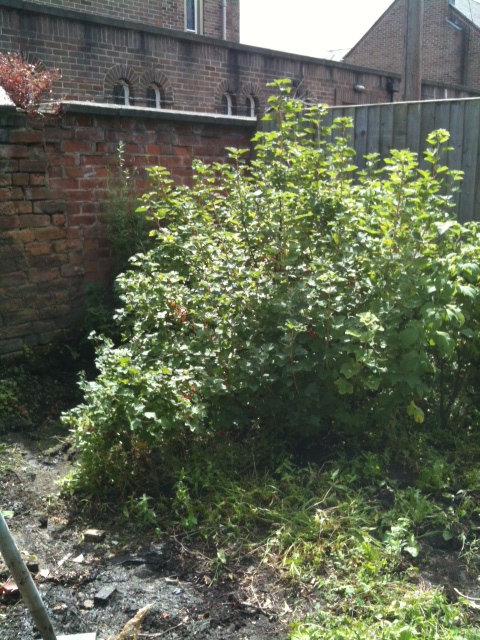
Landshare plot available in Chorlton. Located near the Christie Fields pub/hotel in Chorlton, the land benefits from a greenhouse, and currants, strawberries and raspberries that the owner is happy for the growers to pick!

Chorlton 1


Chorlton 2

Withington

Sunny plot for up to 4 growers to share near Minehead Community Resource Centre in Withington. Initial agreement for up to 2 years (rolling). Accessible 8am to 7pm, Monday to Sunday. Flexible landowner and access to outside water tap and shed (at own risk).

Withington

For more information about any of these plots, please email Eat Green. Rent is completely free of charge to paid-up supporters (84p per month/£10 per year) and there are no hidden costs.

Alternatively, if you have a gardening space going to waste – and fancy some free fruit and veg in return – drop the Eat Green team a line and they’ll see what they can do!

info[at]eatgreen.co.uk | https://twitter.com/eatgreenuk

We here at MCFly are proud of our grubby and paranoid mind. We cultivate it. So we sent the Eat Green people this –
“what’s in it for Eat Green, other than good reputation (!) and warm inner glow (!). i.e. did you guys win a contract to administer this?”

and got this –

“No contract, and we’re still all volunteers, doing it for the love of it (and obviously to help people lower their food-carbon footprints) :). All plots are a result of putting a shout-out for people who have land that they’re not using. Two of the plots are privately owned; one is a social housing property, obviously with the social landlord and tenant’s agreement; one is via a local estate agent.”

Posted in Food, inspire, volunteer opportunity | 3 Comments

Linking storms to #climate change a ‘distraction’, say #Manchester experts

From this press release

Connecting extreme weather to climate change distracts from the need to protect society from high-impact weather events which will continue to happen irrespective of human-induced climate change, say experts.

Cutting greenhouse gases will not eliminate storms, say the authors

Writing in the journal Weather, Climate and Society, the University of Manchester researchers argue that cutting greenhouse gas emissions, while crucial to reducing humanity’s longer-term impact on the planet, will not eliminate violent storms, tornadoes or flooding and the damage they cause.

The authors suggest that developing greater resilience to extreme weather events must be given greater priority if the socioeconomic impact of storms, like those that have ravaged Britain this winter, is to be reduced.

Professor David Schultz, one of the authors of the guest editorial, said: “One of the long-term effects of climate change is often predicted to be an increase in the intensity and frequency of many high-impact weather events, so reducing greenhouse gas emissions is often seen to be the response to the problem.

“Reducing humanity’s impact on our planet should be pursued as a matter of urgency, but more emphasis must also be placed on being resilient to individual weather events, as this year’s storms in Britain have so devastatingly shown.”

In the past, say the authors, society responded to weather disasters with calls for greater resilience, but public awareness of manmade climate change has given climate timescales (decades and centuries) far greater importance than weather timescales (days and years).

Schultz, a professor of synoptic meteorology, and co-author Dr Vladimir Janković, a science historian specialising in weather and climate, say the short-term, large variability from year to year in high-impact weather makes it difficult, if not impossible, to draw conclusions about the correlation to longer-term climate change.

They argue that while large public investments in dams and flood defences, for example, must account for the possibilities of how weather might change in the future, this should not prevent short-term thinking to address more immediate vulnerability to inevitable high-impact weather events.

“Avoiding construction in floodplains, implementing strong building codes, and increasing preparedness can make society more resilient to extreme weather events,” said Dr Janković. “But compounding the problem is that finding money for recovery is easier than spending on prevention, even if the costs of recovery are much higher.”

This bias, say the authors, has a tendency to diminish the political dedication for preventative measures against extreme weather, regardless of whether they are caused or intensified by manmade influences. Yet, steps taken to protect society from the weather can protect the planet as well, they argue.

Dr Janković, based in the Centre for the History of Science, Technology and Medicine, said: “Improving forecasting, increasing preparedness or building better infrastructure can increase resilience and reduce carbon-dioxide emissions. For example, greening neighbourhoods or painting roofs lighter colours will both reduce the urban heat-island effect and reduce carbon-dioxide emissions through reduced air-conditioning costs, while making cities more resistant to storm damage would reduce emissions generated from rebuilding devastated areas.”

Professor Schultz, from the School of Earth, Atmospheric and Environmental Sciences, added: “Linking high-impact weather events with climate change can be distracting; perpetuating the idea that reducing greenhouse gases would be enough to reduce increasingly vulnerable world populations, in our view, only confuses the public and policy-makers as to the socio-economic susceptibility to extreme weather.

“With or without mitigation, there is no quick-fix, single-cause solution for the problem of human vulnerability to socio-environmental change, nor is there a reasonable prospect of attenuating high-impact weather. Addressing such issues would give the world an opportunity to develop a two-pronged policy in climate security, reducing longer-term climate risks in conjunction with preventing shorter-term weather disasters.”

Posted in Adaptation, press release journalism, University of Manchester | 6 Comments