In 2012 Manchester City Council aimed for a 10% reduction in its own emissions. In July 2013 it claimed a 7% reduction. It was able to do this because responsibility for traffic lights moved from its books. Looking at everything else (buildings, transport) emissions went … UP by 1.8%.
So, building on that extremely strong base, the Council’s bureaucrats have proposed a series of actions to help them hit a new “7%” target. You can see the complete list here. Manchester Climate Monthly is going to take a closer look at each and every one of these 44 “actions.”
Twice a week, on “Annual Plan Tuesdays” and “Annual Plan Thursdays” we will be asking a few straightforward questions about each item. And to illustrate each post, we (Marc Hudson and Marc Roberts) are devising “Top Trump” cards for all of these actions. At two a week it will take you until December or so to collect the whole set… So far can’t give you a percentage on the 2005 figure, since the Council has been going off its 2009/10 baseline, in direct contradiction of its own plan.
And throughout all of this, we are asking YOU, the reader, and council tax payer (probably), what YOU think the Council should REALLY be doing… Because next year the council moves to a “three year plan.” And given what we already know of the low quality of the carbon plans and their implementation so far, we, the citizens, will be complicit if we remain silent…
What it says
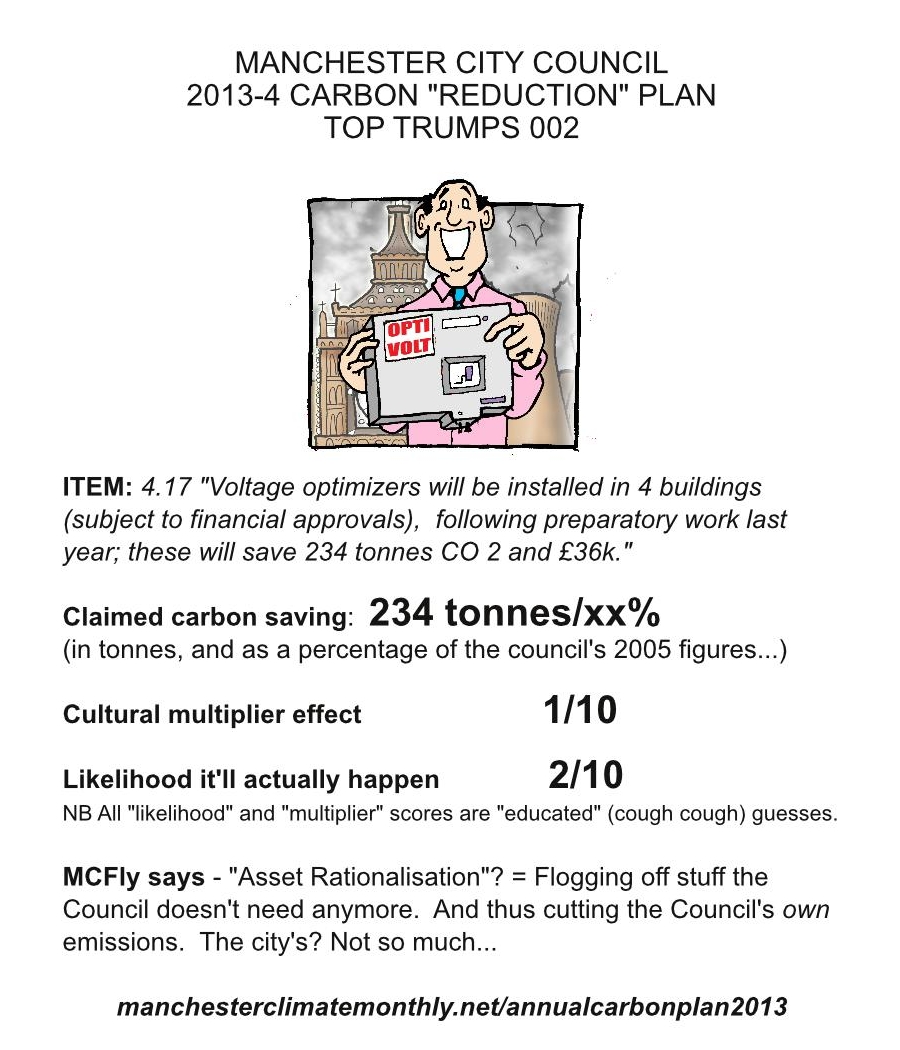
4.17 Voltage optimizers will be installed in 4 buildings (subject to financial approvals), following preparatory work last year; these will save 234 tonnes CO 2 and £36k.
What was said last year (direct quote from 2012/13 plan) “A shortlist of 5/6 new locations for voltage optimizers will be selected and delivered this year (emphasis added) from ten potential sites identified. From the ten, total potential savings of around 682 tonnes of CO2 could be achieved, requiring upfront investment of approximately £600,000.”
MCFly’s verdict
So, first thing to say is, they made bold promises in 2012-3 that they would save some proportion of “682 tonnes”. And they didn’t do it. And they didn’t explain why (presumably ConDem cuts, but at least SAY that, eh?). And they were not scrutinised on their failure. So, make of this latest “promise,” which is “subject to financial approvals,” what you will. What should be an 8/10 likelihood is surely no more than 2/10.
What would a proper three year plan around this item look like? They’d name their top twenty buildings that could do with voltage optimisation. They’d start DOING THEM. 10 this year, 5 next year, 5 the year after. No waffle, no weasel, just wattage, eh watt?*
How can culture be shifted around this item? I personally have no idea.
What else should the Council be doing around this item?
Other info n/a
Phone numbers and emails of the organisations n/a
* Yes yes, I have a hazy understanding of the difference between voltage and wattage. I’m just trying to amp up the tabloid-ese. I hope I don’t encounter ohmighty resistance to this…
Manchester Hub, Oxford Place, 61 Oxford Street, Manchester
Here at the National Trust, we want even more people to enjoy our extraordinary places. We want people of all ages and backgrounds to get involved with them, be inspired by them, and love them as much as we do. That’s why we’ve put some bold ambitions in place. We want everyone in England, Wales and Northern Ireland to feel like a member of the National Trust and, by 2020, five million will be.
If you want to work for an organisation with a fascinating past and an exciting future then the National Trust could be for you. Our places are open to all and we thrive by involving as many people as possible in what we do. That’s really important to us. Our careers are as varied as the places we care for and that’s why we look for people from all backgrounds, with a variety of skills and abilities to help us maintain our places ‘forever for everyone’.
circa £25,410 per annum – Full time (37.5 hours per week), fixed term contract until 28/02/15
About the role
The National Trust is famous for its magical gardens. However, this unique role will create magical and inspiring gardening projects away from Trust sites and in the heart of the city of Manchester. As part of our three year strategy in Manchester, we really want to get people involved in our work and we’re working hard to get people behind us, supporting what we do. And that’s where you come in. This role is about much more than just seeds and shrubbery, you’ll find the best ways for us to engage the public through gardening and get them excited about beautiful green spaces.
Green-fingered and hands-on, you’ll come up with an inspiring programme of activities in gardening and caring for green spaces. We want to encourage others to see how important and exciting it is to enjoy and look after Manchester’s great green outdoors through a programme that celebrates how special these spaces are. Whether you’re managing projects or volunteers, supporting stakeholder relations or engaging with the public, no two days will be the same. As this project is partly externally funded, we’ll look to you to ensure contracted outcomes are met and that budgets are managed all while finding new and innovative ways of sharing gardening skills with people in the city. What’s more, you’ll share your love of our incredible places with visitors too, and getting more people from Manchester involved in our work.
Please also read the full role profile, attached to the end of this advert.
About you
Firstly, you’ll share our love for fantastic green places and you’ll enjoy sharing our story with visitors and supporters of all ages and backgrounds. As well as some practical gardening/horticulture experience, you’ll have an NVQ level 3 or RHS level 3 (or equivalent) coupled with a good practical horticultural experience. You’ll also have experience of planning and delivering gardening projects, and inspiring and engaging the public through gardening and growing projects, as well as experience of using and maintaining garden machinery. Also if you have media training and knowledge of using social media to engage with the public, that’s even better. A current driving licence will also be essential for this role.
Do great things for us and we’ll do great things for you and your career. We’ll give you all the training, support and continued professional development you need, and we appreciate that work/life balance is important. You can also look forward to free admission to all our incredible places, and a helpful 20% off at our shops, cafes and restaurants. But they’re just the benefits we can tell you about here. There are lots more at www.nationaltrustrewardsandbenefits.org.uk
How To Apply
To apply for this vacancy or any other vacancies of interest, you will need to log into your account or create a new one, located on the home page.
Closing date: 12 August 2013
Provisional interview date: 20 August 2013
The Trust appoints on merit.
Short listing is carried out objectively by assessing the information you provide against the requirements of the job as set out in the vacancy details on our website. If you are short listed, you will be contacted and invited to attend an interview. We will also tell you if we need you to do anything else such as a skills test, presentation or a property visit.
We only accept on-line applications. However, if you require assistance to participate in the recruitment process, for example due to disability, please contact the Recruitment Team at 0870 240 0274 (option 1) for assistance.
Having a criminal record will not necessarily prevent you from working at the National Trust. In reaching a decision we will take account of the nature of your work, the circumstances and background of the offence(s) and the time elapsed.
The “Environmental Sustainability Subgroup” of Manchester City Council will meet for the first time at 11.30am on Wednesday 7th August. The meeting, which is open to the public [no need to book], will take place at Manchester Town Hall, and is the first of three for the ad- hoc group.
Councillor Kate Chappell, who chairs the group, told MCFly ““Sustainability is vital to Manchester’s future. We know from Professor Kevin Anderson that there are no simple fixes. This subgroup will provide councillors with the chance to properly consider and discuss some of the most complex issues, and to begin to chart a path forward.”
As reported previously, the group is forming in response to unfinished business from several well-attended and positive meetings of the Economy Scrutiny Committee. This committee, one of the six scrutiny committees, mainly looks at employment, education and skills. Given the lengthy list of reports the ESC already had on its “forward plan”, the proposal at the May 2013 meeting to establish a sub-group (made initially by Liberal Democrat Victor Chamberlain) was warmly welcomed.
The agenda of the meeting (download here) will include a presentation by the Head of City Policy
“providing an overview of the history of developments in Manchester relating to carbon reduction climate change activity. To include the development of Manchester – A Certain Future (MACF), the Manchester City Council Climate Change Delivery Plan 2010-20, and examples of work that has taken place to date in Manchester.”
It will also have an update on the Economy Scrutiny Committee’s May 2013 Decisions” an item on ” Manchester – A Certain Future: consultation with stakeholders” and a “Work Programme of the Subgroup”
The membership of the subgroup is ; Councillors Chamberlain, Kate Chappell (Chair), Basil Curley, Daniel Gillard, James Hennigan, Suzanne Richards, Carl Ollerhead, Chris Paul, Fran Shone, Andrew Simcock and Angeliki Stogia.
Perhaps they will find the time to look revisit the question of all six of the Scrutiny Committees looking at different aspects of climate change and how it will affect Manchester, or at the many suggestions that were put to the Neighbourhoods Scrutiny Committee in July, such as –
The Neighbourhoods Scrutiny Committee could;
* Create a standing item on the committee’s agenda where monthly updates of selected key items in the 2013/4 plan are given, where key items are ones that are likely to a) produce significant carbon savings and/or b) create cultural “multiplier effects.” This would prevent the unfortunate situation that now presents itself where councillors have been unable to scrutinise what has been going on over the last year and now find that plans have not been successfully implemented.
* Have the quarterly Directorate carbon reduction reports scrutinised by the Neighbourhoods Scrutiny Committee (this is a proposal first put forward by Cllr Bernard Priest in early 2012).
* seek permission for members of the Neighbourhoods Scrutiny Committee – or indeed other councillors with an interest in the Council’s Annual Carbon Reduction Plan, such as members of the Economy Scrutiny Committee’s “Environmental Sustainability Subgroup” to join the deliberations of the Environmental Strategy Programme Board.
* Ask for a report on how the Climate Change Action Plan is being integrated into Ward Plans and also Strategic Regeneration Frameworks. The ward plans seen by MCFly have no or at most very cursory mention of Climate Change objectives.
* Ask for the report on the “Stakeholder Steering Group” to be brought forward from its scheduled position of February 2014, since the post of Chair of the Steering Group appears not to have been filled and only one blog post has gone up on the site in the last 8 months. Clearly things are awry.
* Recommend that a “refresh” campaign takes place to try to get more endorsers of the Climate Change Action Plan. Numbers stalled at 220ish, against a target of 1000.
* Recommend that a “now implement” campaign takes place, asking the 220 organisations that endorsed the Climate Change Action Plan to create their own implementation plans.
* Encourage all members of the Neighbourhoods Scrutiny Committee complete their “Carbon Literacy Training” as soon as possible.
* Request that all members of the Neighbourhood Scrutiny Committee are on the circulation list of agendas/papers/minutes for the Environmental Sustainability Subgroup that is being set up at Economy Scrutiny Committee on Weds 17th July.
* Request a report by officers in collaboration with stakeholders on what is understood by a “low carbon culture” above and beyond the introduction of carbon literacy and “Green Impacts.”
* Request a verbal presentation from outside experts on the “adaptation” challenges facing Manchester. Two obvious candidates to deliver this would be Dr Jeremy Carter of University of Manchester and Lex Massey, who is the lead on Adaptation for the Low Carbon Hub. There would be no cost implications in preparing a report.
* Liaise with reelmcr, the makers of the very successful 2009 film “The Green Wave” about the possibility of a follow-up film.
In 2012 Manchester City Council aimed for a 10% reduction in its own emissions. In July 2013 it claimed a 7% reduction. It was able to do this because responsibility for traffic lights moved from its books. Looking at everything else (buildings, transport) emissions went … UP by 1.8%.
So, building on that extremely strong base, the Council’s bureaucrats have proposed a series of actions to help them hit a new “7%” target. You can see the complete list here. Manchester Climate Monthly is going to take a closer look at each and every one of these 44 “actions.”
Twice a week, on “Annual Plan Tuesdays” and “Annual Plan Thursdays” we will be asking a few straightforward questions about each item. And to illustrate each post, we (Marc Hudson and Marc Roberts) are devising “Top Trump” cards for all of these actions. At two a week it will take you until December or so to collect the whole set… So far can’t give you a percentage on the 2005 figure, since the Council has been going off its 2009/10 baseline, in direct contradiction of its own plan.
And throughout all of this, we are asking YOU, the reader, and council tax payer (probably), what YOU think the Council should REALLY be doing… Because next year the council moves to a “three year plan.” And given what we already know of the low quality of the carbon plans and their implementation so far, we, the citizens, will be complicit if we remain silent… What it says
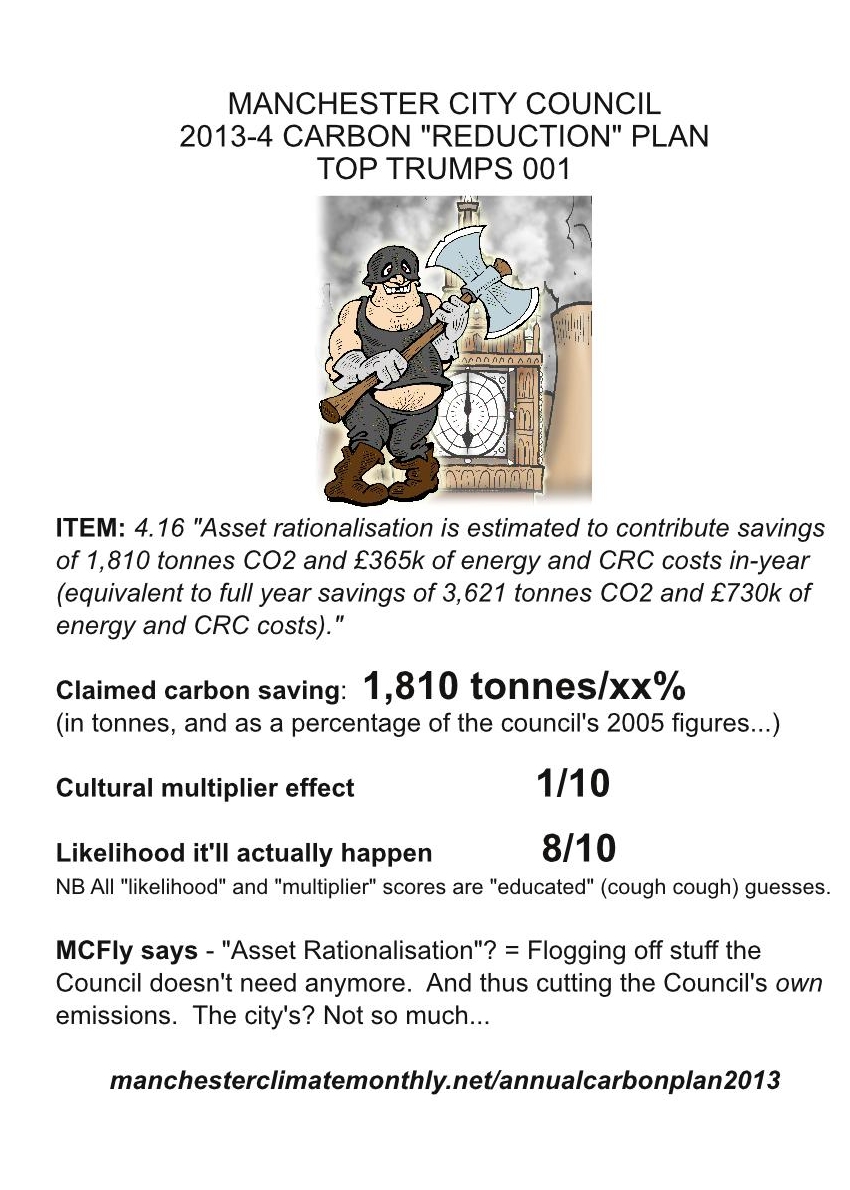
“Asset rationalisation is estimated to contribute savings of 1,810 tonnes CO 2 and £365k of energy and CRC costs in-year (equivalent to full year savings of 3,621 tonnes CO 2 and £730k of energy and CRC costs).”
What was said last year (direct quote from 2012/13 plan “The Council saved 213 tonnes of CO2 in energy consumption costs through
reducing the number of buildings in its operational portfolio in 2011/12. As many closures occurred towards the end of the financial year, full-year annual savings going forward for these rationalised buildings will be significantly higher, equating to 1,089 tonnes of CO2.”
MCFly’s verdict (Is it ambitious enough, is it likely to happen, is this meaningless gibberish/stuff that they were already doing designed to pad out a thin plan, what questions about this “action” are yet to be answered etc etc)
This will, presumably, be one of the ways the Council intends to hit its 2020 target – be so much smaller that its emissions will have inevitably gone down. This, of course, will not help the city as a whole. To do that you would need other organisations also signing up to the Climate Change Action Plan, and the ones that have already signed up producing their own Implementation Plans, and doing a better job of turning those plans into reality than the Council has so far. None of this seems at all likely. Grab your ankles and kiss your arse goodbye…
What would a proper three year plan around this item look like? Any takers?
How can culture be shifted around this item? I personally have no idea.
What else should the Council be doing around this item?Telling everyone exactly what it owns and what it intends to dispose of
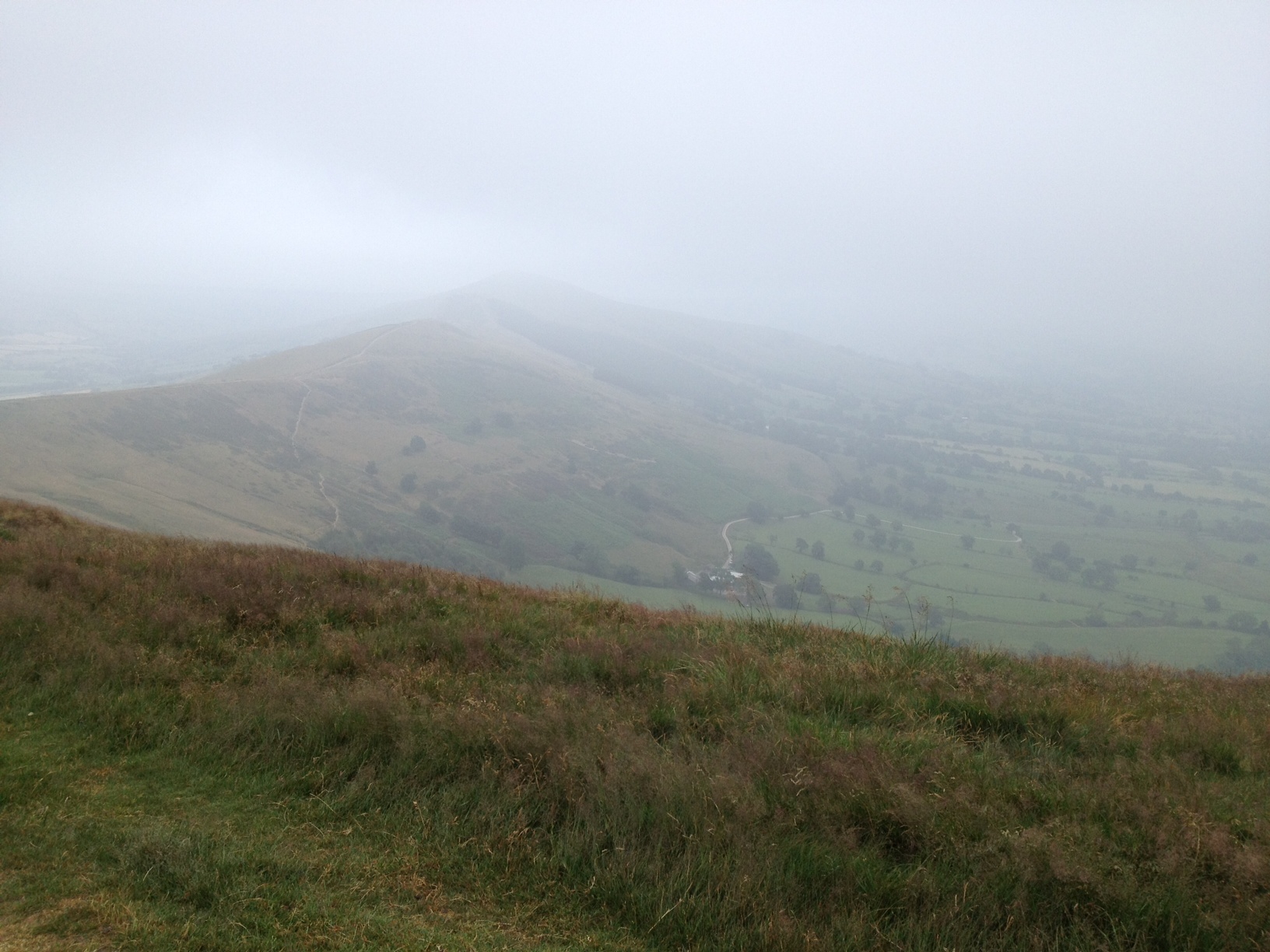
This is a manifesto to create a natural environment from the Southern Pennines to the Scottish border. We live in a densely populated country , but those of us living in cities feel cut off from wild environments. Manchester is fortunate to be surrounded by the Pennines on two sides and I often spend at least part of every day looking longingly at the not-so-distant hills. The smooth round hills of the Pennines are not truly wild in any real sense though. They look that way after centuries of stripping down the native forests and then continual over-gazing by animals released onto the land by human activity and now supported by heavy farming subsidies to keep marginal land in production.
The higher moors are kept clear of trees by constant burning to create shooting ranges and the extreme acidic environment created by air pollution from our old industrial environment. Only the highest mountains in the UK are above the natural tree-line.
I’ve been inspired to write this by my regular walks over the southern Pennines and further afield in Wales , The Lake District and Scotland. I’ve been thinking about this for long time and argued with people about the need to bring back real wild country, but it has been brought in to sharp relief by the publication of George Monbiot’s recent book “Feral.” All that really needs to be done to create a natural environment of forest and high moorland is benign removal of subsidy for marginal sheep farming and the fencing in of those areas we want to turn to forest to protect them from the ravages of stray sheep, deer and rabbits. Nature will do the rest and within a generation the southern Pennines will become a natural forest, creating huge potential benefits as a store house of atmospheric carbon, vastly increasing the natural habitats of all our native species of plants and animals and providing a richer environment with forestry, fishing and natural tourism from surrounding cities replacing many times over the few jobs that sheep farming currently supports.
If we want to speed the process up we could encourage this process by starting to plant native trees on the lower slopes and on the edges of river valleys and then bringing back species such as otters and beavers. I am not arguing for the loss of the high heather moors here; these could continue to managed as they are today to encourage heather and preserve the wide sweeping views.
All that is required is concerted action to take marginal land in the Pennine chain out of subsidized sheep farming and allow forests to develop and grow as they once did before humans came and removed them. With help from public bodies, land owners and ordinary people this vision could be realized within our life times and would be one legacy our generation of post-war consumers could leave to our children.
Councillor David Ellison
Labour Member Didsbury West Ward
Manchester City Council
Here’s a WonkyCam video, complete with poor sound quality, of Dave Bishop launching his wonderful Biodiversity Report[see here for link]. And he has kindly shared with us the text of what he said!
I’d just like to draw your attention to the quote which opens my report; a quote from the American Scholar, anthropologist and author, Jared Diamond:
“Elimination of lots of lousy little species regularly causes big harmful consequences for humans, just as does randomly knocking out many of the lousy little rivets holding together an airplane.”
Very recently, there have been reports in the press of drinking water supplies being contaminated by a chemical called metaldehyde. This material is lethal to molluscs, such a slugs and snails, and is a key ingredient in slug pellets.
The Environment Agency told the Guardian that between 2009 and 2011 concentrations of metaldehyde, used by farmers to protect their crops from slugs, were found in 81 of 647 reservoirs, rivers and groundwater supplies. The chemical is almost impossible to remove from drinking water using standard treatments.
Currently the Environment Agency encourages the agricultural industry to self-regulate on the issue.
But Green party leader Natalie Bennett said that the industry’s inability to control metaldehyde meant a rethink of slug control methods was needed and regulations should be enforced.
“The current voluntary system isn’t working, we’ve got a threat, if hard to quantify, to human and ecosystem health. It’s clear that regulation to protect both is needed,” she said.
Restoring populations of natural slug predators, such as hedgehogs, frogs, wild birds, predatory nematodes and carabid beetles, represented an approach that would work for farmers and for the wider environment, said Bennett
“We clearly have to take a broader view of farms as part of our environment, and understand that they have to work with and support our natural ecosystems, not attempt to manage unfavourable aspects of them with chemical blankets.”
Of course, populations of many of the natural slug predators on Ms. Bennett’s list are currently endangered because of our society’s careless and contemptuous attitude towards nature and the wider environment. Nevertheless, in this example, we have a potential threat to both our water supplies, through contamination, and a threat to our food supplies as a result of a slug population explosion.
So, there’s a possibility of Big Harmful Consequences for humans!
You’ve probably all read about the threats to our wild and honey bee populations? Top of the list are neonicotinoid pesticides which act on the nervous systems of insects. Big monocultures, like those of Oil-seed Rape, are very vulnerable to plagues of pest species. Such plagues require chemical blankets, such as neonicotinoids. It doesn’t seem to have occurred to anyone that such lethal poisons might threaten benign insects, like bees, too. Although I suspect it did occur to someone but such objections were dismissed out of hand because nothing must stand in the way of the profit motive – certainly nothing as trivial as a few insects.
Bees are not only threatened by poisons but also by our management of our rural and urban green spaces. They need abundant supplies of pollen and nectar for their own sustenance and to produce honey. But local authorities now, routinely, cut green spaces, in May and June, when all of the wild plants come into flower. There seems to be no good reason for this behaviour – apart from an obsession with tidiness and, I suspect, because local authority employees like to be outdoors in good weather. And the bees can’t even rely on urban gardens any more because far too many of these are being tarmaced over to provide hard-standing for cars.
The loss of bees and other pollinating insects is likely to cost our country dear. A recent report from the University of Reading puts the value of insect-pollinated production for the UK as a whole at £510.2m and North West England alone at £9.5m.
But the loss of bees and other pollinators, and the ecosystem services they provide, are likely to be much higher than the cost of conserving them. The Reading report states that: “To replace pollination services with hand pollination could cost farmers around £1.8bn per year in labour or pollen alone.” This would, of course, render many fruit and vegetables unaffordable. Imagine a world in which such fruits as apples, pears, plums and cherries are expensive luxuries only to be encountered on the tables of such people as banking executives, property developers and mafia bosses!
And it gets worse:
The Reading report also points out that: “Beyond crops, bees also pollinate clovers and other nitrogen fixing plants that are important to improving the productivity of pasture systems for livestock grazing which are themselves major agricultural enterprises in Wales, the Highlands and northern and western parts of England. The economic benefits of this are presently unknown but likely to be high.” So, supplies of such foodstuffs as beef, lamb and milk could also be threatened.
The loss of bees = Big Harmful Consequences for humans.
Currently around 15 diseases are threatening our native trees. There’s a weird, but very persistent belief, held by local authorities, property developers and even conservationists – who should know better – that loss of biodiversity can be compensated for by planting trees; nothing could be further from the truth! In fact planting trees can actually reduce biodiversity (see my report for details).
I believe that, currently, there are few, if any, nurseries in the UK specialising in the growing of tree saplings – so, to satisfy the irrational tree planting obsession, they have to be imported from continental Europe – and lethal tree diseases are probably imported with them. The distinguished tree and woodland expert, Peter Marren commented recently on the origins of the disease, Ash Die-back (Chalara fraxinea), currently threatening our Ash trees:
Future generations might wonder who was to blame for the holocaust of our most graceful woodland tree. They might point a finger at the hapless, failed guardians of our woodland heritage, Defra and the Forestry Commission. They would be wrong. What is about to cause the worst disaster in woodland history is not so much law as love. Everyone loves a planted tree. We thought planting trees was the solution but it wasn’t. It was the problem.”
He confirmed that many of the 15 or so tree diseases that are now running rampant in our countryside were probably brought in on imported trees. He castigated the Woodland Trust, who claims to be, “passionate about [tree] planting”. Ash Dieback has recently appeared on one of their Suffolk estates, in a plantation next to an ancient wood (!) He asked where their plantation trees came from; were they imported?
The Woodland Trust has asked members of the public to report any instances of Ash Die-back that they encounter so that the progress of the disease can be monitored. Nevertheless, a recent survey found that only about a fifth of the population can actually recognise an Ash tree. To be honest, I’m surprised that the figure is that high – so divorced has our culture become from the natural world!
Ash Die-back doesn’t seem to have appeared in Manchester yet – but it will be a disaster when it does. There are thousands of big, mature Ash trees in our streets, parks and gardens. And if they die, they’ll all have to be chopped down – at a cost of millions of pounds.
So, dishonesty, ignorance and greed are leading, inexorably, to Big Harmful Consequences for humans.
At the end of this month, I will be 65 years old – yes, I’ll officially be an old git! For a big chunk of that time, from when I first became aware of what is happening, I’ve had to watch in horror as the world is brutally dismantled around me. The place that I probably know best, the Mersey Valley, has lost a huge amount of its biodiversity in the 40 years that I’ve known it – and much of that loss is down to ignorance, complacency and contempt for the natural world.
I will probably not see the full results of the great, and unbelievably stupid, War Against Nature – but a lot of the young people and children – who I pass in the street every day probably will – they could well grow-up in a bleak, barren, poisoned and denuded world. All of the countless Big Harmful Consequences, added to the dire effects of Climate Change, will render the world unliveable in just a few generations. As people like Marc speak out about Climate Change it’s time that someone spoke out about biodiversity loss too; in the absence of anyone else, speaking out against local biodiversity loss seems to have fallen to me. Please read my report.
It wasn’t the apologia for Shell. It wasn’t even the bland “we need economic growth.” (Though I can see why so many friends and acquaintances were disheartened by these aspects of Charles Secrett’s little opener at the “Economy for the 99%” event held in late June in Chorlton.)
And it wasn’t even the trotting out of buzz-phrases-empty-of-meaning (“perfect storm,” “scale of the opportunities,” “we have all the technologies.” )
It was … his unwillingness share the limited resources around equitably. By not keeping to the time schedule that the organisers had created, he was, intentionally or not, showing a demoralising lack of respect for the fact that other people have views that are equally/more worth hearing as his own.
He was sat there when the organisers pleaded with everyone be punctual in making it to their workshops. And he knew he was supposed to stop at 2pm. But instead, he kept on going for a further 10 endless minutes, having swatted aside a “5 minutes” notification from the chair with a smile and a wave of his hand.
I am not sure if he started when he was supposed to, but it’s not as if he was about to run out of time to cast his pearls of wisdom in front of the swinish multitude. He had, after all, been appointed two workshop slots and also the final word in the final plenary.
What is to be done?, or how to allay the Dwarf Star Alloy.
Organisers of events could think long and hard about what exact value “big names” add to events. The main argument is that, apparently, they get more people through the door. You have to ask yourself though, if these people who wouldn’t otherwise have come should have top priority. If they are only coming because some “star” is speaking at the event, then how likely is it that you will be able to convince them to give up an hour or two a week to actually start DOING stuff? And the “big name” does not come for free, you see. Because it shapes the event, meaning that you have to have a set-piece opening session where rows of people act as ego-fodder, and you end up having workshops attended by loads of people who want to butt heads with the… star. And you have to have a closing plenary.
And the “big name” is – almost by definition – not a local, and so doesn’t have anything to say about specific local problems (e.g. in Manchester we are about to become a thoroughly one-party state, and we have a “good” climate plan that is being ignored by both the powerful and the powerless.)
So you end up with bromides and bullshit bingo phrases, and people debating abstractions. Great.
On the specific point, of how you stop anyone from going over their allotted time, well, how’s about this; As the chair you say something like “Right, we have amazing speaker x from organisation y. He/she has assured me that he/she will only talk for x minutes. I will give him/her a one minute warning, and at the end of that minute, I will start to applaud, and I want all of you to applaud with me. Let’s do a dry run…” The chair applauds, everyone applauds, and as soon as they stop the chair turns to the speaker and says “over to you.”
Marc Hudson
mcmonthly@gmail.com
PS Yep, this is all sour grapes. I ran a workshop at the event and it had four, count ’em, four attendees. These four were very cool people, interesting and hopefully long-term allies. But I got one tenth of the punters that Mr Secrett did, so you can simply disregard everything I’ve said above as the bitter resentment of a failed activist. So it goes.
Our "leaders" are going to keep making empty promises. It makes them feel good. It gets the activists to act like zombie kittens. If you want to have some self-respect and perhaps make a difference (actual facts may vary), then find a functioning group that cares about your skills and knowledge - what you have, what you want.
One useful group might be www.climateemergencymanchester.net - you can email them on contact@climateemergencymanchester.net

 Voltage optimizers will be installed in 4 buildings (subject to financial approvals), following preparatory work last year; these will save 234 tonnes CO 2 and £36k.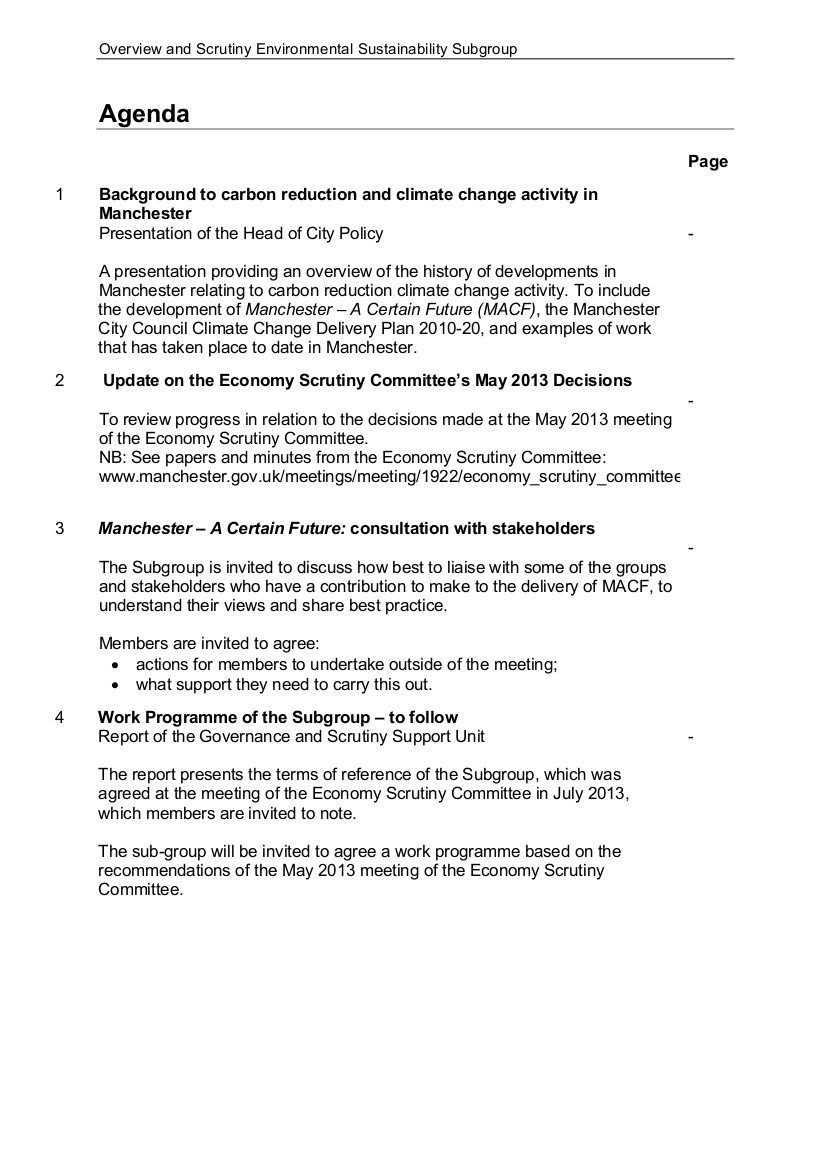


 manchester climate monthly