Competition! How do we “engage all individuals, neighbourhoods and organisations”…

Cross post from “SteadyState Manchester”

We want your ideas. The second goal of the Manchester Climate Change Action Plan is

To engage all individuals, neighbourhoods and organisations in Manchester in a process of cultural change that embeds ‘low-carbon thinking’ into the lifestyles and operations of the city. “

Nobody seems to have a clue about how to do that (or if they do, they’re keeping very quiet about it). So today we are launching a competition to get people talking about how we all achieve that goal.

First prize is going to be £70, second £30. We want no more than two sides of A4 paper. You can fill that with words, pictures, photos, diagrams, tables, graphs and anything else that you can think of to get your ideas across. You have until Saturday September 15th to send your entry to steadystatemanchester@gmail.com 

The winning entry, and other particularly good ones, will appear in the “Beyond Growth: for local prosperity, justice and climate safety” report that is being written collaboratively and will appear in late October.

Posted in Competitions | Leave a comment

Birchfields Park Forest Garden

Yasmin Quayyum writes about an exciting project that MCFly readers can get involved in.

Having recently marked its five year anniversary and newly being added to the Agroforestry Research Trust’s network, Birchfields Park Forest Garden is a dynamic and developing venture, moving from strength to strength. It is situated in the tranquil and picturesque surroundings of Birchfields Park, easily found half-way between the popular Longsight Market and nationally famous Rusholme ‘Curry Mile’.

This pioneering inner-city project grew from a campaign by Birchfields Green Action Group and has been funded by various organisations including Red Rose Forest (via the Heritage Lottery Fund), Wildabout Manchester and Awards for All – not to mention its parent organisation, Friends of Birchfields Park. Recognising that a forest garden, imitating patterns and processes of natural woodlands, would prove engaging, productive, educational and sustainable, the Friends have been of continuous support from the start.

Previously, the site was a council-maintained rose garden but has since been transformed into the lush, bio-diverse permaculture model that thrives today. Thoughtfully designed to beautiful effect, the blueprint took much reference from Whitefield’s ‘How to Make a Forest Garden’ and has benefitted from Manchester Permaculture Network’s input. Its circular form is divided into four quadrants – each led by its own Quadrant Leader – and each displaying its own individual character in terms of layout, species grown and function. The Forest Garden is shaped and maintained by dedicated volunteer Group members and local residents who share a common objective – environmental betterment for the benefit of local communities, wildlife and biodiversity.

Public involvement lies at the heart of the Forest Garden operation and new volunteers are always welcome: Work sessions take place on the third Sunday of each month, 1 till 3 p.m. and alternative extra sessions are frequently held on a weekday evening for those unable to attend on weekends or those able to contribute more time. Ever evolving, past activities have included hosting courses and events and new developments are also underway in an initiative to engage the interest and participation of local children. This is by way of introducing childrens’ forest gardening sessions for the local community centre’s After School Club which so far, have proved popular.

To participate in any of these activities, or if unable to volunteer but wish to support through donations, please contact Jane Morris: 07827980684, jane.morris1@btinternet.com or find out more
on www.manchesterpermaculturenetwork.org.uk/node/3601
Birchfields Park Forest Garden.
Dickenson Road,
Longsight,
Manchester,
M14-5JZ.

Posted in Food, Fun, inspire, Upcoming Events, volunteer opportunity | Tagged | 1 Comment

Free comic about “The Carbon Supermarket”

Cool climate cartoonist Kate Evans tells MCFly about her new project, which takes a critical look at Carbon Trading.

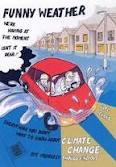
The snappily titled Funny Weather: Everything you Didn’t Want to Know about Climate Change but Probably Should Find Out was written in response to impending environmental catastrophe. I hope it can amuse, and inform people about climate change, and empower them to think creatively about social change. It’s entirely in comic format, and what I like about comics is the fact that people don’t realise that they’re reading about science and social policy. And if you make someone laugh, then you’re halfway to changing their mind.

I hope “ordinary people” put Funny Weather in their toilets, so they read it often. I’d also like it in the toilets in the House of Commons, the House of Lords, and the United Nations Headquarters.
I’m currently writing a book on pregnancy and birth, which is only going to contribute to the overpopulation problem. After that I’d like to get my teeth into financial reform. You can download the free comic The Carbon Supermarket from my website cartoonkate.co.uk if you want to know more about the international response to climate change.
www.cartoonkate.co.uk

Posted in education | Tagged , | Leave a comment

#Manchester #climate nuggets July 16 2012

Hi all,

This youtube is 54 seconds long and tells you about a really exciting project happening here in Manchester. Please watch it!

And this Thursday (19th) there’s a gathering at Madlab, on Edge St.
See here for more details.

Best wishes, and, as ever, if you want to volunteer some time and/or energy to MCFly, get in touch with us via mcmonthly@gmail.com…
PS Here’s our post-mortem of the last print issue. Please add to it!

Arwa Aburawa and Marc Hudson

Coming up this week

Weds 18th Economy Scrutiny Committee meeting of Manchester City Council

Thurs 19th, 3pm to 5pm Social Media Surgery at Zion Arts Centre, Hulme Book here

“We are here to listen to what organisations like you, community organisations, want to achieve by using social media in your workplace.
• Are you ‘Facebooked out?!’ Need help with your account?
• Do you want to know what everyone is twittering on about?
• Have you already got a wordpress account and have specific questions for us?
• Do you want to use video or pictures on the web to raise the awareness of your group or cause?
“Your place is free! Come and bring any social media questions and our volunteers and social media experts will help you out!”

Thursday 19th, 6.30pm to 9.00pm Steady State Manchester gathering at MadLab, Edge St in the Northern Quarter.
steadystatemanchester.net for more information

Stories you may have missed on the MCFly website

Volunteer opportunities
Work with Cooler Projects to make Manchester more carbon literate.

Lessons we like to pretend we have learnt
This week we are not pretending that we have learnt any lessons. Normal service (of pretence) will resume next week.

Reading the Manchester web

West Gorton to be “enthused

Things worth reading

George Osborne versus the future – extraordinary piece in the Guardian…

Posted in Weekly bulletins | Leave a comment

Sometimes it’s what #Manchester leaders DON’T say that matters: Silence and #climate change

Council Leader Richard Leese has probably never been accused of not saying enough. He’s articulate, confident and ferociously well-briefed.  He has a regularly-updated blog too, on which I lurk.  And I seem to be stalking him in real-life; I keep hearing him speak at events and committees. Never short of facts, figures, plans, visions.  But there’s a pattern of silence – four times in a six weeks or so is enough of a pattern for us – and it’s around the central dilemma of the 21st century…

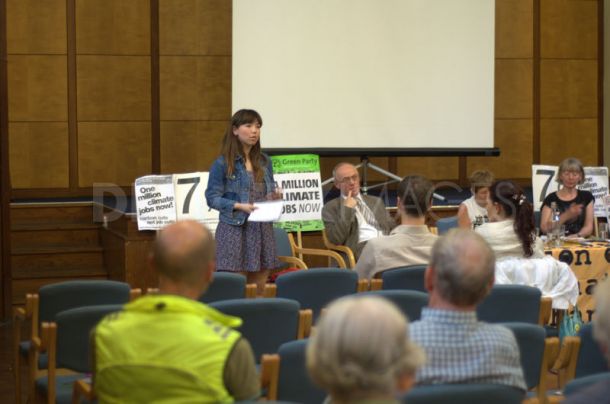
Item the first: He gave up his Friday night (May 25) to speak at an event organised by Campaign against Climate Change, on “One Million Climate Jobs.”  No blog post about this, nary a paragraph (despite plaintive comments).   Judging from this photo he wasn’t finding the meeting particularly in the chuckle-zone, but still…

Item the second: On Wednesday June 20th he was at the Economy Scrutiny Committee’s rather interesting discussion/workshops around green jobs, business, investment and what was that concept again – oh, yes, steady-state economics.  Again, nothing on the blog.

Item the third: He gave a detailed speech at a “Going for Growth” conference the other day.  No mention of the “Mini-Stern Review”, or the Climate Change Action Plan that he went to Copenhagen with.  No mention of climate change until prompted by a questioner, in fact. And, then, no mention on his blog.

Item the fourth: His blog post about full Council meeting on July 11th neglects the “Making Manchester Sustainable/anti-fracking” motion (see our stories before, the evening after, the day after). To be fair to him, it was a very very long (over three hour?!) meeting and he may have lost the will to live – or at least blog – by the end of it.

Still and all, you can tell how much someone powerful wants to talk – or feels the need to talk – about an issue by the amount they, um, talk about it….

Posted in Climate Change Action Plan, Event reports, Manchester City Council | Tagged | Leave a comment

Fallowfield Secret Garden – week-long opening!!

this from their website…

Big volunteer push!!!

Got some great news for you all today.  Me and Mark have committed one full time week of garden attendance starting this Monday…

This means the Secret Garden will be publicly open from 12am – 5pm and 6pm – 9pm, between Mon 16th and Fri 20th.

The reason for this is the Royal Horticultural Society are judging the Secret Garden for their ‘in bloom’ award.

Let make a big push to get the Secret Garden tarted up!!

Bring anyone interested down.  Even if for only an hour.  The buzzword is encourage.

To make this as productive as possible we will have everything necessary to begin several projects that I will list here.

You only need to bring yourself, and some elbow grease.

Project 1

Flower bed construction and planting

We will have plenty of soil, wood, and plants at the Secret Garden.

This will involve building the raised beds, by digging wood into a small trench.

Filling then up with soil

Then planting something

Simple and rewarding

Project 2

Complete the unfinished benches

uDesign was a success because everyone went hone with their fingers.

But we have two benches that were unfinished due to rain.

Can you remember how to make a dowel joint?

It’s very easy if you would like to try anyway!

Project 3

Neaten the paths and boarders

The weeding is the worst of this work…. So City South are lending us a strimmer.  Easy.

This means the most satisfying work is all that’s left.

The soil needs turning (the rain we’ve had makes this the perfect time).

And then membrane needs replacing.

Then we have some fresh wood chip to layer on top.  Thanks again to City South.

Project 4

Assemble the chicken hut

Again a fun project, a personal thank you goes out to Mirella for this kind donation!

The hut will be delivered dismantled.

The ground needs levelling.

And you need to get stuck in!


Like I say this is a big push for volunteers, remember to encourage everyone.

Full time workers have no excuse, we’re here until 9pm.

It’s time to transform the Fallowfield Secret Garden.

If you or your friend really can’t donate any time, can you lend or donate??

We have come to realise that money is not as good to receive as building materials (especially wood), plants and tools.

We would absolutely love it if you could lend us your container plants too.  It will be only temporary, until the judges go home!

Any garden furniture would be fantastic too.

See you there.

Posted in volunteer opportunity | Tagged | 3 Comments

Something for the Weekend 13 July 2012 #Manchester #Climate

We went to hospital the other day, to visit a friend.  Got lost, so walked onto a ward to ask for directions. All the doctors and nurses were singing Auld Lang Syne, which was pretty odd.  We said to one “what’s going on, it’s not New Year’s Eve.” They replied “Well, this is the Burns Unit.”

And this weekend, the only “eco” event we know of is this –

Sun 15, 10.30am Friends of Chorlton Meadows Event: Wild Flower Walk Chorlton Ees car park – end of cobbled road off Brookburn Road, Chorlton you may like to bring a packed lunch. You will also need to wear suitable footwear (boots or stout shoes) and dress for the weather.
*This event has been organised by the MV Warden Service but will be led by Dave Bishop (FoCM Chair) 0161 881 6276

Posted in Something for the Weekend | Leave a comment

Event Report: What’s cooking? The planet, soon enough

Attention Conservation Notice: MCFly co-editor Marc Hudson is seduced by good food, good research [about food, in this instance] and lucid approachable academics. First a bit about the report, then the launch event.

“The key message from this report is the diversity of potential scenarios. There is overwhelming evidence that the climate is changing; farmers are in the front line of this change. Nobody, however, can know the precise outcome. Hence, farmers and others in the food chain need to not only reduce their greenhouse gas emissions, but to develop systems, technologies and methodologies that allow them to adapt to the particular way in which climate disruption manifests itself in their region. Policy-makers need to put in place policies that are flexible enough to enable the food chain to respond to whichever scenario emerges over the coming decades.”
Andrew Rigg, Farmer, Hill View Farm

So says one of the people this bunch of (social and physical) scientists talked to while creating this report “What’s cooking? Adaptation and mitigation in the UK food system.” It was “funded by the Sustainable Consumption Institute to explore how the UK food system may develop and change in response to futures bounded by more or less extreme climate impacts and emission cuts.”  It “presents findings based on an interdisciplinary systems level scenario approach designed specifically to address complex societal problems.”

What does that last sentence mean? It means that smart people from more than one academic sub-culture asked a bunch of other smart people who are tackling problems today to help them come up with some possible ways things might turn out and what we might do if the some of the excrement contacts the air-conditioning blades (‘scenarios’).  Scenarios are not predictions –  “it will be one of a) b) or c)” –  but rather are tools for thinking with.  (1)

In this case, they’ve looked at a not-very-pleasant-for-most-people kind of future (2 degrees above pre-Industrial temperatures) and a really-extremely-unpleasant-for-everyone-and-everything-except-maybe-the-determined-cockroaches-and-a-few-rather-hardy-lizards kind of future (4 degrees).

To investigate how different scenarios may play out within the food system – from consumption to production – two contrasting climate futures are considered. One where mitigation and adaptation are commensurate with avoiding global temperatures breaching the 2°C threshold associated with ‘dangerous interference with the climate system’, and the other in a world aiming to avoid more than 4°C of warming. The analysis is framed by cumulative emissions, as opposed to long-term emission reduction targets, and takes a consumption-based approach to greenhouse gas emissions accounting.

One of the secret joys of scenario-building is coming up with the catchy names.  The SCI lot have done themselves proud –

“Five scenarios are developed, two in line with 2°C futures and three 4°C futures. Each is named after a typical meal: Bubble & Squeak & Mash & Banger (2°C), Pasta & Pesto, Chicken Tikka Masala & Lab Chops (4°C). ” [Yes, lab chops, not lamb chops.]

Key take home messages include –

Rising food demand will elevate greenhouse gas emissions…
It is important to see the full picture…
“The consumption-based accounting approach – which includes the emissions embedded in imports but excludes those from exports – is particularly appropriate for the food system because a high proportion of emissions are associated with the consumption of imported products (29% compared with a national figure of 21% for the UK).”
Targets will be missed without integrating adaptation & mitigation…
Growth in consumption needs to be tackled to avoid 2°C…
Information provision – necessary but not sufficient..
“A common response to addressing climate change through consumers is to provide information, in the form of marketing. However, whilst the level of knowledge may be a necessary condition of low carbon behavioural change, it is not sufficient as even those that are both knowledgeable and motivated face structural and cultural barriers to change. Given the deeply socially embedded and cultural nature of food and eating, information provision alone will not necessarily change food choices.”

So, this 60 page report was launched today, and MCFly was invited…

Here’s a blow-by-blow, no holds barred account of the event…

Professor Rod Coombs, (Deputy President and Deputy Vice-Chancellor of The University of Manchester) started it off, outlining a bit about the Sustainable Consumption Institute’s work and its various “flagships” (see our interview with Alistair Ulph for more info).

Then the project’s lead Dr Alice Bows  talked about “Framing the SCI’s Food System Scenarios: Confronting the physical evidence.”  She pointed out that if you had low mitigation (cutting emissions) then you were going to have high adaptation costs, and that “no climate change” future is no longer an option. (x) She added that in a 4 degree world agricultural yields will be a lot lower, that what we do in the next few years around emissions really matters, and that “we need to get off the curve [of ever increasing emissions] very soon…”

Next up Dr Mirjam Röder  talked about “Reconciling food security and emissions in a changing climate.” She outlined the three challenges the report looks at – increased food demand, the imperative to reduce emissions and the need to adapt to climate impacts.  She used wheat as an example, looking at the non-carbon costs associated with its production (who knew nitrogen fertilizer could be so bad?). At one point she baldly stated that they’d not looked at the 4 degree situation for the UK because they simply don’t know how the soil and micro-organisms will react/interact.

Finally Dr Carly McLachlan outlined “Consumer Responses to the SCI Food System Scenarios. The work had looked at talking to people in Greater Manchester, on the basis of postcodes (a proxy for wealth), split into all male and all female groups.  They’d fired questions not just about climate, but food in general, around seasonality, meat consumption, communal eating and genetic modification (among other topics). There is, unsurprisingly, a lot of confusion of seasonality [permanent global summertime, much?]. A lot of the women said their men-folk wouldn’t accept any real decrease in meat consumption (as in ‘if there’s not a dead animal on me plate, it’s not a meal!’). The biggest surprise to them was the intense dislike of the idea of communal eating, which, focus groupies thought, would aggravate social problems rather than alleviate them…

There were a few Questions of Clarification (nitrogen, tipping points, adaptation even possible, vegetarianism) and then Mike Childs, the science bod at Friends of the Earth had a fifteen minute slot.  They welcome the report, “only the start”… environmental problems [long list, all of which would be familiar to participants, and could have gone on a handout], social problems… what’s needed…. quibble with the mash and banger scenario because of too much reliance on tech, too much fish…

Right, I am a paid-up FoEr, and what I would have loved from the one campaigner person we had on all morning (between the academics [bless them] and the industry bod) was something about

– What are the barriers to achieving this good stuff?
– Why hasn’t enough of the right stuff happened? Why isn’t it happening?
– What have “we” been doing wrong?
– Do we really want to be standing here giving the same plaintive-yet-confident claims in another ten years, as we doubtless were ten years ago?
– What are the game-changers, given that if we keep playing this game, we are all going to fry/starve.

Rather than the usual litany of isn’t it a sitty shituation we find ourselves in and these [insert abstractions in the absence of historical/political actors] should happen.  Just sayin’.

Finally, Louise Neville, the sustainability officer at Quorn Foods
had the industry slot.  [Disclaimer – I had quorn sausages in my veggie fry-up this morning]. She was fine.  At pains to not claim Quorn is The Solution. “Four degrees scenarios quite uncomfortable reading” etc.

Plenary Discussion and coffee

Even though we went straight into “comment tennis”, there were a bunch of good questions and comments, including

– around nutritional impact of the scenarios (also, people aren’t going to drop dead of protein deficiency if they reduce their meat consumption)
– around what policy tools needed to avoid regressive (i.e. hit the poor) taxes and prices rises. Answer “it’s tricky”
– let’s look at how we got to this – overproduction of food, led to innovation pathways that have created unhelpful actions/infrastructure. Geopolitics ignored – countries won’t sit around for ever letting UK/US have enormous land footprint.
– The head of the Vegetarian Society tried to get any of the panellists to say “vegetarianism is good for the planet.”  There was a certain amount of very ngo-like (cough cough) waffling at this point.
– best estimate of the meat  reduction Manchester citizens would accept? “Twenty percent was ‘acceptable’ [at least verbally – the implication was the respondents’ body-language told another story] 70% not so much.”

Smaller table discussions; three of them. One on agriculture, one on emissions accounting that moved on to look at how to get research bridging the gap between policy-makers, industry and the public.

[At this point it is worth noting that nobody from Manchester City Council – either elected members or officers – were present in the room. But of course, it’s a very long way from the Town Hall/First Street to Manchester Museum.  They could at least have sent the office junior to fly the flag briefly, no?]

Alice Bows wrapped up by outlining some further research opportunities, and then implying that the time had come to [in MCFly’s terms] run up the jolly roger, and start kicking out the jams.  More prosaically, “if we’re confident in our results, we should go against the existing orthodoxies.”

Rod Coombes then returned to the stage to endorse Alice Bows’ comments, saying that individual academics could (and should) take a stance on policy issues if their evidence was of a very high standard.  This may, conceivably, be the beginnings of an academic cri de couer [though MCFly has heard that before].  Time will tell…

Lunch was
a) yummy for the vegetarians (and probably the carnivores).
b) rubbish for the vegans – “salad again?” as two of them said, (one via text). A slight irony about a meeting all about food and responsible choices being so unwelcoming to the people who have made the lowest-carbon choices of all?
c) there was too much food (because some people rudely failed to inform the organisers that they weren’t, after all, coming).  So, next time, bring tupperware! UPDATE 16 July 2012 – We’ve been told “Surplus food went to the SCI/Tyndall football team – so nothing wasted!”

MCFly says: Who reads 60 page reports? They must be written (we’re gonna do one for Steady-State Manchester), but that’s only a fraction of the total work wot needs doing.  The problem the academics face is that the ‘bridging’ institutions – the trades unions, the WEAs, the campaigning groups etc – no longer exist [insert glib phrase about the death of social democracy here]. The academics have not the time, the skills or the resources to be the bridges…

Details of the speakers
Professor Rod Coombs “became Deputy President and Deputy Vice-Chancellor of The University of Manchester on 1 August 2010. In this role, Professor Coombs will support the President and Vice-Chancellor across the full-range of functions and responsibilities involved in the management and direction of the University.
“He was previously Vice-President for Research, Innovation and Economic Development, and has international experience of innovation, technological change and commercial development.”

Dr Alice Bows “is Theme Leader for Climate Change and Carbon at the SCI and Senior Lecturer in Energy & Climate Change within MACE. She is currently PI on three projects: the SCI’s Flagship Project exploring coupled mitigation and adaptation scenarios, an SCI project on shipping emissions and an EPSRC funding project entitled – High Seas.”

Dr Carly McLachlan is “a lecturer in climate change, sustainability and project management within the School of Mechanical Aerospace and Civil Engineering at the University of Manchester, associate director of Tyndall Manchester and responsible for the Energy Programme within the national Tyndall Centre for Climate Change Research.”

Dr Mirjam Röder “undertakes research within the SCI’s Flagship Project Climate change mitigation and adaptation in the UK food system.
“Her research interests focus on global adaptation and mitigation strategies for agriculture and food systems, food security, trade and sustainability issues. Apart from her interest in climate change research Mirjam has a strong background in agriculture, development and gender studies.”

Footnotes
(1) It’s a technique that, famously, helped Shell go from small-fry to big-fry during and after the 1973 Oil Shock, and was also used in the transition from apartheid to democracy in South Africa.  The only problem with scenarios, from MCFly’s point of view, is that most of the time, most politicians will cherry-pick them for short-term ammunition and throw all the hard work and hard thinking on the slush pile, for (possible) later retrieval.

(2) I fear we are now at the stage of “high mitigation-high adaptation” – that’s what happens when you ignore all the warnings and pleadings from people who know about these things…

Disclaimer
I know and like some of the academics involved in this research. But if it or the event had been rubbish, I’d have given it a kicking like this, which also involved academics I like.


Posted in Event reports, Food | Tagged , | 2 Comments

Steady State Manchester: how, where, why etc

Hello all,

next Thursday, 19th July, you have a great chance to gather together with other people who want to make Manchester greener and fairer.  There’s a “drop-in” session at Madlab, on Edge St, in the Northern Quarter from 6.30pm to 9pm. We will be finding out what people are already doing, asking them to express interest in getting involved in making the report happen, at a level that works for them. We’ll even have a couple of “early draft” ideas for people to have a look at…

Here’s a couple of short youtube videos that explain more…

and

Apologies to subscribers, who received a blank post (I hit publish instead of “save”)

Posted in Steady State Manchester, Upcoming Events | Leave a comment

Going Through the Motions? Manchester City Council and Climate Change

A Liberal Democrat motion at July 11th’s full Council, calling on Manchester City Council to be “more sustainable,” was  radically amended by Labour councillors before being passed. The LibDem councillor who proposed the motion,  Victor Chamberlain (Chorlton) has described the new motion as  “complacent” . Is the new motion, proposed by Labour councillor Nigel Murphy, better or worse? MCFly investigates.

Food and Meat-Free Mondays
Libdem Motion: To adopt Meat-Free Mondays in all of the Council’s catering and services.

Labour Amendments: This council congratulates Manchester Fayre on its national ‘Food For Life’ award for their meat-free Monday scheme in schools, and notes with despair Michael Gove, Secretary for Education, decision to exempt Academy Schools from the National Nutritional guidelines which has been condemned by Jamie Oliver and Children’s Food Campaign and we will invite Jamie Oliver to address the Council on this issue.
MCFly thinks: Labour have decided to side-step that entire proposal and invoke council project Manchester Fayre which failed to expand beyond one primary school in Chorlton despite the costs and calories adding up in support of a low-carbon menu. So, with that in mind ‘despair’ seems a strong word and they could probably do more about school menus without bringing Jaime Oliver’s boyish charms into it.

Libdem Motion: To encourage stronger regulations to stop supermarkets from throwing away edible fruit and vegetables because the food does not look perfect and to work with Manchester supermarkets to tackle this problem.
Labour Amendments: The support been given by the City Council to FareShare, an organisation that collects over-supplied food from supermarkets and redistributes it to community groups in need and recognises the work being undertaken by them to divert fruit and vegetables from New Smithfield market and redistribute to community groups.
MCFly thinks: So that’s a “no” to stronger regulation then…
Biodiversity and Bees
Libdem Motion: To create a Bee Action Plan to create natural habitats in public open spaces.

Labour Amendment: the Biodiversity Action Plan 2012-6 continues to build on the work already undertaken to ensure biodiversity is sensitively managed across the City. The plan includes actions on increasing green spaces through sustainable development and providing advice and training to promote wildlife friendly gardening across the City.

MCFly thinks: Fair point and our biodiversity reporter Dave Bishop has dissected the Biodiversity Plan and concluded that it “is a good plan which says all the right things, but the big, big question is: will it be implemented? Does it map out a way forward, or is it just a box ticking exercise?” That remains to be seen.

Green Energy and Fracking

Libdem Motion: To switch to a renewable energy tariff for all its buildings and services so that all the electricity consumed comes from a ‘Green’ and sustainable source. To declare itself a ‘Fracking-Free Zone.’ To continue to be a Nuclear-Free City.

Labour Amendment: The energy for its entire portfolio including schools, as well as for all of its street lighting is from a green tariff.

Manchester City Council is committed to acting to mitigate the impact of climate change, in line with the objectives of the Climate Change Act, and section 19 of the Planning and Compulsory Purchase Act 2004 (amended by Planning Act 2008) and calls on the Chief Executive to implemented[sic] a policy that supports the Friends of the Earth campaign that would ensures that planning permission will not be given for test drilling or extraction of shale gas (fracking) unless reasonable scientific doubt as to any adverse impacts can be excluded; the proposal is environmentally acceptable, or it can be made so by planning conditions or obligations.

MCFly thinks: Fair enough about the green tariff but the size of that second sentence on fracking (7 lines long!) alone tells us that the council is hoping for a little wiggle room if fracking opportunities ever make it to Manchester. It certainly reads as a lot more hesitant that ‘no fracking’…

Cycling, Public Transport and Speed Limits

LibDem Motion: To fully acknowledge the impact Manchester International Airport has on the carbon emissions in the City by ensuring the full impact of the airport (including flights) is included in Climate Change strategies. The Council should aim for all flights from Manchester Airport to at least be carbon offset. To set a target of 20% of journeys under 5 miles being made by bike by 2020.

That it will fund campaigns to promote cycling as a healthy and sustainable mode of transport.
To introduce a default speed limit of 20mph in all residential areas for the benefit of people walking and cycling. To provide free on-road cycle training for adults and children. To support better integration of cycling and public transport in particular through the provision of a cycle carriage on off-peak Metrolink trams and longer distance bus services.

Labour Amendments: The council welcomes the Cycling Strategy approved by Executive on 30th May and supports the Cycling Manifesto developed by Friends of the Earth. The council supports the introduction of 20mph speed limits in residential areas and is currently investigating how to achieve this within financial constraints. The council support for better integration of all transport modes, including cycling and public transport.

MCFly says: So that’s a “no” to anything that would seriously impinge on the airport, no to cycling targets (see here for a dissection of how targets can be met even if cycling levels fall), funding for cycling training and putting pressure on the Metrolink to allow bikes on during off-peak hours…

All in all, there are various suggestions put forward by Cllr Chamberlain which were ignored and sidelined. Namely, the meat-free Mondays, cycling targets and free training, getting bikes on the trams during off-peak hours, legislation to cut food waste in supermarkets as well as the suggestion that the airport be included in the city’s carbon targets. The motion has gone from one with some practical suggestions the council could take up to a motion which effectively says the council should continue as usual. That’s it is already doing lots of make Manchester sustainable and doesn’t need any further suggestions thankyouverymuch.

Here’s what Councillor Chamberlain had to say:
“I am really glad that the motion helped the Council have a frank and detailed discussions about these issues and allow the council to re-affirm its commitment to being at the forefront of dealing with climate change. However, I am disappointed about the significant amendments that were put forward which meant the motion was not at radical or ambitious at the one I put forward on behalf of the LibDems. I guess that is just one of those things and I hope the motion has helped the council take more steps towards fighting climate change in some way.
Cllr Nigel Murphy, Executive Member for the Environment, and also put forward the amendments to the motion replied to our questions as follows

Do you think that the motion Labour put forward is as ambitious and radical as the one proposed by LibDem councillor Chamberlain?

“We’ve taken a realistic and measured approach to this issue, encouraging Manchester residents to engage with the debate. With regards to meat free Mondays, we always believe it’s better to encourage rather than to impose change among Manchester residents.”

Why is the council not willing to take a more robust stance on banning fracking outright?

“We have been working closely with Friends of the Earth on this issue, meaning Manchester is now one of the first authorities in the country to pass a motion on fracking. We believe that the measures put in place by this motion are more forceful than simply putting a blanket ‘no’ in place, as it’s important to make sure that there’s a full debate about this issue. Until the industry can ensure that fracking causes no harm to the environment, this practice will not take place in Manchester.”

Arwa Aburawa

UPDATE: Here’s what Manchester Friends of the Earth sent us (15th July 2012)
“MFOE is pleased that the council is supporting the campaign against fracking and is following the precautionary principle. Evidence is growing of the risks fracking poses to our water supplies, air quality and climate change – and communities across the North West are saying we don’t want fracking here. We hope other councils across the region will follow Manchester’s lead and implement precautionary policies on fracking”UPDATE: Here’s what Manchester Friends of the Earth sent us (15th July 2012)

Posted in Manchester City Council | Tagged , | 1 Comment