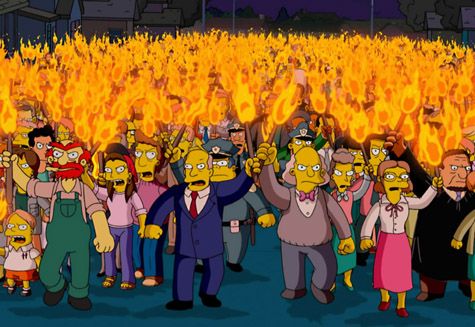
 Dissent reigned at the end of the ‘annual’ Stakeholder Conference for Manchester’s Climate Change Action Plan yesterday. Participants broke ranks to express concern and dismay at both the format of the day’s proceedings and the lack of transparency and information around climate change efforts over the last two years in Manchester. Their outcry was met with an assurance that they had been heard “loud and clear” by the chair of the Steering Group running the conference, and that “communication” would be a priority.
After the creation of the “Manchester Climate Change Action Plan” in 2009, the City Council set up a small “Steering Group.” One of its tasks was to run an annual stakeholder conference. The aim, according to the much-trumpeted “Manchester A Certain Future” document is “to review progress, consider changes and improvements and agree targets for the coming year.” (page 056)
The first annual conference took place in November 2010. The information gathered at that was not circulated, and a deathly hush descended.
After a recent expansion of the Steering Group, the second annual conference finally took place on Friday March 16th. Around one hundred people – overwhelmingly ‘pale and male’ – attended on a ticket-only (“first come, first served”) basis.
The conference cost somewhere in the vicinity of £6,000 pounds, working out roughly at £60 a head. It would be interesting to know where various chunks of this money went (e.g. how much was spent on bringing a speaker up from London), and what money has been allocated for the crucial work of follow-up and dissemination, to avoid the same mistakes as post-November 2010. We’ll ask, and it’s a free country so you can too.
After a keynote speech by Tom Burke, formerly of Friends of the Earth, attendees went to hour-long workshops, on either side of an extended refreshments break. Sadly, the workshops did not bring out people’s experiences of practical action on the ground, nor focus on what was and was not being accomplished in Manchester.
By the second set of workshops it was evident that very many participants were not really clear what it was that they were achieving with their presence, nor clear on what the steering group was, what it had achieved, what it had not achieved and where things were heading. Particularly in the “Growing” workshop (both MCFly editors were present), there was open frustration and exasperation from far more people than the usual suspect. Among causes for concern were the focus on individual change rather than systemic change, the lack of leadership from the City Council and businesses, and the lack of openness, transparency and information from the steering group itself. The intriguing question of whether Steering Group meetings are open to the public was raised by one attendee, but she didn’t, to our knowledge, receive any answer.
A significantly smaller number of attendees was present for the final session. After a useful wrap-up of the “satellite events” that have taken place over the past week (see the very end of this post for details), the Steering Group chair Steve Connor invited attendees to start thinking about how they might find themselves on the Group in future years, since elections would, after all, begin to be held, and stated that he would not be the chair in perpetuity.
MCFly has set up pages for people who attended the conference to comment on individual sessions. See here for links to each page. We also have written a “how it could have been done” page. Comments welcome, naturally.
Marc Hudson. Additional reporting by Arwa Aburawa
Blow by blow account, for the insomniacs among you
Proceedings kicked off with the showing of a short animation designed to get us “in the zone.” It was about a penguin called Sharpie that saves Manchester. This was not, presumably the “video by local school children” that was advertised on the agenda.
Then the conference heard from a keynote speaker, Tom Burke, formerly of Friends of the Earth. (See George Monbiot article here). He expounded on the need for “climate conversations that involve everyone”. It was just a pity he was saying it to a room full of middle-aged, middle-class white people.
Mr Burke had very little specific to say about Manchester, or new to say to anyone who has been following climate change even cursorily over the last years, making him a curious choice as an opening speaker. At the end of his fifteen or so minutes, he told the audience that four Is were needed – imagination, innovation, ingenuity and investment.
He then took questions. The first was on “where Manchester could learn from”. From “everywhere and everyone” said Mr Burke. This presumably includes Chicago, a city graced with a flying visit by Council Leader Richard Leese. Sir Richard was conspicuous in his absence this year.
Mr Burke then fielded questions about climate skeptics (he voiced sympathy for the human trait of turning away from problems) and nuclear power (a Bad Thing).
The third question he was asked was the absolute crucial one, and the one we here at MCFly wish the conference had been framed around. “Where have we [eco-campaigners] gone wrong?” asked an older man, recently returned to the UK from Uganda. “More people are cynical, environmental destruction is continuing apace and we are not winning?” Mr Burke, admittedly short on time, was only able to talk about the collapse of membership of political parties and say “you’ve got to try”.
The first set of hour long workshops then took place, around “vision”, “culture” “knowledge” “environment” and “community.” The one MCFly went to (we forget the title – environment?) had to be moved because it turned out having large three groups in one room was untenable. Who could have foreseen that? More on this “workshop” in a separate post, btw.
There followed a break for “networking.” On the limited evidence available to us, it looked pretty much like any other networking opportunmity– mostly people seemed to be standing or sitting with others they already knew well or vaguely, clinging to each other and not really mingling to the level that they might want. The things that could have been done to prime folks to get beyond their social fears hadn’t been done. So it goes.
The second set of “workshops” on “Moving” “Growing” “Adapting” “Living” and “Working” then happened. Numbers were significantly down, with many people having voted with their feet.
There were no feedback forms for specific workshops, which was a pity, because the various facilitators would probably have gotten quite interesting and robust feedback if they’d asked for it. A missed opportunity. Fortunately for everyone concerned, MCFly is setting up pages for all the workshops and the keynote speech, so people can email in their thoughts to be posted (anonymously if they so wish!).
This second set of “workshops” overran. As a consequence, the ten minutes of “closing thoughts” from Steve Connor were, sadly, cut.
Neither did the advertised “video- the importance of action” by “local school children” happen.” Schoolchildren appeared twice on the printed agenda sheet, but nowhere else around the conference at all. So it goes. “Intergenerational” has too many syllables anyway.
However, “Feedback from Satellite Events” did happen. Here’s what MCFly jotted down.
Rachel Stoney of Groundwork talked about the “Eco-streets” event on Tuesday at the Zion Arts Centre. She said that there was lots of networking and people grew in confidence and ideas because of that.
Colette Humphrey of Friends of the Earth talked about a “Feeding the Five Thousand” event to be held in Manchester later in the year, inviting people to get involved in organising it. A range of different organisations are involved in making it happen.
Helen (sorry – didn’t catch her surname!) spoke of a “Greenspirit” event on Tuesday, at the Friends Meeting House that involved silent walks of meditation around the damage we are doing to the planet, and the healing that needs to take place (she’s promised to write an article on this for MCFly!)
Ali Abbas, also of Friends of the Earth, recapped a FoE event at which Kevin Anderson of the Tyndall Centre laid out the latest information and “thoroughly depressed us. We’re all pretty much doomed..” In addition, Mike Childs, national climate policy person for FoE had spoken, as had Steering Group member Dave Coleman (he of “Carbon Literacy” infamy).
Walter Menzies spoke of a “Sustainable Cities” event put on by SURF the previous night.
Peter Singer from Red Rose Forest spoke of an impending “Edible Hedge” event that will be done with school-children from Chorlton-upon-Medlock
The event wrapped up on time, with the hardened core staying to harden their livers with free wine and beer. After a 16 month wait, the second annual Stakeholder Conference was done.
Gender and Race
Of the 19 workshop leaders, only 5 were female. Everyone was white. So it goes. Of the audience – they were overwhelmingly white (MCFly counted 3 BME people, one of them Arwa Aburawa, MCFly co-editor). There were no children present, or teenagers. Approximately two thirds of attendees were male, and most seemed in their forties or older.
What’s happening to the information gathered?
Well, this fairly basic question was one that the facilitators had not been briefed on. So there was a certain amount of waffling. This provoked a polite but firm reiteration of the question.



 manchester climate monthly