Manchester Climate Monthly #3 out now!

What climate-related events are coming up in Manchester? What is the Liberal Democrat policy on Manchester Airport?  What’s an obesogenic environment when it’s at home?  What can you do to get involved in climate action?  What is “ecological modernisation” anyhow?

All these questions are answered (more or less) in the latest free issue of Manchester Climate Monthly. If you like it, please share it, email it, retweet it et cetera. And if you don’t like it, or think it could be better, tell us why and how! mcmonthly@gmail.com

Arwa Aburawa and Marc Hudson

Posted in print editions | Leave a comment

Cottoning on to the Cottonopolis

MCFly volunteer Roisin Weintraub visits the Whitworth Art Gallery.

As we were walking up to the gallery, Rueben (my 3 year old son) said “What’s that boy doing?”
I had no idea which boy we were talking about and replied “I don’t know, which boy?”
“He’s jumping off the planet because he’s lost his head.”
The sculpture “ Boy on globe 4” by Yinka Shonibare MBE was commissioned for the exhibition, part of a recent series of work about global warming. I had a look at a few of the series and all of the figures appear to be slipping, accidentally falling of a burnt and poisoned planet. I wonder if Rueben’s comment is in fact very in keeping with the work. In our rush to money have lost our heads as we are losing the planet.

The exhibition is about the cotton industry, cotton “the first global commodity.” A huge part of local history is wrapped up in this. At the height of the industrial revolution  there were 108 mills producing cotton in Manchester.  “This famous great factory town. Dark and smoky from the coal vapors, it resembles a huge forge or workshop. Work, profit and greed seem to be the only thoughts here. The clatter of the cotton mills and the looms can be heard everywhere …”
Johanna Schopenhauer , Sammtliche Schriften, Frankfurt, (1830)

In the search for this money all sorts of sins were committed internationally, slavery (someone had to grow all them plants, somewhere warm too) child labor (nice and small for crawling under the looms) and it is far from over; it’s just moved off our shores.

But I have a confession, I love fabric. I studied Art, but wish that I had studied fashion. I am especially into Dutch wax prints.

Something like this to the right, the fabric you see West African women draped in. But you see, it’s another global story. A Dutch company called Vlisco was trying to copy Indonesian handmade batik under cut them and sell them there ideas back. It didn’t work, the Indonesians weren’t that keen. However between 1831 and 1872 some 3,000 Africans were “recruited” into the Dutch colonial army and they saw the fabrics in Jakarta and fell in love, they couldn’t tell the difference between the original and the Dutch copies. Vlisco is still making the stuff after 166 years. It is this fabric features heavily in the exhibition in used by Yinka Shonibare MBE and the mildly disturbing video work of Grace Ndiritu.

I was also very taken with the Kangas (African headscarves) from the lost sample book of Lubaina Hamid. Paintings of again bright pictures and patterns but this time partnered with cautionary sounding messages taken from Swahili sayings like “Forgiveness a cousin to freedom” and “Allow your friends to meet you enemies”

Anne Wilson’s work Local Industry Cloth takes the form of a lengthy woven rug surrounded by video of its production in which the artist and 78 other experienced weavers worked. The work was originally created in the Knoxville Museum of Art in Tennessee. This, from the heart of industrial textile production in the U.S. Southeast, acknowledges the current crisis of production as local mills face closure. Relocated, it asks the question what happened to our own industries, where did Cottonopolis go?

Posted in Event reports | Tagged , | Leave a comment

“What did you do in the ward, daddy?”

This article appears in Manchester Climate Monthly #3, which is published tomorrow…

At the end of March, Manchester City Council will approve ward-level plans outlining a set of priorities for every Manchester ward. Will these include climate change issues and ways to increase the resilience of the ward? Only time will tell.
The council states that the aim of the ward plans is to “improve services at a local level” and “deliver outcomes for neighbourhoods”. In the past, the plans covered a three-year period but they will now cover one year and will be refreshed annually.
Ward plans are put together by city council workers called ‘ward co-ordinators’ who consult with major service providers in the wards. According to the co-ordinator in charge of Chorlton, this includes consultation with council services, local businesses, councillors as well as local residents. She also added the plans are ‘living documents’ to which priorities can be added and altered on an on-going basis.
Looking at the 2009-2011 plan for Harpurhey, there was a commitment to make the area ‘cleaner and greener’ although this was linked to making more desirable neighbourhoods than anything else. The Chorlton plan was a little more focused on environmental issues and raised concerns around recycling, waste, allotments, improvement of pavements and Beech Road Park, as well as consultation around the development of the area.
We will be looking at the ward plans in more detail when they are released in March. In the interest of our sanity we will only be comparing Harpurhey, Chorlton and maybe Moss Side.
Arwa Aburawa

Monday 5th March, come to Friends Meeting House, 6 Mount St
at 7pm if you want to discuss Margaret Atwood’s “The Handmaid’s Tale” and pick up a paper copy of the latest “Manchester Climate Monthly”
at 8pm if you want to meet MCFly writers and readers and generally mingle (and pick up a paper copy of the latest issue!

Posted in Democratic deficit, Manchester City Council | Tagged | 1 Comment

Something for the Weekend? #3

What happened to the man who didn’t pay his exorcist’s bill?
He was repossessed.

And this weekend (drumroll please)

we are aware of precisely no climate-related events, so you’ll all just have to have lives instead.

To make up for this shocking gap, here’s some must-go-to things next week;

Mon 5 March, 7pm at Friends Meeting House, 6 Mount St (city centre) – Second MCFly book reading group – “The Handmaid’s Tale” by Margaret Atwood. Discussion facilitated by MCFly co-editor Arwa Aburawa… and followed from 8pm in the same room by our “mingler” event. Come meet other people who read (and write) MCFly. No obligation to get involved in its production or distribution, just an opportunity to meet like-minded folks. No need to book, just turn up.

Tuesday, 6th March 2012 at 5pm ‘Going Beyond Dangerous Climate Change: Exploring the void between rhetoric and reality in reducing carbon emissions’ – A lecture with Prof. Kevin Anderson Room 3, University of Manchester Students’ Union, Oxford Road, Manchester, M13 9PR

For every even-vaguely-climate-related event we know about, check out our calendar for March, which we update whenever we hear about an event.

Posted in Something for the Weekend | Leave a comment

Road to Ruin? The A556…

MCFly reader (from back when we were fortnightly!) Jamie Fisher writes about another road, which is clearly what the planet needs right about now…

What’s happening?

The current A556 is a major dual carriageway from Chester to the M56 near Altrincham, crossing the M6 at junction 19. A significant amount of traffic uses the section of the road through Tabley and Mere to link between the two motorways. Over the past decade or more several plans have been put forward to try and address the traffic issues and congestion.
With the recession and reduced budgets, the project appeared to be under threat.
But in autumn 2011 the government announced the A556 was one of 500 major build projects it hopes will be financed through a public-private national infrastructure plan.

The route, inevitably termed an “Environmental Improvement Scheme” , proposes to build an entirely new 7.5km stretch of road running from junction 19 of the M6 to just before junction 7 of the M56. Roughly parallel to the existing A556, this would be constructed on what is currently greenbelt land. Continue reading

Posted in Campaign Update | Tagged | 6 Comments

Monthly Journal Overview (MoJO) #2

Is Hong Kong ambitious enough in its carbon reduction targets? Are adaptation people in Manchester networked well enough? What causes the ups and downs in public concern about climate change?  All these questions and more are posed in articles listed in the “Monthly Journal Overview” (MoJO). This one has been collated by Mark Haworth and Kate Matthews, stellar volunteers for Manchester Climate Monthly…

Welcome to the second edition of MoJO (Monthly Journal Overview): a monthly listing of academic articles about climate change and Manchester or the U.K. – articles by Manchester based academics, articles about Manchester or the U.K. and other “particularly interesting” articles that have appeared in journals. This does not include all items published in the issue of the journals we kept an eye on – just those of particular relevance.

It will be published and sent out on the first of the month. We think that the main audience will be academics and interested activists.

For “terms and conditions” see the end of the list. Any feedback on what you think of it, what would make it more useful to you etc. would be appreciated. Similarly if you know of any suitable articles we have missed please tell us about them too, we can always include them next time.

Hope you enjoy it!

Mark Haworth & Kate Matthews (MCFly Volunteers)

(Journals are listed alphabetically, the journals covered in this issue are; Cities, Climatic Change, EcoCities, Energy Policy, Environment and Planning B, Environment and Planning C, Environment and Urbanisation, European Planning Studies, Global Environmental Change and International Journal of Greenhouse Gas Control)

Cities
Volume 29, Issue 2, April 2012, Pages 88-98
A critical review of Hong Kong’s proposed climate change strategy and action agenda
Mee Kam Ng
Abstract
Climate change was not on the policy agenda in Hong Kong before 2007. In 2010, a consultation document, Hong Kong’s Climate Change Strategy and Action Agenda, was published proposing a voluntary carbon intensity reduction target of 50-60% by 2020 (from the 2005 level). This review attempts to understand why there was a sudden shift to climate issues and whether the proposed strategy, actions and targets are appropriate to the climate change challenges faced by the city. Through synthesizing existing literature on climate change at the city level, a framework outlining possible actions at the strategic, knowledge accumulation and implementation phases is developed to position Hong Kong’s experience. It is found that Hong Kong’s move towards climate change is strongly affected by China’s efforts. The city is facing some real climate change threats. However, while the carbon intensity reduction target looks impressive, it is actually too modest for the city’s developed economy. The city needs to reflect critically on its economics-first strategy and undertake more refined vulnerability studies and risk assessments to identify spatially and sectorally-specific adaptation measures. To be a responsible global citizen and to pursue sustainable development, Hong Kong needs more concerted and comprehensive efforts to combat climate change.

Climatic Change
Published online Thursday, February 02, 2012
Shifting public opinion on climate change: an empirical assessment of factors influencing concern over climate change in the U.S., 2002-2010
Robert J. Brulle, Jason Carmichael and J. Craig Jenkins
Abstract
This paper conducts an empirical analysis of the factors affecting U.S. public concern about the threat of climate change between January 2002 and December 2010. Utilizing Stimson’s method of constructing aggregate opinion measures, data from 74 separate surveys over a 9-year period are used to construct quarterly measures of public concern over global climate change. We examine five factors that should account for changes in levels of concern: 1) extreme weather events, 2) public access to accurate scientific information, 3) media coverage, 4) elite cues, and 5) movement/countermovement advocacy. A time-series analysis indicates that elite cues and structural economic factors have the largest effect on the level of public concern about climate change. While media coverage exerts an important influence, this coverage is itself largely a function of elite cues and economic factors. Weather extremes have no effect on aggregate public opinion. Promulgation of scientific information to the public on climate change has a minimal effect. The implication would seem to be that information-based science advocacy has had only a minor effect on public concern, while political mobilization by elites and advocacy groups is critical in influencing climate change concern. Continue reading

Posted in MoJO | 1 Comment

Two new “Climate Monthly” volunteers needed

Manchester Climate Monthly is looking for two more volunteers. We are after someone who can write news stories and features (or wants to learn!), and also someone who wants to be involved in event organising/publicity and “special projects” (sorry, it’s classified; if we told you, we’d have to kill you.)

You need to be;
– at least 18 years old
– intending to be in Manchester for at least the next six months
– concerned about climate change and democracy and so on.
– er, that’s it…

We only have capacity for two more volunteers at present, so we will interview on a “first-come first served” basis.

Email us with “volunteer role” in the subject header to mcmonthly@gmail.com

Have a look at our jobs list under the “Help MCM” tab on the menu bar – that gives you a bit of a sense of some of the managerial jobs (but not the special projects!).

And, of course, come along next Monday, 5th March, to the Friends Meeting House, 6 Mount Street for our “mingler” event, starting at 8pm after the discussion of Margaret Atwood’s “The Handmaid’s Tale”…

Posted in Upcoming Events, volunteer opportunity | Leave a comment

Green Party to review its climate change policy

 MCFly’s spies are everywhere.  One of them told us that the Green Party was taking a new look at its climate policy.  We asked the Manchester Green Party’s Secretary, David Mottram to tell us more…
The Green Party, meeting at its Spring Conference in Liverpool (23rd-27th February), has voted to review its climate change policy. The previous major revision was in 1990 and the last amendment in 2008. In the words of the current policy, ‘The Kyoto Protocol says nothing about the future beyond 2012…’
At each twice-yearly conference the Greens update a section of the party’s core policy statement, Policies for a Sustainable Society, and it’s obviously time – overdue – to re-write the climate change policy.
Popular understanding of the profound impact of climate change is growing but it is essential that campaigners keep working to make the direct and personal connections of climate change to the lives of individuals & families in the city.
Take people of Pakistani origin in Manchester, for instance. The Manchester Green Party highlighted the 2010 floods in Pakistan in a leaflet we distributed last year; ‘The impact of the disaster will be felt for years to come…caused by the worst monsoon rains for 80 years’, we said. Reading a marvellous book by Anatol Lieven published last year* he says that the ‘dependence on the Indus is the greatest source of long-term danger to Pakistan…(while) the possible long-term combination of climate change, acute water shortages, poor water infrastructure and steep population growth has the potential to wreck Pakistan as an organised state and society’. It isn’t the Pakistani Taliban, the army, or corrupt politicians who will bring Pakistan down: it’s the dependence on a single river system at the mercy of climate change.
The Green Party must have up-to-date analysis and policy responses to meet climate change, linking the local and the global, and putting climate change at the centre of the stage when we think about politics and human rights. Knowledge and understanding of climate change has been transformed since 1990. Definitely time for the Green Party to update the whole policy, and then to campaign on it.
The new policy statement will be brought to the next conference to be held in Bristol from 7th-10th September 2012.
David Mottram 
Secretary, Manchester Green Party
* Anatol Lieven, Pakistan: A Hard Country, Penguin, 2011 (paperback edition 2012)
Posted in Uncategorized | Tagged , | 1 Comment

March 5th MCFly Mingler

Want to meet other people in Manchester who give a damn about climate change?  Want to swap ideas and information with them about what you are doing – or want to do? Want explain how they could get involved in what you’re doing,  or find out how you could get involved in what they are doing? Or just to come and soak up the positive energy?
Then come along to our first “Manchester Climate Monthly” mingler. It is happening at the Friends Meeting House (6 Mount St, behind the Central Library), next Monday night (5th March).  It starts at 8pm (after the book group discussion of “the Handmaid’s Tale” – to which you’re also welcome!).

It’s free, it’ll be fun and at 9pm we will wander off for drinks (alcoholic and non-alcoholic) nearby.

And as an added bonus, you’ll be able to get a free copy of the next Manchester Climate Monthly, hot off the presses.

Please forward, share etc, add to any websites you’re responsible for.

Posted in Upcoming Events | Leave a comment

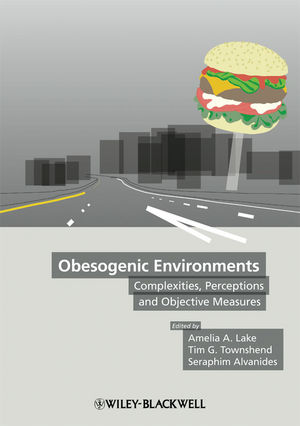
Book Review: Obesogenic Environments

Obesogenic environments: complexities, perceptions and objective measures. (2010), Lake,Amelia A, Townshend,T.G, Alvanides,Seraphim, Wiley-Blackwell.

“When you design streets solely for cars, people die as a result. The underlying conditions that are responsible for those deaths are rarely or never challenged. The victims often get blamed for their own injuries or deaths.”i

The above quote refers to the case of Raquel Nelson, a US Atlanta-area mother who was recently convicted of vehicular homicide. But not for driving a motor vehicle. She was crossing a busy road with three children when her 4-year-old son was struck by a car and killed. The road did not have adequate pedestrian crossing facilities.

Such examples highlight the impact that the design of our built environment can have on our lives. But for some readers, linking street design, road deaths and obesity may seem unwarranted. However, the growing levels of obesity in the United Kingdom suggest that the design of our streets, neighbourhoods and cities are helping to kill us – maybe a little slower but just as surely.

The Health Survey for England (HSE) data shows that nearly 1 in 4 adults, and over 1 in 10 children aged 2-10, are obese. In 2007, a Government-commissioned Foresight report predicted that without actions being taken, 60% of men, 50% of women and 25% of children would be obese by 2050.ii

The likely health consequences of the rise in obesity levels have also been well documented. The US Surgeon General Richard Carmona stated, “because of the increasing rates of obesity, unhealthy eating habits and physical inactivity, we may see the first generation that will have a shorter life expectancy than their parents”. Obesity has been linked to various chronic diseases, such as type 2 diabetes, cardiovascular disease, osteoarthritis, and certain types of cancer. In 2000, poor diet and lack of physical activity were indicated as the second highest causes of preventable death in the United States; just behind tobacco.iii Unfortunately, where the US has led, the United Kingdom and other countries are following.

There are many well-documented factors that influence obesity. At the simplest level, obesity is caused by not doing enough physical activity and eating too much food. But obesity is actually an extremely complex issue. Our built environment and how it encourages, or prevents, us from making healthy lifestyle choices is now recognised as an under-researched area.

For all those not familiar with the term, “obesogenic environment” refers to “an environment that promotes gaining weight and one that is not conducive to weight loss” within the home or workplace.iv Or put another way an obesogenic environment is one that makes it difficult for people to include physical activity in their everyday lives.

As Tim Townshend, one of the book authors, commented:

“We need to think seriously about what kind of environment we are creating for ourselves and have a sensible debate about what’s acceptable and what’s not in our towns and cities. Health needs to be back on the town planning agenda before it’s too late.”

The government and the food industry are keen to stress individual responsibility for health, diet and planning issues. They are also very keen on ‘light touch’ and ‘self’ regulation for the food and drinks industries. The “market”, it would appear, knows what is best for us and gives us what we want.

But the built environment and food policy are too important to be left to the market and to individual “choices”. The current situation is that the unhealthy option is the easy one. Society has to create environments where people are encouraged and supported to take the healthier options.

The book has fourteen chapters (*) which provide an introduction to obesity and its implications for health and wellbeing, and also cover key themes such as eating behaviours and food environments, physical activity and the environment, the urban environment, methods, policy and future research directions. By bringing together many disciplines including nutrition and dietetics, policy, epidemiology, environmental sciences, medical sciences, town planning and urban design, transport, geography and physical activity, this book helps demonstrate the multidisciplinary approach to public health needed to reshape our built environment to encourage and support people to make healthy food, transport and lifestyle choices.

As co-editor, Dr Amelia Lake, commented “Our research shows that it is as much the responsibility of an urban designer as it is a nutritionist to reverse the obesity trend.”.

This book is not an easy read and not for the general reader. However, one of its strengths is that it helps demonstrate that obesity, just like road deaths, cannot be blamed on individual responsibility. There is such a thing as society and we needs to work collectively to plan better and healthier environments.

Pete Abel
20/2/2012.

* Book chapters
An International Perspective on Obesity and Obesogenic Environments;
Towards Transdisciplinary Approaches to Tackle Obesity;
Walkability, Neighbourhood Design and Obesity;
Availability and Accessibility in Physical Activity Environments;
Defining and Mapping Obesogenic Environments for Children;
Objective Measurement of Children’s Physical Activity in the Environment: UK Perspective;
Physical Activity and Environments Which Promote Active Living in Youth (USA);
Active Travel; Greenspace, Obesity and Health: Evidence and Issues;
Eating Behaviours and the Food Environment;
Food Policy and Food Governance – Changing Behaviours;
Neighbourhood Histories and Health: Social Deprivation and Food Retailing in Christchurch, New Zealand, 1966-2005;
Environmental Correlates of Nutrition and Physical Activity: Moving Beyond the Promise;
Obesogenic Environments: Challenges and Opportunities.

Endnotes

ii Foresight (2007) Tackling Obesities: Future Choices – Project report. London: Government Office for Science, 2nd edition. www.dh.gov.uk/en/Publichealth/Obesity/index.htm

ivSwinburn, B., Eggar, G., & Raza., F. (1999). Dissecting obesogenic environments; the development and application of a framework for identifying and prioritizing environmental interventions for obesity. Preventive Medicine, 29(6), 563-570.


Posted in Book Review | Tagged , | 1 Comment