Andy Burnham flies to France to tell us how important #climate action is. No, really.

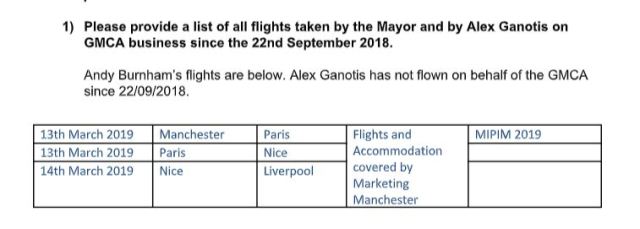
A month ago, shortly before his second ‘Mayor’s Green Summit‘, Andy Burnham was in the south of France.  Talking about how important it was for Manchester to be carbon neutral by 2038.

How did he get there?  Well, the journalist dutifully reporting the story didn’t seem to ask. And the glorious Mayor didn’t answer a tweet about it.

But, you know, there’s always still the Freedom of Information Act.

He flew there. And back. You knew this. We all knew this, all along.

burnham flights 2019 04 16


You have to weep for this species.  And all the other species it is exterminating.


Posted in GM Climate Strategy | Tagged | 1 Comment

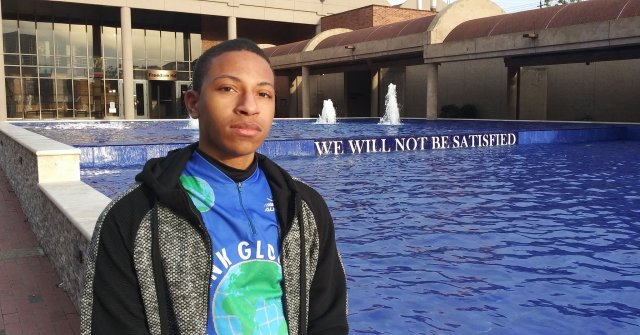
Interview with youth #climate activist Jerome Foster II (USA)

Latest interview with a youth climate activist, this time from the United States…

foster.jpg

1. First a bit about you –
● who are you?
My name is Jerome Foster II, I am a 16 year old climate change activist, I am a
highschool Congressional Intern for Congressman John Lewis, founder and
Editor-in-chief of The Climate Reporter and organizer for the US Climate Strike.
● where did you grow up?
Southeast-side of Washington DC
● when did you first become aware about climate change?
I grew up learning about nature and with the movie Avatar which led me to go to Earth
Day that year led me to find out about the climate crisis.
● what was the process by which you decided to start The Climate Reporter?
I started the climate reporter because I felt the need for the people of the world to be
able to understand the tangible impact of the climate crisis through telling the stories of
the environmental movement and the struggles of frontline communities.

2. Tell us a bit about the Climate Reporter –
● how is it different?
The Climate Reporter is different than most other news organizations because it is run
by high school students which makes the journalism less corrupt to the worries of adults
who search for money.
● what does it want to achieve?
The goal of the climate reporter is two fold: one, to unite the environmental movement
through all forms of media. Secondly, it is to develop a platform for frontlines
communities for become mainstream.
● What have been some of your favourite stories so far?
I can’t possible choose one, every story, every narrative is equally valuable. Also,
remember most of these stories are not happy stories because we are in the middle of a
crisis.
3. Recently Mary Annaise Heglar wrote a brilliant (imo) piece “Sorry, Y’all, but Climate Change Ain’t the First Existential Threat,” What did you think of it?
So I agree to the fact that the climate crisis is an intersectional movement and that racism is a crisis in itself as well. Furthermore, cI believe that the environmental movement movement deserves unity above all. Not to divide ourselves but to unite ourselves. It is not my job to convince everyone that racism still exists it is my make sure that the policy we create to solve the climate crisis works to reconcile the damages it has done many communities were people of color reside.

4. Tell us a bit about the upcoming climate march in the US – who is organising it (give shout outs to whoever you like). What is the short-term aim? What is the longer-term plan for getting beyond mobilisations that make us feel good towards genuine movement-building.
So on March 15th, an organization called Fridays for Future held a global strike to call action to the climate crisis and is universal destruction to the human race. Over 1.6 million young people participated, and over 100 countries were involved.

5. And I HAVE to ask. You’re interning for a living legend from the Civil Rights Movement, Congressman John Lewis. How did that come about? What can we learn from him and from the Civil Rights Movement of the 60s onwards for the climate movement now?
Interning for Congressman John Lewis is such an honor, I have not had the honor of meeting him yet but I have learned a lot from his staff. I believe in the fact that Civil Rights are Human Rights and Human Rights are Environmental Rights, it is a right for my generation to have clean air, clean water and no pollution.

Posted in Uncategorized | 1 Comment

#Climate Emergency #Manchester Bulletin and sign-up form…

Hi, the first #climateemergencymcr fortnightly bulletin is up here.

Crucial things –

  1. There’s a sign up form (super-quick) for the campaign. We want to know what skills you have, what skills you want, and then match you with people (but never ever without your permission, and we’ll never give your email addresses to anyone else).
  2. Anyone who lives, works or studies within the boundaries of Manchester City Council can sign the petition calling on Manchester City Council to 

declare a climate emergency, with a target to be “zero carbon” by the year 2030, with a proportionate share of Manchester Airport’s emissions (35.5 percent owned by the Council) included in the carbon budget it sets.

i.e. you do NOT have to be 18 years of age. If only there were a whole bunch of school children super-committed to take action on climate change…. No, wait!


Posted in Campaign Update | Leave a comment

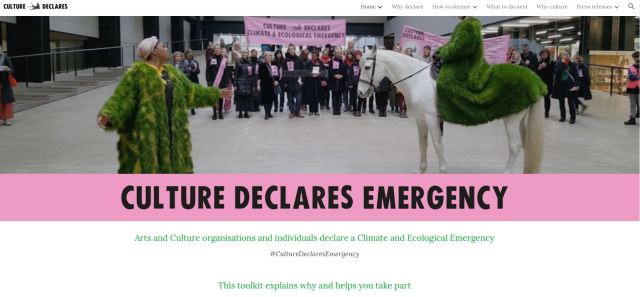
Event Report: “Letters to the Earth” at #Manchester Royal Exchange #CultureDeclaresEmergency

Last Friday night about 50 Mancunians backed into the Royal Exchange’s Studio to see an unusual and interesting event: the reading of “Letters to the Earth.”

The letters were the result of a call out by a new organisation “Culture Declares Emergency,” which very much does what it says on the tin (twitter here, btw).  Events were being staged around the country to coincide with the latest school strike (and some performers who were due to be on the stage had been banned from the city centre for 24 hours after their sit-down protest on Oxford Road earlier in the day).

culture declares

While the letters themselves  were of varying insight, poetry, pathos and bathos, the readings of them (and the singing) were uniformly excellent.  All the more remarkable, in fact, given that the performers only started rehearsing at 5pm!

There are clearly a lot of extremely talented people in Manchester who have the desire and the ability to use art and cultural production to get the message of ecological apocalypse out there.  It’s up to the activists, I suppose, to make sure that there is more local content for them to play with (for example, there was a letter to central government, but not one to local government, or to the complicit local ‘environmentalists’ who have provided fig-leaf services for local government this last decade).

There were only two dud notes, one minor and easily rectified, the other major and long-standing.  The long-standing one is that the so-called Manchester Climate Change “Agency” couldn’t even be bothered to put the event on its (empty) calendar.  That’s typical of the total uselessness of this body.

The minor one – it would have been great if those in the audience had been invited to talk to a stranger in the room for a few minutes before the performance, and then at the end, so that more links were formed and more people stuck around in the bar afterwards (it seemed to me that no-one did, despite the invitation).  We need more art, yes, but we need more relationships and connections…


Posted in Event reports | 1 Comment

Petition: “Give Ryebank Fields back to the people” #Manchester

Here’s a link to a petition on 38 Degrees about Ryebank Fields in South Manchester.

Give Ryebank Fields back to the people

NW

Contact Campaign Creator

Campaign created by
Nigel Woodcock
Give Ryebank Fields back to the people

We, the undersigned, call upon Manchester City Council formally to request the Manchester Metropolitan University (MMU) to return to the people the land known as Ryebank Fields (also known locally as the “clay pits”) – that is, to give it back to the Council, at no cost, to be used for the benefit of the local communities of Chorlton, Firswood, and Stretford, as a Local Green Space. [1]

Why is this important?

Additional information:
1. The land was given to MMU by the Council in the 1950s/70s, to be used for sports and recreation (as per the terms that it was bequeathed to the people earlier in the 20th Century). MMU now has no moral right to profit from this land now that they don’t require it, having neglected it for many years.

2. The fields were claypits in the early 1900s and then used as an uncontrolled landfill site. Any development will risk un-earthing capped contamination which may cause gas leakage and particles would be distributed in the air in the locality. Anecdotal evidence notes WWII air-raid shelters and possibly asbestos on the site. There is Japanese Knotweed on the site that makes it unsuitable for property development and creates a risk of water-borne Japanese Knotweed spread into the surrounding residential area. When Peverill Crescent was built in the 1950s it was noted then that Ryebank Fields was not suitable for building due to the landfill area. It is also a flood risk area and the removal of over 1,000 trees would increase this risk for local properties.

3. There is an ancient ditch – the Nico Ditch – that is mentioned in the Domesday Book of 1086, which runs through Ryebank Fields, and which deserves Ancient Monument status. The Friends of Ryebank Fields are in the process of applying for this protected status. The area around this ditch should be protected and left untouched. The Friends group wishes to restore the ditch into a biodiverse corridor.

4. There are irresolvable traffic problems associated with the building of 70 or more homes, which make it an unworkable proposition. There is already evidence of serious traffic problems on Longford Road and Ryebank Road. Any increased traffic in this area would create an unacceptable risk for families and young children who need to access the local schools. During peak hours, it is virtually impossible for emergency vehicles to use these roads.

The Trafford side of the site has busy roads – especially on MUFC match days – and would not support increased vehicular access.

5. Chorlton has little open green space when compared to other areas of similar population density, and the areas neighbouring Ryebank Fields suffer from poor air quality, with commensurate negative impacts on health.[2] The large number of trees on the fields serves to clean the air of pollutants, especially micro-particles. This is particularly important for anyone bringing up children in the area, since it has now been proven that there is a link between intelligence and air pollution, and that pollution also increases the risk of degenerative diseases such as Alzheimer’s.[3]

6. Furthermore, the fields have developed considerable biodiversity of nature and wildlife, and are a home to foxes, badgers, bats and over 30 bird species including Tawny Owl, Blackcap and Chiffchaff.[4] This would all be destroyed. There are also over 1,400 trees on the fields, according to an audit carried out by the Friends group’s volunteers in August 2018.

7. The local community have formed a group called the Friends of Ryebank Fields, and are developing plans to further boost the biodiversity of the area, and to promote the use of the area for educational purposes (e.g., forest schools). We believe that the community would be served best by allowing the to realise these plans.

8. MMU claim to be a “green university” with laudable sustainability policies. Indeed, in 2017 MMU was awarded 1st Place in the “People & Planet University League” based on “ethical and environmental performance”.[5] In MMU’s Environmental Sustainability Statement (2017) the Vice-Chancellor, Malcolm Press states, “Manchester Met is in an exceptionally strong position to help drive a more sustainable society and economy. We contribute to this through… our continued progress towards reducing the environmental impact of our business activities.” [emphasis added] The same document says of biodiversity:
The conservation of biodiversity is of global importance for many ecological and economic reasons. Biodiversity and green space is important to the health of our planet, and for the health and wellbeing of our communities. Our contribution to preserving and enhancing biodiversity and green spaces, particularly in densely populated urban areas such as Manchester, is vital.
[MMU Environmental Sustainability Statement, p.20]

*** Petition to be submitted 1st December 2018 ***

Footnotes:
[1] “Local Green Space” mentioned in this document: https://www.gov.uk/government/publications/national-planning-policy-framework–2
See also the latest government guidance around planning, which includes the mitigation of flooding, which it’s assumed will become an even more serious problem due to further climate change:
https://www.gov.uk/guidance/open-space-sports-and-recreation-facilities-public-rights-of-way-and-local-green-space
[2] Air pollution reduces life expectancy by six months on average in Greater Manchester, and Manchester Council ranks as the second worst in England for PM10 particulate pollution, which is linked to conditions such as lung cancer and asthma.
https://www.theguardian.com/uk-news/2018/jun/14/people-in-manchester-exposed-to-dangerous-levels-of-air-pollution
[3] “Air pollution may harm cognitive intelligence, study says” (BBC News). https://www.bbc.co.uk/news/health-45326598
Air pollution causes a “huge” reduction in intelligence: https://www.theguardian.com/environment/2018/aug/27/air-pollution-causes-huge-reduction-in-intelligence-study-reveals
[4] Manchester Metropolitan University BioBlitz of Ryebank Fields: https://stuartmarsden.blogspot.com/2015/06/the-history-and-natural-history-of-mmus.html
[5] Tweet from @MMUEnvironment (14th Nov, 2017): https://twitter.com/MMUEnvironment/status/930352103024922624
[6] MMU’s Environmental Sustainability Strategy (2014-20): https://issuu.com/mmuenvironment/docs/final_mmu_ess_issuu

How it will be delivered

We have decided to extend our petition into 2019, whilst the campaign continues to gain momentum. MMU have been forced to undertake further “consultations” – or at least to employ developers that will (?!) – so this means we have more time before formal plans are submitted.

We will deliver the petition to the Town Hall when the time is right. We will ask Sir Richard Leese to receive them in person.

Posted in Manchester City Council, petitions | Leave a comment

#Climate protests this weekend and next… #Manchester #Salford

Two protests – one on Sunday 14th April, the next on Saturday 20th April.
First:
No one would consider taking money for an African cultural exhibition from a company associated with slave diamond mining or for a health exhibition from a tobacco company, so why should it be acceptable to use money from a fossil fuel company about an exhibition on energy?
Come and get involved with our flashmob of Brittany Spear’s Toxic to bid farewell to the Science & Industry Museum’s big oil sponsored exhibition. This will be our last action so don’t miss it.
The flashmob will take place this Sunday. We’ll announce the time soon but if you’d like to confirm the time now please email me back at shelloutofscience@gmail.com.
We’ll also be launching our #burnthefuture exhibition courtesy of arts activist Darren Cullen and have a film crew with us ready to catch the action.
We’re hosting a rehearsal tomorrow from 6-7pm at Partisan Collective where we’ll be practising the song and recording the vocals for the video. Partisan is based just behind Victoria train station. Googlemaps link for the venue here.
Any questions give me a shout. Otherwise see you tomorrow.
Cheers,
Shell Out
P.S. Can’t be there for the action but want to help? Please help us get people along to the rehearsal tomorrow by reposting our tweet on twitter or adding inviting your friends to the event on facebook.
More details about our campaign are available here: https://carbon.coop/portfolio/shellout/
And on social media: https://twitter.com/ShellOutOfSci.
From Frack-Free Greater Manchester (but not on their website, which hasn’t been updated in almost a year)
Second:
Day of Protest about Fracking in Salford 
Below is information on our day of protest to be held on Saturday 20th April at Salford Shopping Centre, Hankinson Way, Salford, Greater Manchester, M6 5JA. from around 11.00 a.m to 3.00 pm and to ask you to come if you possibly can to support this event. Below is a rough running order for the day:


  • Set up at 11am
  • Leafletting and talking to public; asking people to sign template letters to their own Councillor
  • Speakers at 1pm:
    • Frack Free GM
    • Trade Union / Trades Council speakers invited
    • Momentum (Labour Party) speaker
    • Youth Climate Strikers

The purpose of our action is to press Salford Council and Councillors on Igas’ duty to restore the former fracking site at Barton Moss and to oppose any further fracking applications in their area.


We are proposing to leaflet about what fracking is, what happened in Salford in 2013/14, about the new PEDL licence granted (
for hydrocarbon exploration, appraisal and extraction)  and the threat of Igas returning to frack in Salford, and to promote a letter-writing action on the above.
Posted in Campaign Update, Fracking | Leave a comment

Interview with youth #climate striker Lillia Adetoro #YouthStrike4Climate #Manchester

[Update- see Lillia’s blog about the April 12th Climate Strike]

Lillia Adetoro kindly answered questions about her climate change and environment activity. She has a video channel and a blog .

Which of the strikes have you been on?  What was your favourite thing about them? 

I have been on the National strike in February and the Global Strike in March and am going to the strike tomorrow on the 12th of April.
And from the beginning of February I’ve been going to Fridays for Future protests outside the town hall every week. I hand out leaflets and talk to people about climate change and ask them to come along to strikes and help support us to show that people are worried about climate change and our future.
My favourite thing about the strikes is the support by other people, and we all have common if not the same goals. Supporting each other. The atmosphere is phenomenal especially because there are others like me, especially my age and it makes such a big difference to know I’m not alone in how I think or feel about the planet.
I don’t really like giving speeches  because I get nervous about what people might say or how they’ll react but they’ve been really supportive and it gives me confidence to keep striking.

When did you first start learning about climate change – was it in school, from your parents? Did Greta Thunberg have a part to play? 

I first started learning about a year ago . I was walking through Oldham town centre and the council had a recycling stall trying to get people to recycle more. But when I asked why we couldn’t recycle yogurt pots and fruit tubs they told me that it was too expensive to recycle that grade of plastic, and it wasn’t worth it. I got a bit angry because I realised they just binned it. I talked about it on the way home with my mum and sister about how ridiculous that was as it looked like most things that could be recycled weren’t being.
Over the past year I watched documentaries like A Plastic Ocean and researched online and the more I did the more I found out about deforestation for palm oil, micro plastics, fast fashion, carbon emmissions and every thing we do that affects the environment around us.
I was worried after watching all those things and my mum told me we’d start small and make changes to help. Then she found out about Greta earlier this year and showed me a speech she made and about how she started to strike outside her Parliament building. We talked about protests and about how even though she was on her own at first it encourages others to join her and I wanted a way to tell others about climate change and what it was doing to the planet.
I then found out about Xiuhtezcatl Martinez an environmental and Indigenous Rights activist. He’s taking the US Federal Government to court for failing to protect the environment for future generations. I thought that what’s happening now with the Climate Strike only started with Greta. She started this what’s happening now but there have been young activist’s all over the world who have been speaking out for years, from those places in the world most affected by climate and environmental justice issues.  Like Timoci Naulusala from Fijji, Ridhima Pandey from India, and Mari Copeny, Little Miss Flint in America.
I researched about what I could do and found Fridays for Future. Mum searched Facebook and found their group and we decided to go along.  We then found out about Rising up! Manchester families and they helped to organise the first strike in February. It was Brilliant and so good to see I wasn’t alone.

 What next – there’s the next Climate Strike on April 12, and then…?

I’ll be at the Climate strike tomorrow the 12th and I will continue to go to Fridays for Future Protests. With the help of my mum I’ve been tweeting Manchester politicians and my local MP Angela Rayner (still not responded) about climate change because they are not doing enough. We have 11 years but the actions they want to take go past this and they are only interested in reducing carbon emissions by 2038 and that’s too little too late.
I’m still making changes at home reducing the meat we eat, getting rid of single use plastics, using public transport but it’s not enough because it’s Parliament and businesses that have the power to make changes and I think they have to step in to make changes. We have to put pressure on them. I know I’m only a kid and I know I need the support of adults to raise our voices. Adults have the power. So I’m going to keep striking, spreading awareness and pestering politicians and businesses to make those changes. If they don’t I think we need to hit them where it hurts because it’s all about money. We need to change what it is we are buying and where we are spending money so they can see it will be good for them still if they make these changes and hopefully if others do too then it can make a difference. But at the same time businesses are making changes but they are still bad for the environment. Switching from plastic to paper straws. It’s still paper that has to come from somewhere., And they’re still lined with plastic. Or Walker’s Crisp recycling their crisp packets. The amount they are able to recycle is tiny compared to what they make. So it looks good for business but it really isn’t for the environment.

Tell us about that song you sing! 

The song was for the first protest in February, we were all going to learn it but I wasn’t really interested then. But the more I’ve been listening to it the more it has meant to me. Because we need people to stand with us. Especially adults. Children aren’t listened to, like we don’t know what’s important but we do. I wanted to ask people to strike with us because this is so important the future of the entire earth and everything that lives on it is as risk.

This is the tricky one – what sort of help, advice and support would you like from your parents, existing activists, adults?

Parents can help by supporting their children to strike if they want to, and if they can’t because some schools are wanting to fine parents and some parents cannot get time off work and lose pay, then I’d say find another way to help them. Find ways to help them voice their opinions like tweeting their MP’s and writing letters to politicians to show they support their children and we need change. Because staying silent doesn’t help. What happens then is politicians say people aren’t interested. We have to show them that we are.
 Also for parents because they are the ones with power at home because they buy everything to start with. They need to make changes like buying some foods with no palm oil or sustainable palm oil. using reusable bags and cups for all the family, recycle and buy less single use plastic because most of it can’t be recycled. They have to get smart about what they are consuming.
Existing activist I’d like them to make information child friendly because some of the information I found talked down to me and other information I couldn’t understand the language and had to ask for help to know what it was talking about. I’d also like them to offer support in what young people can do that means something to them. I felt sad, angry and frustrated because I didn’t know how I could help. Until my mum found Fridays for Future. I had all this information and I knew that on my own, picking up litter or recycling wasn’t going to do it. I needed a way to focus what I was feeling, and I think older activist’s can help with that.
I think adults in general need to learn about climate change because alot don’t know anything about it but then say it’s fake news. I think programmes like Our Planet are good but the problem is if people watch programmes like that and still do nothing. We all have a responsibility to the planet and adults need to stop being negative and stop saying children will grow up to sort the problem out. That might be too late. Change is happening right now we don’t have time. And like Greta said our house is on fire. We wouldn’t just stand around and watch it burn, we’d do everything in our power to put that fire out.
Posted in Climate Strikes, Interview | 2 Comments

Five Minute Friday #002 – Write to your MP abt Caroline Lucas’ parliamentary motion

This week’s 5 Minute Friday is to contact your MP and ask that s/he support this cross-party motion for the UK Government to declare a climate emergency and take measures to tackle it.

“That this House notes the stark warning from the world’s scientific community that there are just 12 years left to prevent 1.5 degrees warming; further notes that warming beyond 1.5 degrees represents a threat to the future of humanity, and that even warming limited to that level will wreak havoc upon the livelihoods of countless people across the world; acknowledges that the world is now experiencing a climate emergency and that an urgent and rapid global response is now necessary; welcomes the fact that solutions to the climate crisis are widely available including renewable technology, sustainable transport options and zero-carbon buildings; supports the decisions by more than 40 local authorities to pass motions declaring a climate emergency and setting net zero carbon emissions targets for their local areas; and calls on the Government to declare a climate emergency and to release the necessary funding, including to local authorities, to enact a green new deal that would rapidly decarbonise the entire UK economy.”

First – find out whether your MP has signed?

https://edm.parliament.uk/early-day-motion/52682/ukwide-climate-emergency?fbclid=IwAR2IurhAtA9DPSrdKbvuSnpIo6CZLb1eGU88pg8JIqkYmRXfEu5ohgAb-bQ

Get their contact details

https://www.writetothem.com/

Then Email 

Dear

The 12 years are ticking down and there has been no action from the government. Not only this but the UK’s shortfall against the UK’s legally binding Carbon Budgets has worsened.

I am sure you share my feelings of distress about this. When all of our futures are so gravely threatened such inaction is criminal.

I am writing to you as your constituent to ask that you please support Caroline Lucas’s cross-party motion calling for the UK Government to declare a UK wide climate emergency, to invest in a green new deal and rebuild and protect the natural world.

https://edm.parliament.uk/early-day-motion/52682/ukwide-climate-emergency?fbclid=IwAR2IurhAtA9DPSrdKbvuSnpIo6CZLb1eGU88pg8JIqkYmRXfEu5ohgAb-bQ

Yours sincerely


PLEASE SEND ANY REPLIES YOU GET TO mcmonthly@gmail.com

Posted in Five Minute Friday | Leave a comment

Interview with a youth #climate activist: Imogen O’Doherty #YouthStrike4Climate #Manchester

The next Youth Climate Strike is Friday 12th April, starting at St Peters’ Square, 12 noon.

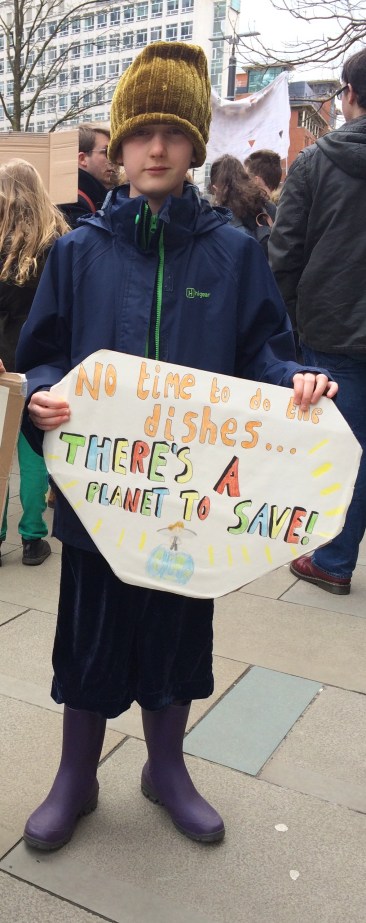
Here’s the latest in a growing list of interviews with youth strikers, Imogen O’Doherty, aged 11.    We’re interested in all youth #climate voices, especially young women and BAME.

imogenHave you been on one or both of the Climate Strikes?  What was your favourite thing about it?

I have only taken part in one of the climate strikes. I liked the fact that so many people cared about our environment and how we treat it; I also liked it when everybody went onto the tram tracks to make themselves heard. It made me feel proud that children could make a difference.

When did you first start learning about climate change – was it in school, from your parents? Did Greta Thunberg have a part to play?

It was when I was in year 3 when I first became aware of climate change and what we could do to help. I think I just found out through the news. I also remember being on holiday and I was asking my parents questions about why it was so warm. I am now very aware of the situation. When I am older I want to be a conservationist so I can make a difference to the world.

More recently I have heard about Greta Thunberg and I watched a video of her talking about her views. It inspired me to do more to help the environment and take part in the climate strike .

What next – there’s the next Climate Strike on April 12, and then…?

At school I am part of an eco-group and we are hoping to set up a stall in the school summer fair to raise money for the school to pay for better recycling . We are also going to use a secluded area of land in the school field to make habitats for animals and insects : bug hotels , flowers for bees to pollinate and possibly hedgehog homes . Also, we are hoping to plant our own vegetables for the school meals instead of relying on shop bought items .

This is the tricky one – what sort of help/advice/support would you like from your parents, existing activists, adults? How is that best offered (I call it the POG problem – “Piss Off Grandpa/Grandma”)

I would like to have some more books about climate change inside libraries to teach people things they don’t already know . Also, I think adults should have strikes too and stand alongside children by striking against plastics , or striking by not going to work. Activists could encourage parents and children to ride bikes more often .

Anything else you’d like to say?

I also think that adults should give more talks to children to tell them about these problems .

A few days ago, I was down by the river Mersey and I saw a small island where birds , like ducks and Herons , and other water wildlife live . However , something wasn’t right : there were plastic bags , plastic wrappers , plastic bottles all around the island . It brought tears to my eyes when I saw this .

Me and my mum are planning to go back there with our litter pickers, fully equipped, to see how much plastic we can find and to tidy up the homes of many animals .

I think climate change isn’t the only important environmental issue . There is also plastic pollution , deforestation , poaching and many others .


Posted in Climate Strikes, Interview | 1 Comment

Charting a new course:  How the “#climate emergency” petition helped make a difference in #Manchester

A couple of weeks ago I wrote – with help from a couple of very smart people – something called “2020 – how we started winning in Manchester.”  A few people said very kind things about it.  This is a bit more specific – it’s about a new effort, to get 4000 signatures on a petition so that Manchester City Council has to debate a climate emergency motion with a zero carbon by 2030 deadline.  It’s similar in format,to the “2020” piece, but is on a shorter timescale. Fwiw, I don’t think anything in this below is unrealistic. I’m looking not just for comments and criticism (though those are welcome), but also for people who want to make something like this come true.  climatemergencymanchester@gmail.com or fill in the contact form with the skills you have, the skills you want]

[sign the petition here. then share it/rt it/facebook it etc]

October 2019

It was all over.  The gathering of the four thousand (plus) signatures.  The countless hours that dozens of people had spent emailing, facebooking, tweeting, gathering signatures from friends and family. Discussions with friends, family, acquaintances and strangers. At the churches, at the bus-stops, in the parks and at venues usual and unusual. The motion – that the Council declare a climate emergency with a zero-carbon target of 2030 (including a proportionate amount from the airport) had made it onto the formal agenda.  A packed visitors’ gallery, and many watching online had seen it unfold.

The Labour Party, with its overwhelming control of the Council had,  of course, been dismissive. And its campaign had started long before the actual motion in the Council Chamber in October. 2019: there had been the usual mix of soothing blandishments and injured “but we’re doing all we can”s, the blaming of central government while simultaneously taking credit for national-level decarbonisation.  They had tried saying they’d already declared a climate emergency, and had a perfectly reasonable and achievable 2038 decarbonisation target – that had been laughed out of court. Then there had been whispering campaigns and the finding of (a few) willing fig leaves. And on the day, the motion had been very heavily defeated. The Council had its plan. It was a good plan, a “realistic” plan. A world-leading plan, they said. The motion was lost.

But it didn’t matter.  Because it was not, in fact, all over.  Because – ironically given that the “petition” asked the council to do something – the whole point of the exercise had not been about the Council. It had been an exercise in creating networks, in creating opportunities for people and groups to exchange ideas, skills, knowledge, to gain confidence and ability.  Even though the word “petition” has implications of begging, of asking sweetly to trusted bosses, this was not what had happened.

The petition had been sincere, but not naive.  Its organisers and most who signed it knew that what was more important than the raw number of signatures was the manner in which they were collected, the conversations enabled, the skills and confidence

Things had gotten off to a steady if unspectacular start.  By the end of the first week there were a hundred signatures – 70 online and 30 in paper form.

Everyone who signed, or thought about signing was given basic written information about the campaign, which included at the very least the email address – climateemergencymanchester@gmail.com and the website – climatemergencymanchester.net which had been set up, with some basic resources. People added an email signature to the their emails, others changed their social media image.

 Progress quickened over the following weeks, as more events at which signatures could be gathered were spotted.  There was the School Strike on April 12th, obviously, and the “Letters to the Earth” at the Royal Exchange that evening.

On Thursday 18th April David Attenborough’s climate change documentary was shown on the BBC. A co-ordinated Twitter campaign, using the hashtag #climateemergencymcr had helped capture some of the interest and concern, boosting the online petition’s numbers considerably. It also alleviated frustration that Attenborough had mentioned the C-word…

While other environmental events (such as Envirolution – May 25 and Groundswell– June 1) were on the organisers’ wish list, they also sought to move beyond the usual suspects.  They put calls out for invitations to do spiels (anything from 3 minutes) to workshops at school assemblies, mosques, churches, community groups, whatever. Wherever they were invited, the speakers would thank the organisers and the attendees, keep to time, and stick around afterwards to answer what questions they could.  Mostly they were interested in how they might be able to put people in touch with each other across the city, rather than saying “follow us.”

Artists, graphic designers and video makers were approached to produce supporting materials which could spread the message wider.  Podcasts were done. A quiz night, held to celebrate the 2000th signature, raised some money, but was more an excuse to have fun and make new friends.

People who got in touch to help out were asked how much time they had, when they had it, what skills and knowledge they had that they’d be willing to use and/or teach to others, and what skills and knowledge they wanted. They were asked to identify as novices, practitioners, experts or ninjas on several “core skills”, but if people had other skills they wanted to use, the organisers would try to figure out a way of making it work for everyone.

signupcemcr

[click here for the online contact form]

People were offered specific jobs which were simple and quick, simple and long, complex and quick or complex and long. When people wanted to know more about the climate science, more about how local government “works”, then a new collective – “Academics Acting As Activist Allies Against Atmospheric Apocalypse regional group – Hulme” (AAAAAAARGH for short) was on hand to deliver clear accurate information in useful formats., inspired in part by Professor Julia Steinberger’s excellent interview.

One of the obvious always-needed tasks was helping to do  signature collecting at makers’ markets, farmers markets, festivals and, well, you name it.

Meanwhile, teachers and students were busy encouraging students to sign the petition, because there was no lower age limit.  Indeed, anyone who lived, worked or studied in Manchester could sign the petition.

Every time a “round number” milestone was reached, an interview was posted with someone who had signed up, asking for their ideas about how to advance the campaign, what the Council should do after declaring an emergency (see for example this one).

Media interest was, truth be told, relatively sparse.  Journalists were drawn to the more dramatic and picture-worthy blocking of roads and colourful protest.  That was fine – the petition wasn’t reliant on attention, but just quietly getting on with the creation of conversations. And the signatures. That mattered too.

And what mattered even more than that was the conversations that were made possible

  • It gave people who sign the petition an “excuse” to talk to their friends, families and colleagues, breaking the silence around climate change and what we could/should do at a local level.

  • It gave people who were worried but couldn’t simply afford to get arrested something concrete to do, something to get involved in at a regular, low-intensity manner.

The organisers knew that the Council was keeping a close eye, and developing its own attempts to contain the debate,  Every comment was designed to obscure or deflect. The past ten years of abject failure were ignored, shiny promises of future engagement made.  And, boldly, the Council said that they’d already admitted that there was a gap between their aspiration and where the plans would take them.  They found a couple of new activists willing, but everyone else had decided that enough was enough, that seeking to change the system from within had simply not delivered the goods.. And those activists realised.they were trashing their credibility for precisely nothing.

Did it work perfectly? No, of course not. There were missed opportunities for gathering signatures. Not every speech went smoothly. A couple of  volunteers felt under-supported despite the best efforts of the organisers. Some completed paper petitions got left on a tram, which was demoralising and a privacy breach to boot.

But there were successes, overall. In synergy with the schools strikes, the Fridays for the Future, the Five Minute Fridays and other initiatives, the petition helped

  • put a climate emergency “on the (policy and cultural) agenda” in a way that the Council and GMCA could not fobb off.
  • individuals  talk to other people about what was happening locally, what COULD happen
  • people learn new skills, especially around public speaking, meeting design, facilitation.

It also  began to get Greater Manchester activists talking to each other more.  Other petitions started, in selected other local authority areas (tailored to local circumstances). Although there was no attempt to have a petition in every borough just for the sake of completeness – a poor petition without many signatures would only be a demonstration of weakness, and a morale s and credibility suck –  if people in a borough felt it would help, they could at least benefit from the experience of the Manchester activists.

So, on that day in October it really didn’t matter that the Council was determined to keep playing the same stupid games that it had been playing for a decade.  Glossy brochures and vague promises were no longer go to be enough. Too many mums, too many pensioners, too many students were alert and aware now.

Thirty years of listening to the incrementalists telling us to be “practical” were over. In any case, we already knew that mere words would count for nothing, It was always the case that the Council  would have to be grabbed kicking, screaming, co-opting and blame-shifting, towards “real action.” The difference was now that there were enough people, with enough connections and confidence to do that.

Posted in Campaign Update | 2 Comments