On Wednesday 21st November 2018 at 6pm at MMU’s Number 70 Oxford Street we will be joined by Richard Roberts one of the 3 anti-fracking protesters recently jailed, and subsequently released, for taking peaceful direct action to oppose hydraulic fracking in the UK.
Richard will be joined by further campaigner(s) from Reclaim the Power and Frack Free Lancashire to share their experiences, alongside Dr Will Jackson co-author of the Keep Moving! Report on the Policing of the Barton Moss Community Protection Camp.
We’d also like to take this opportunity to share with you some of the other work we’ve been involved in recently.
…Last month Patrick Williams spoke at the launch of ‘Being Matrixed’, the report which examines the experiences of those (over)policed as gang suspects in London. Read more in his blog ‘Being Matrixed’ HERE
I don’t know how much rethinking economics is actually going on (I have my suspicions, but no hard data). I do have a good idea of how much rethinking politics/academia/civilsocietying is going on, and it’s not much at all/zero. The latest piece of hard data came tonight, at the University of Manchester. The debate/discussion was on the hot topic of “is capitalism unsustainable?” (see here for a 1950s Edward Teller/Dr Strangelove throwback: physics Has All The Answers and Salvation We Need).
Around 110-120 (I counted) mostly white, mostly middle-aged/old people turned out on a Sunday night to…. well, I don’t know why they came: to hear from the great and the good, I suppose. Me, I mostly went for the anthropological lulz, and I got them.
Here are the predictions I made, and the scores I got. After that, I’ll do super brief capsule (bullet-points) of what I scribbled down (It wasn’t, as far as I can tell, filmed or audio recorded).
Prediction
How’d I do?
1
There will be no “turn to the person next to you and introduce yourself” at the outset
CORRECT
2
There will be no “turn to the person next to you to share thoughts” between speeches
CORRECT
3
There will be no time for “clarification” question after each speech
CORRECT
4
No one will actually try to define capitalism
CORRECT (they may have had a go in the last 20 minutes)
5
There will be no mention of “false needs” and the advertising industry
WRONG. Molly Scott-Cato had a portion of her speech on this (though she then drew I think too firm a line between Sigmund Freud and Edward Bernays)
No distinction will be made between capitalism and industrialism
CORRECT
8
No one on panel will make distinction between capitalism and democracy
CORRECT
9
It will be at least an hour before anyone from the audience is able to ask a question
CORRECT (closer to 75 minutes, I think).
Kevin Anderson went first, with the latest update of his “Paris vs Growth? Two degrees, maths and equity” powerpoint.
If the top ten percent of global emitters reduced their level to the average European, that would lop 30% of human emissions
Human emissions 65ish% percent higher than they were in 1990 (went up 1.5% last year, will go up again this year).
The “Climate Glitterati” stick in his craw, and he named names – Mark Carney, Adair Tuner, John Gummer, Nick Stern, Christina Figueres, Mike Bloomberg, Al Gore, Leonard Di Caprio. He also served it out to grey-haired academics who he said were running cover for them.
Sound quality was quite a problem, and there was no accompanying powerpoint (a visual prompt might have helped us decipher some of the random syllables?)
Mostly advocating a Green New Deal (because the 2008 one gained such traction?)
There’s a proposal on the Washington State ballot, which got there in the teeth of some trade union opposition.
Vested interests need to be fought and defeated (nowt in speech about the mechanics of how you do that, but I suspect this article and this article might have more on that).
Degrowth is a Bad Idea, won’t deliver the emissions reductions we need.
Giorgos Kallis (Universitat Autònoma de Barcelona, Institute of Environmental Science & Technology)
Same sound/no powerpoint issues as before
At least tried to answer the question by asking two sub-questions is economic growth unsustainable? Does capitalism need growth? (if answer to both questions is yes, then, well, yes).
Took issue with Pollin’s tight focus on energy systems.
Thought that even if we could contract the economy it “would be a stupid idea”
kind of (as you’d expect) talked around the question, quite “well, what do you mean by capitalism?
Actually talked about advertising and the creation of false needs, and vested interests in, for example the “Pheobus” (sic) cartel. (light bulb manufacturers who kept bulbs life short to keep punters having to buy them).
Talked about interest (but not ‘fractional reserve banking”) and the discount rate.
Then the chair (Maeve Cohen of Rethinking Economics) had a whole set of questions and panellists responding to each other (something, surely, that the audience was present and equipped to do??) Fun only for the sniping.
Finally three questions from the aduience got asked – what about a truce in the green growth/degrowth wars and agreement on caps? – why haven’t we got through to the climate deniers and those who vote for them? And ‘how bad will the next recession be’.
Those (good) questions got relatively brief answers and then the panellists basically started talking to each other again. And I left. Life really is too short, what with pretty damn imminent societal breakdown. I’d rather be under one or both of the bloody cats….
Highlights
Professors Kevin Anderson and Professor Robert Pollin lobbing increasingly flashy and bangy skype-grenades at one another.
A couple of Polyp cartoons
Lowlights
The total lack of clarity in terms of defining what the hell “we” (i.e. they) are talking about.
Surely someone of them thinks that capitalism isn’t just a set of organisations but, you know, a social relation?
The lack of a sense that we have been having this debate, on ecological terms, for just on 50 years.
The chair abusing (in my opinion, maybe not others’) the chair’s position to ask multiple questions, which then bounced back and fourth among the panellists
The egofodderfication of it all
What the hell do I mean by egofodderfication? Read on if you wanna know.
Egofodder is what I call the audience at any public event (big or small) which has not been structured by the organisers to provoke the highest possible amount of participation, engagement and mingling.
Here’s an old video.
Is egofodderfication unsustainable? “Sadly No”
The social norm is that you turn up to a meeting and are talked at for at least 45 minutes (if you’re lucky). Then the sharp-elbowed might get to ask a question. Then you file out.
And people keep coming back for that. There’s a hardcore of the same old faces (I used to be one of them) who would go to the opening of an envelope, to keep the gnawing sense of despair and powerlessness at bay. And there is, flowing over these stones, a river of people seen once or twice, who never can see a way ‘in’ for themselves, their concerns, and realise that they’d be better off reading a book/watching at TED talk, for all of the actual human interaction they would get at one of these wretched events, where they are talked at by experts. But there are always enough ‘new people’ scared shitless by the news and the obvious total incompetence of our “leaders” (not just international and national, I’m looking at YOU, GMCA and MCC) in even having the tiniest idea what to do. So in that sense, organisers of activist meetings, public events, academic seminars etc will never lack for warm bodies to be their ego fodder, coming from the usual suspects and the not-yet-churned through.
Is egofodderfication unsustainable? Hell yes
We (most of us) think that a civil society upsurge, an unprecedented social movement of diverse groups is required. And yet we tolerate the same old broken tools, thinking they will work this time, because we are too scared to piss off “busy” event organisers. But what it does is wastes the time and potential connection of usual suspects and ALSO offers a granite wall of alienation for ‘newbies’ to scale. Some do, mostly they don’t. Mostly they go away, and are ‘lost’ to ‘activism’ (of whatever stripe).
Since someone on the panel launched a thought experiment, I thought I’d have one here too.
What if there was a social norm that every meeting (whether it was activist, local authority, academic, whatevs) started with a call for people to introduce themselves, very briefly, to someone they don’t know (but always have a system where people can hold up their hand or whatever to opt out!)
What if there was a social norm that wherever it was possible (i.e. multiple speakers) there would be a chance for people to compare notes between speakers, and ask questions of CLARIFICATION.
What if there was a social norm that before the Q and A (which was never more than 45 minutes from the beginning of the event) people had a chance to turn to a friend/stranger and get help making a long question into a short one, or a half question into a whole one, and then the chair could choose from more hands than the stale male hands that inevitably go up.
What if speakers were expected to spend a quarter of their time explaining concrete things that could be done, and how people in the room could take concrete steps towards that?
What if speakers were expected also to address the question “what have ‘we’ (academics/activists/politicians) been doing wrong/badly in the past?” and explain how they were doing better in the future (i.e. from right fricking now.).
What if speakers via skye were asked to record their initial talks, and have a powerpoint alongside, sent to the organisers in advance; and then come in “live” purely for the Q and A (though obvs have been “lurking” to hear the other speakers’ comments).
What if there was a social norm that events would be filmed and blogged so people who couldn’t make it could still feel a part of it, rather than apart from it?
Maybe then, the networks of people who care (and if you came out on a dark Sunday night, you care) would grow thicker, people would randomly encounter people and we’d all be better connected, less atomised, less isolated. Who knows, you might even be able to grow some movements with the help of those networks. I know, I know, crazy talk.
So, I read a fantastic book called “The Mushroom at the End of the World” by the anthropologist Anna Tsing. Defo worth your time. And then this invite, from a climate-engaged artist, turned up…
MYCORRHIZAL GATHERING 1: INOCULATION
Knowledge exchange for the fungally inclined.
Saturday 24th November, 10:30-5.30
Castlefield Gallery, 2 Hewitt Street, Manchester M15 4GB, then moving to Hulme Community Garden Centre, 28 Old Birley Street, Manchester M15 5RF
The event is part of the exhibition The Ground Beneath Your Feet (16th Nov to 3rd February; preview 15th Nov, 6-8 pm)
Cost: £9.60 incl fees and VAT; includes an oyster mushroom growbag for each participant.
For lunch, please bring something to bring and share. If this isn’t practical, there is a very reasonably-priced cafe on site.
The venues are wheelchair accessible and just under a mile apart.
This gathering brings together artists, mycologists, activists, growers, and others interested in fungi for an exchange of practical knowledge and connective ideas. It is especially aimed at those who might be interested in starting a UK node of the ‘Radical Mycology’ network.
Radical Mycology https://radicalmycology.com/ is a grassroots movement and social philosophy based on teaching the importance of working with mushrooms and other fungi for personal, societal, and ecological resilience. It differs from classical mycology in that, rather than focusing on taxonomy, identification, study and mycophagy (eating mushrooms), Radical Mycology works to build relationships between humans and fungi for the benefit of largercommunities and the wider world. At its core is the idea that the highly resilient lifecycles of fungi and their interactions in nature serve as powerful learning tools for how humans can best relate to each other and the world we live in.
Classic examples of resilient systems in nature are the mycorrhizal (fungus-root) mutual aid associations that 95% of plants form with subsoil fungi, in whichthe plants exchange starches for water, minerals and other benefits such as deterring predators, breaking down rock into soil and filtering out heavy metals. The fossil record indicates that mycorrhizal fungi were key to the transition of plants from water to land 400 million years ago. In nature, it is survival of the most co-operative as much as it survival of the fittest (and don’t let Jordan Peterson tell you otherwise). Studying the interdependence of plants and fungi provides a useful counter to the neoliberal paradigm which claims that it is “natural” for individuals to act as rational agents motivated only by self-interest.
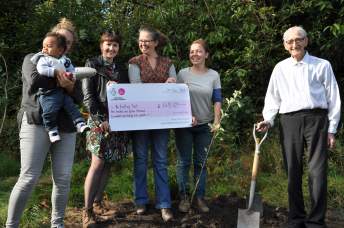
On a beautiful, sunny, Autumnal Saturday morning, over 200 local residents, local councillors, senior council officers and funders came together to celebrate the launch of Stockport’s Community Food Hub.
Funding from Reaching Communities, Postcode Local Trust (supported by players and Awards for All, totalling just under £1/2 million, will support the development of this sustainable food and community hub for the next five years.
Helen Woodcock, founder of the Kindling Trust, the organisation that secured the funding and is co-ordinating the development of the hub said “This funding means an exciting future for the old council plant nursery at Woodbank Memorial Park. We had a really warm welcome from the local community when we took on this site and the support and enthusiasm just keeps on growing. Over the next 5 years we will together transform Woodbank into a regional leader in social prescribing, urban food production, horticulture training and long term solutions to food poverty”.
Funding will equip the hub to confront a wide range of challenges – from food-related illness and food poverty to loneliness; from an ageing farming population and unemployment, to soil erosion and climate change. It is about taking the root cause of these seemingly disparate issues and turning it into a solution for them all; building healthier, happier, more resilient communities through good food.
Saturday’s event used food both to celebrate the funding success and to engage more people, asking how they want the community food hub to develop over the next 5 years. The day included pumpkin carving and souping, apple pressing, chutneys made from the produce grown on site, tours of the gardens, soup, bee keeping and a big thank you made out of vegetables!
Corrina Low (Community Engagement Co-ordinator) said ” Our oldest member Sid (91 years young) and youngest, Elliot (about to celebrate his 1st birthday) lead the celebration with the planting of an apple tree. This symbolises our confidence in the future of our Food Hub to deliver meaningful solutions for generations to come and offers hope in a world with so many competing challenges“
Sid talks very openly and movingly of how he felt when his wife died and the role of the hub in bringing some cheer back into his life. For many it is a place where not only can you learn about and experience the joys of growing, cooking and eating healthy fresh and truly local food, but where you can find community. If you’re really lucky you might get a little song from Sid and cheering smile from Elliot.
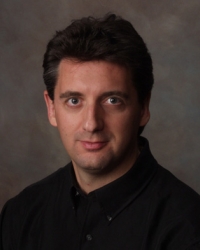
The speaker for the Philosophy Research Seminar on Wed. 7th Nov. will be Prof. Stephen Gardiner (University of Washington). The title of his talk is “Ethics and Intergenerational Climate Extortion.”
The seminar will take place in Arthur Lewis Building, Boardroom (ALB 2.016/7) from 3.15 to 5 pm.
This paper argues (i) that extortion is a clear threat in intergenerational relations, (ii) that the threat is manifest in some existing proposals in climate policy, and (iii) that it is latent in some background tendencies in mainstream moral and political philosophy. It focuses on some troubling undercurrents to recent arguments in climate policy and climate ethics for “making the grandchildren pay” for climate action. It also makes the case that intergenerational extortion raises issues about the appropriate limits to the sway of central values such as welfare and distributive justice.
You’ve seen the bone-chilling report issued by the UN Intergovernmental Panel on Climate Change, and boy oh boy, them bones them bones them chilled bones! So what should you do? The internet seems to think that small, incremental lifestyle changes might help turn the tides of human-driven destruction of our planet. But on the other hand, the river is just around the bend, and those smooth river stones would weigh you down so perfectly as you shuffled off this mortal coil. Go green? Or go bloated blue? Let’s find out!
1. Do you need meat at every meal?
Nope! I’m happy to reduce my meat consumption, trying out options like meatless mondays or seasonal, plant-based meals. Even just cutting down on beef can be a huge help in reducing my carbon emissions. Sustainability can be yummy!
I don’t need meat at every meal, but I want it. And if I’m being perfectly honest with myself, I am a greedy, selfish, little person who is desperately seeking some shred of comfort in the unforgiving machinery of capitalism. I know what I do is bad, but what models for good do I have in my life? CEOs? Presidents? Only the soft gurgle of the river promises me any release from this troubled world.
2. What kind of car do you drive?
I drive a Toyota Prius. It’s not perfect, but it’s a step towards reducing my carbon emissions. Plus, it’s got absolutely fabulous trunk space!
I take the fucking bus. It’s green as hell, but no amount of overcrowded public transportation on my way to work can change my complacency in the mechanisms of corporate greed. In my fantasies I smash those mechanisms with stones, but in reality I know my only option is to weigh my beige slacks down with those very stones and let the river wash away my guilt.
3. Have you considered energy efficient appliances?
I just recently upgraded to a smart thermostat (the future is now!), and I’m saving up to get a more efficient A/C next summer. Plus, my new LED lights make for great party lights when I have people over for green drinks!
I have considered many things. But the best choice always seems to be to fill my pockets with stones and walk into the river.
4. Would you rather do a cottage vacation or a European getaway?
I love Europe, but I’ve come to understand that transatlantic flying make mother earth feel super sad. So I’ve changed my habits and have come to enjoy local vacations more. Cottage getaways! A bus down to Montreal or NYC! Or even a fun staycation at an Airbnb in the funky Kensington Market area!
This morning I had to sit in on a video meeting with the CFO of our company while he flew on a private jet to Hawaii for a game of golf. He complained about how it was his third flight this week, and how he was so tired of the filet mignon they serve on board. Beneath his entitled, petty voice, I kept hearing the sound of the river. She calls to me.
5. What do you think about the three Rs: Reduce, Reuse, and Recycle?
I’ve been working on buying fewer things and consuming less in general. Wherever possible I reuse and recycle things. In general, everything I buy I try to find the lowest carbon option: clothes, food, energy. Oh, and I have just the cutest reusable tote bags for shopping at Whole Foods!
A Carbon Majors Report shows that just 100 companies have been the source of 71% of carbon emissions since 1988. What the fuck do my inconsequential little choices have to do with numbers of that dizzying size? The illusion of individual choice and individual guilt obscures the grim reality of capitalism. I know that three Rs won’t change a goddamn thing for those 100 fossil fuel producers polluting our earth. But one R might make all the difference to me: River.
So, MCFly subscribes to a rather excellent news outfit called “DeSmogUK” – lots of good investigative journalism on the frackers, the deniers and so forth… Here’s their latest newsletter…
Thursday 25 October 2018
This week, we’ve been focusing on the investigation into allegations that the judge who handed three fracking protesters “manifestly excessive” jail sentences has family ties to the oil and gas industry.
Under the Judicial Code of Conduct, judges are expected to disclose personal relationships, social contacts and activities that could cause a bias or a conflict of interest and which put their impartiality into question. Our reporter Chloe Farand has the full story here.
We also reported on the big news that Shell is ending its corporate partnership with the National Gallery after a decade, as the credibility drains out of the Big Oil sponsorship sham. Our editor Mat Hope has the full story here.
This is an issue we’ve been reporting on for several years – and it’s the sort of story we’d like to continue to expose.
But we need your help.
We’ve got ten days left of our crowd fund appeal and we need your help to reach our target of £20,000.
We are at a critical time in our history and we need your support to fight back against those who are fuelling climate breakdown.
Thank you.
We’re always looking for feedback on our newsletter and stories. If you’ve got something you’d like to share, please do get in touch with editor@desmog.uk
The email (you can see the whole thing at the end of this blog post) invites people to take part in working groups which will produce draft plans which will….
Oh, come on, we all know the score by now. Five Year Plans (I kid you not). As someone said on seeing this
Same old, same old – with Slack thrown in for extra collaborative effect! Now with an online discussion forum, people can share ideas about movement towards a plan building on the new strategy not only face to face and in vacuous documents like this, but also digitally! Brilliant!
There are two basic questions that the people behind this latest farcical offering won’t answer
a) Doesn’t this imply that, um, You. Haven’t. Actually. Been. Doing. Anything. For. The. Last. Ten. Years?
b) How come you’ve not contacted the people who attended this year’s Mayor’s Green Vomit, sorry, Summit, to invite them to participate? Because other people besides me (I’m on your blacklist, for unfathomable reasons), who did get to go, have heard diddly-squat from you lot.
If this were not so tragically serious, it would actually be funny. Still, it keeps some middle-class activists calm, and keeps some academics in REF-able ‘activity’ (as opposed to, you know, action). Meanwhile – and this is not hyperbole – we enter the last decade in which we even have a snowball’s chance of pretending to prepare for the (now almost certainly unavoidable) cataclysm. But our powerpoints and five year plans will protect us. Oh yes.
Here’s that email. Read it and weep.
From: GMCA-LCH Sent: 03 October 2018 13:32 To: GMCA-LCH <LCH@greatermanchester-ca.gov.uk> Subject: Green Summit – Working Group Invitation
Hello,
A few weeks ago, the Greater Manchester’s Springboard to a Green City Region report was published. This report summarised the feedback and learning from the 2018 Green Summit as well as feedback from listening events, and it sets out the first steps we are taking this year.
One of those steps was to establish online working groups that will help develop detailed delivery and investment proposals focusing on key actions that should be taken forward in the near term. These online working groups, along with other key actions highlighted at the 2018 Green Summit, will come together into a 5-year plan.
We are currently planning three working groups – with a focus on Energy, Buildings and Sustainable Consumption and Production (Incl Circ Econom, food etc) Green Summit actions that need evidencing. This work will build upon the evidence gathered from the Green Summit. We are proposing that each working group will help us to focus on developing a few business cases based on the Springboard Report, that can be used to identify how we will deliver key actions.
We hope that the working groups will help create these business cases through two `in person’ meetings and an online workspace. The `in person meetings’ will take place at the GMCA office at Churchgate House on 56 Oxford Road at the following times:
Energy group: Monday 29 Oct. 4-6pm
Buildings group: Wednesday 31 Oct. 4-6pm
Sustainable Consumption & Production group: Thursday 1 Nov. 4-6pm
We have chosen these times to also attract people who can only attend at the end of a working day.
Each group will have an online workspace in Slack – a mobile and web based tool that is a cross between email and WhatsApp. Click here to join the GMCA Slack group. This weblink will prompt you to create an account so you can join Slack. Once you’ve created an account, you’ll automatically be directed the GMCA Environment Team Slack page. At the first `in person’ meeting, we’ll discuss Slack and how it will be used to augment the working group’s efforts.
Finally, please find attached to this email a one-page brief that provides background for the working groups, what we hope the groups will delivery and a timeline of activities.
We would appreciate your participation in the workgroups and hope you will join us at one of the relevant launch meeting in a few weeks. Can you please confirm by return if you are able to attend one of the three sessions and, if so, which one.
A press release sent to MCFly (which thinks all the political parties – Tories, Labour, Lib Dems, Greens – have been almost as woefully fail-y on climate as the social movements) by the Lib Dems, giving Manchester City Council (94 Labour councillors, 2 Lib Dems) a well-deserved kicking for the usual opacity, evasions and non-action… We’re so toast, but I suppose we do have to keep staring into the abyss, eh?
Councils in Greater Manchester are investing £1 billion into the fracking industry, the Liberal Democrats have revealed.
Manchester Council is a leading member in a regionwide £1bn investment into the fracking industry, despite a policy opposing the controversial drilling.
The region’s councils invested more half a billion pounds into global fracking giants BP and Shell, whilst companies like Statoil, Exxon, Chevron also received hundreds of millions each.
A total of 6% of the £17bn pension fund went into fracking, making it the second largest investment by proportion of its fund but the largest overall investment in the country,
Public support for fracking has been consistently low, with the recent polls suggesting just 18% of people in the UK support the drilling.
But a 2014 poll run by the Manchester Evening News found that 73% of Greater Manchester residents opposed fracking.
Despite this, Greater Manchester Labour Councils are supporting investing nearly £1bn into the fracking industry.
In the last full council meeting, Labour refused Lib Dem questions to clarify their position on the investment.
The revelation follows the Government’s recent decision to allow fracking in the UK, with Cuadrilla set to become the first company to begin the controversial practice.
Uncovering the shocking investment, Manchester Lib Dem leader John Leech said:
“Fracking is widely unpopular across the country and in Manchester, some polls even indicate that up to 80% of local people oppose it.
“Climate change is the single biggest threat we face and rather than leading the fight for our environment, Labour councils in Greater Manchester are investing in the most unpopular, dirtiest and most damaging industry imaginable.
“Imagine the difference this £1bn could make if redirected into renewable and clean energy.
“Liberal Democrats take the fight for environment seriously and this revelation is another example of Labour’s stranglehold on Greater Manchester and why electing Lib Dems across the region is more important than ever.”
The 56-page report [you can download it here] found that in 2017 the UK’s 42 incinerators released a combined total of nearly 11 million tonnes of carbon dioxide (CO2). Around 5 million tonnes of this CO2 was emitted through the incineration of fossil-based materials such as plastic. The 5 million tonnes of fossil CO2 released by UK incinerators in 2017 is estimated to have resulted in an unpaid cost to society of around £325 million.
The report highlights yet another way that plastic is harming our environment, with polluters getting away without paying their fair share for the climate damage that they are causing. The study says that over the next 30 years the total cost to society of fossil CO2 released by UK’s current incinerators equates to more than £25 billion pounds of harm arising from the release of around 205 million tonnes of fossil CO2.
Each tonne of plastic incinerated results in the release of around 1.43 tonnes of CO2. According to the report, a typical waste incinerator built in 2020 would release 2.8 million tonnes of fossil CO2 over its 30-year lifetime. Even when electricity generation is taken into account, this is equivalent to releasing around 1.6 million tonnes of CO2 more than sending the same waste to landfill.
Josh Dowen, Associate Coordinator of the United Kingdom Without Incineration Network (UKWIN), says: “The study shows waste is a rubbish feedstock for generating energy. Burning large quantities of plastics gives rise to a small amount of electricity that comes with a high climate cost. To add insult to injury, those profiting from waste incineration are not paying for the huge cost to society of emitting all these greenhouse gases, and so a UK-wide waste incineration tax is long overdue”.
Dowen continued: “The climate change impacts of incineration are worse than landfill. Most of what is incinerated could and should be recycled or composted. It is time to stop thinking of waste as potential incinerator feedstock and time to recognise the urgent need to reduce, re-use and recycle”.
The report, ‘Evaluation of the climate change impacts of waste incineration in the United Kingdom’, is available to download from http://ukwin.org.uk/climate
Our "leaders" are going to keep making empty promises. It makes them feel good. It gets the activists to act like zombie kittens. If you want to have some self-respect and perhaps make a difference (actual facts may vary), then find a functioning group that cares about your skills and knowledge - what you have, what you want.
One useful group might be www.climateemergencymanchester.net - you can email them on contact@climateemergencymanchester.net

 ned up…
 On a beautiful, sunny, Autumnal Saturday morning, over 200 local residents, local councillors, senior council officers and funders came together to celebrate the launch of Stockport’s Community Food Hub.
 The seminar will take place in Arthur Lewis Building, Boardroom (ALB 2.016/7) from 3.15 to 5 pm.


 manchester climate monthly