Individual Responsibility for #Climate Mitigation; Dr Tom Crompton

A panel debate on the ‘To what extent does individual responsibility have a role to play in climate change mitigation?’ was held at the end of the 4th Tyndall Centre PhD Conference, held in Manchester in April 2014.

There were four panellists

Dr Lorraine Whitmarsh, lecturer in Psychology at Cardiff University (and co-developer of the crucial concept of “carbon capability,” over and above the anemic and convenient “carbon literacy.”
Dr Sarah Mander, research fellow at Tyndall Manchester
Dr Julia Steinberger, lecturer in Ecological Economics at the University of Leeds.
Dr Tom Crompton, Change Strategist at WWF-UK.

My hypothetical “contribution” to the debate is here. If I’d known you could actually go on for 15 minutes I… wouldn’t have. But I’d have gotten in something about the multi-level perspective “versus” social practices. So it goes.

Posted in academia | Leave a comment

Treestation chopped down to size ahead of Sat May 3rd open day #Manchester

Well, sort of. Here’s an interview with Patrick Morello of said organisation. You can find details of the open day here.

a) What does TreeStation do?
We provide arboricultural and woodland management services and with the wood that this produces we make firewood, sawn timber, and other products – the aim is to make the best possible use of it. We also take material from councils and other treework contractors; our aim is to save carbon by making the best use of this valuable local resource – replacing firewood imported from Eastern Europe and sawn timber from all over the world. Imported wood fuel is worse than useless; but local wood is part of the answer, and there is a surprising amount of it in Greater Manchester that is simply wasted.

b) What have been the big successes in the last year?
Our biomass woodchip received Woodsure Plus (http://www.woodsure.co.uk/levels_2.htm) accreditation, guaranteeing quality and sustainability. Our treework team passed their Arboricultural Association  assessment with flying colours, meaning that we are now AA Approved Contractors. This is the gold standard in the arb industry, and ensures the quality and safety of our work; it should be a big help in winning tenders in the future. Our sales of firewood, arboricultural services, and sawn timber are well up; our wood is being sold in John Lewis stores in the form of chopping boards made by our customer Start Creative.

c)  What hasn’t gone according to plan/why/how is it being dealt with
Costs were higher than anticipated, but we have renegotiated our lease and appealed our rates and have succeeded in reducing these. It is proved much more costly and complicated than anticipated to get the biomass woodchip side of our business going properly, for a variety of reasons. Biomass woodchip sales were a big part of our business plan, so this is the main reason our trading deficit was more than budgeted for. We are launching a new community share issue to fund the purchase of new equipment to overcome some of these difficulties and improve our ability to produce and deliver wood fuels. It will also fund a kiln, powered by a biomass boiler, for drying sawn timber and, when necessary, firewood.

d) Why are you having the open day?
The open days are to promote what we are doing, and also to promote what our customers and partners are doing. So other wood related businesses that we work with are part of the open day too – joiners, green woodworkers, stove and boiler people, mushroom growers. We are a social enterprise, so we are keen to involve people in what we are doing, as members and supporters. We are also using the open days to promote the new community share issue. Finally, part of what we do is promote low carbon technology and ways of living, by hosting school visits for example, and the open days are also part of that

e) How can people get involved?
Anyone can join the treestation, although for the duration of the share issue the minimum subscription is £200. Members can attend the AGM and be elected as directors, and we are also on the lookout for more volunteer directors, especially if they have relevant skills and experience. More generally, it would be great to have more people to help out at the open days, and on other publicity events. Anyone interested should email us on info@treestation.co.uk.

Anything else you’d like to say.

We are really excited to be developing the TreeStation to its full potential. In years to come it will be a major asset to the local community of environmentalists and co-operators, and is already acting as a hub for a variety of wood related eco-businesses. Now is the time to build the future!

Posted in Campaign Update | Leave a comment

Individual Responsibility for #Climate Mitigation; Dr Julia Steinberger

A panel debate on the ‘To what extent does individual responsibility have a role to play in climate change mitigation?’ was held at the end of the 4th Tyndall Centre PhD Conference, held in Manchester in April 2014.

There were four panellists

Dr Lorraine Whitmarsh, lecturer in Psychology at Cardiff University (and co-developer of the crucial concept of “carbon capability,” over and above the anemic and convenient “carbon literacy.”
Dr Sarah Mander, research fellow at Tyndall Manchester
Dr Julia Steinberger, lecturer in Ecological Economics at the University of Leeds.
Dr Tom Crompton, Change Strategist at WWF-UK.

My hypothetical “contribution” to the debate is here. If I’d known you could actually go on for 15 minutes I… wouldn’t have. But I’d have gotten in something about the multi-level perspective “versus” social practices. So it goes.

Posted in academia | Leave a comment

Free* Fundraising/Governance etc training in #Manchester 7th and 8th May

It is free, but you do need to pay a (refunded when you turn up!) deposit. It’s not as if we couldn’t all do with better skills in this department, eh?

Hello,

There are just 3 days left to book your free place at our Manchester training event for charities.  

The Manchester Regional Training Event                                         

Date 7-8 May 2014 (attend one day or both days)
Time 9.30am – 4.30pm
Location St Thomas Conference Centre, Ardwick Green North, Manchester M12 6FZ
Cost Training courses and materials are free of charge.  A £50 deposit is required
to secure your booking; £10 of this will be retained to contribute towards venue and refreshment/catering costs.


Demand for our Regional Training Events are high so don’t miss out – click here to book your place.  

Here is a selection of the full-day courses available, for the full line up visit our website

  • Major Donor Fundraising – Wednesday 7th MayMajor Donor fundraising is all about building and nurturing relationships with individuals, so that they want to invest in your organisation and the outcomes that you achieve.  This course will provide an overview of major donor fundraising and the tools to start a major donor programme in your small charity.  
  • Governance and Board Development – Wednesday 7th May: Is passion enough? An active, involved and well-trained trustee board is essential for the success of any small charity.  This session is targeted at charity CEOs, Chairs and representative Trustees and will look at how to develop a truly High Performing Board.
  • Demonstrating Your Impact – Thursday 8th May: How can you show that you are making a real difference, in order to build trust, rapport and credibility for your services?  This course will provide you with tools and tips for starting this process yourself, without spending money on external consultants.
  • Develop Your Fundraising Strategy Thursday 8th May This course looks at how to develop your Fundraising Strategy. It will provide a structured road map and relevant tools to enable you to link together fundraising sources and the areas you need to fundraise against.

FSI training courses have a market value of between £295 and £325 per delegate place but as a small charity* your place is FREE.

*The FSI defines a small charity as a not-for-profit organisation with an annual turnover of less than £1.5 million. Only staff and trustees of small charities are eligible to join the FSI.  For our full eligibility criteria please see our website.

The FSI  – about our charity

Each year the trustees and donors to the FSI donate approximately £2.2 million worth of FREE support to Small Charities. Why? Because every day thousands of small charitable organisations struggle to remain open. Each day these organisations support individuals, families and communities who positively touch the lives of millions.    

Our aim is to support small charities to become more efficient, effective, accountable and self sustaining. We do this by delivering expert knowledge, strategy and support to small charities free of charge so their futures are secure and their users protected.

I hope you are able to join us at the training and look forward to meeting you.

Pauline
                        Signature
Pauline Broomhead
CEO, the FSI

Posted in capacity building, Upcoming Events | Leave a comment

Individual Responsibility for #Climate Mitigation; Dr Sarah Mander

A panel debate on the ‘To what extent does individual responsibility have a role to play in climate change mitigation?’ was held at the end of the 4th Tyndall Centre PhD Conference, held in Manchester in April 2014.

There were four panellists

Dr Lorraine Whitmarsh, lecturer in Psychology at Cardiff University (and co-developer of the crucial concept of “carbon capability,” over and above the anemic and convenient “carbon literacy.”
Dr Sarah Mander, research fellow at Tyndall Manchester
Dr Julia Steinberger, lecturer in Ecological Economics at the University of Leeds.
Dr Tom Crompton, Change Strategist at WWF-UK.

My hypothetical “contribution” to the debate is here. If I’d known you could actually go on for 15 minutes I… wouldn’t have. But I’d have gotten in something about the multi-level perspective “versus” social practices. So it goes.

Posted in academia | Leave a comment

Do you participate in your (low carbon) culture at all?

There’s this quote by Aida Hurtado.

“It doesn’t matter how good you are, as a person, if the institutions of the society provide privilege to you based on their group oppression of others. Individuals belonging to dominant groups can be infinitely good, because they are never required to be personally bad.”

Posted in humour, Low Carbon Culture | 8 Comments

Individual Responsibility for #Climate Mitigation; Dr Lorraine Whitmarsh

A panel debate on the ‘To what extent does individual responsibility have a role to play in climate change mitigation?’ was held at the end of the 4th Tyndall Centre PhD Conference, held in Manchester in April 2014.

There were four panellists

Dr Lorraine Whitmarsh, lecturer in Psychology at Cardiff University (and co-developer of the crucial concept of “carbon capability,” over and above the anemic and convenient “carbon literacy.”
Dr Sarah Mander, research fellow at Tyndall Manchester
Dr Julia Steinberger, lecturer in Ecological Economics at the University of Leeds.
Dr Tom Crompton, Change Strategist at WWF-UK.

My hypothetical “contribution” to the debate is here. If I’d known you could actually go on for 15 minutes I… wouldn’t have. But I’d have gotten in something about the multi-level perspective “versus” social practices. So it goes.

Posted in academia | Leave a comment

Wildflower planting in #Disbury Sat 17th May South #Manchester

This should be fun!!

bees poster

Posted in Biodiversity, Upcoming Events | Leave a comment

Upcoming Event: #Chorlton Community Wildlife work day – Sat 3rd May from 10am…

chorltonwildlifegarden“It would be great to see plenty of people at Chorlton Community Wildlife Gardening on Sat 3rd May from 10am.

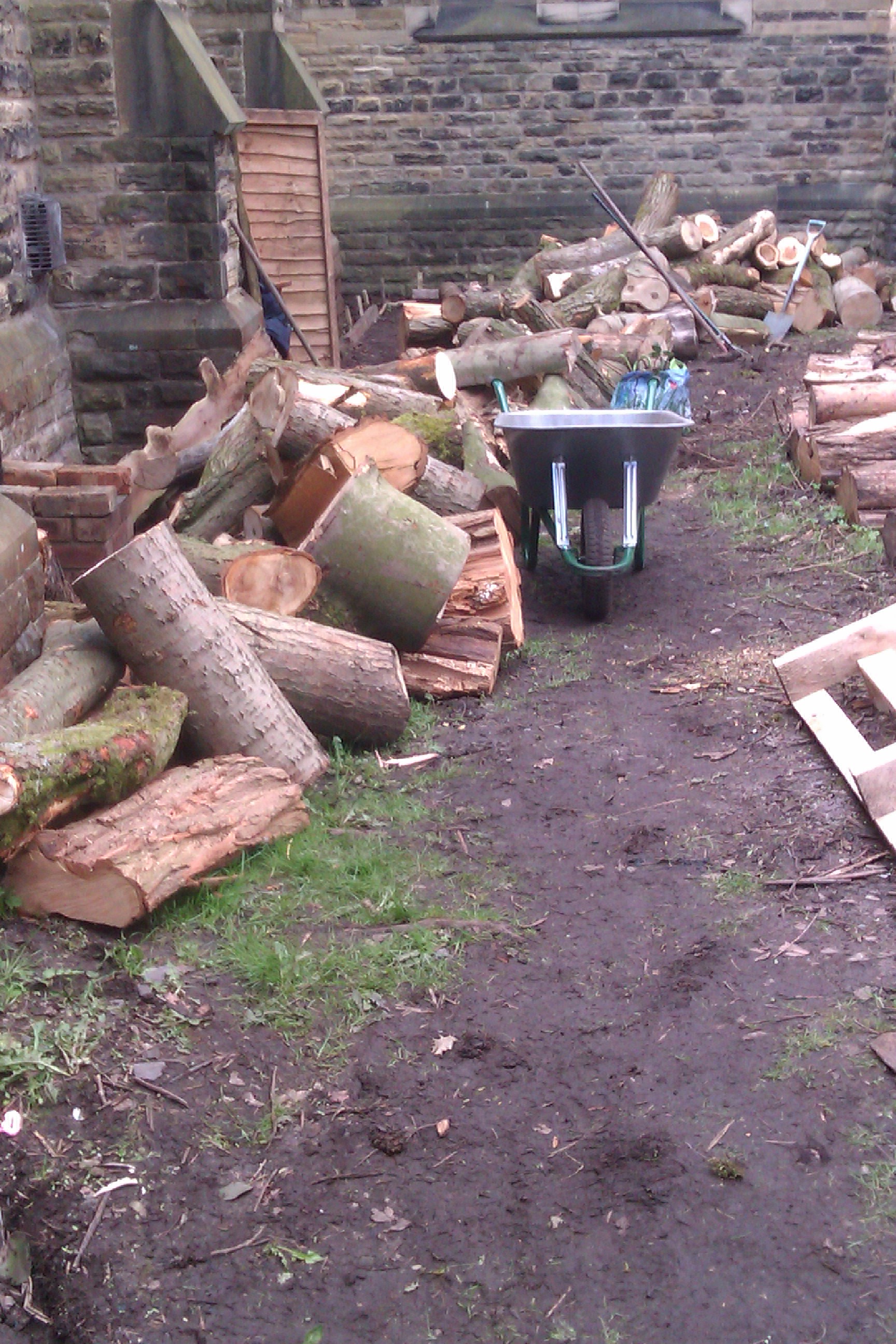
We have lots of logs that want moving and making into a wall for the raised beds.

We will then be able to get some top soil to fill the beds ready for planting.

Thanks”

Posted in Campaign Update | Leave a comment

A #climate philosopher interviewed – “people have used an overly positive rhetoric about climate change and we still haven’t been motivated to act.”

The geniuses in charge of Manchester’s official “climate communications” these last FOUR years will tell you that “you mustn’t scare people”, that it “demotivates them” etc etc.  These geniuses who have managed not to get a single business to write an implementation plan around the 41% reduction and “low carbon culture” goals (and who’ve now given up on even that effort).  These geniuses who can’t even set up a twitter account and keep it going.

These geniuses who don’t even have a list of who they are trying to communicate with.

These geniuses who … and…. breathe…

So, here’s an interview with Dale Jamieson, a professor of environmental studies and philosophy at NYU. He’s got a book out called
“Reason In a Dark Time: Why the Struggle Against Climate Change Failed and What it Means for Our Future,”

He’s interviewed here by Lindsay Abrams.* It’s all good, but this bit got me ranting-

But there still needs to be the focus of reducing greenhouse gas emissions and convincing politicians to make this a priority in policy, right? Otherwise, wouldn’t people take away the kind of discouraging message that climate change is happening and we might as well give in now? 

Often in American public life, we have to speak optimistically about everything. Because the idea is that people will only act if they feel empowered and so on. And what’s happened is that people have used an overly positive rhetoric about climate change and we still haven’t been motivated to act. And part of the reason has been because of these really, really serious institutional and structural problems that I talk about in my book….

* “an assistant editor at Salon, focusing on all things sustainable. Follow her on Twitter @readingirl, email labrams@salon.com.”

Posted in academia, Steering Group | Leave a comment