Interview: Dr Simon Cook, Glaciologist, Lecturer at #Manchester Metropolitan University

Simon Cook_Austedalsbreen1Dr Simon Cook
Glaciologist, Lecturer in Physical Geography
School of Science and the Environment, Manchester Metropolitan University

What you do
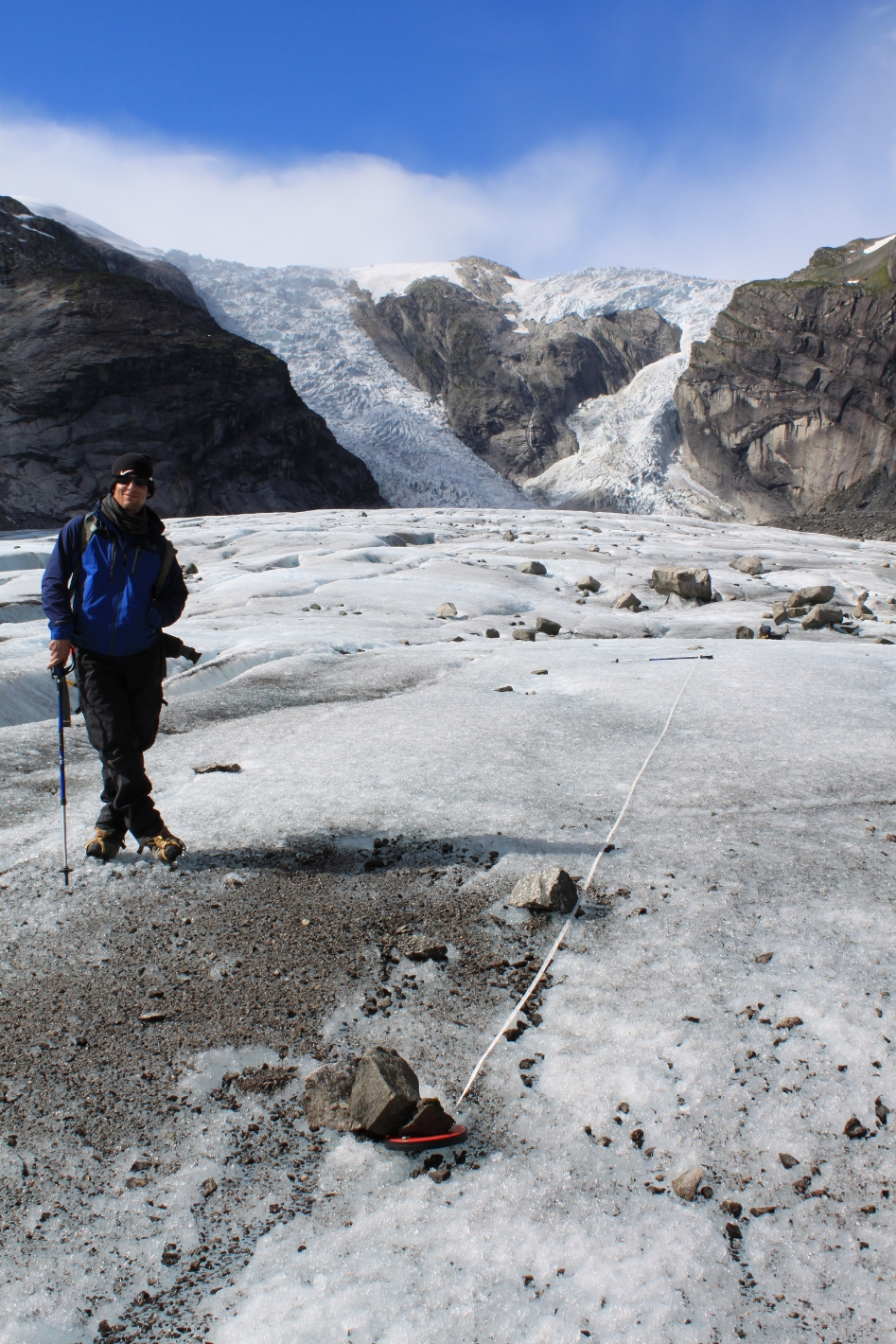
I’m a Lecturer in Physical Geography at Manchester Metropolitan University (MMU). There are three parts to my job. First – research. I’m a glaciologist, so I seek to understand how glaciers and ice sheets shape landscapes, how they respond to climate change, and the dangers posed by glacier-related hazards, which may also be exacerbated by climate change. My research involves making original and objective insights into the way that glacial systems work. I have to read (a lot!) to keep up-to-date with developments in my field, apply for research funding, acquire and analyse data, and publicise the results, usually by writing a paper in a scientific journal, and by giving presentations at conferences. Increasingly, scientists are urged to communicate their work to the public, and so I give talks to local environmental or geological groups and schools, and write articles such as this!

The second part of my job is teaching. It takes a diverse range of abilities and knowledge to be a physical geographer – you need skills in research design, numeracy, writing, computing, statistics, plus specialist subject knowledge. My teaching involves imparting such skills and knowledge to geography and environmental science students. Most of my teaching is about glaciers, geomorphology (the study of landscapes and the processes that shape them), research design and statistics. There’s some marking to do too!

Finally, there are administrative duties, which are not especially exciting, so I’ll leave it there.

Why you do it
As clichéd as it sounds, I had an epiphany! During my A-Level in Geography, we took a trip to Snowdonia. Coming from Kent, which is relatively flat, the mountains of north Wales were an unfamiliar environment. Looking down the Nant Ffrancon valley, I remember our teacher telling us that thousands of years ago we’d have been stood under a glacier. At the time, that blew my mind and I was hooked.

Today, I’m lucky enough to get paid to do something I love. Essentially, my job is to think, go to fantastic places, and help students develop a good future for themselves, It’s a very rewarding job. Being a scientist, there is a lot of thinking to be done, and a lot to wonder about. As a Geographer, I get to wonder about stunning landscapes, for example. You can’t ask for more from a job than that.

As a scientist engaged in a research community there is a sense that I am contributing to something bigger. The point of research is to find out something new about the world, to test theories, and to tell people what you found out so that it enters the broader scientific knowledge base..

I also get to go to some wonderful places. Fieldwork has taken me to Iceland, New Zealand, Sweden, Norway, Svalbard (also Norway, but a long way from the mainland), Spain, and Switzerland. Conferences have taken me to Oslo, Bern, San Francisco and Vienna.

Teaching students is exceptionally rewarding. In my own small way, I like to think I’m helping to guide my students in the right direction such that they can make the best of themselves. Students are good fun to be around in class or on fieldwork. I’m often amazed at how busy and interesting their lives are – we have champion athletes, members of bands signed to record labels, surfers, climbers, etc. Some of them hold down jobs with demanding hours whilst still trying to better themselves by gaining a degree.

How long you have been doing it
I became a glaciologist when I started my PhD at Keele University in 2003. I’ve been a Lecturer for around 7 years, having finished my PhD in 2006. My ‘foot-in-the-door’was a temporary, part-time lectureship at Liverpool John Moores University. I’ve spent most of my career working at the Centre for Glaciology at Aberystwyth University, as well as shorter spells at Nottingham Trent University and the University of Hertfordshire. I started my current job at MMU in July 2012.

What you have changed over time (i.e. what “works” and what doesn’t)
With research, I had to learn to let go of the reins a little. After completing my PhD I tried to hold on to all my ideas and do all of the work myself. As arrogant as it sounds, I didn’t want anyone to steal my ideas! However, in most cases, research works best through collaboration. Working with others can take your original idea to new and exciting places.

With lecturing, it took me a while to develop a style that I felt comfortable with. I probably started my lecturing career with very dense, complex powerpoint slides, and some awkwardly delivered humour. Nowadays, I think my slides are more interesting (more photos and diagrams!) and I just speak enthusiastically about Geography. Enthusiasm is key – nobody wants to listen to someone who’s bored. I also like to have students DO something in class, rather than listen to me for 2 hours solid!

What advice you would give your ‘younger’ self.
To me – there were a lot of fashion errors! Academically, however, I would probably take maths A-level if I could go back. I did Physics, but the maths would have been highly complementary – much of physical geography involves maths, physics and computing! This is something I have to work hard at now in my research.

To students – read…a lot! Work hard. Push yourselves – your future is in your hands. Listen to and read instructions – do what your lecturers tell you and you’ll do well. Read feedback on assignments – the mark won’t tell you how to improve – the feedback will. Get off facebook – no amount of reading about your mate’s mate’s (who you met once in a bar and added you) dinner is going to help you finish that essay. Don’t leave your work to the last minute, or day, or week – keep it ticking along from the day you receive the assignment details.

Anything else you’d like to say…
Feel free to contact me through over email (S.J.Cook@mmu.ac.uk) or through Twitter (@glacio_cook).
Posted in academia, Interview | Leave a comment

Event Report: “Radical Emissions Reductions Conference” #Tyndall #climate

MCFly writer Vicky Ramsden reports on the recent Radical Emissions Reductions Conference. For other accounts, see here and here.

A radical conference to reduce carbon emissions

Now let me make one thing clear.  This was not a conference that was designed to be radical, although it may be true that in some ways it was.  This was the Tyndall’s Centre’s call to action of academics, climate change scientists and sustainability practitioners.  A plea to reach consensus that the action of the last 30 years has not delivered any real reductions in carbon emissions.  And that now, more than ever, real change is needed if we are ever to mitigate against the rising emissions that are almost certainly taking us beyond the known ‘safe’ limit of 2 degrees. But we’ve heard this all before haven’t we?

The Tyndall Centre for Climate Change Research hosted the conference at the Royal Society, London.  The conference aimed to get key policy influencers into one room to have a meaningful action focused discussion about how to galvanize policy makers and the wider public to take more urgent, more radical action to reduce carbon emissions.  Key-note addresses were given by Caroline Lucas, former leader of the Green Party and -via video from her kitchen in Canada- Naomi Klein, author of ‘No Logo’ and ‘The Shock Doctrine’. Chairs included Andrew Simms from the nef (new economics foundation), Carly McClaughlin and Charlie Wilson (both from Tyndall). Presentations were delivered by a pack-a-punch line-up of Tyndall A-listers and experts. Conformity to the agenda timings made for minimal wastage and the proceedings were excellently executed with chairs who were really able to hold court.  The benefit of technological advances in the international jet-setting conference arena was never felt more poignantly with far-away colleagues beamed in for presentations and Q&A’s. It showed that climate converts really can put their money where their mouth is.

The breadth of the conference ranged from a recap of the science, evidence of environmental impacts, insights into behaviours and systems and examples of actions delivered by normal folk that really have led to deep and swift reductions in carbon emissions.  The refreshing bit was a general consensus of a few salient points:

  • For those who ‘get it’ – the responsibility is ours to address
  • Politicians are just like us and if they don’t get it, then it’s up to us to make them
  • Social movements do happen, and in ways that we want
  • Other campaign groups can be aligned with the environmental movement, but it’s up to us to reach out to the right ones
  • There is low hanging fruit and its people.  Changing behaviours, generates stakeholders
  • There are quick wins which should just be won
  • Some small action is better than talking about bigger action

So I’ll keep it brief, links to the presentations are here:

http://www.tyndall.ac.uk/communication/news-archive/2013/radical-emissions-reduction-conference-videos-now-online.  The 2 day session was streamed live with more than 60 individuals joining on each day.  The Twitter feed was constant. There were no break-out groups which means that subject to interpretation, all those who attended heard the same message, delivered at the same time and in the same way.  If ambiguity has been part of the problem of inertia, then this format cleverly side-stepped it.

And so what next?  Well, assuming those that are reading this are part of the ‘get it’ contingent, then this is a prompt to connect with others that do, and to act.  Tell your friends, recycle more, think about putting a jumper on before you put the heating on, goad others when they don’t.  For Tyndall, I hope that this will form the basis of action. Real impactful action.

Posted in academia, Event reports | 1 Comment

#Salford and #Trafford Councils investing in #fracking company.

Haven’t had a chance to get a react quote from Salford and Trafford Councils on this below, from “http://frackfreegtrmanchester.org.uk” yet…

Press Release: Salford and Trafford Councils found to be investing in fracking company iGas

Salford and Trafford Councils investing in iGasFor immediate release.  

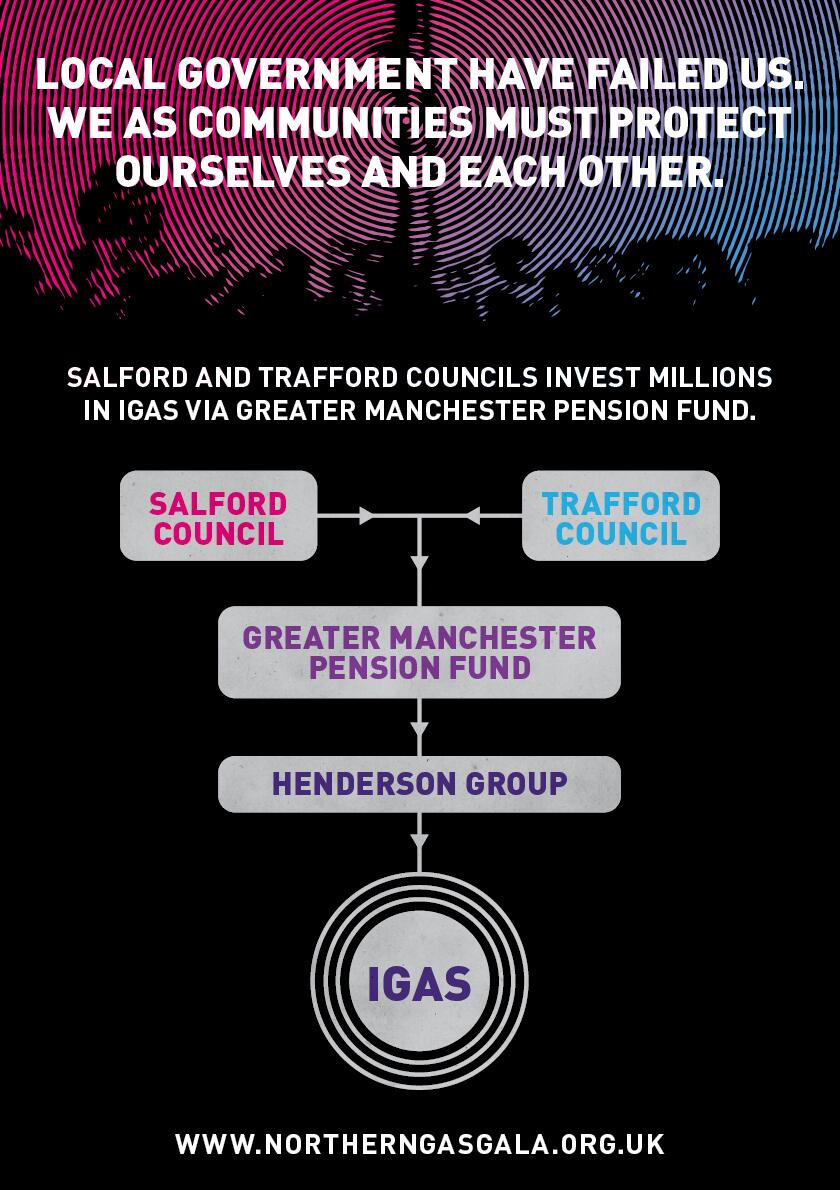
Research conducted by Frack Free Greater Manchester has discovered that Salford and Trafford Councils are investing in fracking company iGas via the Greater Manchester Pension Fund.  Both Councils have granted iGas planning permission to conduct exploratory drilling at different sites [1].

iGas lists Henderson Global Investors (HGI), a subsidiary of Henderson Group, as one of their five major investors [2] and Greater Manchester Pension Fund (GMPF) holds shares worth millions of pounds in the Henderson Group (HG) [3].  The pension fund also invests in fracking companies operating in the US and Australia [4].

Local resident Helen Chuntso said “I am shocked and appalled. We are here fighting tooth and nail to stop the destruction of our community by fracking companies and we find that our local council will profit if they are successful. They are elected to look after local interests yet they have financial interests that go against us.”
She added, “The layers of corruption and vested interests are starting to become clear.  We have a government that employs Executives from the fracking industry, such as Lord Browne, as its Cabinet advisers.  And now it emerges that our local councils – who should act as a check and balance – also have vested interests in seeing these companies profit.”
“But they have underestimated local opposition – we will not allow fracking to destroy our communities, not here or anywhere in the country.”

Robbie Gillett, from Frack Free Greater Manchester added, “We call on all local authorities who are considering planning applications for Unconventional Gas Extraction to divest their Pension Funds from all fracking companies.”

Trafford Council is due to consider an application from iGas to extend their planning permission for coal bed methane exploration at Davyhulme at a Planning Committee meeting on 9th January 2013. Frack Free Greater Manchester are concerned that neither Trafford nor Salford Council required iGas to conduct full impact assessments despite the serious risks to the environment, and lack of clarity about iGas’ operations at both sites regarding shale gas exploration.

Frack Free Greater Manchester is hosting a family-friendly event at the Barton Moss site on Saturday 21 December to raise awareness in the local community, with a photo opportunity at 2pm.

Notes to editors

[1]    http://frack-off.org.uk/extreme-energy-fullscreen/

[2]   http://www.igasplc.com/investors/shareholder-information/major-shareholders

[3] Greater Manchester Pension Fund  *http://www.gmpf.org.uk/pdf/investments_infrastructure%20commitments_31032013.pdf 

*http://www.gmpf.org.uk/pdf/investments_property_pooled_vehicles_31032013.pdf

*http://www.gmpf.org.uk/pdf/investments_year_end_holdings_2013.pdf
 

[4]  The Greater Manchester Pension Fund has the following investments:

AGL Energy (Coal Seam Gas Aus) (£4m)
Apache Corp (US fracking) (£1m)
Centrica (Cuadrilla) (£4m)
Cliffs Natural Resources (US fracking) (£0.5m)
Devon Energy (US fracking) (£0.5m)
Duke Energy (US fracking) (£0.5m)
Endbridge Energy (US fracking) (£0.5m)
EOG Resources (US fracking) (£1.5m)
Noble Energy (US fracking) (£1.5m)
Schlumberger (US and UK fracking) (£12m)

Total fracking investments: £107.5m

Posted in Campaign Update, Energy, press release journalism | Leave a comment

Upcoming Event: Winter Tree and Shrub identification course, #Chorlton, #Manchester #biodiversity

On Sunday the 12th January 2014 the Greater Manchester Ecology Unit will be running a Winter Tree and Shrub Identification course at Chorlton Water Park. Places are limited, so booking is essential. For more details, please follow this link:

http://www.gmwildlife.org.uk/news/index.php?id=248

Please note that the Water Park is at the end of Maitland Avenuenot Maitland Road.

Merry Christmas & a Happy New Year!
Dave Bishop (FoCM Chair

Posted in Biodiversity, Upcoming Events | Leave a comment

Another year for #Manchester – Madlab 2013 and 2014…

MCFly is asking a bunch of different organisations the same 3 questions –

  • What was your biggest achievement in 2013?
  • If you could go back to the beginning of the year and give yourself one warning/piece of advice, what would it be?
  • What have you got planned for 2014, and how can people get involved in what you do?

Below please find the answers from Madlab, the wonderful Northern Quarter space for all things innovation. Other groups to follow over the Christmas period…

Biggest Achievement: There have been so many this year. It’s been our best yet, but opening the Community Shop – Inventory – was brilliant. It’s the first such shop of its kind and we’re really excited to see how it will develop in 2014. Just ordered some mouse taxidermy kits from our taxidermist – and Manchester Girl Geeks’ “E-Rascals” (a cuddly toy kit with light-up eyes) are flying out the door. We’ll be running workshops with schools in January to teach them all about Raspberry Pis, Arduinos, MakeyMakeys and the like. If you’re a school or interested parent, contact us at office@madlab.org.uk and we’ll be in touch about dates.

Advice: A great team does wonders. We’ve recently employed two interns via the Creative Employment Programme and we nabbed someone super from CUBE plus a great technologist (who is in a Sun Ra tribute band by night!) It’s been brilliant working with them and doing lots of new, exciting projects.

What have we got planned? Loads! Too many to mention them all in this space – but we are relaunching the website in early 2014 to put more focus on the brilliant community groups that meet here, we’re doing more courses than ever (see http://madlab.org.uk/courses/) and there’s also a long-overdue refurb in the works, starting with the ground floor and frontage. We’ll be creating two new self-contained work/ meeting spaces, taking out the tricky middle pillar (if you’ve experienced it, you’ll know) and getting new loos. If you’d like to get involved, contact office@madlab.org.uk or visit our website: madlab.org.uk.

Posted in Campaign Update | Tagged | Leave a comment

It takes several to tango – photos from Barton Moss #fracking protest, #Salford #Manchester

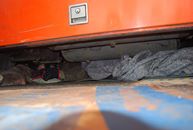
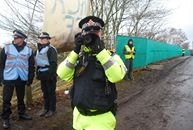
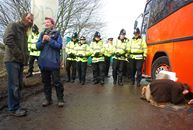
Climate protesters have blocked the entrance to a drilling site in Barton Moss with a large orange bus. Protesters have “locked on” under the bus, in the bus and on-top of the bus.  This follows the blockade of the same site yesterday with the blade of a wind turbine.

Photos taken from Facebook…

bartonmoss1 bartonmoss2 bartonmoss3 bartonmoss4 bartonmoss5 bartonmoss6 bartonmoss7 bartonmoss8 bartonmoss9

Posted in Campaign Update, Energy | Leave a comment

Professor Kevin Anderson on shale gas, civil disobedience and Barton Moss #Manchester #climate

[Update 23rd Dec – see also Prof Anderson on science, silence and ‘neutrality‘]

Professor Kevin Anderson of the Tyndall Centre on why shale gas – with or without fracking – is a very bad idea. At the 3 minute mark he responds to a question about the recent wind-turbine-blade-blocking-the-Barton-Moss site.

This is a clip from a longer interview, conducted on Tuesday 17th December which covered the recent Radical Emissions Reduction Conference at the Royal Society, the UNFCCC talks in Warsaw, time machines, psychological denial and other topics. That 38 minute interview will go up very soon.

On civil disobedience; The great American historian Howard Zinn said that the problem isn’t civil disobedience, but rather civil obedience… See Matt Damon reading one of his essays

Posted in academia, Energy, inspire, Interview, youtubes | 7 Comments

#IPCC 5th Assessment Report as… haiku! #Genius #climate communication! #Manchester version to follow…

A haiku, for those who don’t know, is is a very short form of Japanese poetry.
According to “Sightline Daily: News & Views for a Sustainable NorthWest” (US of A!)
“Housebound with a rotten cold one recent weekend, Greg Johnson found himself paring his key takeaways from the IPCC report into haiku…”

They are simply awesome – and can be seen here.

Please note, “explicit permission must be granted by Sightline and Greg Johnson for republishing this work in full or in part. In no instance may the work be republished for profit.

Posted in Campaign Update, education, inspire | Leave a comment

Wind Turbine Blade blocks #fracking test site. #IGas #BartonMoor #climate #Manchester

Read the press release here.
windturbineblocksfrackingrig

According to a tweet from the nodashforgas people “Amongst the 50 pple on the #BartonMoss blade blockade today were #blacklisted construction workers. Climate and trade union activists unite!”

Posted in Campaign Update, Energy, Event reports, inspire | Leave a comment

Video: On anxiety management, social class and who feels comfortable at “top-down” meetings

The first four minutes of this are kinda reasonable. The last three minutes add a bit (including some qualifications and disclaimers and so on). Many thanks to Justin Hellings for helping make this – he (and others?!) will soon be flying solo…

The best thing I have ever read on social class and schooling is by Cynthia Peters- “The Boy Next to Me Sings All the Time.” You. Really. Do. HAVE TO READ IT!!! Please.

Posted in academia, Interview, video review | Leave a comment