Asked the Librarian for that book about Pavlov’s dogs and Schrodinger’s cat – she said it rang a bell but she didn’t know if it was there or not. (via Brian Candeland)
And this weekend…
Friday 15th MarchGreen Economy, Green Jobs What do we mean by a Green economy? How can we build an economy for a steady state, no growth future? Speakers and debate with Natalie Bennett, Leader of the Green Party, and Neil McInroy, chief executive, Centre for Local Economic Strategies. Friends Meeting House, 6 Mount St
Saturday 16th March “The Big Dig” a volunteering open day run by Big Dig gardens to welcome in their local residents and show them the benefits of volunteering on food-growing gardens. Keep a close eye on http://www.kindling.org.uk/bigdig for what we’re up to, and to get involved e-mail kirstin@kindling.org.uk
Saturday 16th, 9am-2pm Big Red Bus Tour
Meet: Manchester City Centre (Piccadilly Gardens)
The Carbon Co-op Big Red Bus Tour takes passengers on a journey around three eco-show homes in Greater Manchester. Want to see what a low carbon retrofit looks like? Meet the people who have reduced household carbon emissions and bills by up to 80%? The tour is free and includes lunch, to book email them on info@carbon.coop.
Sunday 17th, Once a Month volunteer day in Platt Fields from 1pm – 4pm
• working on the eco garden – grass sofa, bramble cutting,
• repairing the broken panel in the wheelchair garden (hammer and nails job!)
• designing and painting information boards etc for Envirolution festival this year
• cleaning the greenhouse glass of mildew and sowing broad bean and pea seeds to get the summer going
Meet at the Lakeside Centre, wear warm old clothes and boots or outdoor shoes. It is useful to bring gloves if you have them, we do have lots but they are rubber and rather hot!!
At the end of the afternoon we have tea/juice and biscuits
To get there on the bus, get off anywhere along Wilmslow rd between Rusholme and Owens park (turn into the park and go straight ahead along the path you will get to the lake and the Lakeside centre is the building that looks like a large dovecote in front of you – there is a clear map on our website http://www.plattfields.org on the geography section) If yopu arrive late, phone 07740 428629 to find where we are.
And if you know any jokes of the high standard we’ve used so far, please submit ’em.
“The campaign will expose how the UK financial sector is bankrolling climate change by ploughing billions into dirty fossil fuel projects which are devastating people’s lives around the world.
“As a first step, we are calling for pension funds and other shady financiers to be made to come clean on the emissions created through its dirty investments: http://www.wdm.org.uk/vince-cable
“New regulation coming into force later this year will mean that the UK’s biggest businesses will have to report on their carbon emissions. But the financial sector has been let of the hook from disclosing the climate impacts of their investments.
Find out how much your bank has poured into coal power and email Vince Cable to demand that the financial sector is forced to come clean on the carbon footprint of its investments.
Friday 22nd March at London Scottish House, Mount Street, Manchester 9.30am – 2pm.
This conference looks at the impact of Climate Change on local communities and will be of interest to everyone. It has been organised by a partnership of MBMEN, My Community (MC-UK), Salford Interfaith Forum & Creative Hands Foundation and is funded by Defra. It is the conclusion of a project on the impacts of climate change on BME older people and Refugee and Asylum communities. Conference participants will have the opportunity to hear from the project team on the key findings of their work and ideas about how we can all help our communities to better understand the impact of Climate Change. A range of specialist speakers will be talking about key themes and projects and you will have an opportunity to join workshop sessions for more learning and discussion.
Come and join in the discussion, get networking and stay for a lovely hot lunch. It’s all FREE!.
There will also be stalls with lots of information and goodies.
For catering purposes, please let me know if you can attend (plus any dietary requirements) by Wednesday 20th March.
Best wishes,
Fiona McInroy
Administrator
Manchester BME Network
London Scottish House
24 Mount Street
Manchester
M2 3NN
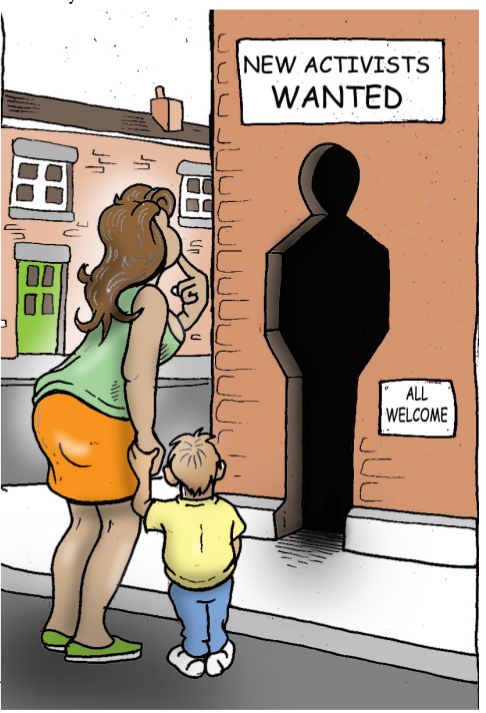
Help! Send in your thoughts about “How do we get more people (especially ones who don’t look like us; white, middle-class, child-free) involved in the “climate movement”?
Please use the comments box below, or email us at mcmonthly@gmail.com
Your answers will be collated and edited and the “top tips” will appear in the next Manchester Climate Monthly. (Each one has a page of people’s thoughts on issues around “movement-building”. Last issue we did “maintaining morale”.)
We got this press release below from BCAG. We asked the Environment Agency for a comment and they got back to us very swiftly indeed. That response is below the BCAG one.
BCAG Press release
Trafford-based Breathe Clean Air Group has challenged the Environment
Agency over a serious irregularity in issuing the controversial Barton
Renewable Energy Plant in Greater Manchester, with an Environmental
Permit.
Group Chairman Pete Kilvert has written to Secretary of State for
Communities and Local Government, Eric Pickles claiming that the
Environment Agency has clearly flouted the law and this should be taken
up with higher authorities.
The Barton Renewable Energy Plant is still awaiting planning permission,
but two weeks before a Public Inquiry last November, the Environment
Agency issued an Environmental Permit. “Not only did the timing of
the permit go against us” said Mr Kilvert, “but certain facts about the
danger of the incinerator were not revealed. One crucial fact that was not
revealed was that the Environment Agency failed to notice, when looking
at Peel Energy’s plans, that the nearest people to be affected by emissions
from the plant lived on Wilfred Street, not Tindall Street, Peel Green”.
The Breathe Clean Air Group says that Wilfred Street will receive 2 per
cent extra nitrogen dioxide from the plant, and they are already well over
the limit for this toxic and irritant gas, because of their proximity to the
M60 motorway.
Mr Kilvert has urged Mr Pickles, who will make the final decision about
the Davyhulme biomass incinerator by mid May, that he should not allow
it to be built. The campaign group has also planned to visit Parliament
next month to stress to MPs, the dangers of burning biomass. “We are not
opposed to alternative energy” added Mr Kilvert, “but biomass should not
be used as it adds to Global Warming and has serious health impacts”.
Environment Agency response (in full)
An Environment Agency Spokesperson said: “We carried out a thorough assessment of the application, and consulted with the Health Protection Agency and Primary Care Trusts amongst others, and we are satisfied that this took into account the impact on the whole of the Air Quality Management Area, including both Tindell Street and Wilfred Road.
“We set strict conditions within the permit to ensure that local people and the environment are protected. We appreciate that some local people have ongoing concerns about the potential impact from the site. We would like to reassure the local community that if the facility does go ahead we will ensure that it adheres to these strict standards and will monitor it closely to make sure the conditions of the permit are met.”
Attention Conservation Notice: Fifty five people gathered on Thursday 7th March for the launch of “Beacons, a book of short stories for our not so distant future”. You can read MCFly’s interview with the editor or, a longer one on the Manchester Literature Festival blog. What follows is a “blow-by-blow” account of what was said, some reflections and a complete list of the works the audience recommended.
Gregory admitted that after working on the thing for 6 years he was on the edge of tongue-tied. In his speech he said that fiction writers have problems with engaging with ecological crisis. There is a risk of piety, sombre apocalyptic talk. “Nothing is more tedious than proclaiming yourself as a prophet in your own time.”
He said there’s a dislocation – our old stories are not serving us well. When he started the project in 2007 there were not many people outside of science fiction writing on the subject. Now, with science telling us dark things, if we choose to listen, we are entering the realm of the outlandish. He recommended the collection as containing stories that are “bracing, wonderful and thrilling”.
He then handed over to Clare Dudman, who, when asked to contribute, had wanted a story with hope in it. One of her inspirations had been a photo she took in Greenland while researching a book on Alfred Wegener (“Mr Continental Drift”), who had taken a photo of the same (much bigger back then) glacier 70 years previously.
After her reading, the second author, Rodge Glass spoke. He mentioned that in the course of his research he had spoken with a Green Member of the Scottish Parliament. Rodge had asked him what made it difficult to get things done, and the MSP had emphasised the importance of having sympathy with people’s reasons (for not doing what they ‘should’).
In his reading of a portion of his short story, one of his characters tells another “your problem is not qualifications, it’s distractions.” How true
In the guided discussion after this reading, Clare Dudman, who has a scientific background, expressed that “what is happening is so scary [she] felt obliged to write about it.”
In his reading, just before a break, Gregory Norminton cheerfully admitted to “pilfering” Italo Calvino‘s “Invisible Cities”
After a break for mingling and drinking (and BUYING THE BOOK), the chairs were moved into a large circle(ish) and there was a general facilitated discussion, based on the books that people had cited as important (see below for a full list!).
Some items that weren’t mentioned in the list
Sadako and the 100 Paper Cranes (post-Hiroshima) When the Wind Blows by Raymond Briggs
There was a useful comment that the pre-1968 world lacked many basic freedoms (contraception for unmarried women, for example) that we now take for granted. The Inheritors by William Golding (Neanderthals versus Cro-Magnons)
The English language version of the song 99 Luft Balloons –
Verdict: It was a welcome – and very largely successful – experiment in moving away from the “experts at the front and rows and rows of passive people” model that is the default setting for public events in Manchester. The fact that this was announced at the outset perhaps contributed to how few people left at the break – folks knew they wouldn’t be bored if they stayed, perhaps?
It could, however, have been improved even further by having people get “warmed up” for participation in a big group through talking for a few minutes in groups of three or four or five. People might then have been more willing to throw out ideas into the large group. In addition, the slips of paper which circulated could have created further prompts by asking people to talk about plays, poems, films and songs that have also been important to “how people view the world/inspire them to change”. Then we’d have had an even bigger database to be playing with. But what should not be lost sight of is that rather than take the easy route, the organisers had the diligence to expect more of themselves and offer the audience something new. More please!
Footnotes
(1) Disclaimer – MCFly co-editors Marc Hudson and Arwa Aburawa are members of the Steady State Manchester collective
Desert island books The Great Work by Thomas Berry gave me the feeling of being part of creation, and the right to be hopeful
Being and Nothingness by Jean-Paul Sartre. Existentialism – a modern philosophy. Question everything, take nothing for granted, we construct and give meaning to our lives through the decisions we make, for which we must take responsibility
The Farewell Glacier by Nick Drake. This collection of poems inspired by a trip to the Arctic was the first time that I realized how important other means of communicating (than science and non-fiction) could be for engaging with climate change at an emotional level
1984 by George Orwell showed me the power of society over the individual and the importance of resistance
Unbowed by Wangari Maathai changed my understanding of the importance of trees and local growing
Staying Alive with Eddie McGee (post-apocalypse survival guide, but aimed at children. Made me scared of everything, but I can now snare rabbits with an unravelled jumper.
Brixton Beach by Roma Teame reinforced my belief in non-violent conflict, made me think a lot about arts as healing (and her other books) made me want to understand and read more about conflict in Sri Lanka
Ecotopia by Ernest Callenbach. The change was optimism/alternative vision of the future. Not just environmentally-based but political and social sustainability
The Drowned World by JG Ballard, – the change was more jumpers, less heating
Diet for a Small Planet by Francis Moore Lappe I was quite young and hadn’t thought much about finite natural resources and how Americans’ ordinary preferences and habits (eating) affected the rest of the world. I stopped eating beef (and harangued a lot of my friends) and read more on the subject
Wilfred Owen‘s War Poems strengthened my anti-war feelings
Doctor Zhivago by Boris Pasternak made me think about the value of art and the role of artists – does a doctor make a more valuable contribution to society than a poet? How do you balance your own individual needs with the obligation to serve/be of use to wider society?
Catch 22 by Joseph Heller enabled me to discard my conventional acceptance of the establishment and belief in the goodness of empire, the great game, and ware as the “ultimate diplomacy…”
Canopus in Argos Series by Doris Lessing. Showed me how people cope with enormous change, by telling the truth, talking to one another, making relationships in spite of the hazards. The potential for loss was also highlighted
The Year of the Flood by Margaret Atwood and The Carhullan Army by Sarah Hall are both very astute and prophetic. Some things are already happening (e.g. gated communities), but time will tell how prophetic and astute or not. Women self-organising in the Lake District. Both examples of literature as prophecy…or not. Do we avert the apocalypse or be prepared to deal with it when it comes? Both include questions of feminism and self-sufficiency
Pigeon English by Stephen Kelman seeing the world from the perspective of a young Ghanaian immigrant who has to navigate a terrain of poverty and gangs
The Communist Manifesto by Marx and Engels. I was 23, just setting out. The book recast my world view
The Uses of Literacy by Richard Hoggart. The change was to understand where I came from and where I might be going
Austerliz, Rings of Saturn et al, WG Sebald The change was to have a bit more confidence in the extended sentence which drifts with precision towards revelation. I suspect Sebald’s work has allowed me to believe that my major film project, discarded after a dozen years, could come alive on the page.
We asked new MCFly writer Vicki Ramsden to “interview herself” about her MSc dissertation.
Why did I do the research?
My interest in the issue of waste relates to its relationship with the consumption of natural resources. The focus of my dissertation and MSc is environmental; however my professional background is within a social setting. For me, waste serves as a useful lens through which social and environmental issues can be considered together. For example, the presence of excessive litter on streets or in public areas is often linked to areas experiencing high levels of deprivation.
I am also interested in social processes and relationships and whilst my research did not focus on this area specifically, my hunch and one that I would like to explore further is that the constructs of modern social processes, systems and norms and a tendency to use market instruments in the delivery of public services has detached individuals from the waste they generate. It was my initial hypothesis that this detachment forms the nub of the problem of ‘excess’ waste.
I was therefore keen to examine the processes and different groups of actors (such as households, waste collection companies, local authorities, the waste disposal authority) involved in the creation and disposal of waste which could then set a platform from which some of these other aspects may be explored further.
What was the study about?
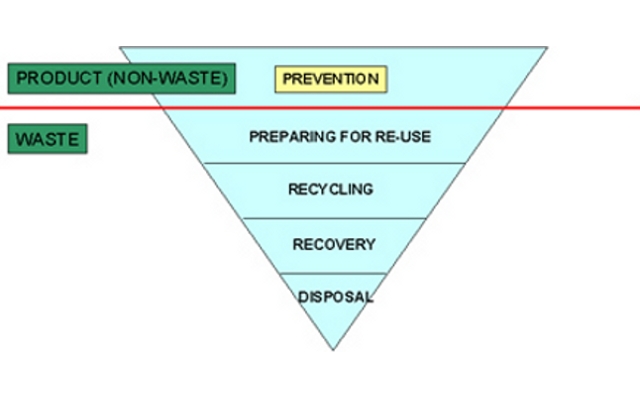
As the aims of the project were refined the research focussed specifically on Local Authority Collected Municipal Waste (LACMW) in Greater Manchester (GM) and considered a possible disconnections between EU waste prevention policy – the Waste Hierarchy (Fig. 1) with domestic waste policy implementation; and a disconnection with the link between waste policy with natural resource conservation.
Figure 1: The EU Waste Hierarchy (Source: EC, 2008)
The study also sought to consider the role of the market mode of governance (that is use of the market or market instruments) in achieving waste prevention.
The research was grounded in a number of opposing concepts which make waste a complex problem to tackle. In summary:
Firstly, that the physical generation of waste is associated with levels of consumption. Consumption is an indicator of economic growth. This means that tackling waste can have implications for consumption levels. In theory, less waste means less consumption, making waste prevention politically and economically unfavourable as an outcome.
Conversely, waste is also said to represent inefficiency in production and production processes, a drag on the economy. In this case, less waste improves productive capacity, or reduces material inputs, a positive outcome.
A third more abstract view of waste creation is that the creation of waste is a social process in which individuals are inherent in its generation. In this conceptual scenario, reducing waste as a policy aim requires social measures, rather than the use of market instruments.
What was the most inspiring this that I discovered?
The research unravelled some of the on-going debates of:
Weekly or fortnightly collections;
Segregated waste vs. one bin for all types of waste (co-mingled);
And creating energy from waste (EfW) vs. recycling.
The research revealed that in areas where additional bins were provided to households which supported the segregation of domestic waste into 4 categories (green bins for food waste, blue for paper and card, brown for glass and cans and black for everything else that currently can’t be recycled) and collections of residual waste had decreased to fortnightly, that whilst the overall bin ‘capacity’ had increased, levels of domestic waste had actually decreased. This suggests that the act of segregating waste raises households’ awareness of overall waste that is generated and seems to instil in households more sustainable consumption habits as well as awakening them to other environmental and social agendas.
In short, the research indicated that the process of waste segregation and recycling reduces overall waste which means saved budget for domestic waste services. In turn, this means it may be possible that by reducing waste, the total budget for domestic waste services can be reduced, and crucially redistributed to other local authority services.
What is the most useful insight that I uncovered – for policy?
The UK government devolved responsibility for waste prevention to Local Authorities (LA’s) via the Waste Minimisation Act of 1998, meaning that LA’s are accountable for domestic waste prevention yet are not directly responsible for its creation. Other producers of waste were identified as manufacturers and retailers and similarly, there are no rigorous measures applied to these actors to reduce waste.
The study revealed an ‘accountability gap’ for waste prevention. Individuals being (in part) responsible for the creation of waste and therefore have the ability to reduce waste. Yet individuals hold a lack of binding responsibilities to reduce waste and possess in general; a lack of awareness of the significance of waste as a problem and therefore, the benefits of waste prevention – environmentally, economically, socially and personally.
Additionally, the landfill tax (LFT) is an example of a market instrument. In the UK the LFT was introduced in response to specific problems of reduced capacity of landfill sites and raised public concern about the health effects of landfill. Whilst the LFT was the first environmental tax, the study revealed that the landfill tax is primarily a fiscal tool to raise government revenue (introduced through the Financial Act 1996). The tax is in effect levied on waste already created which means that it is not a tax which directly affects the process of the production of waste – meaning that it is ineffective in reducing the creation of waste. The landfill tax is payable by producers of waste and by businesses, but specifically for Local Authority Collected Municipal Waste (LACMW), the burden of tax falls to local authorities who, as the research confirms, are not the direct producers of domestic waste.
What next?
I’m keen to explore some of these issues further particularly around the frequency of bin collections and the number and types of bins provided to households and the impact on total levels of waste generated.
Considering the EU Waste Hierarchy and carbon emissions from waste, it would also be interesting to undertake a detailed analysis of the waste creation process through to different waste ‘disposal’ options to include:
Burning waste for energy (WfE) or energy from waste (EfW)
Recycling waste
Reusing waste
Waste prevention
The research signalled that burning waste is a viable solution for waste that can’t be reused or recycled. However if EfW is used without being part of a hierarchy of disposal options (as the on-going debate illustrates), it could be more carbon intensive than other disposal options (reusing or recycling) because of the associated activities of having to intensively mine to extract more raw materials, as well as the continued overuse of scare resources themselves.
Anything else that I’d like to say?
In the midst of central government funding cuts and pressures on Local Authority budgets and a rising population, I’d urge authorities (both in and outside of Greater Manchester) to be brave and stick with measures which aim to reduce the creation of domestic waste rather than opt for waste disposal measures which might appear cheaper in the short term.
Victoria L Ramsden
MSc Environmental Governance
University of Manchester
Professor Kevin Anderson – who will be speaking to the Economy Scrutiny Committee of Manchester City Council on Weds May 22nd – has dragged himself kicking and screaming into the 21st century. This below just landed in the MCFly inbox, on its way to the trash…
Dear All,
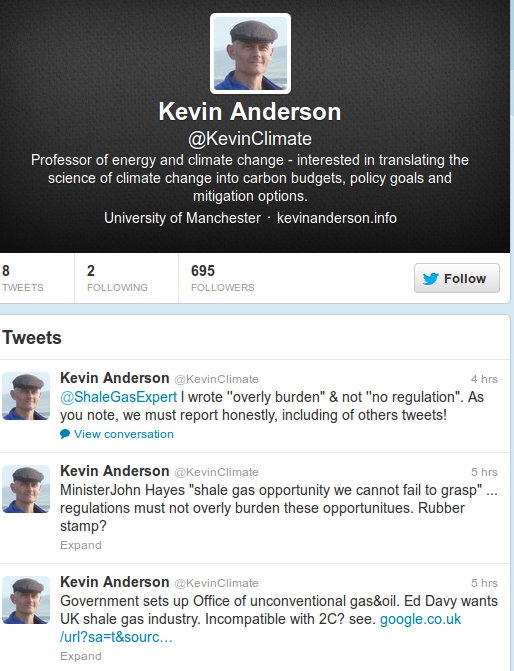
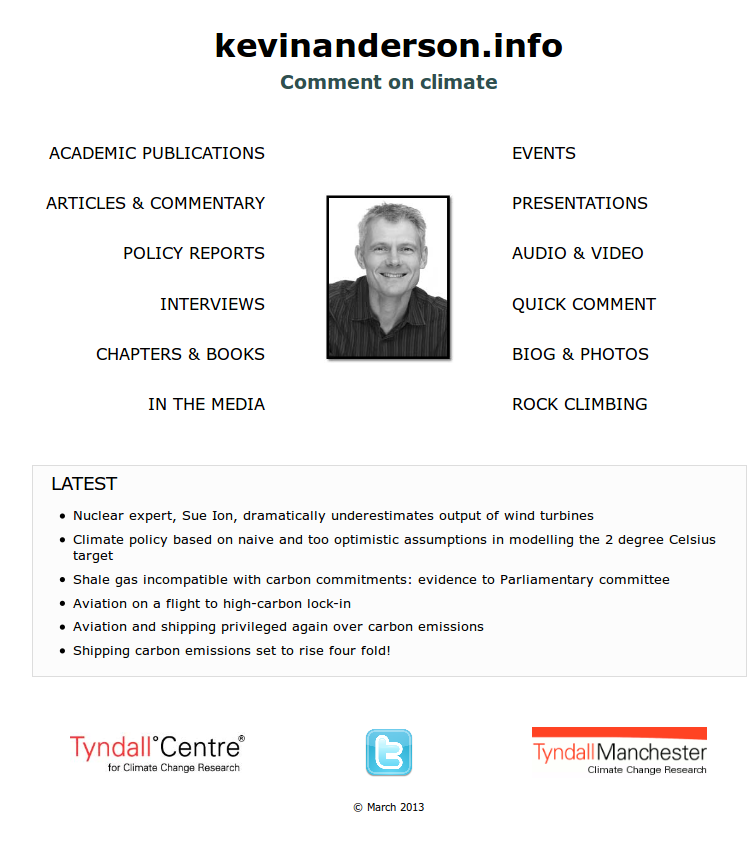
After some cajoling I’ve swapped my preference for post boxes and pigeons for this new-fangled IT revolution and have set up a website where I’ll be posting papers, articles, presentations etc that I’ve written or given. In addition I now have a twitter account where I’ll link to new posts and commentaries that I’ll be putting on the website – amongst a few other things
The website URL is http://kevinanderson.info and I can be followed on twitter at @KevinClimate (I’ll be changing the photo – too many whippet and ferret comments!)
Apologies if this email is unhelpfully clogging your account – and I hope you don’t think such self advertising is too cheeky!Feel free to pass the above links on – or just send to the trash.
Climate scientist Kevin Anderson talks to Manchester’s full council about turning climate rhetoric into reality, steady state and why it’s too late in the day to be pinning our hopes on technologies Weds Jan 30: Kevin Anderson, professor of energy … Continue reading →
Professor Kevin Anderson has spoken(1) to MCFly, ahead of his presentation tomorrow morning to the full Council meeting of Manchester City Council. (2) In the interview he pointed out that “the industrial revolution began [in Manchester] and then spread across … Continue reading →
We just got this amazing comment from a local businessman, who has been involved in the “Manchester A Certain Future” process since last year. We at Manchester Climate Monthly have been asking questions about democracy and “process.” He is asking hard-headed questions about effectiveness.
“As something of an outsider, and having first been invited to attend the “refresh meetings” last summer, I wonder whether a fresh pair of eyes is worth anything? If they’re not, then don’t read on, but if anyone would like the view from the SME installer side of renewable energy and energy-efficiency technologies (insulation, building fabric measures, plus the usual PV bling) who comes to MACF as a novice of its history, then I’d say this: Last summer, at the first meeting I attended, the comments and facial expressions I received from those around the table when I said “I don’t know anyone in the industry in GM who has heard of MACF” were a signal that all was not well. The reaction was generally “But! everyone’s heard of MACF!” … er… No. Secondly, I was stunned to hear that this was in fact the third year and that this whole wave of “refresh” meetings was simply to update a plan that had been put in place some years previously, but which had achieved …. er .. what exactly? The discussions around the tables were punctuated by the facilitator asking for any evidence at all of any activity, however tangential, that might be attributed to the efforts of MACF. It was clear that nothing could actually be attributed to MACF. So I asked why. The answer I was given by one of the people organising the event: “We forgot to assign responsibilities after the first plan was put together, so nothing has actually been achieved.” Now, she might have got that wrong. Her view might have been poisoned by some personal experience, but since that first couple of meetings last summer I have tried to find evidence of real results that can be attributed to MACF. I haven’t given up searching yet, but other things have happened that make me wonder.
“The steering group asked last autumn for nominations to head up sub-groups. Telephone interviews were held, emails apologising for the delays were sent out and then ….. nothing.
“Whether one agrees with the style of this most recent “workshop” with the plasticene, and the expensively produced brochures etc. is open to debate and taste, but the more important questions are about its content. Why is it, I ask myself, that in the 4th year of MACF, the facilitators at the tables are asking us what we think should be done. I thought the idea of planning was to pave the way for action rather than more planning. None of the “objectives” that I have seen in the first plan for MACF nor in the refresh, are SMART. They are all aspirational, of course. Nothing wrong with aspirations, but shouldn’t we by now be arriving at Specific, Measurable, Achievable, Relevant and Timed objectives? Shouldn’t we be able to point to a level of success, or is this all about telling ourselves that we are doing a great job of it?
“This may not be important to most people. Most people are more patient than me, but it is important to me and to others in the industry. Why? Because from the industry’s side of the fence we’re getting a bit fed up of the prowess shown by the “powers that be” in planning and strategising. Three years ago, there was a lot of noise made about Manchester being named as the first “Low Carbon Economic Area for the Built Environment”. Flags out, trumpets blown, back patted. Meanwhile Bristol, Leeds and London were busy doing it. Now the LCEA has been superseded by the “Low Carbon Hub”, so presumably we will now need to set about another three years of strategising and planning. Yes, the landscape has changed, but it will change again in another three years, so the value of the plan that is being re-written, is … exactly what if it is never put into action? I can’t fault the planning and the strategising and the formulation of policy. Ten out of Ten for that. But what exactly have we done compared to ReFIT?
“I’m not determined to have a go at the MACF forum, but I really don’t see what the benefit is. Help me to explain to the industry that this is not a giant waste of public money. Tell me, please, that I have misunderstood and that there really is some tangible result to point to.”
MCFly says: We’ve checked this gentleman’s bona fides as best we could. Normal journalistic practice would be to try to get a react quote. Well, if we contacted the City Council’s Green City Team, they would probably refer us to the Press Office. The Press Office would then certainly say “The City Council doesn’t control the Steering Group and cannot issue statements on their behalf.” So why not go straight to the Steering Group? Well, the current (but outgoing) chair has recently stated he will never engage with us ever again. MCFly readers can either contact them as citizens (it’s still a free country) and stakeholders. Or they can wait for the new chair to be announced (famously, no elections were held at the last Stakeholder Conference) and ask them.
Our "leaders" are going to keep making empty promises. It makes them feel good. It gets the activists to act like zombie kittens. If you want to have some self-respect and perhaps make a difference (actual facts may vary), then find a functioning group that cares about your skills and knowledge - what you have, what you want.
One useful group might be www.climateemergencymanchester.net - you can email them on contact@climateemergencymanchester.net







 manchester climate monthly