
MCFly volunteer Sarah Irving learns about bats in one of Manchester’s loveliest parks.
It’s no shock when an outdoor event in Manchester gets rained off. But at least we got to come face-to-face with a pipistrelle, Britain’s commonest bat; in the hands of a gloved expert it looked like two inches of quivering, furry energy bursting to take off around the room.
This was the high point of a talk from Simon, an ecologist and member of the South Lancashire Bat Group hosted by Friends of Platt Fields in Rusholme. We may not have got the promised walk around Platt Fields lake with bat-detecting equipment, since bats don’t come out in the rain (even Mancunian ba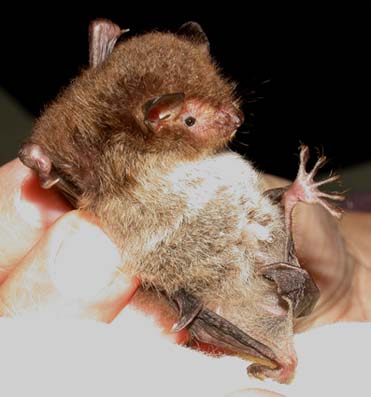 ts). But we did hear how the Daubenton’s, another bat species, feeds on small insects on the surface of water by scooping them up with its big furry feet. (see picture!)
Other bat facts:
- individuals from some of the 17 or so British bat species live up to 30 years;
- bat hearts beat up to 300 times a minute when flying but drop to 10 beats a minute while hibernating;
- scientists have synthesised an anti-coagulant called ‘draculin’ from the saliva of Central American vampire bats, and
- vampire bats show one of the rare examples of co-operation in the animal world, with some individuals regurgitating food (yes, blood) for fellow (but unrelated) colony members.
Then there’s echolocation as a means of catching your dinner, which is just mind-bending in its incredibleness. Really.
And you know how all the men in a room wince and cross their legs when testicular injuries are mentioned? The female equivalent is watching all the women in a room react to the information that baby bats are a third of their mother’s weight when born – roughly analogous to a women giving birth to a 3-stone infant.
Ouch.
There was, of course, a serious message to the evening. Most British bat species are in decline, falling prey to habitat destruction (especially the loss of most of the country’s ancient woodland) and reduction in food supplies due to wetland drainage and insecticide use. As long-lived, slow-breeding species, they may also be especially impacted by the habitat changes that climate change will bring about. In fact, a major report published only yesterday says that bats around the world have been seriously affected by climate change, and the situation is expected to get worse.
As well as the loss of biodiversity this represents, falling bat numbers around the world could impact on other species, with bats playing important roles in pollinating some plants (including bananas) and spreading seeds.
In the short term, there is information on how to make a bat-friendly garden or other local environment on the Bat Conservation Trust website.
Photo credit: From this web page.




 manchester climate monthly