Volunteers needed Sat April 28 to promote FareShare North West

Hmm, sorry about that – wordpress ate the post. It’s an email we’ve received from Fareshare North West, the regional branch of a national charity committed to supporting communities to combat food poverty and food waste.

Could you spare a few hours this weekend to promote FareShare North West at Love Food Fest?

Love Food Fest is a celebration of sustainable eating in Manchester. There will be free food and drinks and hands-on workshops on the themes of growing food, cooking cheap and healthy recipes and food composting. There will be tonnes of fun food games and best of all entry is completely free!

FareShare need volunteers to help us this Saturday 28th April from 10am onwards. We will be handing out information to the public to tell them about what FareShare does, encourage them to reduce their food waste and support us. You will get the chance to look around the festival yourself and enjoy the free food and drink on offer.

Venue:  Manchester Museum, The University of Manchester, Oxford Road
Time: 11am-3pm

Contact Nicola on 0161 223 8200 or email volunteering@emergemanchester.co.uk if you would like to volunteer.

DISCLAIMERS:

a) We’ve not been asked to post this, and won’t be paid. Lucy Danger, who chaired our recent climate hustings, is doing a charity bike ride to raise money for FareShare, but this post won’t be replacing her impending guest post on the subject.

b) We may have gone drinking with Nicola Milner at some point.

Posted in Food, volunteer opportunity | Tagged | Leave a comment

Book Reviews: World Cities and Climate Change, Cities and Low Carbon Transitions

Marc Hudson co-editor reads two academic books about climate change. One is merely very good, the second is staggeringly useful to activists, and chunks of it urgently needs translating into youtubes and “bluffers’ guides” and so on. Help wanted!
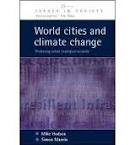
World Cities and Climate Change: Producing urban ecological security
Mike Hodson and Simon Marvin
Open University Press 2010
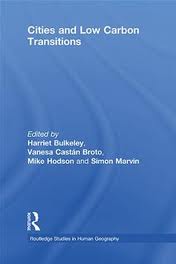
Cities and Low Carbon Transitions
Eds Harriet Bulkeley, Vanessa Castan Broto, Mike Hodson and Simon Marvin
Routledge 2011
World Cities is a short dense book that looks at the construction of “urban ecological security” as an (elite) response to uncertainty about the water, food, and the physical infrastructure we mostly take for granted in the West. Divided into three sections “Theory, Concepts and Issues”, “Urban Responses” and “Implications, Limits and Alternatives”, it will convey useful thinking tools to academically-trained and/or intellectually self-confident lay people, if they work at it.
As the series’ editor writes in his intro;

“Through an examination of the responses of world cities, with particular emphasis upon London, New York, Tokyo, Shanghai, Melbourne and San Francisco, the authors examine how strategies to secure their material advantage are pursued via particular constellations of social interests, resources and knowledges. Flows of energy, water, waste and people through and within cities are part of politicized processes with varying impacts upon populations and the environment.
The authors state they “seek to understand what it means for a particular class of world cities and associated coalitions of interests to become active in the (re-) organization of planetary ecological resources and what it means to attempt to secure ‘their’ ecological reproduction…” (p. 3)

This involves looking at different conceptions of security – “geo-political, military, resources and so on” (page 10)
The meat of the book, to this reader, comes the third chapter, looking at how “sustainable urbanism and resilient infrastructures” are defined. Sustainable what? For whom? Resilient what? Whose infrastructure – to do what?
As they say (in chapter 5) “World cities and these economic-ecological coalitions are clearly positioning themselves as being the obvious actors and places to address the ‘threats’ of resource constraint and climate change. This we can see as a particular political mobilization of a rhetoric of depoliticization; the result being a particular framing of the agenda as obvious, where these partners collaborate in constructing their (narrowly defined) agenda of the measurable results of their initiatives where resource security and climate change are framed as economic benefits.” (page 118)
Aside from the occasional needlessly lengthy sentences (samples available upon request), “World Cities” is an interesting and useful book (the extensive glossary of terms at the end is especially welcome). If I appear lukewarm about it, it’s because the other volume under review – “Cities and Low Carbon Transitions” – inevitably outshines it. It is one of the most important collections I’ve encountered in many years of hacking through the thickets of climate academia, and will be the source of many a MCFly youtube video in the coming months (if you want to help make those, please get in touch – mcmonthly@gmail.com).

As befits academics, they do their theory bit first. Part one – “Conceptual frameworks for understanding urban transitions” – consists of four chapters, written by people at the top of their field and on top of their game. First up is the “Multi-level perspective” (MLP) of socio-technical transitions. (“niches, regimes and landscapes”) via Frank Geels, the progenitor of the concept. In the chapter that follows two of the editors, and a colleague, write about the challenges of “Governing urban low carbon transitions.”

They caution that

“Cities are approached either as homogeneous actors that act with a certain degree of autonomy in influencing government choices, or as the space of specific types of innovation. In seeking to understand specific urban responses to climate change, we argue, an alternative account of the city is needed, one that can also take into account the politics of experimentation and of obduracy. To do this they deploy the concepts of “splintering urbanism” and “the uncanny” in the city (where “infrastructure networks are not only contested but also in some way subverted by the everyday practice of actors in the city.” (see Kaika, M (2006) City of Flows).

Aidan While, co-originator of a favourite sociological concept here at MCFly Towers (“the Sustainability Fix”, since you ask), writes – clearly as ever – about “the carbon calculus and transitions in urban politics and political theory” (“urban transitions take place at the intersections between the reconfiguration of state strategy around the political economy of carbon and the restructuring of urban infrastructure systems. By recasting the city as a space of carbon flows, new forms of intervention and practice become desirable, legitimate and even necessary”). Or, more pithily “if urban planners have been described as “doctors of space”, urban managers will increasingly be seen as “doctors of carbon flows” charged with securing a carbon fix within limits set by targets and the cost of carbon.”

Finally, Hodson and Marvin (remember them?) look at purposive transitions, using the MLP (remember that?) frame. They point out that there are loads of questions about how/whether transitions might occur, not least “(1) how pressures are experienced and perceived in a particular city and by whom, and how this translates into a shared understanding of an urban socio-technical transition; (2) the current and historic organisation of infrastructure in relation to a city and the level of capacity and capability to develop and operationalise this shared understanding processually; and (3) the degree of learning that takes place within and about the urban transition.” (p 61) Their table about organisational capability, snappily titled “A framework for active and configurational intermediation” (5.1, page 65) has pride of place on the MCFly dartboard at present).

I know lots of people shy away from “Theory” – and given the tendency of academics to dress up obvious and/or banal observations in grotesque quantities of verbiage that is entirely understandable – but these four chapters should not be skipped.

The second half of the book is given over to “Urban transitions in practice”
Two authors look at the “eco-cities” of Freiburg and Graz, pointing out just how important charismatic, well-networked and well-positioned people are, but also how vulnerable that makes the “radical” changes to changing fashions and bureaucratic resistance.
Two local academics, James Evans and Andrew Karvonen take a clear eyed look at Corridor Manchester in their chapter “Living laboratories for sustainability: exploring the politics and epistemology of urban transition” using the MLP notion of “niches.”
Alex Aylett provides a must-read view of “Municipal bureaucracies and integrated urban transitions to a low carbon future.” Using the concept of “trained incapacity”, he looks at how Durban has coped/not coped with energy challenges.

“At its most basic, trained incapacity refers to a simple argument: through our training, and subsequent professionalization, we are schooled to use specific tools and analytical systems to define and accomplish our goals. These ways of seeing and acting on the world around us can also produce blind spots that incapacitate us when solutions, or even problems themselves, fall outside of these professional limits.” (p 145).

Elephants don’t tap dance. They just don’t.
One of the most interesting chapters for activists will be Alex Smith’s account of being a participant researcher in the Nottingham “Transition Towns” movement. Lessons to be learnt here, but is anyone in Manchester willing and able to do so?
In the final case study chapter, Jenny Pickerill looks at just how difficult it is for social movements to move socially, and help create the sorts of changes that we are going to need in the first century where the bill for our unconstrained burning of fossil fuels starts to be paid.

In their conclusion, the editors point out that while “policy-led responses… take little account of, or fail to engage with, publics in seeking to make urban context amenable to inward investment, competition and business” at the same time the “’alternatives’ … are often guilty of the same privileging in reverse, understandably prioritising local social interests but ignoring the availability of resources and forms of knowledge and technology that may be drawn on from policy contexts and beyond.

It appears everyone has a lot of work to do.

Marc Hudson
mcmonthly@gmail.com

Disclaimer: MCFly editors Marc Hudson and Arwa Aburawa have met several of the academics whose work is reviewed here, and will be interviewing them in the coming months. And meeting some of them for points at other pints.

Further Disclaimer: Although this review was written over a month ago, its publication has constantly been pushed back due to more immediately relevant stories popping up. Its publication now, a day before I take part in a day-long academic seminar that involves some of the authors of the books and chapters above, is pure coincidence and not a beat sweetener at all. Anyone who thinks otherwise is wrong.  Marc Hudson

Posted in academia, Book Review | 2 Comments

Earth Day in Didsbury, and eco-cookery to come!

Amanda from Didsbury Dinners has something to share…

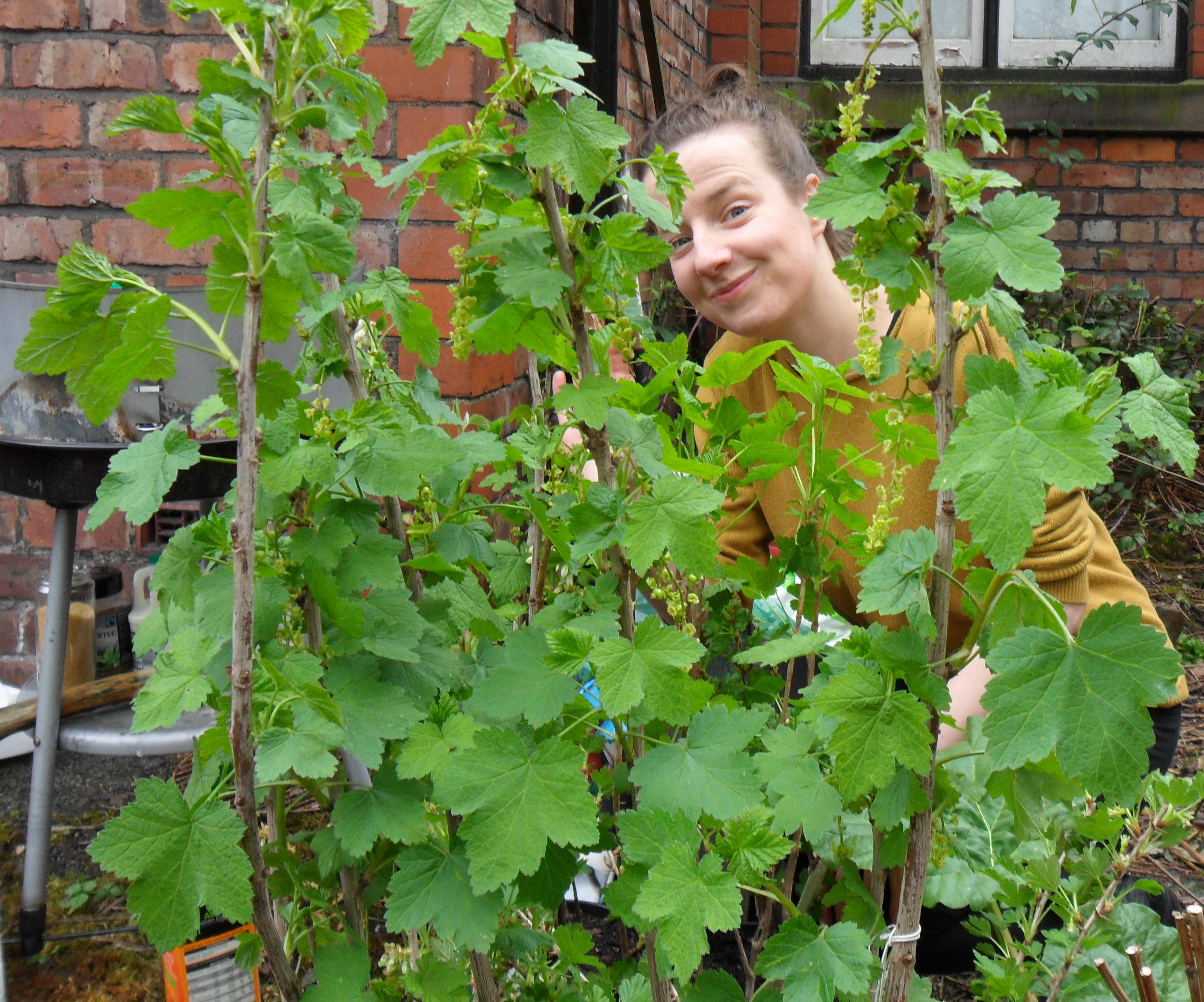
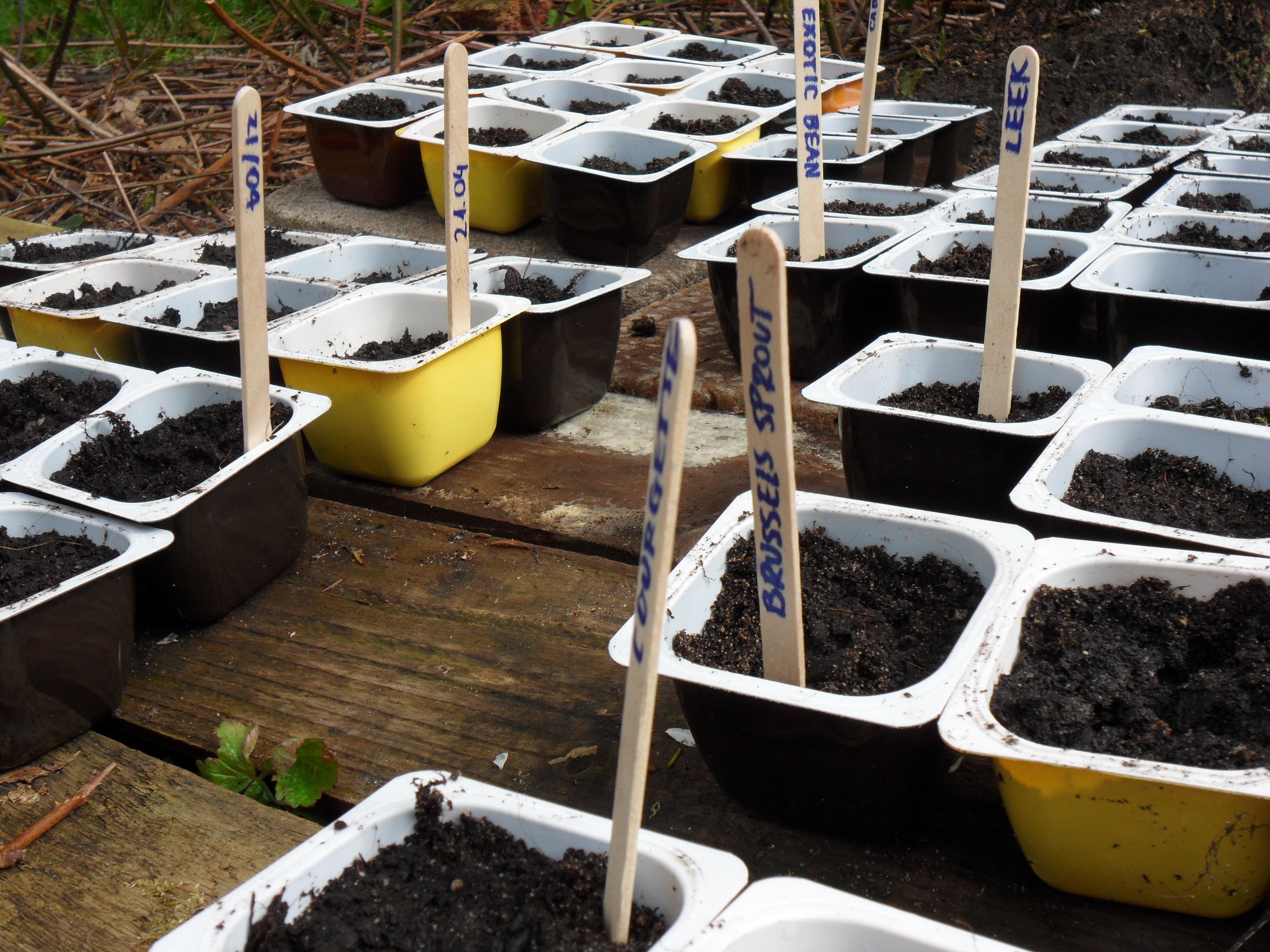
Many thanks to everyone who supported Didsbury Dinners’ Earth Day celebrations (22 April). We marked the day at our Barlow Moor Road community garden by planting an array of donated seeds, including various varieties of beans and peas, and soft fruits, such as strawberries, redcurrants, gooseberries, raspberries, blueberries and blackcurrants. Roll on harvest time! You can view fun, foot-tapping videos of our efforts here!
Thanks to all of the volunteers who helped out: it was great to see so many new faces. We’ll continue to work on the garden for a while yet; most Saturdays from 12-4pm. Just email usto get involved.

Thanks also to everyone who contributed to our photo montage, helping to capture people’s imaginations with what we can all grow at home, with minimal effort. If you’ve not got around to sending yours yet, please email them to didsburydinners@yahoo.co.uk
Finally, don’t forget that the first meeting of our eco-cookery planning group is this Thursday, 26 April, 6.30–8pm at West Didsbury Sure Start Centre, Barlow Moor Road. We aim to teach another 100+ people how to cook, for free, and we’d love you to get involved!

Posted in Event reports, Food, volunteer opportunity | Tagged | Leave a comment

Manchester Climate weekly climate nuggets April 23rd

Hi all,

an account of last week’s climate hustings (and the feedback forms) will go up this week, alongside the usual book reviews, event reports and any other news we stumble across.  Get in touch if you want to get involved in MCFly. We have big jobs, small jobs, easy jobs, difficult jobs – our email is mcmonthly@gmail.com

Coming up this week

Tues 24, 7pm to 8.30pm  Fuel Poverty and Corporate Control. Conference Suite 3, 4th Floor, Manchester Metropolitan Students’ Union.

Weds 25th 4-6.30 pm “Every Revolution has its Space: from Occupying Squares to Transforming Cities?”
Presentations by:
Erik Swyngedouw, Professor of Geography, University of Manchester
Andy Merrifield, Leverhulme Visiting Professor, Department of Geography, University of Manchester
Neil Smith, Distinguished Professor of Anthropology and Geography, CUNY Graduate Center, New York
Cordingley Lecture Theatre, Humanities Bridgeford Street building, Oxford Road, University of Manchester
All welcome, no registration necessary.

Stories you may have missed on the MCFly website

Lessons we like to pretend we’ve learned

Checklists are the way forward. And implementation plans take long enough to be written, let alone implemented…

Things worth reading

The coalition is probably going to throw money at the nuclear energy industry, and call it low carbon.

The planet is about to hit a metaphorical iceberg, and we don’t have enough lifeboats.

Cumbrian farmers better get ready for climate change

Oh, let’s bio-engineer humans for a climate-altered world. That’d be a genius idea, that would…

Posted in Weekly bulletins | Leave a comment

Good news: Reservoir to be completely screwed!

MCFly talks to Clare Walker*, who been helping some local community-owned schemes to turn water and gravity into … electricity.

Who is it that has been raising money?
H2ope (Water Power Enterprises) the social enterprise behind the UK’s first community-owned hydro electricity plant in  New Mills, High Peak, have been working with the Saddleworth Hydro team to raise the outstanding £120K needed to finance the project.

What has the money be raised to “do”?
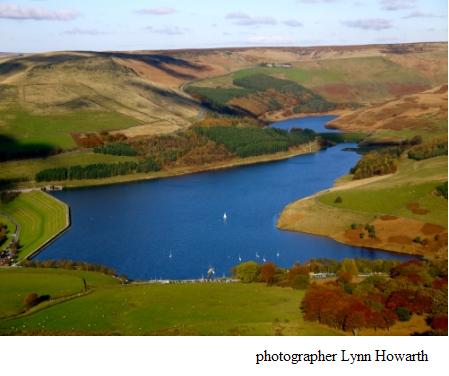
The £120K raised through the share offer, which was launched last December, will be added to the grant of £223K from the European Agricultural Fund for Rural Development: Europe investing in rural areas, which is administered via Defra.  This covers the total cost of the project and will enable the Directors to move on immediately to phase 2:  developing the final specifications for the scheme and applying for the necessary regulatory permissions .Saddleworth will be England’s first ‘high head’ community-owned hydro, using head from the 90ft dam at the Dove Stone reservoir. A 51kW turbine will be installed generating 170,000kWh/year electricity, enough to power 45 homes

When will that start to be done?
Directors are hoping that construction will start in Spring 2013

Where did the money come from (biggest individual amount etc etc)
The majority of the shareholders are local from the Saddleworth and greater Oldham areas, but there are some from Manchester and some as far afield as Ayrshire, and London.  The minimum investment was £250 and the maximum £10,000, from just under 200 shareholders.

Anything else you’d like to tell us?
The scheme is being supported by the Friends of the Earth in Manchester. “When conventional power supplies are under pressure, I believe that renewable energy schemes such as ours can help provide an alternative solution” explains Saddleworth Hydro Director Bill Edwards.  “The powerhouse will be unobtrusive, we won’t be using up natural resources, we’ll simply be harnessing the power from the compensation flow of the 90ft dam.  There’ll be no environmental damage to either the surrounding countryside or to the ecology of the reservoir.
“I’m absolutely delighted that there are enough like-minded people who believe that individual community hydro schemes like ours are worth supporting.  I’d like to say a heartfelt ‘thank you’ to everyone who’s subscribed.”

* Clare Walker
CJ Communications
07595 873221/0161 374 5868/01609 883011

Posted in Energy | Tagged | Leave a comment

Event Report: The Arab Spring, Consumerism and Sustainability

I recently attended a short lecture on sustainability, the Arab Spring and the Middle East at Manchester University. Relli Shechter from Ben Gurion University, spoke about the rise of a consumer culture in countries such as Saudi Arabia and Egypt. His main thesis was that during the oil boom period of the mid-70s and 80s (which affected countries such as Egypt as well as the Gulf Nations), there was an explosion of consumerism which shaped aspirations and the social discourse around money and status. This commercialisation expressed itself in everything from cheap housing, the suburbanisation of the village to the commercialisation of religious holidays such as Ramadan.

Obviously the consumer boom varied across the region and so Egypt didn’t witness the same of level of commercialisation that Saudi Arabia did with its concrete villas, foreign maids, drivers and mega-malls. This consumer boom did however lead to growing inequality and so nations made an authoritarian trade-off to stabilize their inequitable consumer societies. This took a particularly conservative and religious turn in Saudi Arabia but there was a more subtle shift in Egypt towards Islamism to counter Nasserism (1), states Shachter.

The one tension that remained was that between growing economic choice and the narrowing political choice. Economic growth in the region also didn’t amount to economic development and so some level of instability and anxiety remained. On the Arab Spring, Shechter states the uprisings were mainly motivated by a growing demand for political change and economic equality. Whilst he admitted that he doesn’t know what a sustainable Middle East would look like, he believes that it is unlikely the Arab Spring will usher in a more sustainable region. With a global recession, limited infrastructure that would aid a transition to a more sustainable economy, he states that is looks like business as usual for now.

He did however add that the Arab Spring is still in motion and that no-one really know what its outcome will be – that certainty should allow us to remain optimistic.

Arwa Aburawa
freelance journalist

1) Nasserism is a pan-Arab nationalist and largely secular ideology bassed on the thinking of the former Egyptian president Gamal Abdel Nasser.

Posted in Event reports | Tagged , , | Leave a comment

Something for the Weekend 20th April 2012

Newsflash: There’s been a collision between two cargo ships. It seems one, carrying red paint, has hit another, carrying blue paint. Many of the sailors are marooned.

And this weekend…

Sunday 22nd is Earth Day (for a history lesson on this, see here)

We only know of the one climate/environmental activity on this weekend in Greater Manchester. Check out Didsbury Dinners for details of it.

If you know of weekend events that are about “climate” (and that includes food growing, or cycling or whatever), then let us know and we can include them in future “Something for the Weekend”s…

And if you know any jokes of the high standard we’ve used so far, please submit ’em.

Posted in Something for the Weekend | Leave a comment

Community gardening grants available – July 31 deadline

Grants for Groups to Garden in North of England

The North of England Horticultural Society (NEHS) has launched a new £20,000 grants programme for community groups in the North of England.

Manchester-based voluntary and community groups and organisations may apply for grants of between £100 and £2,000 to support gardening projects and activities in the community.

The NEHS, organiser of the Harrogate Flower Shows, is a leading gardening charity that was founded in 1911. It currently supports more than 50 garden-related organisations, and the grant scheme is an extension of the charity’s mission to promote horticulture across the north of England.

North of England Horticultural Society Show Director, Martin Fish said:
“The proceeds from our annual spring and autumn Harrogate Flower Shows have always gone back to the charity to re-invest in horticulture…. our 2011 Centenary Year was one of the best on record, and that has enabled us to offer additional funding of up to £20,000 for community work in 2012.”

There will be two rounds of funding in 2012. The closing date for the first round of funding is 31 July 2012.

An application form and further information can be found on the
Harrogate Flower Show website

[Not real journalism; culled from press release]

Posted in volunteer opportunity | 1 Comment

Event Report: AfSL celebrates

Action for Sustainable Living, the Manchester-based charity that well… the-clue-is-in-the-name, held a “thanks and aren’t our volunteers really cool” event (1) tonight. It was at Platt Chapel , and in covering it we are in no way influenced by the free plonk and free food and general good vibe.

After time for mingling, the evening started with a brief (2) intro, then another intro and then a series of “Pecha Kucha” presentations. Via this, the audience of just under 100 got to learn more about various interesting sounding projects, not least Didsbury Dinners (who have already arm-twisted us into running a story about their work, which continues this Sunday, 22nd, if you’re free) and the Fallowfield Secret Garden Project, which is doing a big community thing in late May. (Just to be confusing, the chap leading on it is one letter removed in name from MCFly wonder-cartoonist Marc Roberts).

After some awards to lots of “Local Project Managers” the Manchester Community Choir then led into the networking break with some pretty amazing singing (I’m basically tone-deaf, and even I could tell it was fab).

Free grub and free plonk (3) and good music; no wonder many AfSL staff had a spring in their step and big smiles on their faces. Couldn’t be any other reason, could there?

In other unrelated news, there may be a job opportunity at AfSL soonish. We’ll let you know.

Marc Hudson
mcmonthly@gmail.com

(1) The event was not billed as a “forum“, so guess what – no gratuitous and “negative” kicking from MCFly. It’s almost as if we only get annoyed when groups do the ol’ “bait-and-switch” of advertising one thing and delivering another.

(2) Insert arch Dororthy Parker gag here.

(3) MCFly may have accidentally liberated a cheap bottle of white. Just sayin’. (Marc is teetotal, but Arwa – boff – she drinks like a fish…) Update: Duly returned to rightful owner, unopened.

Posted in Event reports, humour | Tagged | 5 Comments

“Climate Survivors” – who, what, why, how

We asked the people at “Climate Survivors” to tell us about who they are and what they do.  Here’s what they sent us!

Climate Survivors – supporting positive change in Manchester since 2009

“Never doubt that a small group of thoughtful, committed, citizens can change the world. Indeed, it is the only thing that ever has.”
― Margaret Mead

The Transition movement recognises the concept of Inner Transition.  We all have lives to live and habitual ways to live them.  We want things in the world to be better, but it can be challenging to change our habits.  And the threat of environmental destruction is an emotional subject.  Therefore, people who want to make positive changes can benefit from having somewhere to discuss ideas and share experiences.  For a growng group of Mancunians, Climate Survivors is that place.  The introduction read at the beginning of each meeting explains more…

“Welcome to Climate Survivors.  We are here because we are concerned about our home, the Earth.

“We run open meetings about once a month. They are free-form meetings, without strict agendas. It’s up to the participants what we talk about. We can have one big discussion, or a few smaller ones. The discussions can help us learn, or can be used to help solve a problem, or can be about taking practical action. Some of us think it’s important to talk about feelings as well as practicalities, but it’s not compulsory. On more than one occasion our discussions have resulted in action, for example running awareness-raising film events. We use techniques such as The Thinking Environment to get the most from people’s time and energy. This emphasises equal turns to speak, and the power of focussed, non-judgemental attention from everyone else onto the person speaking.

“All are welcome to join, regardless of political view or any other factor. It doesn’t matter whether you are knowledgable about environmental issues, or a novice.

“The group does not have a leader, but anyone is welcome to contribute time and energy to organising events, chairing meetings, sharing information and so on.

“Our website is http://climatesurvivors.ning.com/ and this is a great place to check meeting dates, find information about environmental issues, and continue the discussion between meetings. We ask for small donations at the end of each meeting, the main purpose of which is to keep the website running.”

The group has been meeting and refining what it does since 2009 and now has around 15 regular participants, plus about 15 more keeping in touch and forming connections to other groups and initiatives.  And they would like to keep growing!

Interested?  Here’s what they have to say about getting involved.  You can:

  • Join the website or facebook group.  http://climatesurvivors.ning.com/   and   http://www.facebook.com/ClimateSurvivors
  • Come to a meeting.  We want to make newcomers feel really welcome.  You can join in with the meeting straight away if you’d like, or alternatively someone will volunteer to welcome you one-to-one.  We will make sure you have a chance to speak, and to be heard.  Look up the next meeting date on http://climatesurvivors.ning.com/ (the next two are 4th May and 13th June) and call Pauline on 0777 992 3681 for the address – we often meet in someone’s house so we communicate this privately to those who are attending.
  • Be a link with another group.  One of the most important things that transition/eco/justice/sustainability/action/etc groups can do is to be part of a movement, to form a link in a chain, to be aware of the latest thinking, and to help their members stay aware that they are part of something bigger.  If you are already part of a business, community organisation, project, or campaign group with an interest in environmental issues we would love to see you at a Climate Survivors meeting – get in touch as above.
  • Start your own group.  We look forward to the day when we have too many attendees and begin to form offshoots.  If you’re interested in starting your own Climate Survivors group, come and learn how we do things by attending a few meetings (contact us as above), and the rest is up to you.

There’s no commitment of any kind.  People who’ve come along for the first time say they really appreciate the way we run our meetings, and how they’ve been listened to.  Regulars find the discussions refreshing, supportive, and positive.  Call Pauline on 0777 992 3681 for more information or get in touch at   http://climatesurvivors.ning.com/   and   http://www.facebook.com/ClimateSurvivors.

Posted in Upcoming Events, volunteer opportunity | Tagged | 1 Comment