This copied from XR Manchester’s facebook page (with permission). If you’ve got questions about Extinction Rebellion (what, why, how, who etc) then go along. You can buy the editor of Manchester Climate Monthly a pint, if you like…
Come along to our XRMCR Bank Holiday Monday social at Sandbar. 120 Grosvenor Street, M1 7HL Manchester, United Kingdom
Runs from 6pm.
A welcome home for any returning rebels from London who can share their experiences of what it’s like, meet other Manchester folk and find out a bit more about Extinction Rebellion.
This is not a planning meeting (that’s Monday 29th April) but a chance to ask any questions you might have and make some new friends 🙂
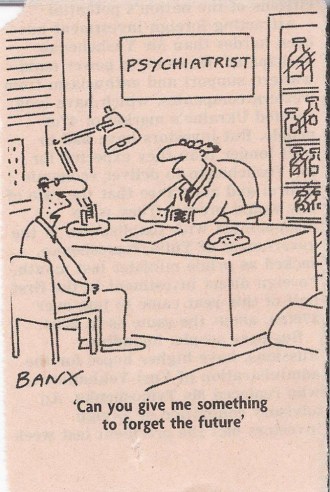
Manchester needs a network of support for people who are dealing with the full horror and dread of climate change.
“Established” activists have mostly forgotten what it is like to be hit between the eyes by the likely impacts, the speed with which they are coming, and the disbelief that our “leaders” have been so inept.
There are a whole bunch of “new” people (many who have known about the issue in general terms for ages) who are being confronted by Greta Thunberg’s example, by the 2018 heatwave, the IPCC report, and now the David Attenborough documentary.
Some of them are able to cope by throwing themselves into activism, by surrounding themselves with other people who ‘get it’. But not everyone can do that. Many people have jobs, caring responsibilities (children, parents), lack the finances or the physical capacity to do the stuff that helps you feel worthy and active (none of this above is a criticism of those who have been able to go to London!). Some people are dealing with family members who just don’t seem to care, or are actively hostile.
Already on the Climate Emergency Manchester contact form we have had someone expressing feelings of horror, helplessness and guilt. We (Marc Hudson and Calum McFarlane) are expecting more. Other organisations will surely experience the same.
If we do not find out ways to support these people effectively, in their grieving, and in taking action (if that’s what they want to do), then are we really working towards the world we want? I think not.
This is a call out for all people who are
willing to share their experiences (anonymously if they like) of dealing with climate grief
willing to meet people who are going through it
willing to make materials that will help others
have suggestions for materials.
are willing to help build a grief resources page on Manchester Climate Monthly (on the explicit proviso that all materials are creative commons and can be shared elsewhere).
Please get in touch if you are one of those people. Please share this post. This stuff matters, it really does.
Also – and this will be a separate post – there is a workshop on the evening of Weds 22nd May, 6.30 to 9, upstairs in The Royal Oak, Chorlton M21 0BQ,
Here’s another interview with an Extinction Rebellion person in Manchester. Others to follow… (here’s a link to the first)
1. Who are you, why did you get involved, what have you done in Mcr and in London
I am Paul Harnett, Co Director of World Basic Income. We believe that CO2 taxes should be imposed on the 100-200 largest CO2 extracting companies immediately. They should rise to $50/tonne CO2 very quickly and then take stock with a rise to $100/tonne to be considered. The revenues should go to a fund for a World Basic Income. They would be enough to give everybody on the planet (including children) $22/month and end poverty.
I have been to 2 actions in Manchester. One at Media City and one yesterday cycling through town
2. How can XR be more inclusive, address legitimate race/class concerns?
Give prominence to any minority groups represented at actions. Highlight that the impact of climate chaos is felt most by the poorest people in the world and drives migration
3. What skills, knowledge, relationships do you think XR ppl need to cultivate in the short term?
Media Training. Knowledge of the mechanisms to reduce CO2 emissions to neutral by 2025. Relationships with sympathetic media people, key people in the Irish Citizens Assembly, particularly those involved in discussing Climate Change, key spiritual leaders e.g. Pope, Dalai Lama etc.
4. Given that intense activity is unsustainable (emotionally, physically, practically), how does XR Mcr plan to sustain radical action over the summer?
Plan many “fun” activities – picnics/barbeques, music events, more cycle rides – as well as key demonstrations.
5. What can so-called “non-arrestable” people do? Spread the message on social media, attend demonstrations but avoid illegal activities, talk to friends, neighbours etc.
6. How does XR plan to cope with the “Tyranny of Structurelessness” identified by Jo Freeman? I am not qualified to analyse how “structureless” XR are. I would need to know how the 3 demands were decided upon. I can say that the 3 demands are reasonable to most people and I was impressed when I saw them, and I wish the MSM would highlight them more. I would be inclined to limit the demands to those 3 at present and simply work towards how they can be achieved, especially how carbon neutrality can be achieved by 2025. At the Media City event I was talking to some activists who were tempted to widen the issue e.g. anti capitalist but I think if you avoid such issues XR will appeal to a greater number of people. XR should stick to the single issue of Climate Chaos. XR does need to be wary of enrtyism from other political groups and causes (even World Basic Income!) and all those who speak on behalf of XR will therefore need to be vetted for potential entryism issues. You can also be sure that the government will be monitoring prominent XR activists and that we have seen undercover police infiltrate many radical organisations in the UK. This is likely to happen to XR. Structurelessness has advantages and disadvantages but for the moment gives XR the feeling of a mass movement with all equal.
7. Anything else you’d like to say. I’m sorry I haven’t been to London yet, but may get down there next week.
[Manchester Climate Monthly, running since 2011 and preceded by Manchester Climate Fortnightly (2008-2010) is an independent news source, not affiliated to any political party or particular pressure group. The editor has recently co-founded Climate Emergency Manchester, a campaign to connect concerned citizens and get 4000 signatures on a petition calling on Manchester City Council to declare a climate emergency. Anyone who lives, works or studies in Manchester can sign that petition, and get involved in the campaign at whatever level they wish, learning new skills and making new friends.]
Yesterday a detailed and powerful account of one Manchester activist’s time in London appeared on Medium. Today we publish the first of what is hopefully a series of interviews with Manchester activists who have been in London. If you are/were there, you can answer whichever of these questions and send them in plain text (no attachments please!) to mcmonthly@gmail.com. First up, Caz…
1. Who are you, why did you get involved, what have you done in Mcr and in London?
I’m Caz, involved because I’ve been grief-stricken for over a decade about what we’re doing to the planet and animals. I’ve felt completely hopeless and gaslighted by parents, friends, and family. Then a community appears that knows how I feel – with space to feel that grief. A community that says “let’s fight this together”, and so I fight. We have blocked the road on Waterloo bridge, lain down in front of number 10, stormed Buckingham palace, and I was arrested in parliament square.
generic photo (a great one!), not of the interviewee…
2. How can XR be more inclusive, address legitimate race/class concerns
I don’t think I can answer this question. I’m a comfortable, white female jewess, and there are many women and jews involved.
3. What skills, knowledge, relationships do you think XR ppl need to cultivate in the short term?
self-organisation, resilience, public engagement and relationships with MPs.
4. Given that intense activity is unsustainable (emotionally, physically, practically), how does XR Mcr plan to sustain radical action over the summer?
Each person could do small bursts of daily activity, coordinated amongst affinity groups. Eg swarms, postering, flyering, etc. Then a big action every few weeks for a couple of hours.
5. What can so-called “non-arrestable” people do?
Social media, moral support, legal observing, well-being, banner-making, letter writing, press, admin, finance, etc
6. How does XR plan to cope with the “Tyranny of Structurelessness” identified by Jo Freeman?
I have no idea what that’s referring to. If it means the tyranny that comes from unfettered power, then it can’t be any worse than planetary ecological collapse so that’s a problem for future?
[Tyranny of Structurelessness is a 1970 talk by an activist in what was then known as “women’s liberation”. It argued that the lack of formal categories of chair, vice-chair, secretary didn’t mean that power was absent within a group, just better hidden, and could lead to unacknowledged or unchallenged cliques. ]
The next meeting of Extinction Rebellion Manchester will be on Monday 26 April, early evening (probably 6pm start), at a venue to be announced.
[Manchester Climate Monthly, running since 2011 and preceded by Manchester Climate Fortnightly (2008-2010) is an independent news source, not affiliated to any political party or particular pressure group. The editor has recently co-founded Climate Emergency Manchester, a campaign to connect concerned citizens and get 4000 signatures on a petition calling on Manchester City Council to declare a climate emergency. Anyone who lives, works or studies in Manchester can sign that petition, and get involved in the campaign at whatever level they wish, learning new skills and making new friends.]
This below is from Claire Stocks, and is well worth your time.
London Climate Change Protests: what I learnt from four days blocking city streets and why I did it
I’m one of 10,000 people who joined protests across London from April 15th 2019. I offer this personal reflection of what is has been like to take part in large-scale non-violent direct action, from an emotional, practical and moral point of view*.
If you want to get involved in a petition campaign to declare a climate emergency in Manchester (one of the things Claire mentions), then please sign up for Climate Emergency Manchester here.
Environmental Sustainability Data Analyst and Project Co-ordinator (Part time)
Job Reference : PSX-13753
Location : Oxford Road, Manchester
Closing Date : 24/04/2019
Salary : Starting at £27,025 per annum (pro rata)
Employment Type : Fixed Term
Faculty / Organisational Unit : Professional Services
Division : Sustainability
Hours Per week : 28
Contract Duration : Available from June 2019 for 3 years
This role will assist in the delivery of Environmental Sustainability projects as outlined in the Environmental Sustainability strategy and associated plans.
You will be responsible for the developing and monitoring of a data management process together with inputting and analysing all of the Environmental Sustainability related data, making recommendations based on the findings. The data collated and analysed will be used to provide evidence for awards entries and benchmarking exercises.
You will monitor the impact of the sustainability champions programme and events and present findings and recommendations to the relevant leads within the Environmental Sustainability team.
You will possess an academic qualification to degree level or equivalent in an engineering, science or maths discipline and be able to demonstrate an understanding of how software packages can be utilised to prepare and analyse quantitative data.
You will have experience of collecting and interpreting data and making use of it in developing solutions and presenting findings in different formats.
You should possess an ability to be able to prioritise your own workload and be capable of working on your own initiative or as part of a team.
As an equal opportunities employer, we welcome applications from all suitably qualified persons. As we are committed to the principles of the Race Equality Charter Mark and Athena SWAN, we would particularly welcome applications from women and the black and minority ethnic (BME) community, who are both currently under-represented at this grade. All appointments will be made on merit.
Please note that we are unable to respond to enquiries, accept CVs or applications from Recruitment Agencies.
Enquiries about the vacancy, shortlisting and interviews:
Name: Emma Gardner, Head of Environmental Sustainability
Email: emma.l.gardner@manchester.ac.uk
Tel: 0161 275 2240
This vacancy will close for applications at midnight on the closing date.
Please see link below for the Further Particulars document which contains the person specification criteria that you should address in your application.
This below was sent to informationcompliance@manchester.gov.uk yesterday…
Dear Sir/Madam
I am writing to request information about the City Council’s climate change policy.
I used to live in Moss Side. I now live in “Whalley Range”, at least according to the boundaries – changed without consultation – shifted by the Council. So my three councillors include Councillor Stogia, who is the Executive Member for the Environment.
I today received an unsolicited letter from the good Councillor, in which the Labour party claims, among other things to be
“taking urgent action on the effects of climate change and pollution”.
This left me in a state of some bewilderment, since I happen to know that Councillor Stogia cancelled the quarterly carbon reduction reports that the Neighbourhoods Scrutiny Committee instituted in 2014.
My requests are these
a) please provide copies of minutes of all meetings/discussions in which Manchester City Council officials and members discussed – among themselves or with third parties – taking new “urgent action” on climate change since September 2018 when the IPCC released its 1.5 degrees report. I am specifically interested in discussions around bringing the putative “zero-carbon” date forward to, say, 2030
b) Since January 1st 2018, what climate adaptation projects have taken place in Moss Side and Whalley Range wards. When did these projects take place? How much money was spent? Who was consulted, how? What were the outcomes?
c) Since January 1st 2018, what specific actions have been taken to reduce air pollution in Whalley Range and Moss Side wards. When did these projects take place? How much money was spent? Who was consulted, how? What were the outcomes?
Also, who do I talk to about election claims which I believe to be misleading?
Please consider this a request under the Freedom of Information Act 2000
Marc Hudson
Some thoughts on what the climate strikers and their allies and supporters could do to sustain morale and momentum after the May strike
On Friday May 24th the next climate strikes happen around the UK, and presumably the world too.
There’s plenty that adults in Greater Manchester can and should do to support the efforts of the young people (but that’s another blog post) .
I for one don’t know what is happening after that (1). I think that’s a key question that the strikers have to ask themselves (and I hope/suspect they’ve already started dong that).
I hope that they find time, energy and bandwidth amidst studying for their courses, being teenagers (and younger) (2).
Meanwhile, we adults/old farts have to ask ourselves what WE could propose, what WE could do to offer support to the strikers (3) So, this below is my attempt at sketching out some of the things that adults (whether parents or not) could do locally between June and the end of August.
It’s based in part on a longer blog post that I’ll put up soon-ish.
To start at the simplest level of the average supportive parents.
1. Support your child/children to get together with other climate strikers, perhaps set up a park meet-up on the weekend and try and get parents along too. What do your children want you to do? Perhaps they need your support to be more hands off, to let them get on with it, in which case look at what you could do as adults. Talk about what skills and resources you have, how you can support, what you need to find out. Contact councillors, ask friends to sign the petition….
2. Or if you are already involved in youth groups or climate group, then what about organising a series of meet ups or workshops etc etc. What about having workshops to help the young people amplify their voices? Using photography, blogging? Podcasts and poetry.
3. One thing is to start finding out now the specifics of what sorts of things the young people think that they need. From the interviews with them so far, there have been a couple of themes –
I would like to have some more books about climate change inside libraries to teach people things they don’t already know / I’d like them to make information child friendly because some of the information I found talked down to me and other information I couldn’t understand the language and had to ask for help to know what it was talking about.
So, there is a job of work to be done here, where adults who write could submit their work to kids who could then ‘vet’ the efforts, suggest improvements before final versions were made.
4. Might it be possible to create opportunities for young people (and their parents?) to meet and get to know each other without the stress/adrenaline/noise of a strike, nvda, police and all that that entails. There are lots of venues which claim to be supportive of the strikers (and a subset of those actually are, and would surely be up for hosting regular-ish get togethers). There needn’t be any particular agenda, but surely if the attendees decided they wanted a guest speaker to come along and give some perspectives on, say, climate science, or social movements, or whatever, then adults should be able to find some people, no?
And given that there is going to be some very nice weather (funny how the warm summers keep getting warmer…) then who actually needs an indoor city centre venue – why not use the parks and green spaces that haven’t yet been paved over/flogged off to developers?
5. Sympathetic adults could help young people organise workshops around poetry, fiction writing, song writing on climate change. Indeed, how come there isn’t already a Manchester-based writing competition (fiction and non-fiction) for young people around climate change and what means to them? With best entries published in a book, for example?
6. More ambitiously, I personally think there is scope for a” climate academy”, held at a sympathetic school , where at the end of the day those attending get a certificate of “carbon citizenship” that actually meant something. Such a curriculum might involve people watching short videos beforehand and then coming ready to do activities around…
Climate science in a nutshell and how to explain it to someone who knows nothing
Mocking climate denialism into irrelevance
Spotting false friends who claim to be on your side but are actually advocating business-as-usual, and what to say and do in response.
Designing and holding decent public meetings
Public speaking for beginners/advanced
The real history of social movements and how they have worked in the past
What was promised but is not actually happening in (Greater) Manchester, 2009-2019
What COULD be happening in Manchester 2020 onwards
Who are the local politicians (council, MPs) and what are their positions on climate change
Your rights when dealing with the police
Emotional support for dealing with burnout/fear etc
What ELSE should/could adults be doing to help the climate strikers? Please make suggestions in the comments box.
Footnotes
(1) I hope to Gaia not a march in London. Why? I have my reasons, but that’s another blog…
(2) These are KIDS we’re talking about here. If the adults hadn’t absolutely screwed this up, they could actually get on with being kids, but instead they are having to be the adults on the planet. It’s embarrassing. Of course, all over the planet, there are kids working in slavery conditions, dying of easily preventable diseases, starving… but that’s another blog.
(3) Whether the strikers feel minded to take that is another question. It’s not as if we old farts have a whole lotta credibility or moral authority at present, is it?
Hello Manchester Climate people – some of you will know students and wannabe students who might be interested in this – do pass it on to them!
The Social Lives of Batteries and New Energy Materials
3 year, fully funded PhD opportunity for UK and EU Citizens, based in the Leverhulme Material Social Futures Doctoral Training Centre, and Sociology Department at Lancaster University, UK.
One of the most profound changes to society over the next 20 years will be the replacement of conventional fossil-fuelled vehicles with electric vehicles (EVs) for public and personal transport. The key enabling technology for EVs is the rechargeable battery, which is one of the great success stories of materials science, and continues to be intensively developed and optimised for future EV applications. However, many assumptions framing current materials research for EV batteries are based around the notion that present travel demand will be undisrupted, with new technologies providing the same services as private fossil-fuelled cars, but in less carbon intensive ways. This is problematic. Despite the advances that have been made in battery materials, it is doubtful that EVs will ever match conventional vehicles in terms of vehicle range and ease of refuelling. Additionally, many materials used in current battery technology are either toxic, difficult to recycle, or increasingly scarce. And in any case, the demand for travel is changing, and in some cases private car is declining as new forms of mobility and ways of life emerge.
Specifically focused on new energy materials, battery technologies and electric vehicles, the PhD will follow batteries through the laboratory and into the possible forms of mobility and everyday futures which they might be part of. To achieve this aim, the successful candidate will i) conduct empirical research on how ‘the battery’ exists in the discourse and practices of material scientists that are working on new energy materials; ii) analyse how such assumptions have implications for the development of new materials and battery technologies; and, iii) creatively develop ‘everyday futures’ drawing on resources from the social sciences and design, mobilities research and debates on futures of travel. The ultimate aim is to explore some of the alternative socio-technical lives of future batteries through focussing on futures of travel in different countries, in transformed vehicle ecologies, and in relation to changed end use practices (e.g. online shopping and third space working). Through the Material Social Futures doctoral training centre, there will be many opportunities to engage in dialogue with material scientists (both staff and students), for example, through the MSF training programme, and with a thematically linked PhD in Chemistry on sustainable battery materials.
The position will suit a candidate with a background in Sociology, Anthropology, Geography, Material Culture or Science and Technology Studies. Experience of qualitative and ethnographic methods, and an interest in fields such as mobilities, science and technology studies, social practice theory, sociology of the future, and design anthropology are desirable.
PLEASE, read all of this. PLEASE share it in all your networks.
Sharon Adetoro is the mother of Lillia, a young climate striker (interview here). She kindly took the time to interview the following questions.
1. Can you say a bit about who you are, where you live, how you came to be concerned about environmental issues
Who am I? That’s always a difficult question. So, I’m an Ex Teacher and now a Childminder and Tutor and mother to 3 very different and unique individuals. I live on the border of Oldham and Manchester. I was born and raised in Manchester and I am Manc to my soul.
As far as the environment is concerned, when you grow up in poverty, issues about the environment get pushed from the fore as parents are more concerned about putting food on the table and see “those issues” as belonging to someone else, so as a child I suppose that my interests were not nurtured although the concerns I had never went away. As an adult that was very different. Although I never found my place within the Environmental Movement, I was brought up with a mend and make do mentality through necessity. I have always lived my life in a way that is very environmentally conscious and I have always kept up to date with issues as they relate to the planet as a whole but also the intersections with people of colour (POC). However it was not until Lillia came along that I started to take activism more seriously – for her, to nurture that curiosity as I know how it can affect you when something you feel strongly about is not. She has been a catalyst for me making more changes to our lifestyle as well as facilitating her education with regards to climate issues and also her activism.
2. Lillia seems a bit of a force of nature. When did she start being interested in environmental issues, and how have you supported her?
Lillia has always loved nature. She is in her element when she is climbing trees, identifying insects or learning about different animal species. She is also very opinionated. I Home Educate her and her elder brother. So it has been a natural progression to facilitate her learning, going from learning about insects to species that were endangered. That is when I think it really hit home to her that what we are dong as humans is impacting wildlife. She became increasingly upset and frustrated by it all that I had to look at ways we could help the environment on a personal level above what we already did.
We have always recycled, it was a natural thing to do, but last year we were passing a council run recycling stall in Oldham town centre and they had just changed their recycling rules and were trying to spread the word and she became incensed that they had stopped recycling thinner grades of plastics due to cost. Her frustration increased after this. She wanted to know what the council was doing about helping the environment so we researched it, and it turned out not much. And so she kept researching and every so often she’d find a piece of information she had to share from climate change, to rising carbon emissions, threat of animal extinction, plastic in the oceans, pipeline/oil developments on indigenous land,and the more she found the more I knew I had to find her an outlet.
We started collecting plastics on walks and reduced meat consumption to add onto what we were already doing as a family but still it wasn’t enough as she knew that although we were making changes others were not, so again I had to find a way that she could maybe impact others. That’s when I stumbled on an article about Greta Thunberg and about Fridays For Future in February of this year. I showed them to Lillia and she just lit up. We joined the Fridays for Future group outside the Town Hall the next Friday. She was in her element handing out leaflets, talking to people asking them to come to the first Youth Climate Strike that was due to happen a few weeks later and that’s where she gave her first speech. Youth Climate Strike Speech 15th February 2019
Youth Climate Strike Speech 15th February 2019
3. What sorts of things would you like to see organisations and sympathetic individuals do to support the school students, both in their strikes and other activities?
I think there needs to be a greater support for the student who do strike, in regards to other established environmental groups joining them. Allowing them to take the lead but being there to show solidarity as they are all there with the same objective in mind. Which would in turn be a great opportunity for them to pass information along, because a lot of young people have the passion and want to see change but are uncertain about how to make that change. It would also be valuable for established organisations to pass on their knowledge about striking itself. I often hear young people at the strike who have congregated say ” well what do we do now?” It would be fantastic for organisation to set up stalls, have representatives handing out leaflets. How to get in touch with their MP’s etc . And also facilitate with planning, especially with regards to how to engage a crowd – there is wealth of information out there. The younger generation are very savvy when it comes to social media but they need guidance in how to channel that in a political way to put pressure on MP’s/ policy makers and big business.
I also think there is a need for established organisations to create links with schools. Create educational programmes that go further than just tackling recycling, but talk about how they impact the environment – make it relatable. Especially with teens they are huge consumers and they often don’t relate how their consumption has a direct impact not only on the environment but the people who are living in the areas that are being affected directly by climate change right now. We are not just talking chocolate here but the clothes they wear, the phones they use, the food they eat – although younger people are more open to changing their diet and embracing vegetarian, or veganism.
I would also like to see organisations embrace younger activists into their groups. Their views are very heavily constricted at school. Schools use gaining environmental awards and having school councils as a marketing ploy to raise the profile of school and gain brownie points with Ofsted. School councils and environmental groups are compartmentalised and the students are not given true freedom to actually lead on their ideas. Ideas are presented to them and that is what they have to work with and that very rarely translates to outside the classroom. My daughter is usually the only child at any organisation’s we attend whether that’s the local growing hub,Green Belt protests or Friday’s for Future. The Youth Strikes and Friday’s for Future have been a platform for her to embrace her activism, to feel apart of something bigger than herself, to not be condescended too, patted on the head and told here let’s plant a tree or some wildflowers. All good and well, but to a child who is environmentally switched on and knows that doing those activities, although enjoyable, really doesn’t do much in the grand scheme of things it can be frustrating and feel hopeless.
4. What do you think the main obstacles for the students are, and what can be done about those?
One of the main obstacles is getting out of school in the first place to attend a strike. For younger children they are going to need a parent to attend with them and lets face it in the current climate of austerity and zero hour contracts the average working parents cannot afford to take time of work. They may want to support their children but also know they have to put food on the table. And for some it is as blatant at that, do we strike or do we etat this week. This affects Working Class and Single parent households massively. I know if I wasn’t Home Educating and self employed so I have a little leeway to work around the Strikes, financially I would not be able to take time out. It just so happens right now I do not work Fridays, and that is the reality of the situation. There is a real Working Class/Middle Class divide when it comes to the strikes. At the last strike a young lady got on the mic and said she had to work a full hour on minimum wage to be able to afford the transport cost to attend the strike. Not everyone has the privilege to afford even the basics to attend the strikes, or even the luxury for it to be an option to attend as they have to earn to live and sadly that is the reality for many working class students. So again I think that social media savvy may be a way for those who cannot attend to still have their voices heard – but the information has to be put out there.
Again on the younger end of the spectrum, we have schools threatening exclusions, isolation. detention and fines. Again a lot of working parents cannot afford those fines. But then we have schools penalising the children for upholding the values that our education system is supposed to instil in them. To be citizens, global citizens at that, To be thinkers and to stand up for what is right. There is an absurd dichotomy at play from schools, as if education and the strike is mutually exclusive. They are not! The Strikes are Global Citizenship in action, there are great learning opportunities here to engage students, and to actually get involved in the strikes themselves. Arranging groups of students interested to attend the Friday Strikes, and if schools cannot do that due to resources and costs of cover /transport and budget cuts then arranging strikes at school may be an alternative. Allowing the students to give speeches, inviting the community into schools to hear what students have to say on the issues at hand. I see so many wasted opportunities from schools. I also feel that older students with permission from parents should be allowed to attend strikes, there is this over paternalistic approach from schools. They want bums on seats, which is more about league tables and funding than anything else. They are increasingly taking control out of parents hands to use their judgement about what benefits their child, from taking them on holidays to these strikes – with fines being the penalty. It is a criminalising act, when all they are doing is practicing their democratic right to protest.
5. You and your family are “BAME” or of “mixed heritage”. Does that raise any special challenges for being involved on environmental issues? Have you encountered any racism within the environment movement? If so, what would you like to see allies do? Do you have any examples of good allyship you’d want to share?
My children are white presenting, I am not.The Environmental movement is heavily white and middle class. Both of which we are not. There is an uncomfortableness about entering that space. Especially when there is no one within that space who reflect you or your concerns, and/or do not have your shared experience. You only have to look at major environmental organisations and NGO’s in the UK and the from the top down there is a very heavy white presence, ok, who am I kidding they are majority white. It is one of the main reasons I have stayed on the periphery of the Environmental movement, as I see it very much detached from my reality as a Black working class woman or even how those intersectionalities work together within the movement, let alone being concerned with the issues that face communities within inner city areas, which tend to be areas with high concentration of Black and brown POC where there are very few green spaces, air pollution reaching drastic levels – clean air zones never touch these communities nor are they campaigned for. There is a reluctance to move towards social ecology
Also people talk, and that news travels within the Black community. When The Wretched Of the Earth, Consisting of Indigenous Pacific Island Communities were disrespected at the Peoples Climate March in London a few years back that news travelled within activist networks that centred around POC but was not reported on in the mainstream. They were displaced from marching at the front when invited to do so,with organisers rearranging the blocs so that they no longer lead the march. Placards which read “British Imperialism causes Climate Change” were replaced with “more appropriate” ones, and when the collective tried to reclaim their space and held a peaceful sit-in outside BP headquarters, the police were called by the organisers. That kind of weaponization against POC is abhorrent.
So the catch 22 situation of the Environmental Movement being predominantly White is not always because Black and Brown faces are staying away because they are not engaged within the environmental movement, it is also because they are being erased from it – pushed to the fringes. It is this kind of erasure that is endemic and still needs addressing. However the more those with Black and Brown faces stay away, the more that other Black and Brown POC don’t see it as a space for them. In all honesty I cannot totally disagree with them as the example shows above. I could go on but racism within the Climate Movement is a whole discussion within itself, is far reaching and something that needs to be tackled within each organisation. There are bodies of work out there addressing allyship. A simple google search will bring up articles and books etc. So I feel that when people say how can I be an ally? How can we make the movement more inclusive for POC? I have to reply with do the work, because you are asking me to come up with solution to problems that are not mine.
They affect me yes but the root of the problem does not stem from me. If you can put the energy into the work that is done within the Climate Movement you can sure enough put the energy into figuring out how to make the movement more inclusive. You actually did a pretty good blog post on this recently. But from where I am sitting not many are willing to do that because it means really looking at the structures of organisations and what their foundations are based upon and no one least of all non POC in the movement want to hold a mirror up to themselves and how they contribute to racism within it. Because the work is not pretty. So instead when I post within my groups or ask questions on this issue I get crickets! Silence! Maybe because to others the issues I post about are seen as side issues in a movement that is predominately White but to a POC they most definitely intersect with the movement at large.
And that’s all I have got to say about that otherwise this interview will take a different direction.
Even so I have come to the conclusion that my presence at the youth strikes is necessary, because if a young person doesn’t see themselves reflected, as I did not, then how are they ever going to feel comfortable in that space. The cycle will just continue. I have not directly experienced overt racism, but I am conscious of not letting my self or my child be used as tokenism to show diversity when the movement has not diversified.
6. What you say to a parent who was worried about their child getting in trouble with school or the police because of their involvement in the climate strikes?
There are a lot worse things your child can get in trouble for, being prepared to stand up for their views and protecting the future of the planet should not be a worry. When dealing with school I would say if you are in a position to facilitate your child taking part in the strikes then please do not take what the school have said as law, particularly when it comes to exclusions and detentions, Challenge the school. When it comes to fines make yourself aware of your LEA penalty notice protocol which should be available from the LEA’s website, and yes be prepared that you may very well be fined but stand your ground and appeal against it. Striking is your child’s democratic right.
However I am very aware that my children can get in trouble with the police and potentially be arrested. I am all for no violent protest. As long as my children causes no damage to property or intentional harm to another person then I am fully behind them 100%. And this is something you have to discuss with your children because they need to know that they will not be the only people striking, there will be other organisations/groups that may not have the same non violent philosophy so they need to be aware. I think like I said earlier this is where established organisations can come into play and lend there expertise. Especially with regards to the law and what impact this can have on them.
I am also very aware about how race and class plays a part in this, and that statistically working class and Black and brown POC are more likely to be treated more severely than their white counterparts especially if they take part in direct action. So for any parent I will say the above but also to talk to your children about stop and search laws, especially parents who have POC children, as they are often seen as agitators and Black boys especially are often criminalised by virtue. I actually handed out stop and search know your rights leaflets to some children I knew were attending strikes, which is a sad reality but a necessary thing to do when their presence by authority can be seen as other and counter to what white protester’s are trying to achieve, even when it is not.
Even so I fully support my children in their need to strike for an issue that they feel is important to them. Lillia I have more control over how she strikes and protests, her older brother not as much. He is a young adult who has to make those decisions for himself, but what I can do is arm him with the knowledge he needs.
MCFly says: Fellow white people, fellow middle class people, fellow men. It may well be that you skipped bits of the above interview because they made you uncomfortable. I implore you, I beg you, go back, read those bits – there are more important things on this planet than how you feel. Think about those bits. And please please please share this interview on social media, via email. Repost it on other websites. “We” are not going to “win” unless and until we learn to listen, learn and engage with these voices. That doesn’t mean they’re always right, that doesn’t mean that our voices no longer matter. But ffs, it DOES mean that until we listen, until we engage, we are doomed to the irrelevance of clinging on to our own vanishing “privileges” on a doomed planet.
Our "leaders" are going to keep making empty promises. It makes them feel good. It gets the activists to act like zombie kittens. If you want to have some self-respect and perhaps make a difference (actual facts may vary), then find a functioning group that cares about your skills and knowledge - what you have, what you want.
One useful group might be www.climateemergencymanchester.net - you can email them on contact@climateemergencymanchester.net


 There are a whole bunch of “new” people (many who have known about the issue in general terms for ages) who are being confronted by Greta Thunberg’s example, by the 2018 heatwave, the IPCC report, and now the David Attenborough documentary.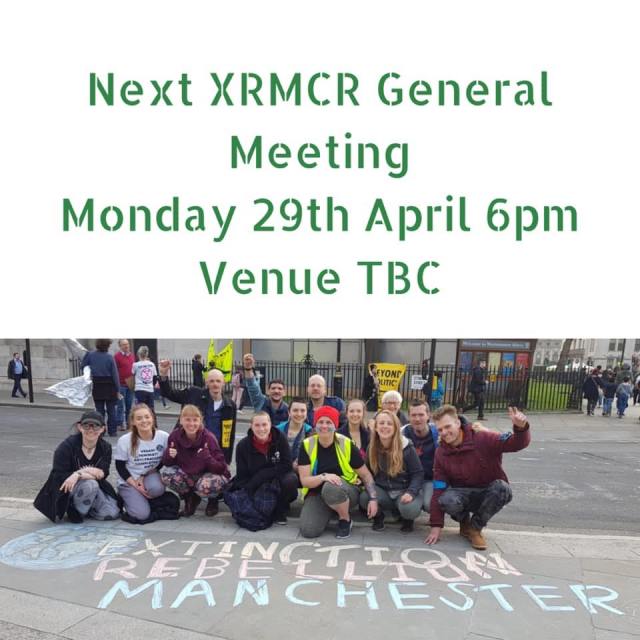
 1. Can you say a bit about who you are, where you live, how you came to be concerned about environmental issues


 manchester climate monthly