Youth participation in international #climate negotiations – interview with Harriet Thew

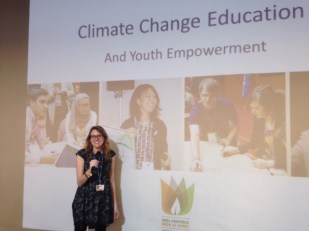
harriet thew for mcflyHarriet Thew is a PhD Researcher at the University of Leeds. Her research focuses on youth participation in climate change governance. She kindly agreed to an interview (for the perspectives of young people – see this interview with Emma Greenwood, and an imminent one with George Hassall.

1, Okay – so a) describe your research interest on children’s participation in (international) climate politics – what sparked it, what have you done on it?

My research is on youth participation in climate change governance, particularly at the UN climate negotiations (UNFCCC). From 2015-2018 I conducted an ethnography of the UK Youth Climate Coalition (UKYCC), an entirely youth-led group of young volunteers who attend the negotiations, amongst other things. I’m currently in the process of writing up my findings for my PhD.

I have been interested in the role of children and youth in climate action throughout my career. I previously worked at the Climate Change Schools Project, training teachers on climate change education and engaging schools in climate change adaptation projects across North East England. I then managed the Global Environment Programme for the World Association of Girl Guides and Girl Scouts, empowering young women around the world to start their own environmental projects, reach out to get their local communities involved, and advocate for women’s and youth rights at the UN. Through this job I became familiar with the youth constituency of the UNFCCC, an inspiring and fascinating, yet under-researched, civil society network in the climate change negotiations.

2.  What kind of children from developed world “get involved” – is it the rich white middle-class liberal-parents ones? Or is there decent provision for other less-well-resourced types of children to be involved?

The UNFCCC recently lowered the age of participation from 18 to 16 years after a concerted effort from the youth constituency (YOUNGO). Because of this, it is mostly young adults rather than children who attend, aged between 16 and 30. There are some exceptions to this, such as Greta Thunberg being permitted access in the recent COP when she was 15, and one day a year during the UNFCCC Conferences of the Parties (COPs) when younger children can attend with chaperones.

There is very little provision for youth to attend the negotiations, so youth participants must self-fund their travel, accommodation and subsistence. This often means taking (unpaid) leave from school/university/work. As a result, it is difficult for young people with less financial resource to attend, due to financial barriers and work commitments. Some require support (or permission) from their parents, so in the main their parents are interested in climate change and usually fairly liberal. Youth from all around the world attend the negotiations though the majority come from the Global North (because of the aforementioned financial difficulties and also because of visa issues). There is some diversity in race and gender, less so in other aspects.

3.  What types of activities do they undertake (attending COPs, what else?) and what impact does that have on them – does it build their confidence, demoralise them?

Throughout the year, youth participants engage in school talks to share their experiences with other children and youth, seek to engage with government and decision-makers, run social media campaigns both nationally and internationally, and get involved in local projects and protests.

Every individual is different but the vast majority report feeling demoralised after attending the climate negotiations with reports of burn-out, depression and frustration occurring after each COP. I intend to write an academic paper on this at some point because I have so much data on the tremendous emotional toll it takes on youth participants and their commitment to keep trying in the face of unrelenting disrespect, disillusionment and defeat. I really admire their tenacity, commitment and dignity in continuing to engage.

4, What kind of things does children’s participation enable at the international level (a kind of moral ‘radical flank’ effect?) and in their home towns/cities – do the children have moral authority they can then use more locally?

Prior to the Paris Agreement being signed in 2015, I saw more attempts by youth to use moral authority to demand ambitious action in global climate governance. However, after governments reached agreement in Paris at COP 21 the negotiations shifted into a new phase which focuses more on implementation and prioritises technical input over moral concerns. This is quite difficult for youth participants to navigate as, even those who have technical expertise from their undergraduate/masters degrees and professional roles, are not recognised as expert contributors on account of their age. Outside of the UNFCCC, a “youth participant” may be an environmental consultant in their late 20s who spends their days overseeing major infrastructure projects, but none of it matters once they are given that youth label. As a result, many youth participants in the UNFCCC have adopted a more professional approach in the way they dress and have become more technical in the arguments they articulate. However, their age still acts as a barrier to the recognition they receive. What has happened as a result of this is that the moral voice of the next generation has been subdued. In the most recent negotiations in Poland there was much more of a focus on process than on progress. In part that may be because there is less of a visible youth presence demanding urgent, ambitious action and holding politicians to account. Greta Thunberg has helped to revitalise this moral argument, and I think this has given other young people courage to say “yes, climate change does affect me, and I’m going to stand up and make my voice heard”.

At local level there may be more opportunity for youth to be heard as, at global level, they have to compete with diverse narratives of vulnerability and injustice around the world. However, I think the difficulties that young people face in climate change governance are symptomatic of wider societal ageism as seen in some of the patronising responses to the SchoolStrikes4Climate. There’s a perception that young people’s fears are silly and that they will grow out of them. This is particularly problematic when dealing with climate change which will significantly impact the next generation over the course of their lifetimes. Their concerns aren’t silly and they are likely to deepen rather than lessen with time.

5. Anything else you want to say.

Following the school strikes I have repeatedly heard the criticism that children are better off spending three hours in school than engaging in political debate and making their voices heard on climate change. To this, I would like to echo the sentiments of original school striker, Greta Thunberg, in asking: What is the point in children learning facts in school if governments ignore the facts that have been presented by climate scientists? Why should children focus on their studies in the hope of becoming the green technology pioneers of the future when the problem is not a lack of technological solutions but a lack of political will to use the solutions we already have? Some schools have threatened their students with detention for attending the strikes. I see this as a misinterpretation of the purpose of education. I attended the most recent strike with several colleagues from the University of Leeds where I had very interesting discussions with young attendees. They asked insightful questions about climate science in the IPCC report, social science on how to create behavioural change and how best to communicate the urgency of the problem, as well as more general questions about university study. At university we teach students to think critically about the world around them. It is never too early to start, and spending an afternoon chatting to academics rather than to your teachers should be encouraged rather than being grounds for punishment.
Posted in academia, Interview | Tagged | Leave a comment

Upcoming Event: Hugo Blanco in #Manchester, Mon 25 February

From press release-

Veteran Peruvian activist Hugo Blanco, who was born in 1934, will visit Manchester and speak about his life and current political work at a meeting on Monday 25 February.

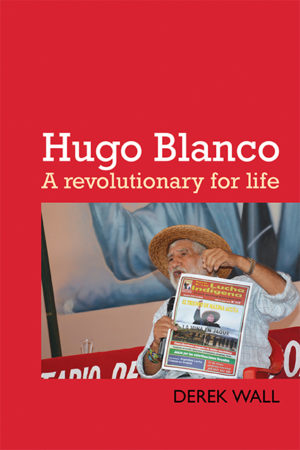
Derek Wall Hugo Blanco 14mm v5_MerlinHis life of ecosocialist struggle for the Quechua and other indigenous peoples around the world has been chronicled in Derek Wall’s new book Hugo Blanco: A Revolutionary for Life (Merlin Press and Resistance Books).

The book describes Hugo Blanco’s journey to Argentina, back to Peru, his trial, imprisonment and international campaign for his release, his time in exile in Mexico, Chile and Sweden, his return to take up a position in the Peruvian parliament, and his present-day activities.

This impressive figure, now 84 years old and still actively involved as editor of the weekly newspaper Lucha Indigena (‘Indigenous Struggle’), will be speaking in Manchester on Monday 25 February 7pm-9pm together with Derek Wall, formerly a Principal Speaker for the Green Party.

This meeting, a Resistance Books launch, will be a unique opportunity to discuss with Hugo Blanco and Derek Wall, and other invited speakers, contemporary revolutionary ecosocialism in movements of solidarity with the exploited and oppressed in Latin America and lessons for global left politics.

Register here for the event: https://www.eventbrite.co.uk/e/hugo-blanco-in-manchester-tickets-53862706806

Posted in Upcoming Events | Tagged , | Leave a comment

Example 423 of the failure of #climate leadership in #Manchester

When the climate emergency requires our “leaders” to speak loudly, to behave with vigour and clarity, we get… procrastination and muddled-thinking evasiveness.   NFM – Normal For Manchester.


Why do I go to events with titles like  “The development of thriving and inclusive cities: The Manchester Strategy”?

To hear incisive, insightful and genuinely innovative thinking from our lords and masters?  You’re having a giraffe.  The simple answer is that I go for some combo of the following

  • the canapes (wont pays) and the free booze.
  • to catch up with old friends and new ones
  • to ask awkward questions, if I can rouse myself from my despair and torpor.
  • material for vituperative and career-limiting blog posts like this one

For the lulz, in other words, as the young people never said.

And so it was on Tuesday night when I hauled my masochistic old body along to the Alliance Manchester Business School. I won’t bore you the bromides and the platitudes about skills and creativity, Manchester as industrial powerhouse, opportunity, innovation, DNA of our city.  You have heard it all a thousand times before.  The usual word salad, the usual bullshit bingo.  Participation, engagement, listening. Community. Pride. On and on it goes.
Cometh the Q and A section, cometh the man.

I said something roughly along these lines

“Thanks to the speakers and the organisers. A plea, some background and two questions. I’ll be quick.

“The plea- when you are speaking about the future in future, please mention climate change. (No, none of you did)

“Back in 2009 Manchester City Council created a Climate Change Action Plan – in partnership with the community and participation and other words we’ve heard to night. And one of its goals was to create a “low carbon culture.” And one element of that was a day’s “Carbon Literacy Training.”

“And so my two questions. To you, Dave Moutrey.  When I go to Home – and I love Home – before the film there’s an advert that proudly states that all your staff are carbon literate. And then up come adverts for airlines.  Now, I think that is a contradiction.  I want to know if you think it’s a contradiction, and if it is, what you are going to do about it. [see here for 2018: Home responds to questions (without really answering].

[I skipped over Jessica Bowles, last seen as the Head of City Planning for Manchester City Council in January 2015 when she told a room full of scrutiny committee councillors that achieving only  23 councillors as carbon literate instead of the 60 that had been the target could/should not be seen as a failure. True story, I was there.]

“And to Joanne Roney – putting aside the fact that only 10 percent of the Council staff are carbon literate, and only about half the councillors are, I keep submitting Freedom of Information Act requests about the seven member Strategic Management Team and its carbon literacy status. Yeah, I’m that guy (audience laughter).  So, I’m asking if the Strategic Management Team is carbon literate, and if they’re not, when they will be. Thank you.”

[See Feb 2017- Only 1 out of #Manchester City Council’s 10 ‘Strategic Managers’ is carbon literate

See May 2017 – Only 1 of the 10 members of #Manchester Council Senior Management Team is carbon literate #climate

See October 2017 – #Manchester Carbon Literacy debacle – no Senior Management Team take training

See August 2018 – Only 1 in 7 of top #Manchester Council bosses is ‘carbon literate’ #climate farce

And the replies. From Roney-

“Don’t have  seven in the team, don’t have a stable strategic management team, but when we do… it’s compulsory…there’s a  bespoke training programme….”  (I sent off another FOIA, btw – watch this space).


From Moutrey

“We sell advertising space, we don’t control it.   We assume our audiences have a brain. Our government sells arms all over the place. Organisations take money from the National Lottery, which some people disagree with We let our audience make their own decisions. “I’m not going to get involved in censoring those things.”


So thought experiment time. Imagine,  say, an anti-slavery newspaper in pre-Civil War United States that carried adverts for bounty hunters to recapture escaped slaves, and supplements extolling the fine handiwork of manacle-makers in order to meet its running costs. And when attacked for this contradiction, the response was  “we let our audience make up its own mind,” I mean, history would judge that newspaper’s editors and owners kindly, wouldn’t it? Oh yes.

And the censorship argument?  Really?  So, you’d have no problem allowing strip clubs to advertise? Or escort agencies?  You have fought against the government’s ban on cigarette advertising on the basis that it is “censorship”?  How utterly utterly incoherent and convenient.

As for carbon literacy, well, it is a feeble joke. A toothless make-work scheme that enables people who want to get jobs as consultants in the “green economy” to have something to put on their CVs.  Jeff Smith, a local MP, has done his carbon literacy training. And then voted for Heathrow Expansion.


We don’t have leaders willing to break the spiral of silence on climate change, who don’t seem to think that climate change will have any significant impact on Manchester’s future. We don’t have leaders who can walk their talk.  Barring a miracle (if our own devising),  we are toast.

Posted in carbon literacy training, Climate Change Action Plan, Event reports | Tagged | Leave a comment

Interview with Emma Greenwood, youth #climate activist #Manchester #SchoolStrike4Climate #YouthStrike4Climate

Last week Emma Greenwood gave this speech at the Manchester Climate Strike.

She kindly agreed to supply answers to some questions – the full interview is below.

Was today bigger than you thought? What was your favourite thing about it?

The strike ended up being drastically bigger than I expected. At first I thought it was going to be an event with a hundred or so of us and very little media coverage, that quickly changed. When I started posing about it online newspapers and radio stations started getting in contact asking about why I was taking part and what I hoped to achieve, which filled me with hope that it would be a much bigger and more impactful event than I had first expected.

By far my favourite things about the event was the atmosphere and the people that were there. Its not often I meet so many like minded young people who all feel as passionately as I do about protecting our future. Everyone was so supportive when I was speaking and it just felt like we were all at home. The fact that we felt like that, made it so much easier to come together and unite in protesting for a better future.

When did you first start learning about climate change – was it in school, from your parents? Did Greta Thunberg have a part to play?

I’ve always been very involved in protecting our environment, in primary school I was an avid member of the eco and gardening club. I think my parents have always inset in me the view that the planet we live on is not something we should take for granted.

Greta Thunberg however truly showed me just how much we have to fight for. The fact that she gave up so much of her time protesting for the protection of our future truly put across to me just how much danger our planet is under. As soon as I saw Greta doing that, I knew I couldn’t let her do it alone. The only way we are going to cause the change we want is if we come together.

What next – there’s the next Climate Strike on March 15, and then…?

We will continue, this is not a one time event. To make the change happen that we want to see it is going to have to be a global effort so we will continue to put pressure on those in power to put our planet first. We will continue to question companies that aren’t changing to more environmentally friendly options and we will continue to educate others on how they can reduce their impact on the environment.

In the long run, our aim is to protect our planet and the main way we are going to do that is through education. When people begin to think about the environmental effects of their day to day life, they will begin to make more conscious decisions.


This is the tricky one – what sort of help/advice/support would you like from your parents, existing activists, adults? How is that best offered (I call it the POG problem – “Piss Off Grandpa/Grandma”)

I would love for adults to realise just how much pressure their day to day lives is putting on our future. Whilst I fully understand having a low impact on the environment is very hard, reversing the effects of pollution will be even harder. It is about so much more than just your life. We need you to help us in demanding a greener now so we can, in hand, have a greener future. We need to start being the change we want to see. The attitude that it wont effect you isn’t the right one to have, do you want to have to explain to you child what a polar bear was?

We simply need you to support us in our bid to protect our future. We need you to stand by us and support us in our view that the protection of our future is the most important thing.

Anything else you’d like to say?

I just want to say a huge thank you to everyone who participated in the strikes all across the world. I can’t express how much it means to me, and I am sure so many others, that people are willing to stand up and demand a greener future. This is not a one time event, we need to continue to put pressure on those in power to demand they make the future of our planet their upmost priority.

Posted in Uncategorized | Tagged | Leave a comment

Speech by George Hassall at #Manchester #SchoolsStrike4climate

This below is the text of the speech given by George Hassall  in St Peter’s Square, Manchester, on Friday 15 February, reprinted with kind permission.

gerogehassall

Placard designed by George’s Aunt, Claire.

Hi

I’m George and like the rest of us here today I’m representing the voice of young people. For me, coming here and speaking up about climate change, for what I believe is right, is so important and I want to be able to say, “I was there, I was there when young people took action”

But I just want to take a moment here to reflect. In the 21st century we look back on significant events like World Wars 1 & 2, the first man on the moon, women’s’ rights and Rosa Parks refusing to move from her seat. Now I was having this conversation with my mum and I said “In 50 years from now when we look back at how far we’ve come, what will we look back on? Will we look back at a time of great invention? Will we still see a beautiful world of great natural landscapes? Or will we look back on a world of rust and steel? A world with no ice caps, a world with no forests. A world therefore without polar bears, without orangutans, a “world without life.”

With that in mind we need to think about what we’ve done, what we’ve done to this planet, what we’ve done to our home. Human beings now populate nearly every land mass in the world. How many more animals are going to die because of us? How many more innocent lives will it take for us to wake up to what is happening to our precious planet.

I believe, “Seeing is human, but opening your eyes is a skill.” This couldn’t be more apparent than today. If we reflect back on the faults of man, many animal species have been affected by hunting. Take the dodo bird for example, peaceful, innocent. No more is the dodo bird, when settlers kill, wipe out, exterminate the whole population.  All dead because of us, climate change just like hunting, means that innocent wildlife is lost forever, because of the greed of man, all for the need of man, the hunger of man.

Now it’s time to talk about the other things that climate change will inevitably affect; wetter summers, warmer and possibly later winters, early springs. If we’re going to mess with the weather we’re going to mess with the ecosystem. Some plants only have one pollinating insect, a bee for example that that plant relies on, and that bee relies on that one plant. If that plant and bee go out of sync, (kaput) they’re both dead.

That is what is going to happen if we continue to refuse to accept what is going on right in front of us. If we think of this on a practical (and I dare say on an economical) level If we have these varying seasons; when the blossom appeared early on apple trees in New York one spring all was fine. But then there was a cold snap, all the blossom, all the future apples, lots of people from New York wanting apples and all the money made from the apple business, gone. That is the hard truth we’re going to have to face.

I represent the generation who climate change will most affect and I see it as my job to spread the word.

I shall end my speech with a bit of rewording from one of my favourite songs, London Calling by The Clash

Young Un’s calling to the faraway towns
Now war is declared and battle come down
Young Un’s calling all over the world
Come out of the suburbs, you boys and girls
Young Un’s calling, look to us
Phony petrolmania has bitten the dust
Young Un’s calling, see we got lots o’ swing
Except for the collapse of the ozone ring

The ice age is coming, the sun is zooming in
Meltdown expected, the wheat is growin’ thin
Engines stop running, but I have some fear
‘Cause Young Un’s are calling out, and we live for our future

Posted in School Strikes | Leave a comment

The #climatestrike in#Manchester – hopes and fears…

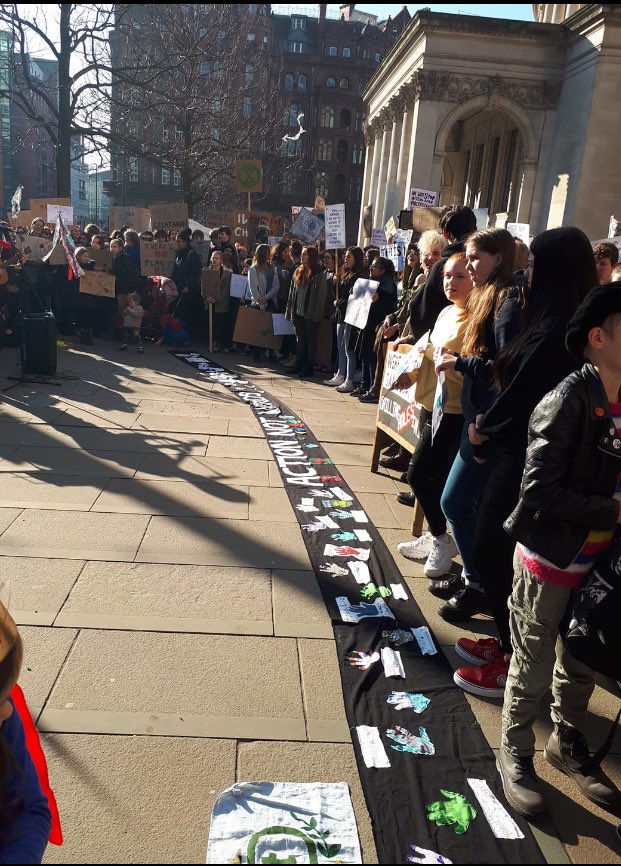
So, it happened!  It happened all across the UK. And in Manchester it was  (far) bigger, noisier and far more FUN than anyone expected it would be.  There were hundreds (perhaps a thousand?) congregated in St Peters Square.

Dozens of young people getting the chance to do some public speaking. This speech, from Emma Greenwood, was really good (as were many others!). [See bottom of this post for transcript]

There was singing. There were hand prints.

handprints.jpg

There were many parents supporting their children.  There were old and new adult climate activists looking on.

Meanwhile, of course, Teresa May was, well, Teresa May. Quelle surprise.

Beyond “bravo” to all those who participated (and to whoever came up with “I’ll do my A-levels if you do something about sea-levels”, I want to simply say this:

I suspect there’s a lot of fear, underneath the hope and the energy.  It’s great that the youth are out, that they’re saying what many of them have no doubt been thinking for years – you really cannot trust the adults.  That fear needs to be shared, and people need to support each other with it, perhaps through it.

My fears and doubts are these (and I’ve got something coming out somewhere that gets more traffic than this – I’ll back link when it does).

  • What happens after the bigger (?) strike on Friday 15 March?  Will there be (god I hope not) the call for a “Youth Climate March” in London.
  • Will charismatic youthful “leaders” be thrown up by the NGOs, the media, and the focus turn to them, with the false message that only if we have leaders can we have success (Noam Chomsky on this

The way things change is because lots of people are working all the time, and they’re working in their communities or their workplace or wherever they happen to be, and they’re building up the basis for popular movements. In the history books, there’s a couple of leaders, you know, George Washington or Martin Luther King, or whatever, and I don’t want to say that those people are unimportant. Martin Luther King was certainly important, but he was not the Civil Rights Movement. Martin Luther King can appear in the history books ‘cause lots of people whose names you will never know, and whose names are all forgotten and who may have been killed and so on were working down in the South.

  • Will the big NGOs try to capture (in every sense) the narrative?   Probably/certainly.  There will be ‘youth ambassadors’ etc etc.  But those NGOs have, mostly, been part of the problem.
  • Crucially – and I have no answers to this, or none that I think is compelling – how might parents, and would-be allies – help the youth go through the learning curve faster than has happened in previous times. Do “we” actually have anything useful to offer? And if we do, how to offer it in ways likely to help rather than irritate? (I call this the POG problem – for “Piss off Grandpa/Grandma”).


PS Thanks to Emma Greenwood for permission to use her clip, and for posting it on Youtube.  Here is the transcript –


We are here today to make a statement to those in power saying we want a future and that the protection of our plant needs to stop coming second place. So far, the government have been words over actions and that has to change. Change is no longer an option it is an obligation. No longer shall the government be able to ignore our demand to a safe and clean future.

Sea levels are rising at their fastest rate in 2,000 years, our oceans are 26% more acidic than at the start of the industrial revolution and there are more green houses gases in the atmosphere than ever before. This is no longer a what if scenario, it is a when scenario.

We need to stop allowing companies to put profit in front of protection and preservation. The attitude can no longer be ‘you can’, it needs to become ‘you must’. You have the power to demand the change you want to see and hold companies responsible for their actions.

When we start to change our thoughts and the way we live, we can change the world. As Nelson Mandela said “Action without vision is only passing time, vision without action is merely day dreaming but vision with action can change the world”. And that is what we are doing here today.

Who ever you are, where ever you are, you have the power to be the change you want to see in the world. To everyone hearing this, this strike is a message from all young people saying “We want a future”.

Posted in Event reports, Uncategorized | Tagged | Leave a comment

Upcoming Events at University of #Manchester on #climate change Weds 20 February

First floor of University of Manchester Students’ Union, 4 to 6pm, Weds 20 Feb.


Alternative Lecture Series. Climate Change: Historical Perceptions & International Negotiation

We have multiple speakers in this week!

The first two are Masters students from the School of History of Science, Technology and Medicine – Robert Naylor and Amber Quraishi on Historical Perceptions of Climate Change:

The traditional story of climate change is one of big international conferences between governments, leading to grand sounding resolutions which rarely seem to be kept to. However, the 1970s show is that the story could have been very different, with smaller, more user based approaches for adapting to climate change being explored around this time. There will be surprises along the way – the first climate change act in the US was brought to Congress by one Democrat and two Republicans. The discussion surrounding climate was very different to today, but nevertheless we can draw lessons if we choose to. Prepare your preconceptions challenged about the climate debate.


Ignore the bit that says “lectures” – I don’t do lectures if I can avoid it (as in, formal ones. Lots of ranting, but in a lecture format, I try to subvert)

Title: International Climate Negotiations – a fun bluffer’s guide.

What’s the Paris Agreement?  What does it say? What was the Kyoto Protocol and (why) should you care? What does UNFCCC stand for?  What are these COPs that I keep hearing about, and has any of it ever made any difference? If you’re confused about the international climate negotiations that have been going on for thirty years, come to this session – meet other confused and less-confused people.  Learn some useful facts in a fun way, get to ask as many questions as you want and go away with new friends, new sources of information and inspiration.

biog
Marc Hudson recently passed his viva: his thesis was on incumbent resistance to carbon pricing in Australia.  He is old enough to remember (all to well) the 1992 Rio Earth Summit.  He edits manchesterclimatemonthly.net

Posted in University of Manchester, Upcoming Events | Leave a comment

Does #Manchester “Low Carbon Culture” Council support the #ClimateStrike?

On Friday thousands of children in the UK will go on strike from school because their parents are doing (less than) nothing about climate change, condemning them to an at-best grim future.  Ten years ago Manchester City Council said it would work with the people of Manchester to create a “low carbon culture.”

So, do they support children going on strike? Rumour reaches us that the Council has told schools that they must NOT allow absence for this purpose.  We’ve tweeted at the Executive Member for the Environment, Angeliki Stogia,


futile stogia tweet


who occasionally seems to have problems giving a speedy answer to requests for information.

We’ve also sent this FoIA, but won’t get a response for 20 working days. Still, that will be in good time for the March 15 strike, which will probably be bigger.

Dear Sir/Madam,

I have heard a rumour that the City Council has instructed schools that they cannot give leave to students/parents for children to take part in the February 15 “climate strike”.
I am writing to request

  • all legal advice sought/received by the Council around this issue (including internal deliberations/discussions within the City Solicitor’s office, or whoever is responsible)
  • copies of all correspondence between schools and the City Council pertaining to the February 15 2019 “Climate Strike”.
  • copies of minutes of internal deliberations held by Council officers and elected members on the Executive about the stance of the City Council.
  • Given that the City Council has the goal to create a “low carbon culture” I am particularly interested to know if any officer or elected member suggested at any point that the City Council SUPPORT the strike.

Many thanks and Please consider this a request under the Freedom of Information Act 2000

Posted in Low Carbon Culture, Manchester City Council | Leave a comment

Job Alert: Carbon Coop retrofit project officer, #Manchester

full details here

carboncoop

Carbon Co-op domestic retrofit project officer

Deadline: 5pm, Tuesday 5th March 2019
Time: 0.6-1.0 FTE
FTE: £28,428
Start date: March/April 2019
End date: Permanent
Status: payroll/PAYE
Location: Manchester City Centre

We are seeking a new team member to contribute to our work on domestic retrofit and lead on our four year Friends Provident Foundation-funded, Energy Empowerment Greater Manchester project. You will be part of an inter-disciplinary team of people developing citizen-led solutions to creating a market for domestic deep retrofit in Greater Manchester and beyond.

Posted in capacity building, retrofit | Leave a comment

Upcoming Event: Blood Bricks: Untold Stories of Modern Slavery and #Climate Change from Cambodia #Manchester 20 Feb

The Global Development Institute is pleased to host Prof Kate Brickell as part of the GDI Lecture Series, talking about: Blood Bricks: Untold Stories of Modern Slavery and Climate Change from Cambodia

Cambodia is in the midst of a construction boom. The building of office blocks, factories, condominiums, housing estates, hotels, and shopping malls is pushing its capital city upwards. But this vertical drive into the skies, and the country’s status as one of Asia’s fastest growing economies, hides a darker side to Phnom Penh’s ascent. Building projects demand bricks in large quantities and there is a profitable domestic brick production industry using multi-generational workforces of debt-bonded adults and children to supply them.

Moving from the city, to the brick kiln, and finally back to the rural villages once called home, the talk traces how urban ‘development’ is built on unsustainable levels of debt taken on by rural families struggling to farm in one of the most climate vulnerable countries in the world. Phnom Penh is being built not only on the foundation of blood bricks, but also climate change as a key driver of debt and entry into modern slavery in brick kilns. Blood bricks embody the converging traumas of modern slavery and climate change in our urban age.

The study (2017-2019) was co-funded by the Economic and Social Research Council (ESRC) and Department for International Development (DFID). For more information see http://www.projectbloodbricks.org.

The Global Development Lecture Series brings experts involved in global development to The University of Manchester. It aims to facilitate dialogue and discussion, providing a space for leading development thinkers to share their latest research and ideas. Lectures are followed by an audience Q&A. All lectures are live streamed on the Global Development Institute Facebook page: http://www.facebook.com/globaldevinst

This event is open to members of the public and information on the accessibility of the venue is detailed at this link: https://www.accessable.co.uk/venues/roscoe_th-b

For full details see

Speaker

Katherine Brickell

Role: Professor of Human Geography

Organisation: Royal Holloway, University of London

Biography: Katherine Brickell is Professor of Human Geography at Royal Holloway, University of London (RHUL) and Principal Investigator of the ‘Blood Bricks’ study. She is Director of the Geopolitics, Development, Security, and Justice Research Group at RHUL; editor of the journal Gender, Place and Culture; and has successfully led two ESRC-DFID grants on human rights issues in Cambodia. Her research has been published in leading academic journals in geography, development studies, and women’s studies. Books she has co-edited include The Handbook of Contemporary Cambodia (2017); Geographies of Forced Eviction (2017) and Translocal Geographies (2011). Her new monograph Home SOS: Gender, Violence and Survival in Crisis Ordinary Cambodia will be published in 2019. For her research excellence she has been awarded the Royal Geographical Society Gill Memorial Award (2014) and Philip Leverhulme Prize (2016).

Posted in academia, University of Manchester, Upcoming Events | Leave a comment